Logical Reasoning World Around Us Worksheets for Ages 3-6
5 filtered results
-
From - To
Welcome to our "Logical Reasoning World Around Us Worksheets" designed for children ages 3-6! These engaging activities promote early learning and critical thinking skills, helping young learners explore their surroundings while developing their logical reasoning abilities. Our worksheets incorporate fun themes, vibrant images, and relatable scenarios that encourage children to analyze patterns, make comparisons, and solve simple problems. Perfect for parents and educators, these resources lay a strong foundation for future academic success. Join us in making learning an enjoyable adventure as children sharpen their reasoning skills and discover the fascinating world around them! Perfect for home or classroom use!
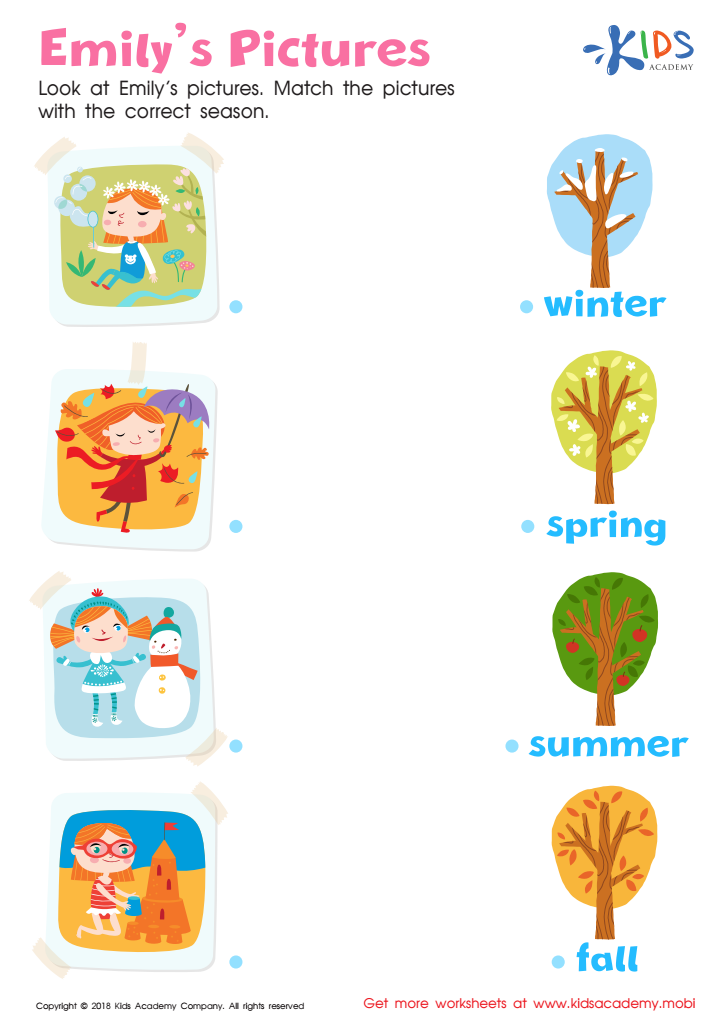
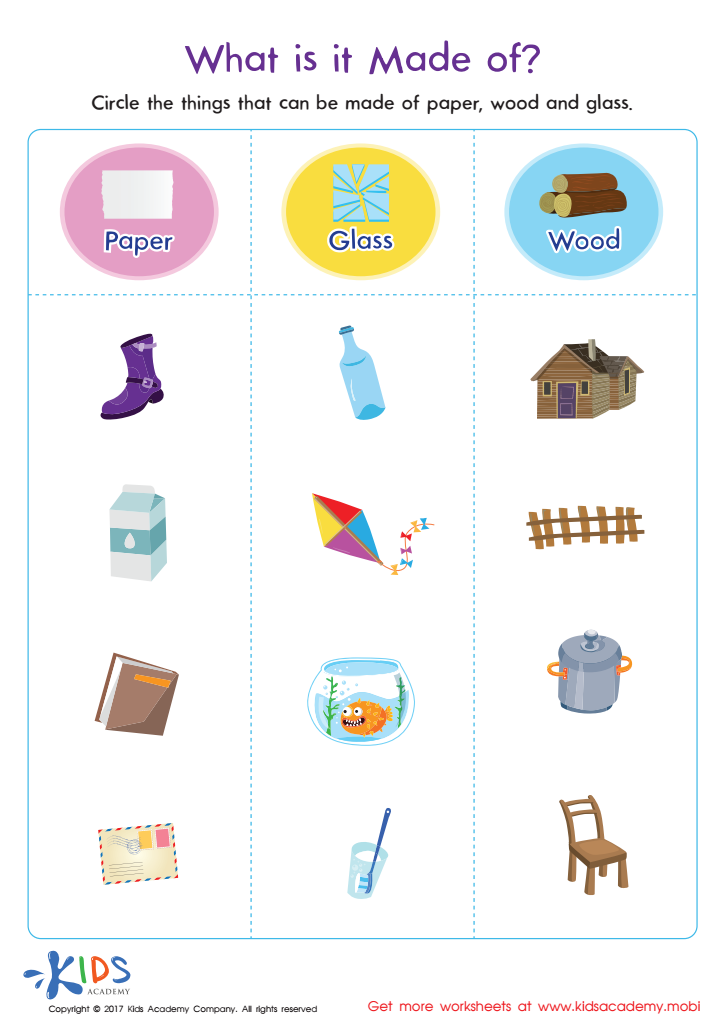
Emily's Pictures Worksheet
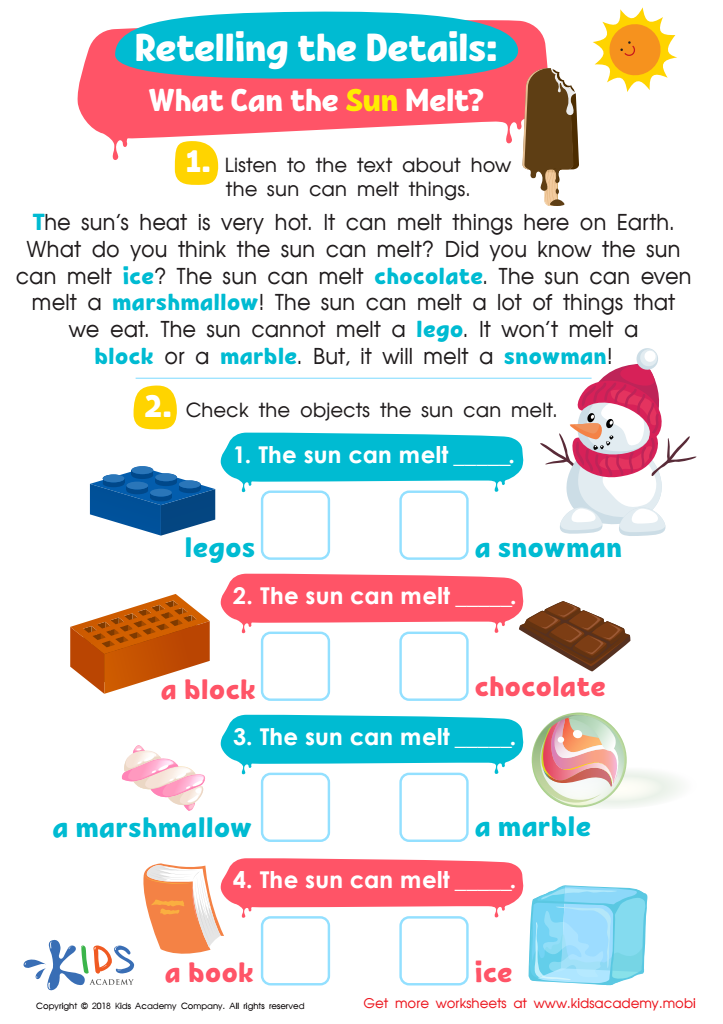
Retelling the Details: What Can the Sun Melt? Worksheet
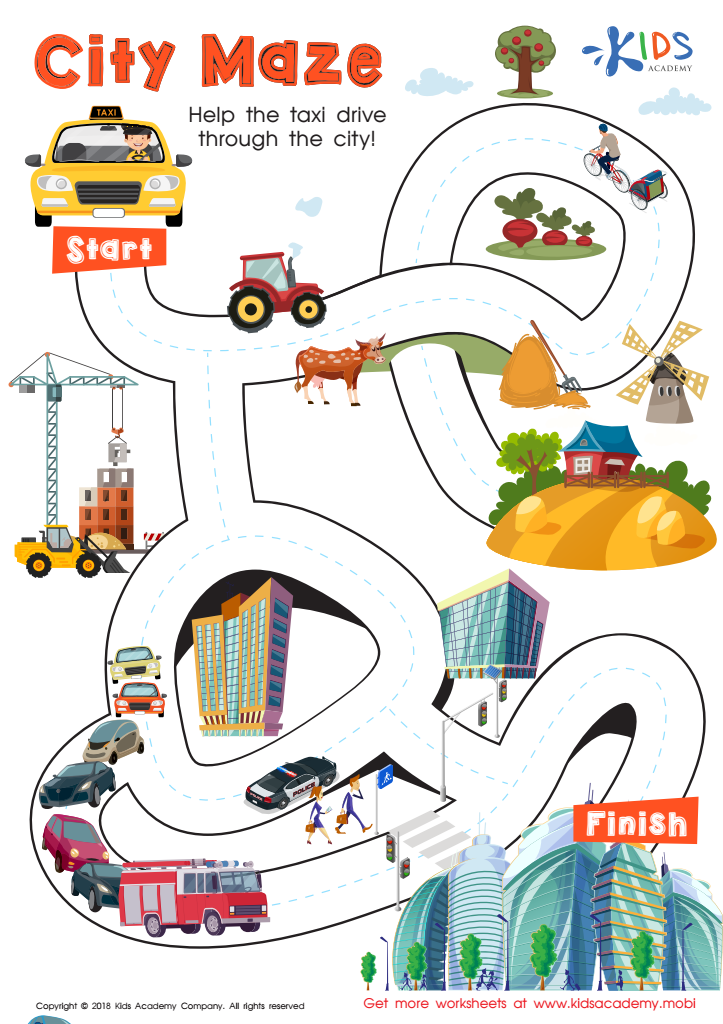
City Maze Worksheet
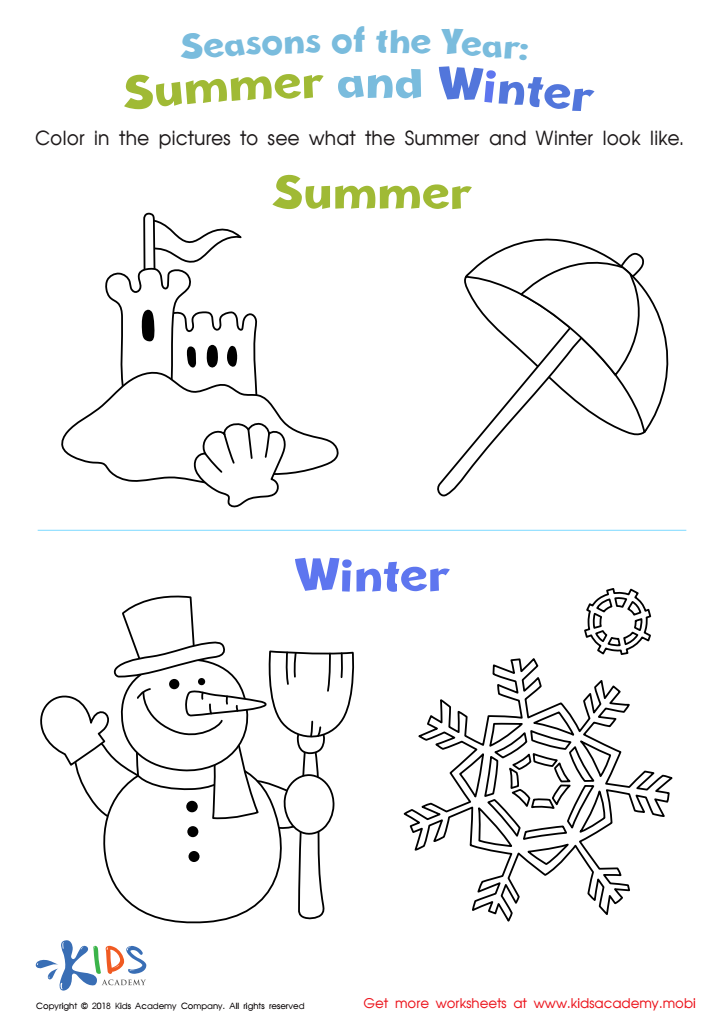
Summer and Winter Worksheet
 Assign to My Students








Logical reasoning is a crucial cognitive skill that develops foundational thinking abilities in young children, particularly between the ages of 3 to 6. During this formative stage, children are naturally curious and eager to explore their world, making it an ideal time to nurture their logical reasoning skills. Parents and teachers should care about this development because strong reasoning skills are linked to better problem-solving abilities, improved understanding of cause and effect, and enhanced decision-making.
Engaging children in activities that involve logical reasoning, such as puzzles, pattern recognition, and classification games, helps them make sense of their surroundings. This age group is particularly adept at learning through play, and incorporating logic into fun activities reinforces these crucial skills while keeping their interest piqued.
Moreover, fostering logical reasoning enriches their learning experiences across various subjects, from mathematics and science to everyday situations. Children equipped with solid reasoning skills are better prepared for academic success and life challenges. Ultimately, by prioritizing logical reasoning in the early years, parents and teachers can support young learners in developing critical thinking skills that will serve them well throughout their lives.