
Vocabulary enhancement Grammar Worksheets for Ages 3-6
31 filtered results
Difficulty Level
Grade
Age
-
From - To
Subject
Activity
Standards
Boost your child's language skills with our Vocabulary Enhancement Grammar Worksheets for ages 3-6! Designed to inspire and engage young learners, these worksheets focus on expanding vocabulary while enhancing their grammar comprehension. Our fun, interactive activities include matching words, fill-in-the-blanks, and picture Identification, making learning to read and write a delightful experience. Perfect for at-home practice or classroom enrichment, these worksheets support early literacy development and foster a love for language. Give your little ones the tools they need to express themselves clearly and effectively. Explore our resources today, and watch their vocabulary bloom!
Favorites
With answer key
Interactive
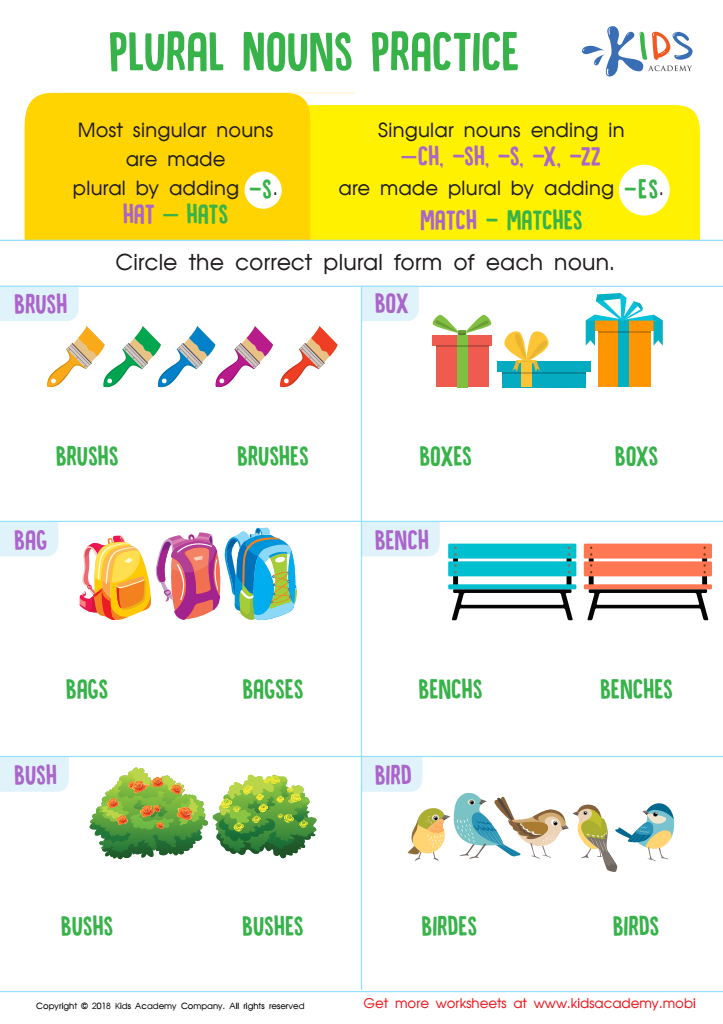
Plural Nouns Practice Worksheet
Explain to your child that most singular nouns become plural by adding "-s". E.g. "cat"->"cats". For words ending in "-ch", "-sh", "-s", "-x", or "-zz", add "-es". E.g. "buzz"->"buzzes". Then, get them to circle the right plural form of each noun on the worksheet.
 Assign to My Students
Plural Nouns Practice Worksheet
Worksheet
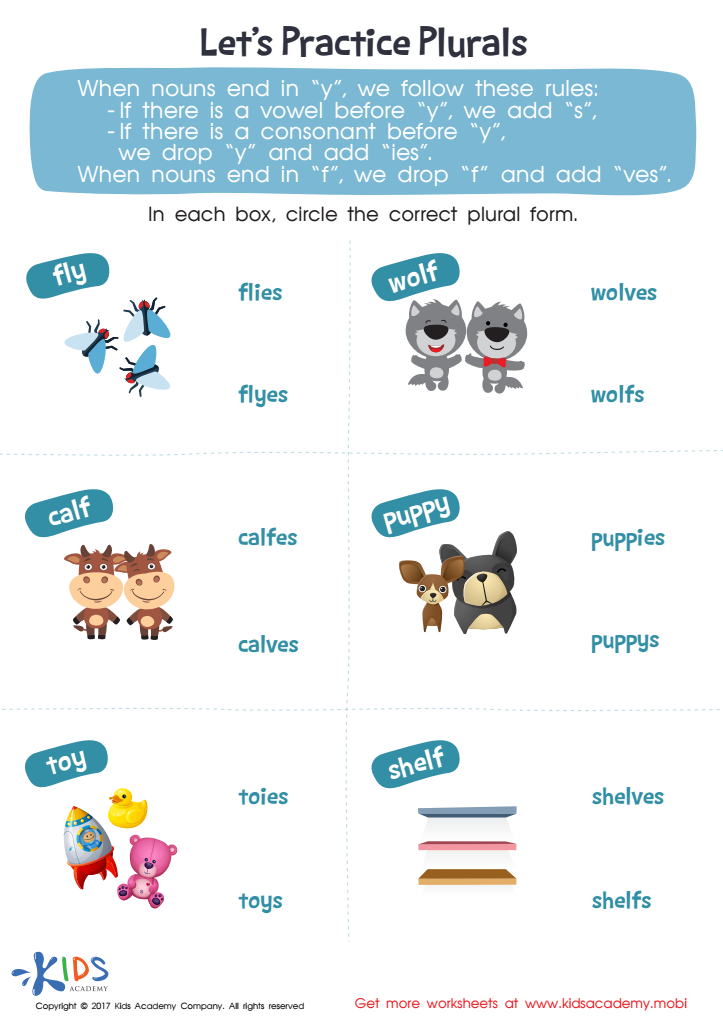
Let's Practice Plurals Word Structure Worksheet
Practise plurals with this meaningful word structure worksheet. Plurals can be tricky for kids, but with this worksheet they'll learn to transform singular words with certain ends into plural forms.
Let's Practice Plurals Word Structure Worksheet
Worksheet
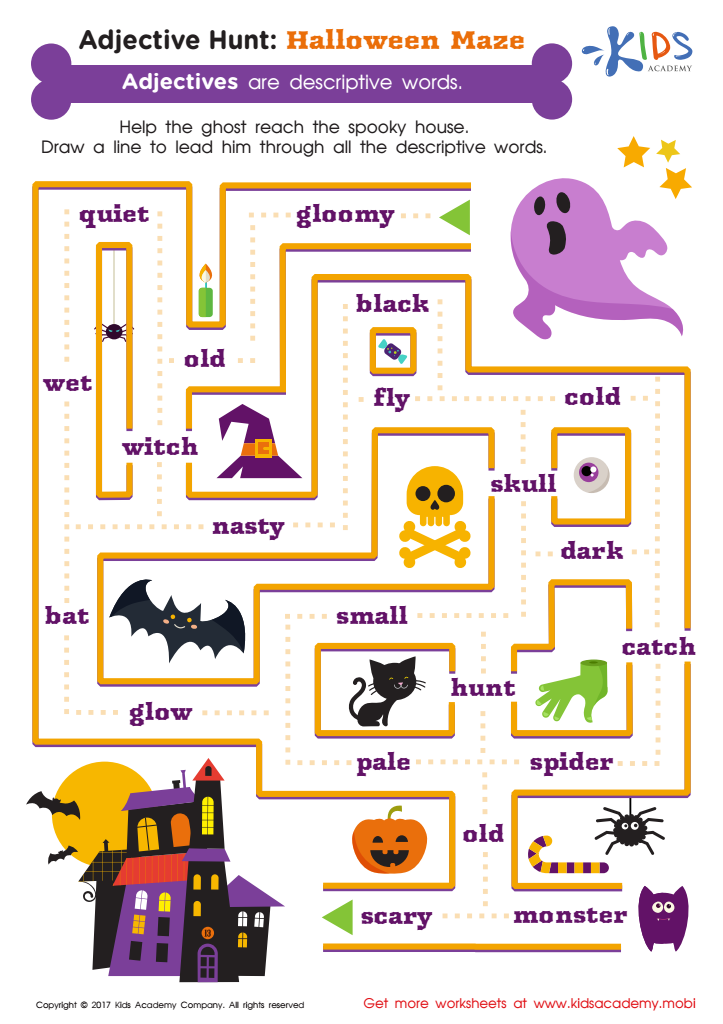
Adjective Hunt Printable
This spooky maze is perfect for Halloween! Kids will be both haunted and delighted while they figure out which words are descriptive or not. Get them excited for learning grammar with this fun and frightful worksheet!
Adjective Hunt Printable
Worksheet
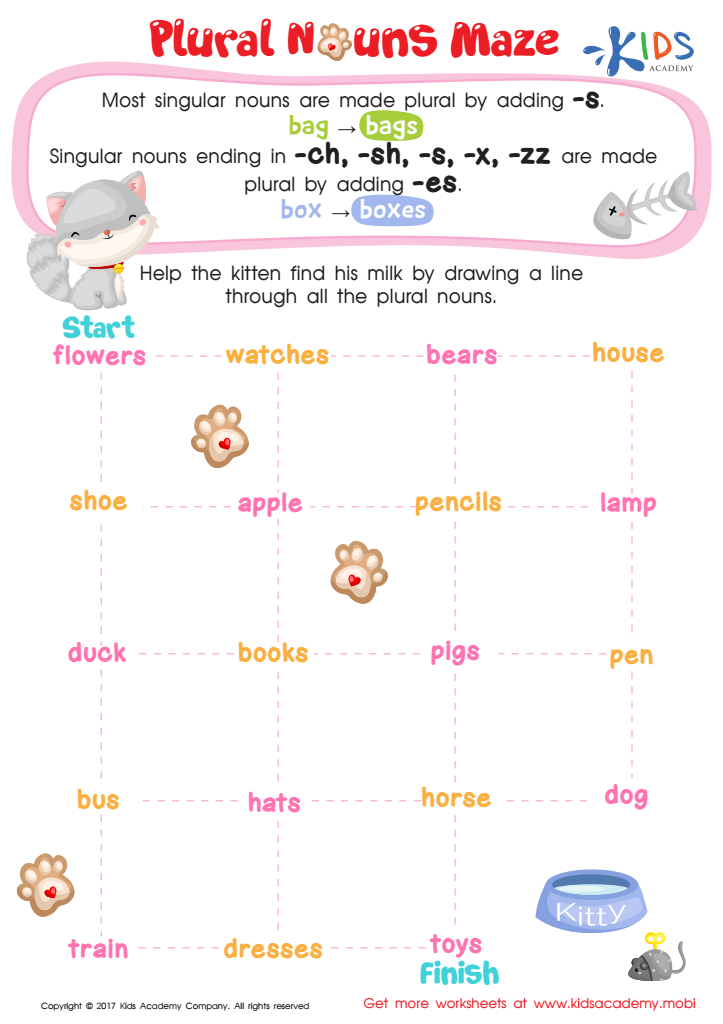
Plural Nouns Maze Worksheet
Oh no, the kitty needs her milk! Help your learner navigate the maze by drawing a line through the plural words. Review the grammar rules on -s and -es endings, then get to work to guide the kitten to her bowl! Download this PDF worksheet to start.
Plural Nouns Maze Worksheet
Worksheet
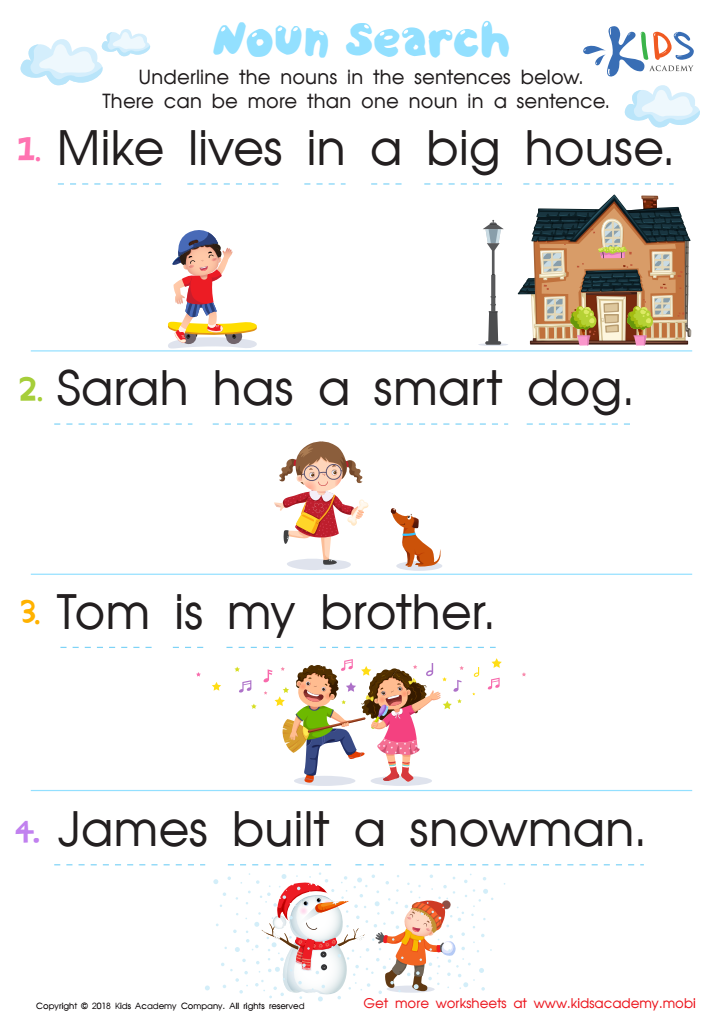
Noun Search Worksheet
To help your children learn the basics of grammar, start with nouns, verbs, adverbs and adjectives. This noun search worksheet will help your child understand the most common part of speech - the noun. Ask them to underline the nouns in each sentence. This is a great way to start learning proper grammar.
Noun Search Worksheet
Worksheet
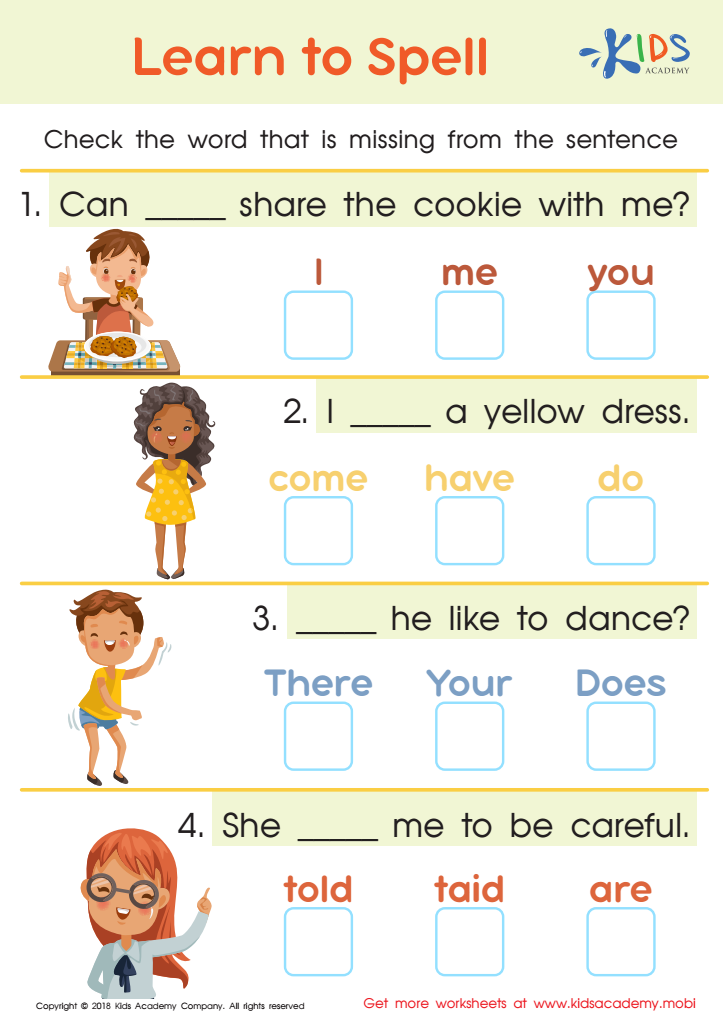
Learn to Spell Worksheet
Help sharpen spelling skills with a simple worksheet. Read sentences aloud and show which word is missing. Ask students to pick the correct word from the options. Ensure they check the missing word for accuracy.
Learn to Spell Worksheet
Worksheet
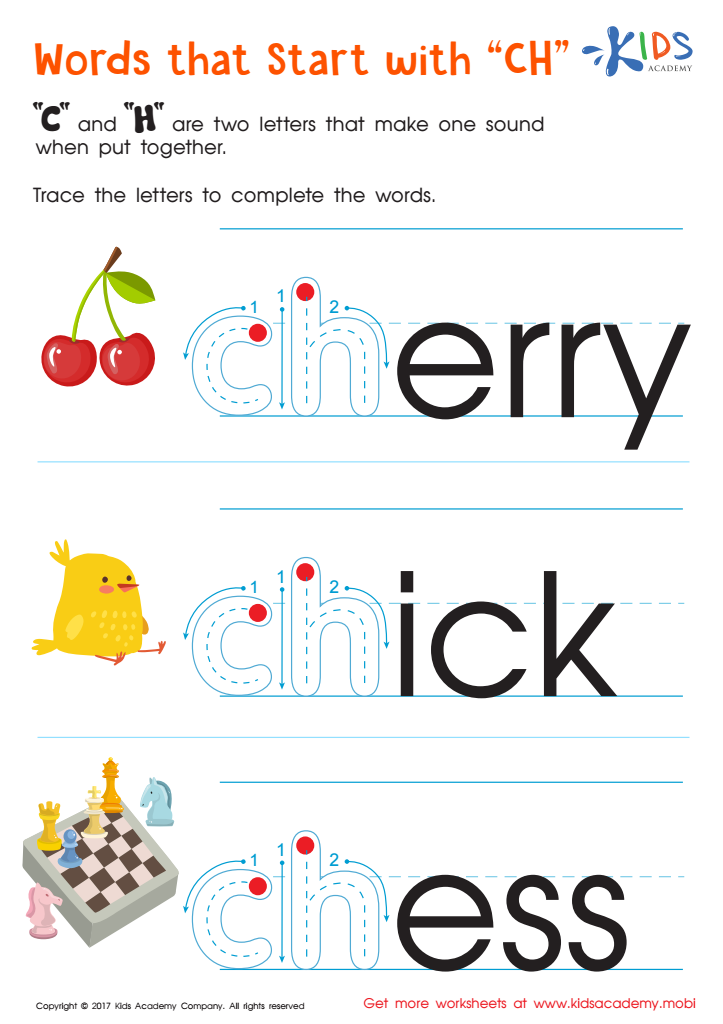
Words That Start with "ch" Spelling Worksheet
With Kids Academy, learning phonics and spelling has never been easier.
Kids Academy's "ch" tracing worksheet makes it easy for your little one to learn phonics and spelling. It features cute, brightly colored images to help them trace familiar words, making learning fun and enjoyable.
Words That Start with "ch" Spelling Worksheet
Worksheet
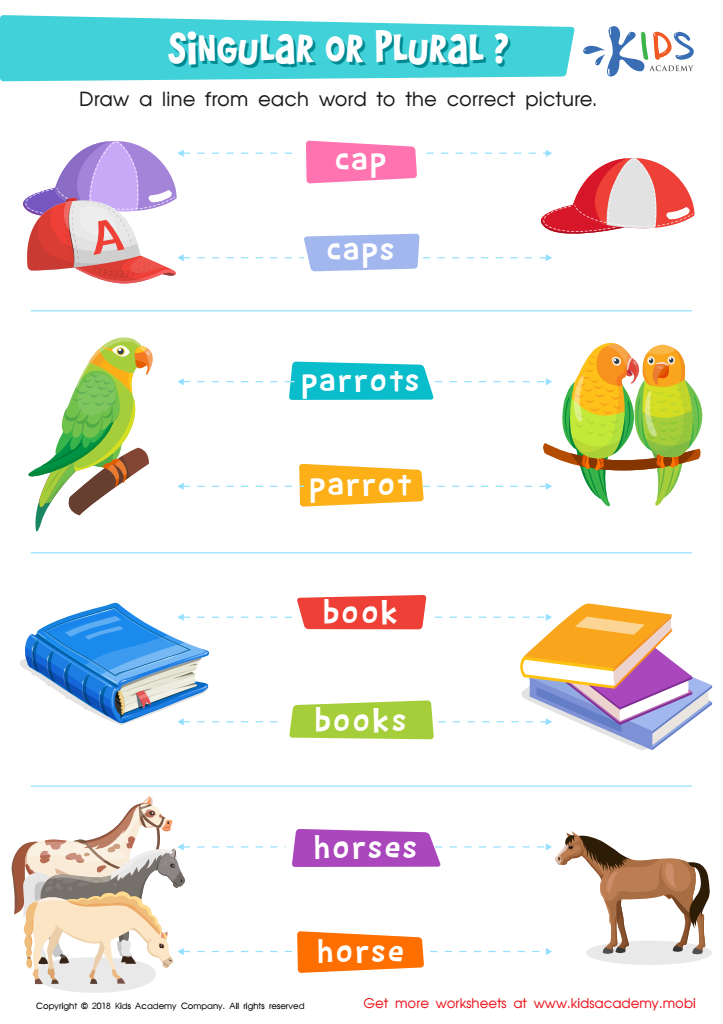
Singular or Plural? Worksheet
Help your child practice recognizing the plural forms of words with this fun tracing worksheet! They'll need to connect each word and its plural form to the correct picture. For example, they'll write "cap" for one cap and "caps" for two. Enjoy this learning activity together! 80 words.
Singular or Plural? Worksheet
Worksheet
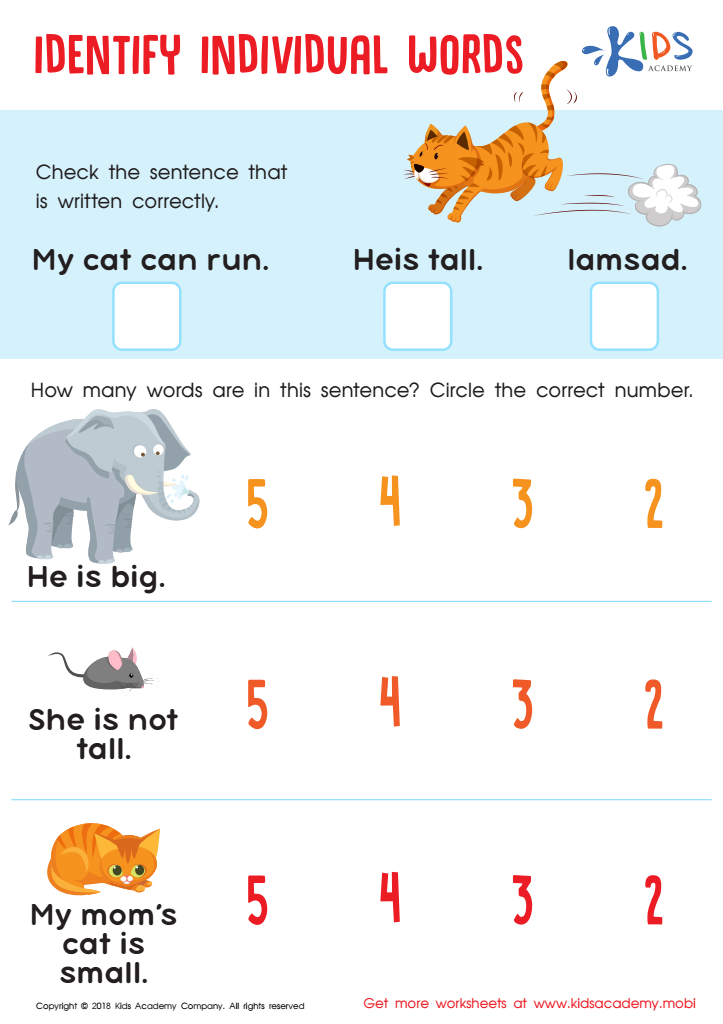
Identify Individual Words Worksheet
Does your child have trouble constructing sentences? Check out this worksheet! It will help them identify words that make up sentences and assess how well they can read and answer questions. The first part tests how well they can recognize a written sentence. The second part has them read questions and circle the correct number of words. Give it a try!
Identify Individual Words Worksheet
Worksheet
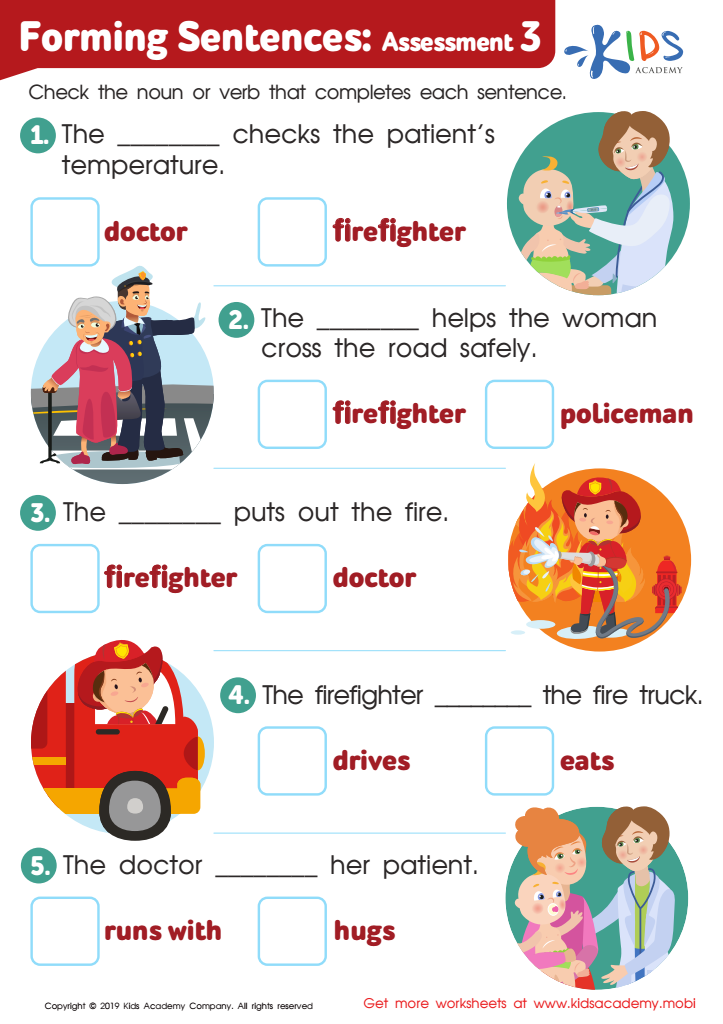
Forming Sentences: Assessment 3 Worksheet
Students must master sentence formation to be successful English learners. After grasping the ABCs and basic words, the next step is to construct sentences using those words. Worksheets like this one can help teach kids how to make sentences; they need to look at the pictures and select the correct noun or verb to complete each sentence.
Forming Sentences: Assessment 3 Worksheet
Worksheet
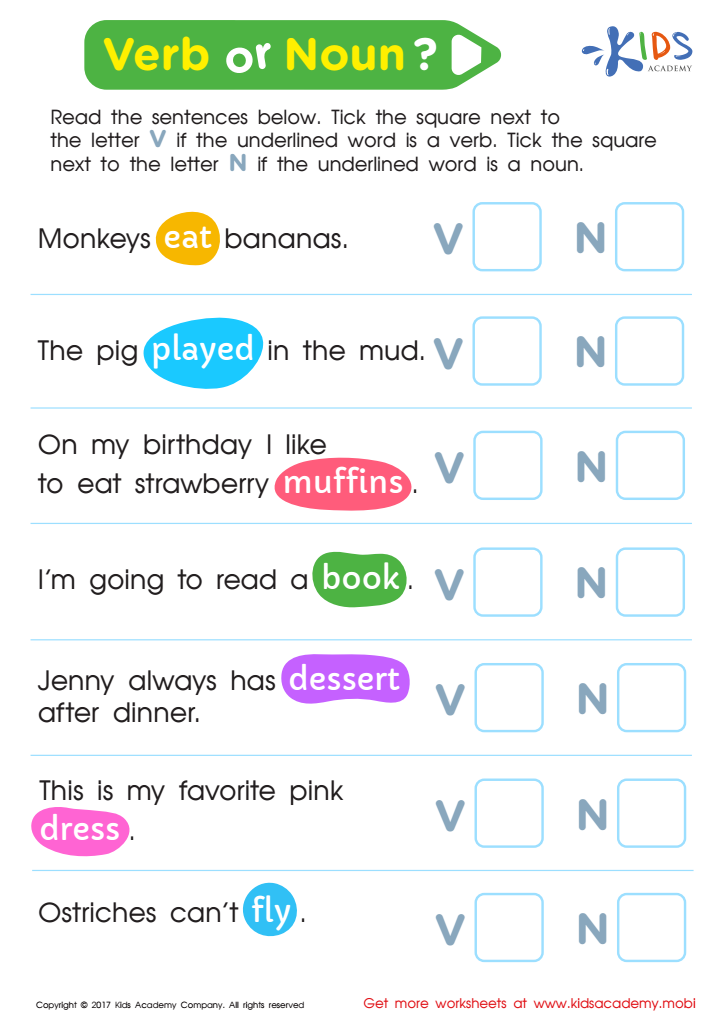
Verb or Noun Worksheet
This worksheet will help your child identify verbs and nouns quickly. With colorful highlights and simple sentences, they'll master parts of speech in no time! Get ahead of the game with this incredible worksheet.
Verb or Noun Worksheet
Worksheet
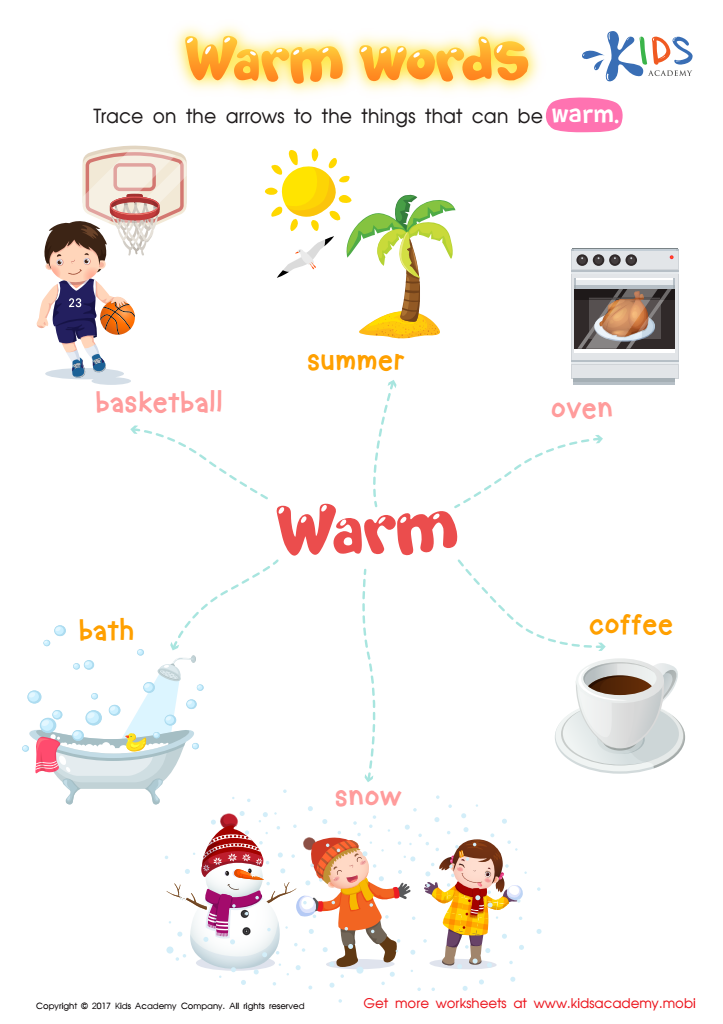
Warm Words Worksheet
Learning with tracing sheets is fun! Ask your child to list some things associated with warm temperatures. Then, trace the arrows on the worksheet with them and explore the items that can be warm. Have fun!
Warm Words Worksheet
Worksheet
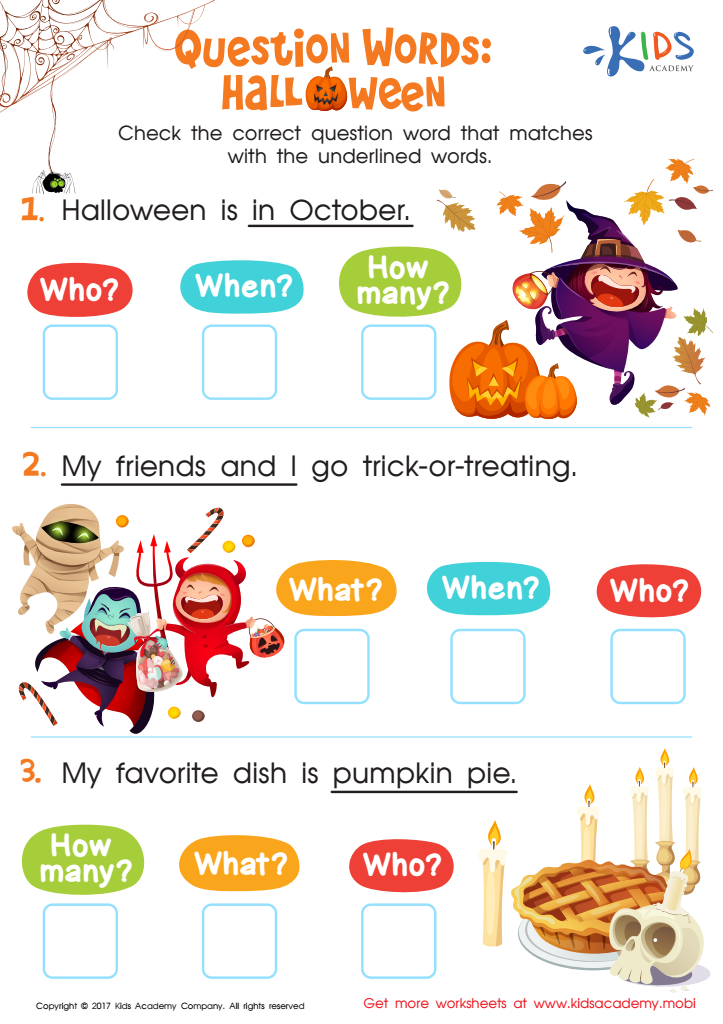
Question Words: Halloween Worksheet
Questions lead to answers, so it's important to use the right words. This Halloween-themed worksheet helps kids learn to use precise language when writing or asking a question. Just read each sentence, noting the underlined phrases, and pick the question word that fits. Have spooky fun!
Question Words: Halloween Worksheet
Worksheet
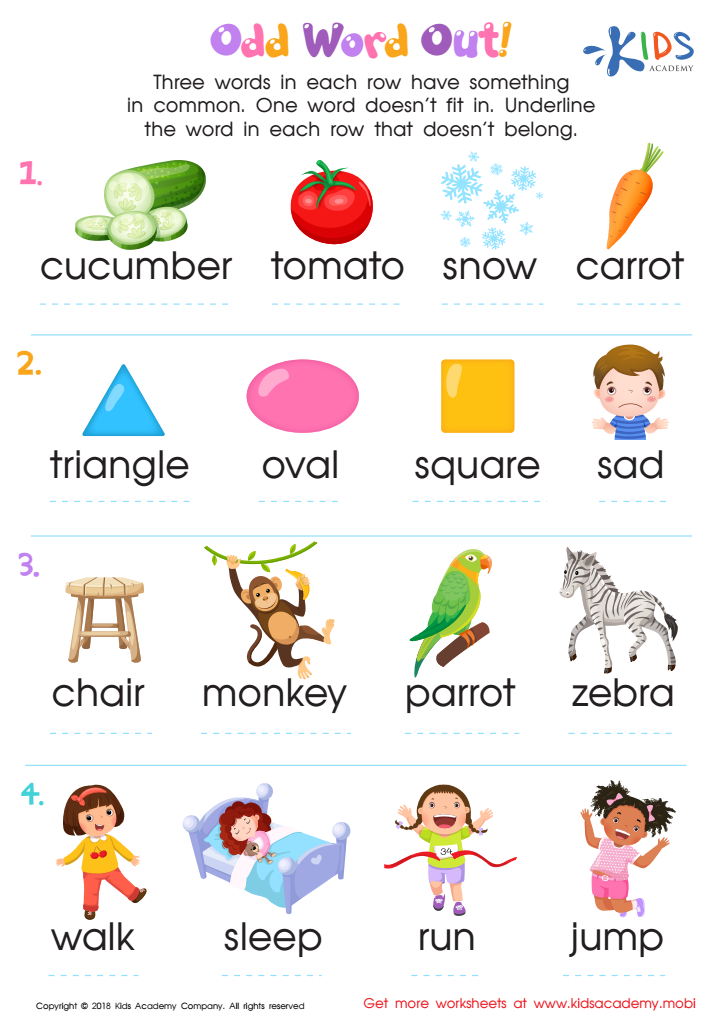
Odd Word Out Worksheet
Ask your child to name all pictures in each row and see if there's something they share. Then, have them identify the odd one out and underline it. Repeat for all words in the rows to help them understand how to identify words.
Odd Word Out Worksheet
Worksheet
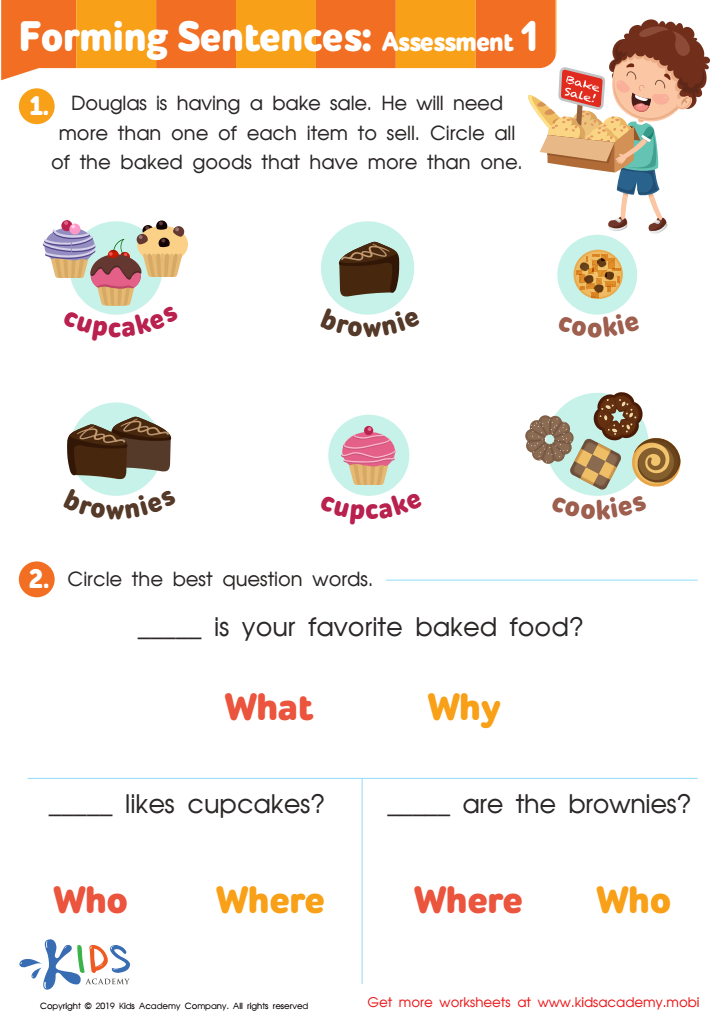
Forming Sentences: Assessment 1 Worksheet
Bake sales are great fun, offering a variety of goodies and treats! Kids also have a chance to make a bit of money. Help your students circle all the yummy baked goods with more than one in this worksheet - Douglas is hosting a bake sale and needs items in bulk!
Forming Sentences: Assessment 1 Worksheet
Worksheet
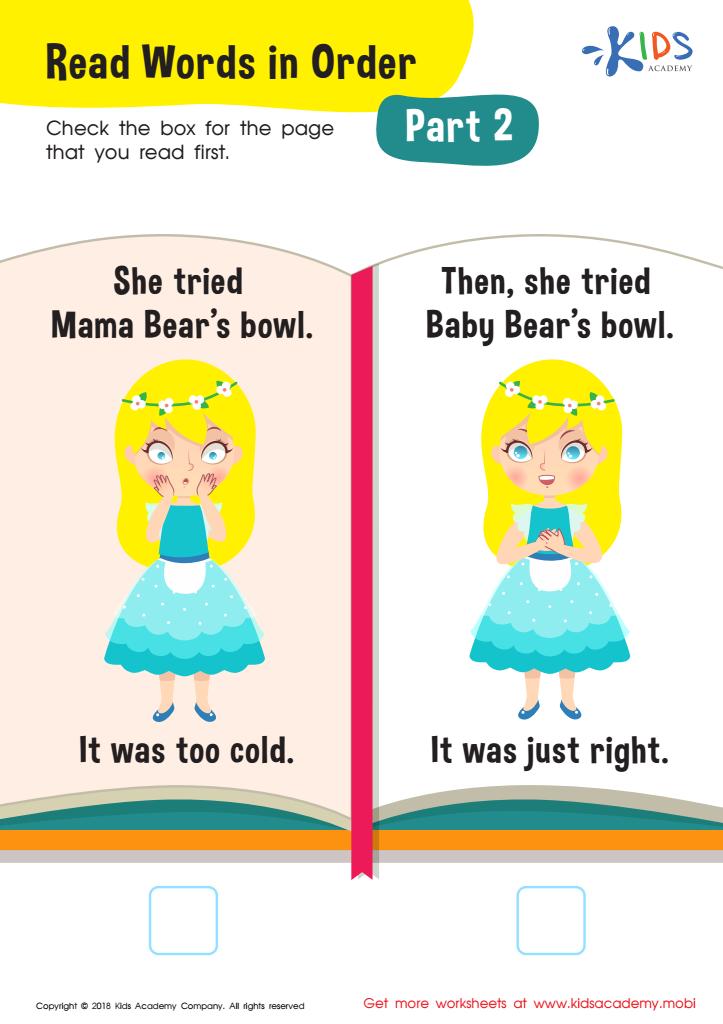
Read Words Order Part 2 Worksheet
Help your students make progress with reading by using this easy worksheet. It includes two pictures with short sentences your child should be able to read. Ask them to read these out loud, and if they're struggling, help them. Then, they should check the box that shows the page they'd read first.
Read Words Order Part 2 Worksheet
Worksheet
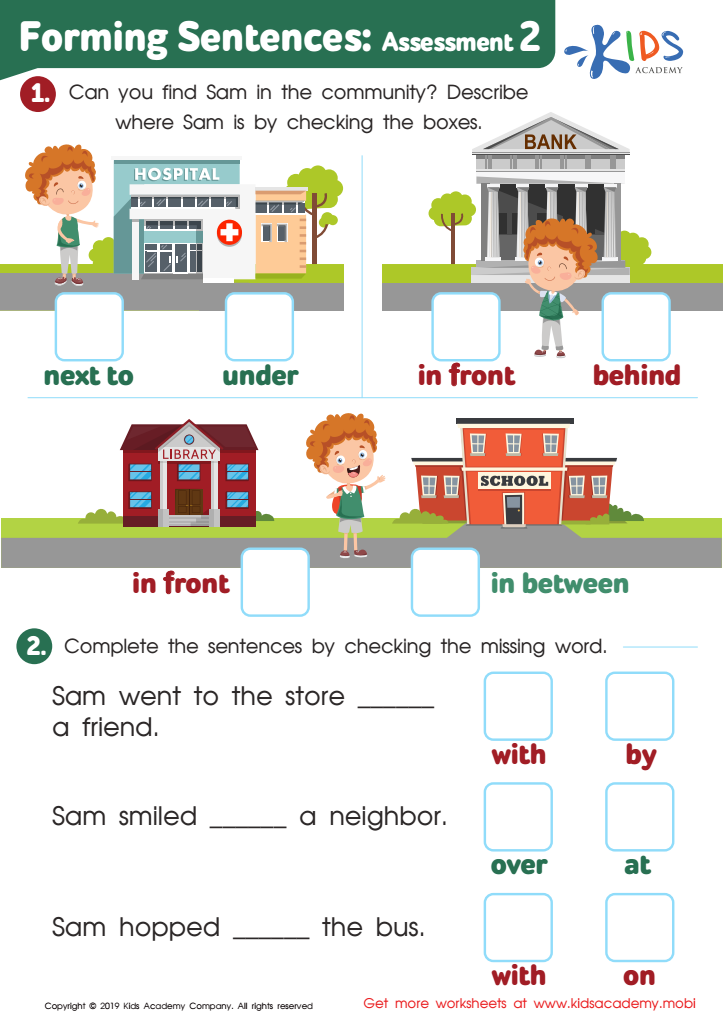
Forming Sentences: Assessment 2 Worksheet
A community is an area with different people, buildings and professionals. Ask students to list buildings in their area, then help find Sam. Describe where he is and check the boxes in the worksheet. At the bottom, help complete the sentences by checking the missing word.
Forming Sentences: Assessment 2 Worksheet
Worksheet
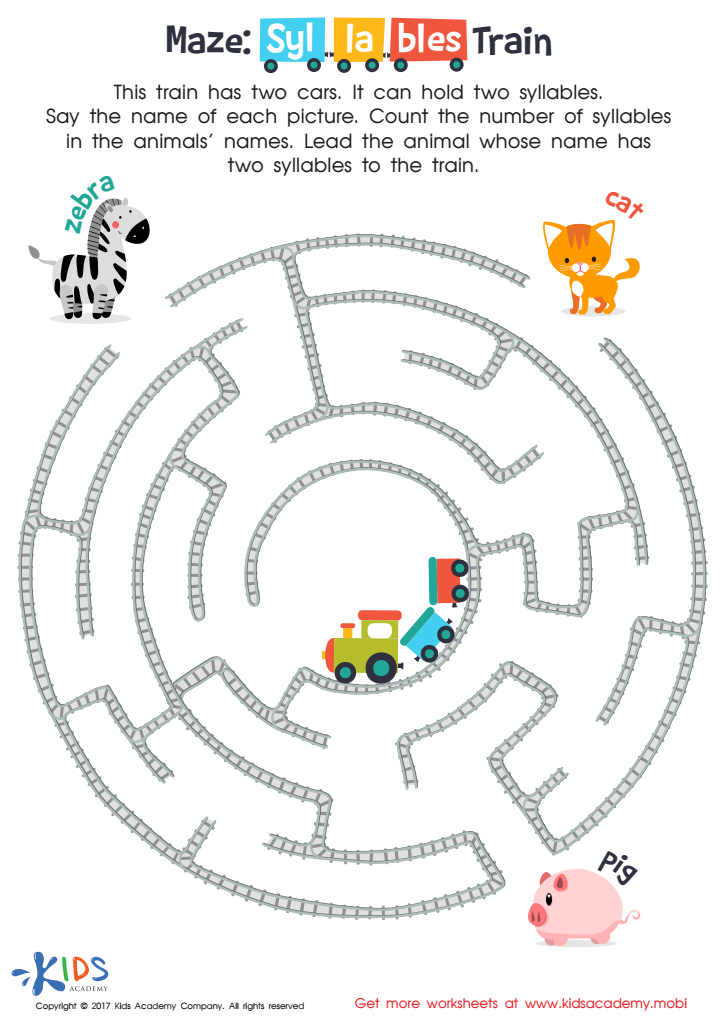
Maze Syllables Word Structure Worksheet
Can your child find their way from the start to the finish?
Can your child lead the correct animal to the train using our fun printable maze? It's puzzling from the start, with a two-syllable animal name at the end. See if they can make it to the finish! They'll have a blast!
Maze Syllables Word Structure Worksheet
Worksheet
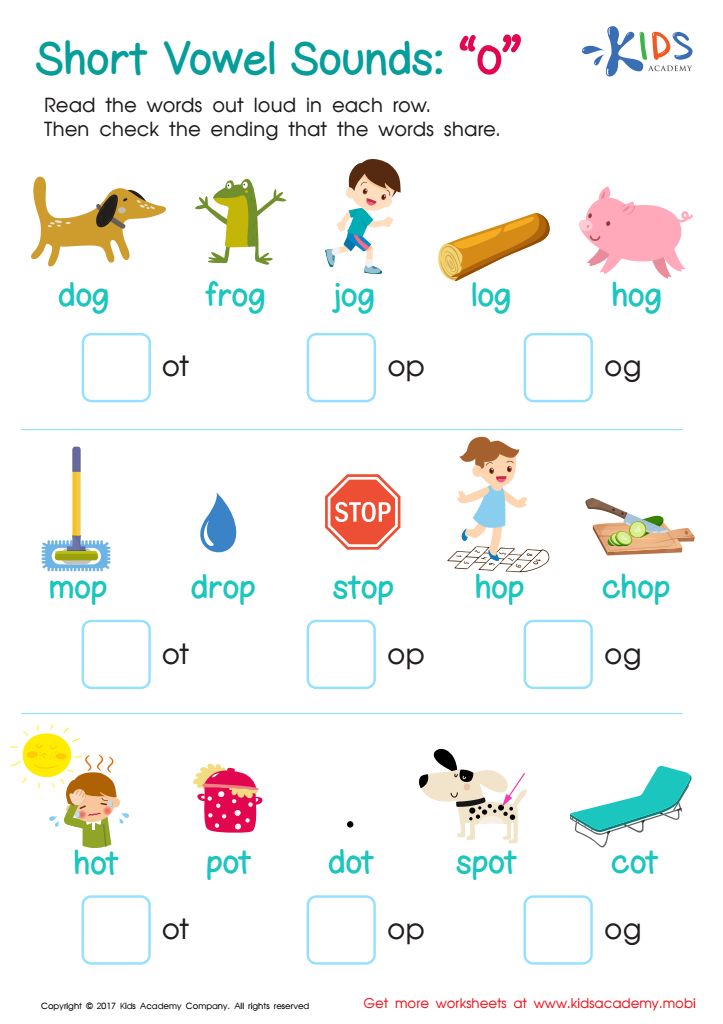
Short vowel Sounds "o" Spelling Worksheet
This worksheet will get your child thinking! Have them look at the pictures, read the words and check the ending of each. They'll learn to analyze words and vowel sounds using the Short Vowel Sounds "O" spelling worksheet.
Short vowel Sounds "o" Spelling Worksheet
Worksheet
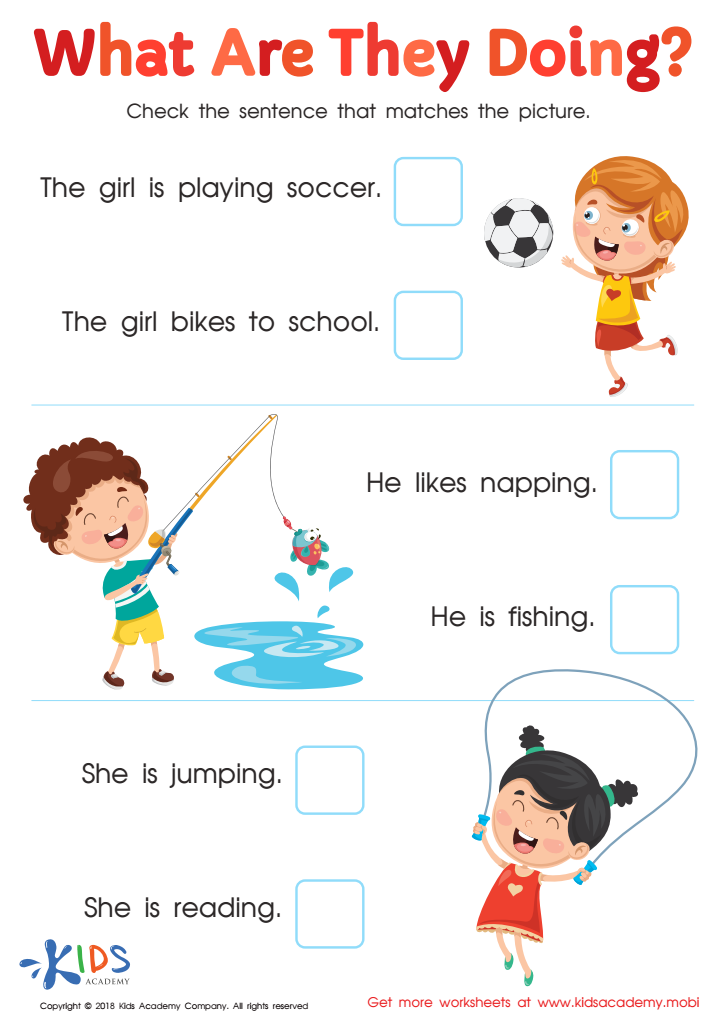
What Are They Doing? Worksheet
Look at the pdf with your child and ask which activities they like. Ask them to match the pictures with the sentences. Read the sentences aloud and help them check the right answers. Encourage them to talk about what they see in the pictures. It's a great way to help them learn.
What Are They Doing? Worksheet
Worksheet
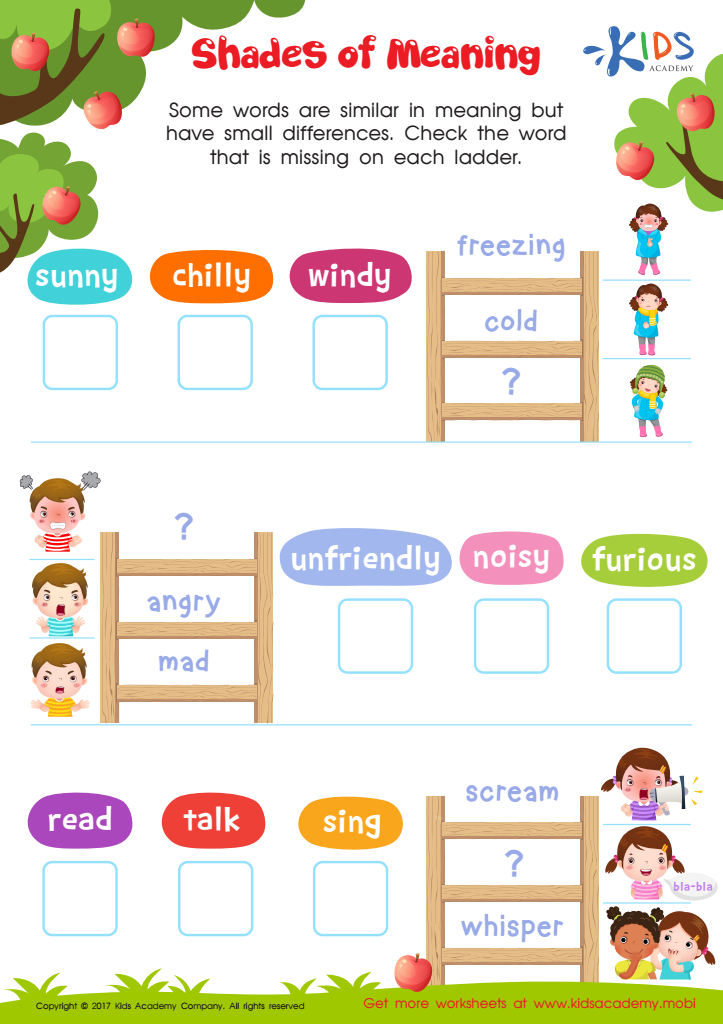
Shades of Meaning Worksheet
Your child can practice understanding similar words with this worksheet. They'll need to pick the word from the options that best fits the gap on each ladder, and learn to differentiate between words with similar meanings. For example, there are various terms for 'cold' that your child can learn. Try it out!
Shades of Meaning Worksheet
Worksheet
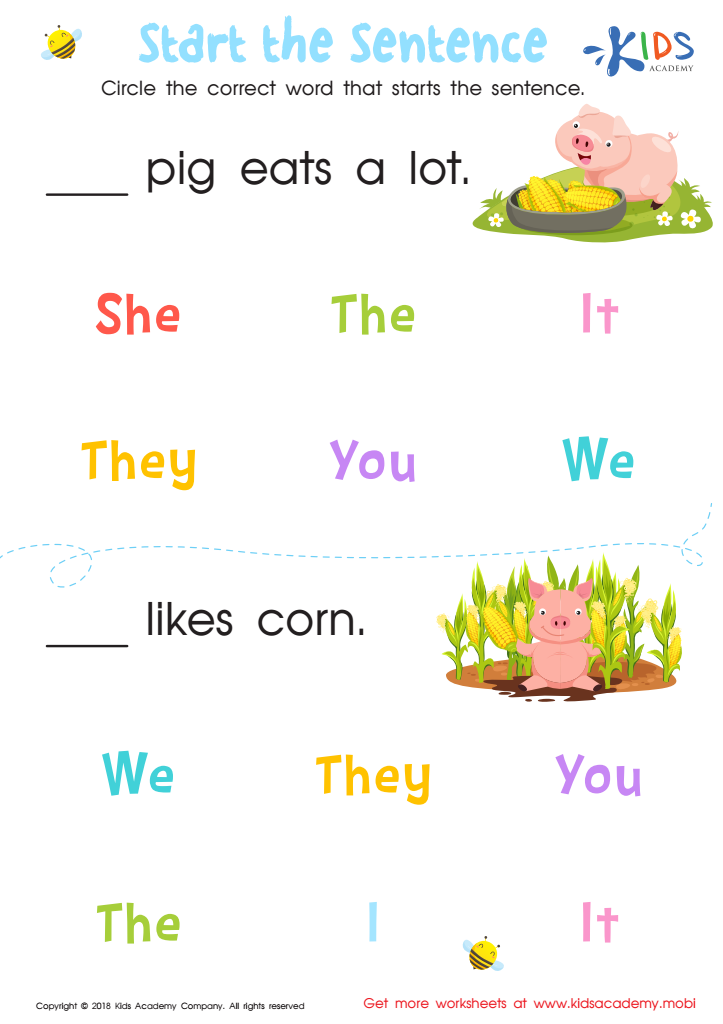
Start the Sentence Worksheet
Test your students' understanding of sentences with this easy worksheet. Ask them to read the sentences and circle the correct word that starts each. This will show how well their lessons have paid off and if they can construct short simple sentences.
Start the Sentence Worksheet
Worksheet
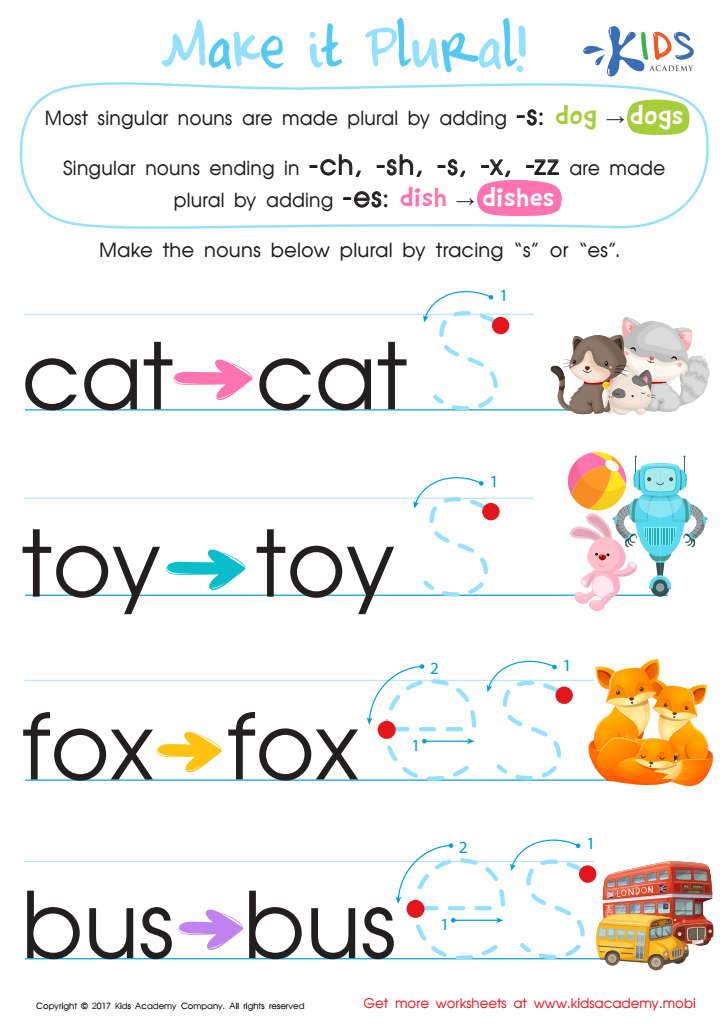
Make it Plural Worksheet
Changing words from singular to plural can be tricky as there are many word endings with special rules. Most words just need an -s, while endings like -ch, -sh, -s, -x or -zz need -es. This worksheet helps kids read words and trace the correct ending for each, making it easier to master these rules!
Make it Plural Worksheet
Worksheet
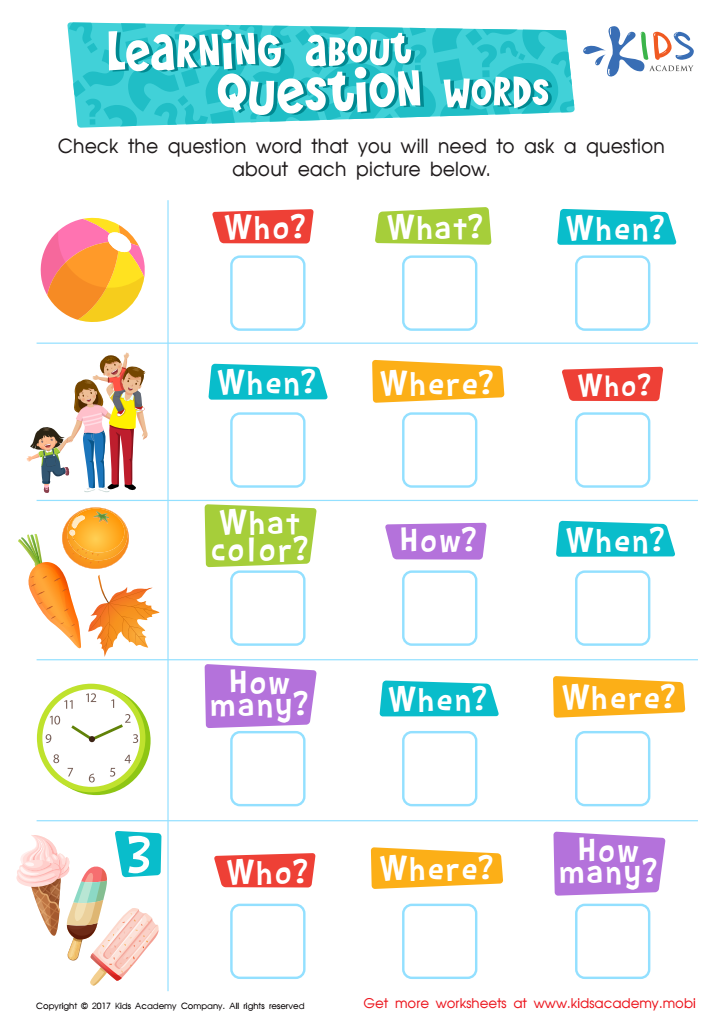
Learning about Question Words Worksheet
Learning language can be difficult, but this free printable worksheet will help! Have your child look at the picture and name it. Then help them choose the right question word to ask something about it. For example, when looking at a beach ball, you can't ask "Who?" Instead, look through the list to select the right word. It's a great way to learn language basics!
Learning about Question Words Worksheet
Worksheet
Join Kids Academy for Free
Who is primarily going to use this learning content?


.jpg)
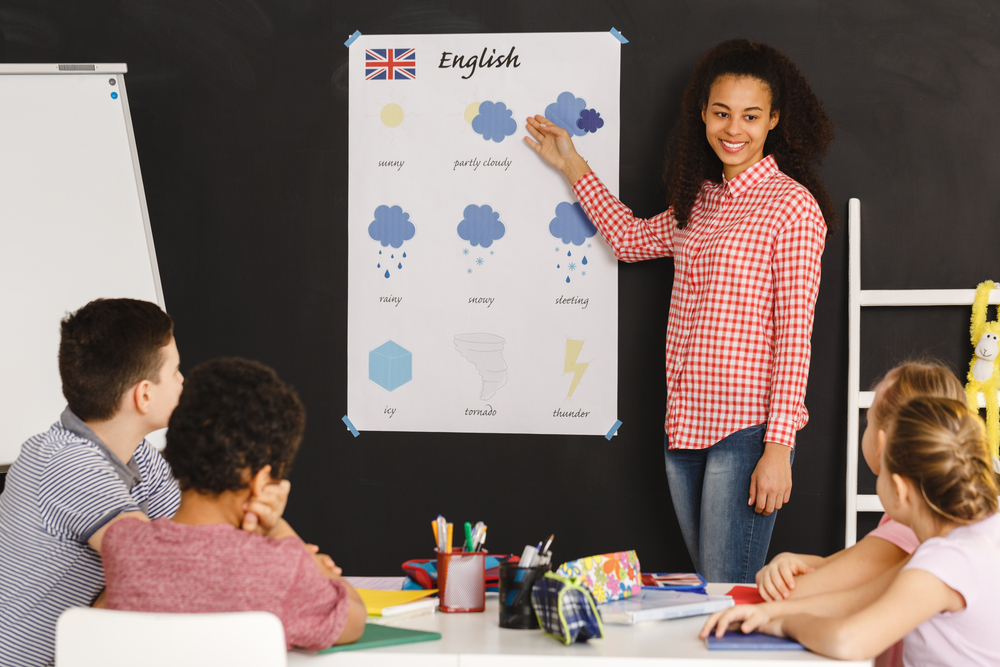



Vocabulary enhancement and grammar are critical for children aged 3 to 6 as they lay the groundwork for effective communication and academic success. During these formative years, children are rapidly developing language skills, and a strong vocabulary enables them to express their thoughts, feelings, and ideas clearly. Increased vocabulary not only aids self-expression but also boosts comprehension skills, allowing them to engage more fully with stories, conversations, and educational content.
Understanding basic grammar concepts solidifies this foundation. Grammar provides the structure that helps children assemble words into meaningful sentences, enhancing their ability to communicate effectively. It is essential for reading and writing development, and mastering these fundamentals encourages confident participation in language-rich activities.
Additionally, children with robust vocabulary and grammar skills are better equipped to navigate social interactions. They can articulate their needs, ask questions, and resolve conflicts more effectively, fostering positive relationships with peers and adults.
Ultimately, focusing on vocabulary enhancement and grammar during early childhood education prepares children for future learning experiences, promoting literacy, cognitive development, and social-emotional skills. Parents and teachers play a pivotal role in supporting this journey, making it crucial for them to prioritize these language skills in their teaching and interactions.








