
Cognitive Development Writing Worksheets for Ages 3-6
7 filtered results
Difficulty Level
Grade
Age
-
From - To
Subject
Activity
Standards
Enhance your child's cognitive development with our engaging writing worksheets designed for ages 3 to 6. These worksheets not only encourage early writing skills but also stimulate critical thinking, problem-solving, and memory enhancement. Kids will explore various fun activities that promote creativity and understanding, enabling them to connect ideas through written expression. Our resources are tailored to young learners, ensuring they enjoy every step while building a strong foundation. Ideal for use at home or in the classroom, these worksheets are perfect for parents and teachers seeking to give children a head start in their educational journey. Boost your little one's learning today!
Favorites
With answer key
Interactive
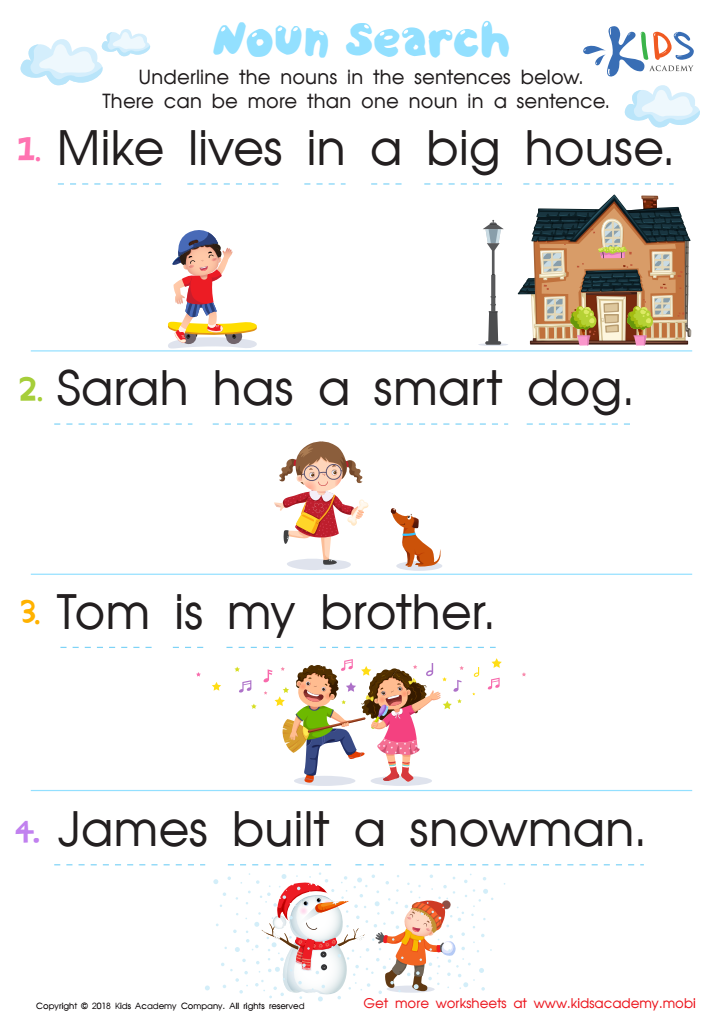
Noun Search Worksheet
To help your children learn the basics of grammar, start with nouns, verbs, adverbs and adjectives. This noun search worksheet will help your child understand the most common part of speech - the noun. Ask them to underline the nouns in each sentence. This is a great way to start learning proper grammar.
 Assign to My Students
Noun Search Worksheet
Worksheet
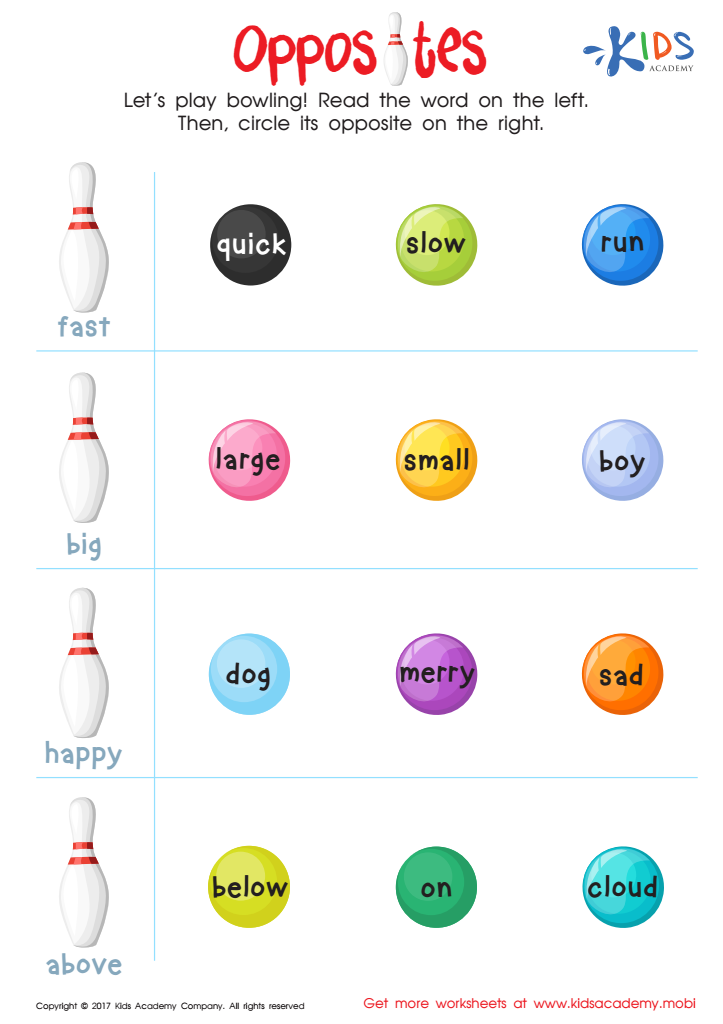
Opposites Worksheet
Have your students identify and circle the opposites of the words on the left. As a fun bowling-themed exercise, read the words and ask your kids if they know the opposites. Look through the options on the right and see if the answer is there; then, circle the correct answers.
Opposites Worksheet
Worksheet
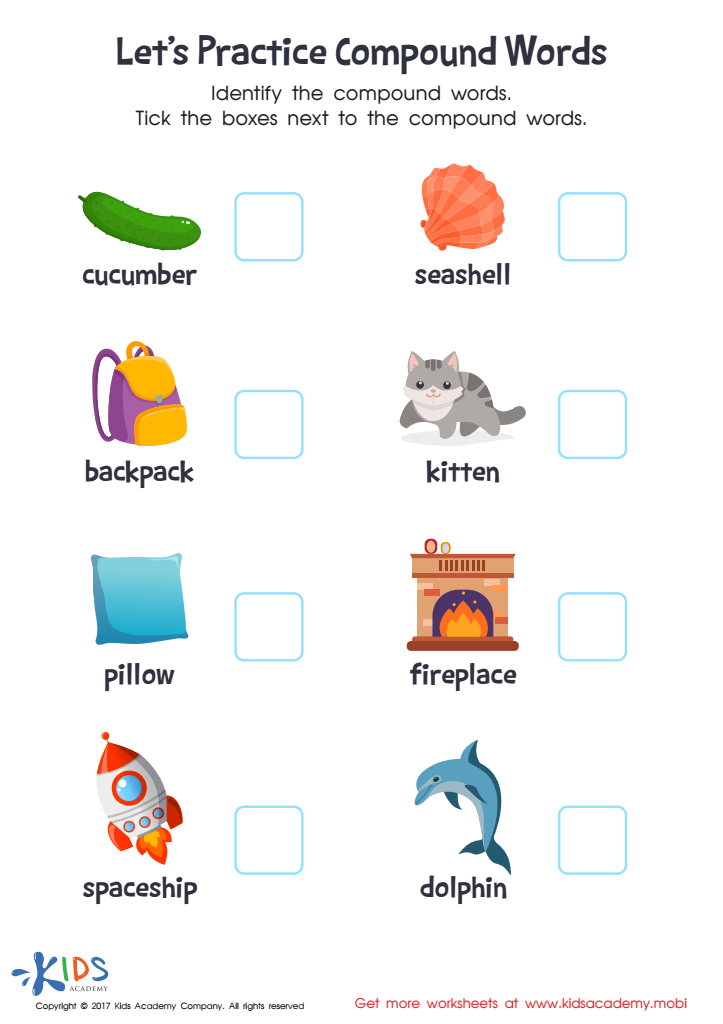
Let's Practice Compound Words Word Structure Worksheet
Test their knowledge of compound words with this fun worksheet and help them build their vocabulary. Have them say the words out loud as they work!
Let's Practice Compound Words Word Structure Worksheet
Worksheet
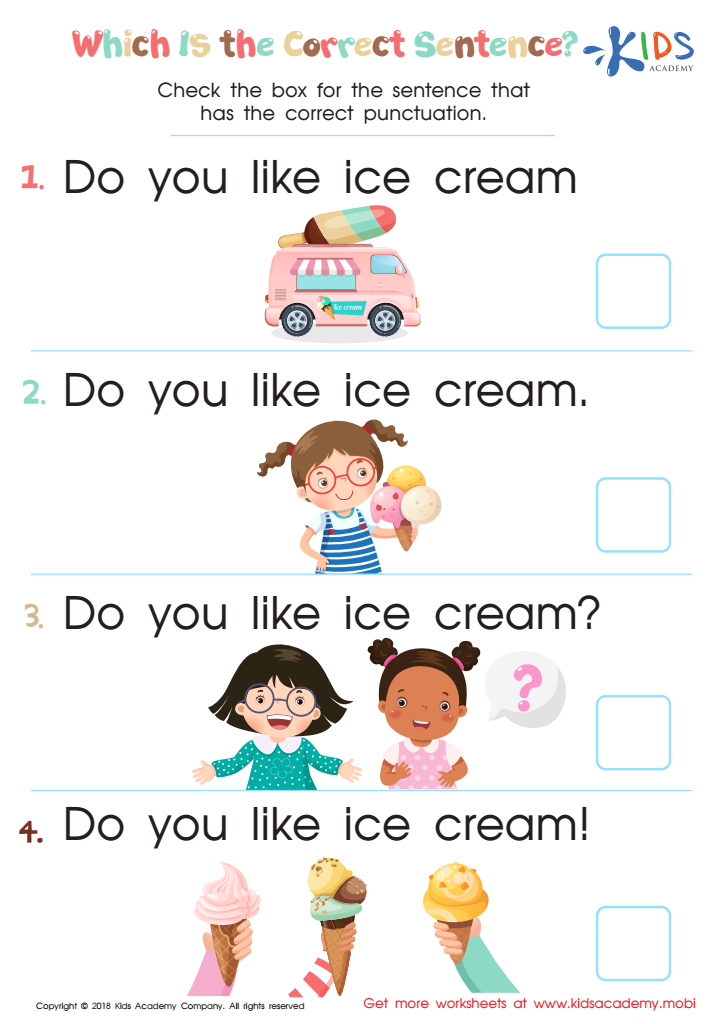
Which is the Correct Sentence? Worksheet
Punctuation is crucial in sentence formation. If your kid still doesn't grasp it, bigger hurdles await when writing sentences. Get them to read simple sentences, then ask if they know the right punctuation. Assist them in selecting the sentence that has the accurate punctuation.
Which is the Correct Sentence? Worksheet
Worksheet
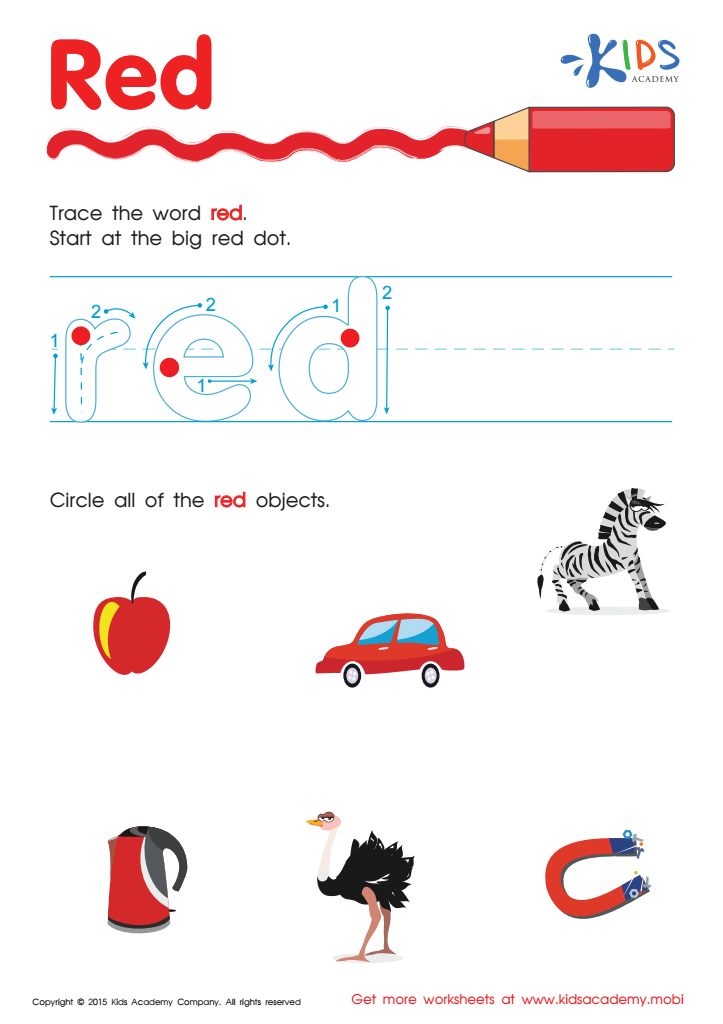
Red Tracing Color Words Printable
Trace red letter by letter, following the arrows and circling all the red objects. Look around your room and find something red. Have fun and become a handwriting master with this worksheet!
Red Tracing Color Words Printable
Worksheet
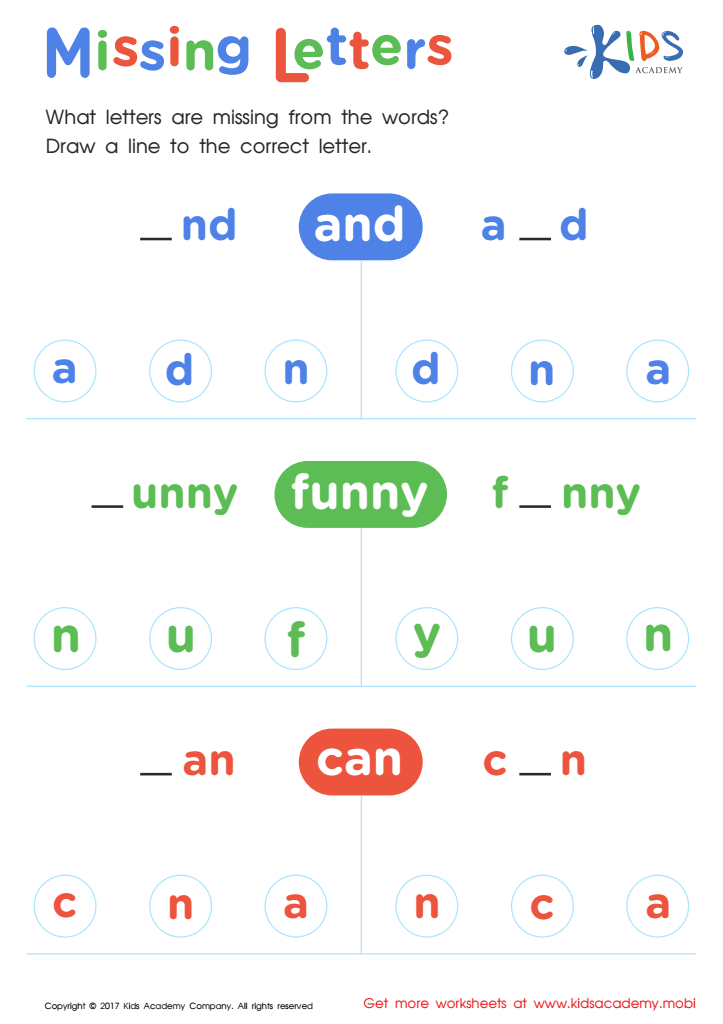
Missing Letters Worksheet
Review sight words with this fun matching worksheet from Kids Academy! Look at the sight words in the middle, read them aloud and find the missing letter on each side for each word. Draw a line to the correct letter to complete the sheet!
Missing Letters Worksheet
Worksheet
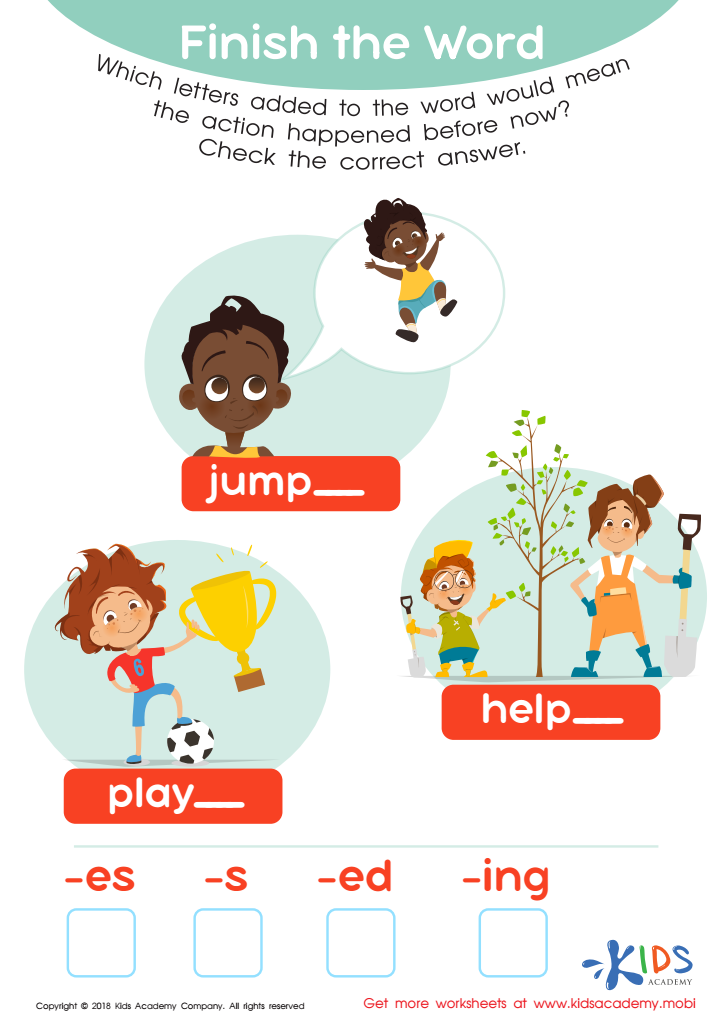
Finish the Word Worksheet
Does your kid know tenses? Listen to see if they are using words correctly. With this worksheet, your kids will learn to use the appropriate past tense forms. Ask them which letters added to words make the action past. Help them check the answers.
Finish the Word Worksheet
Worksheet
Join Kids Academy for Free
Who is primarily going to use this learning content?








Cognitive development during ages 3-6 is a crucial phase in early childhood, as it lays the foundation for critical thinking, problem-solving, and language skills. During this period, young children are naturally curious and are engaged in discovering the world around them. Supporting cognitive development through writing is essential for fostering language acquisition, enhancing imagination, and improving communication skills.
Parents and teachers play a vital role in nurturing this growth by providing opportunities for imaginative play, interactive reading, and creative expression. Writing activities not only sharpen fine motor skills but also encourage children to organize their thoughts, express feelings, and develop confidence in their ability to communicate ideas. Furthermore, engaging in writing helps to build connections in the brain that are essential for future academic success.
When children practice writing through stories, journals, or drawings, they also strengthen their ability to analyze and comprehend information. This skill becomes particularly important as they transition into more structured learning environments. Therefore, by caring about and advocating for cognitive development through writing, parents and teachers empower children to become critical thinkers, effective communicators, and lifelong learners, setting the stage for their future educational achievements.








