Sentence comprehension Writing Worksheets for Ages 3-6
3 filtered results
-
From - To
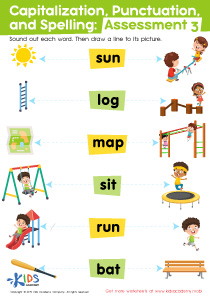
Unlock the potential of young learners with our "Sentence Comprehension Writing Worksheets for Ages 3-6." Designed to enhance early literacy skills, these fun and engaging worksheets help children understand and construct meaningful sentences. Through various colorful and interactive activities, kids will practice reading comprehension, sentence formation, and beginner writing techniques. Perfect for preschoolers and early elementary students, our worksheets foster a love of learning and build a strong foundational understanding of language. Ideal for both classroom and at-home use, these printables make early literacy practice enjoyable and effective for young minds. Transform learning into an adventure!
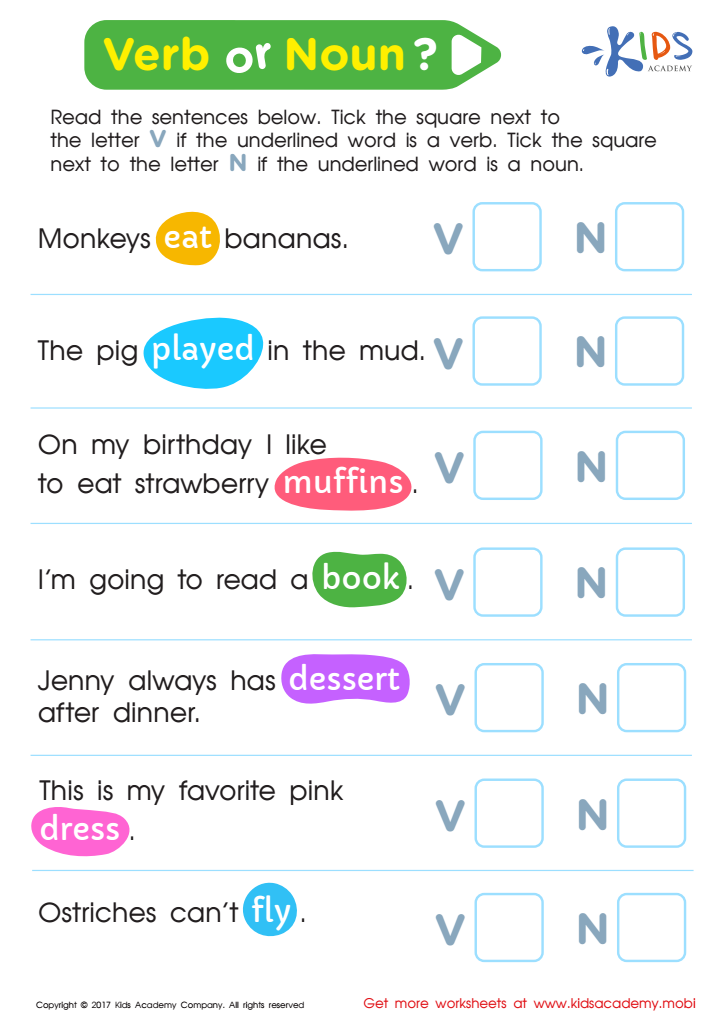
Verb or Noun Worksheet
 Assign to My Students
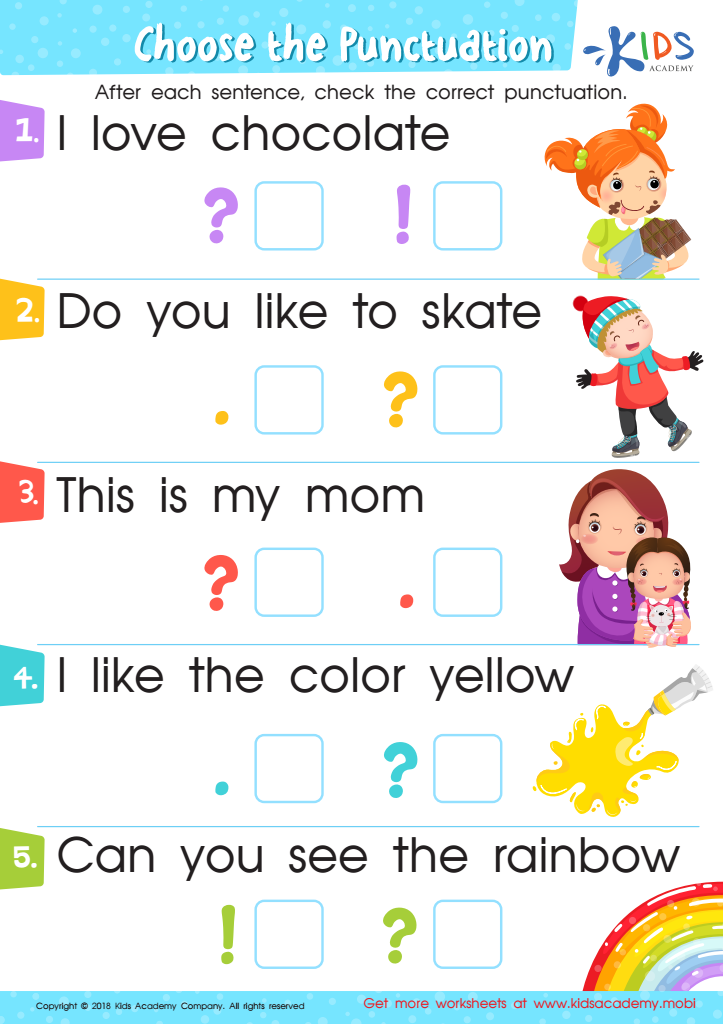
Choose the Punctuation: Assessment Worksheet
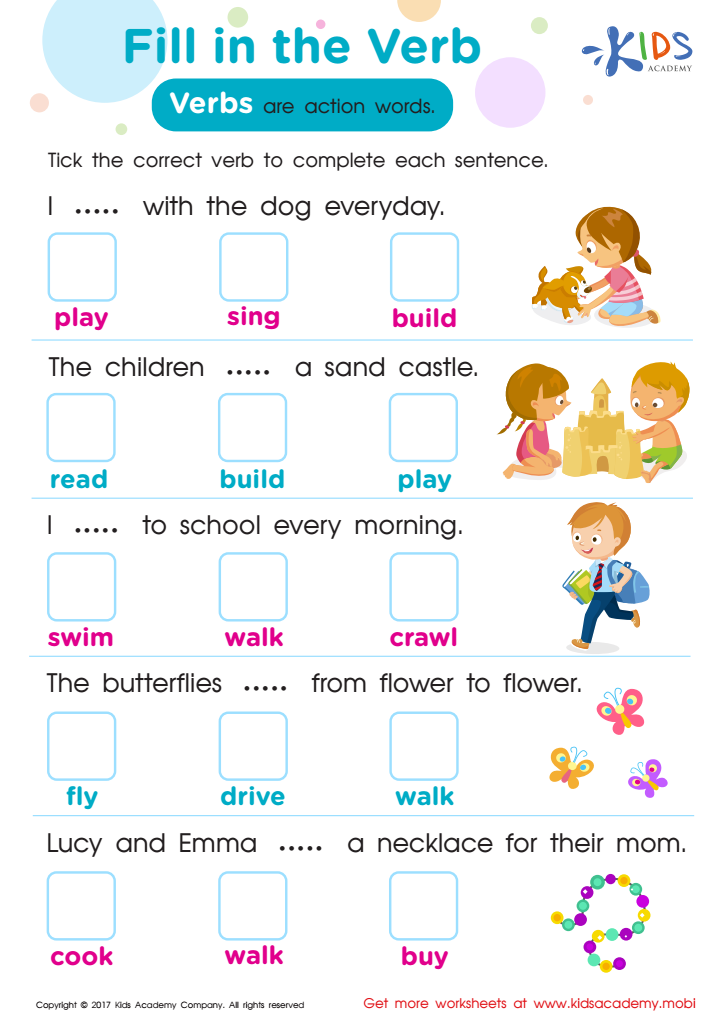
Fill in the Verb Printable







Sentence comprehension and writing are foundational skills that are crucial for young children's overall academic and personal development. For children between the ages of 3-6, these skills form the building blocks of effective communication and literacy, which are essential for future success in school and life.
First, sentence comprehension is key to understanding spoken language and written texts. When children can grasp what sentences mean, they are better equipped to follow directions, understand stories, and engage in meaningful conversations. This understanding also fosters critical thinking and helps them make sense of the world around them.
Writing, on the other hand, gives children a means to express their thoughts, feelings, and imagination. The practice of forming sentences reinforces their comprehension skills, as writing requires them to think about structure and coherence. This dual focus on comprehension and expression nurtures cognitive development, including memory, attention, and problem-solving skills.
Moreover, early development of these skills is linked to later academic performance. Proficiency in reading and writing by the end of kindergarten is a predictor of reading proficiency in middle school, which in turn is linked to higher academic achievements.
By focusing on sentence comprehension and writing during these formative years, parents and teachers help set a strong foundation for lifelong learning and effective communication.