Filters

7 filtered results

Clear all filters
Favorites
With answer key
Interactive

7 filtered results

Difficulty Level

Grade


Enhance your child's reading comprehension skills with our engaging Punctuation Worksheets designed for ages 3-6! These fun and interactive worksheets introduce young learners to essential punctuation marks while promoting understanding of sentence structure and meaning. Our carefully crafted activities encourage children to identify and use punctuation effectively, strengthening their reading abilities. With colorful illustrations and simple instructions, each worksheet offers an enjoyable learning experience that keeps kids motivated. Support your child's literacy journey and lay a strong foundation for future reading success. Explore our collection of Punctuation Worksheets today and watch your little reader flourish!

Check out this FREE Trial Lesson on Punctuation for age 3-6!

Recognize and Name End Punctuation

Favorites
With answer key
Interactive
  • 3-6
  • Reading comprehension
  • Punctuation
Word Spacing Worksheet

Word Spacing Worksheet

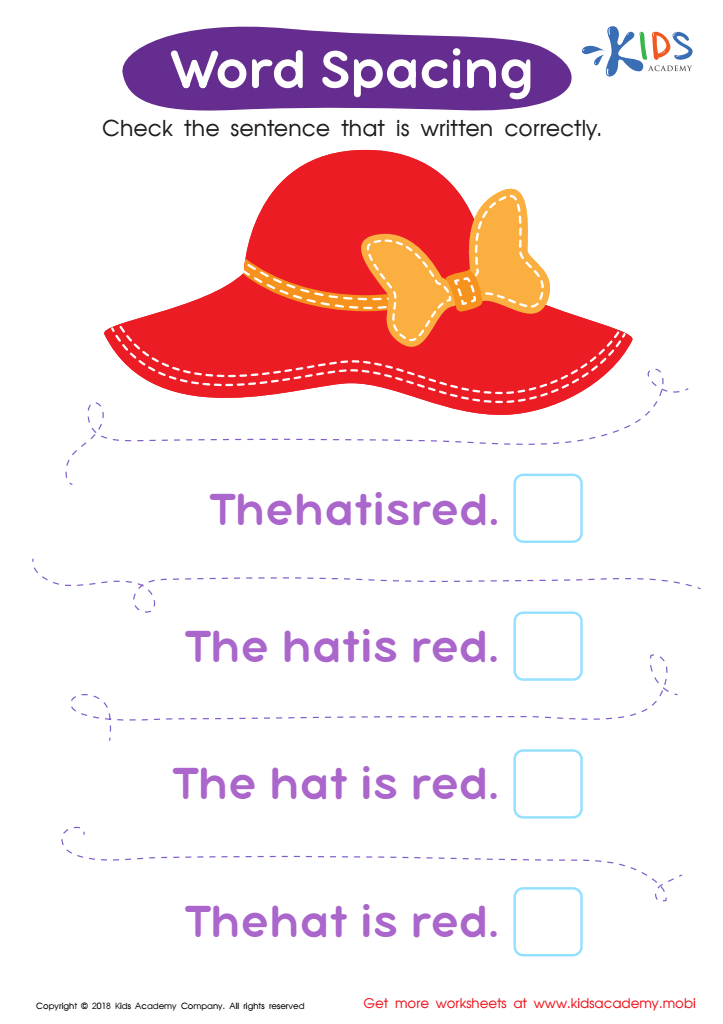
Can your child read and write simple sentences? Test their skills with this easy worksheet. Point to the four sentences under the picture; each conveying the same message but with different word spacing. Ask your child to select the sentence with proper spacing.
Word Spacing Worksheet
Worksheet
Which Punctuation Mark Worksheet Preview

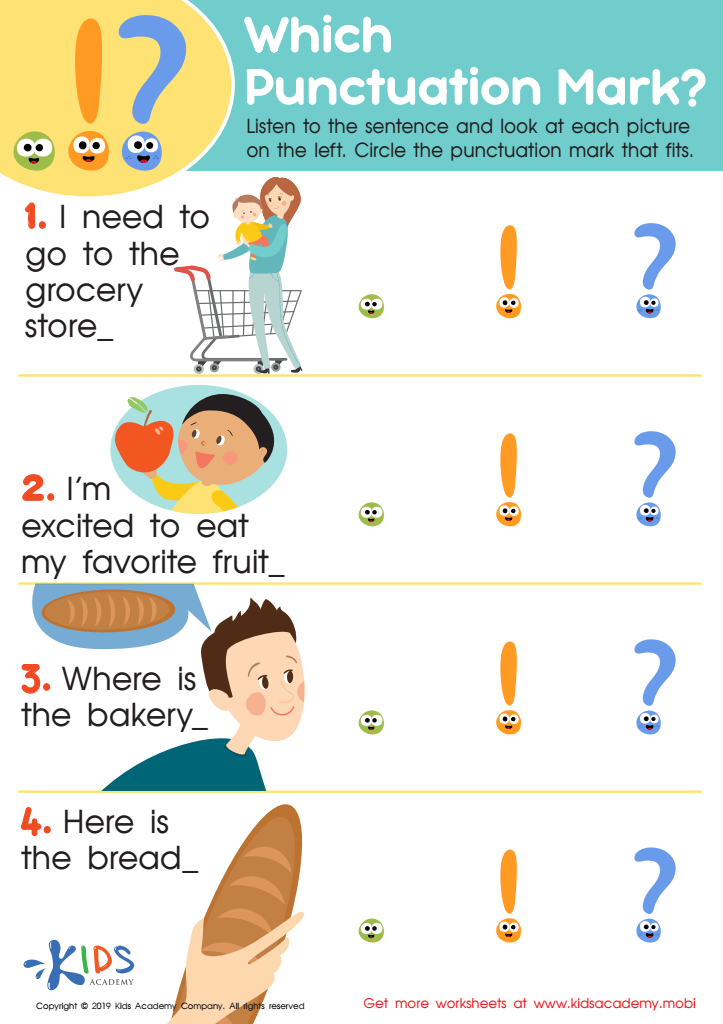
Which Punctuation Mark Worksheet

Punctuation marks are essential for expressing what we say. This worksheet asks your kindergarten student to circle the correct punctuation mark for each sentence. Read each sentence aloud and help them identify the expression needed. A picture accompanies each sentence. Enjoy! (79 words)
Which Punctuation Mark Worksheet
Worksheet
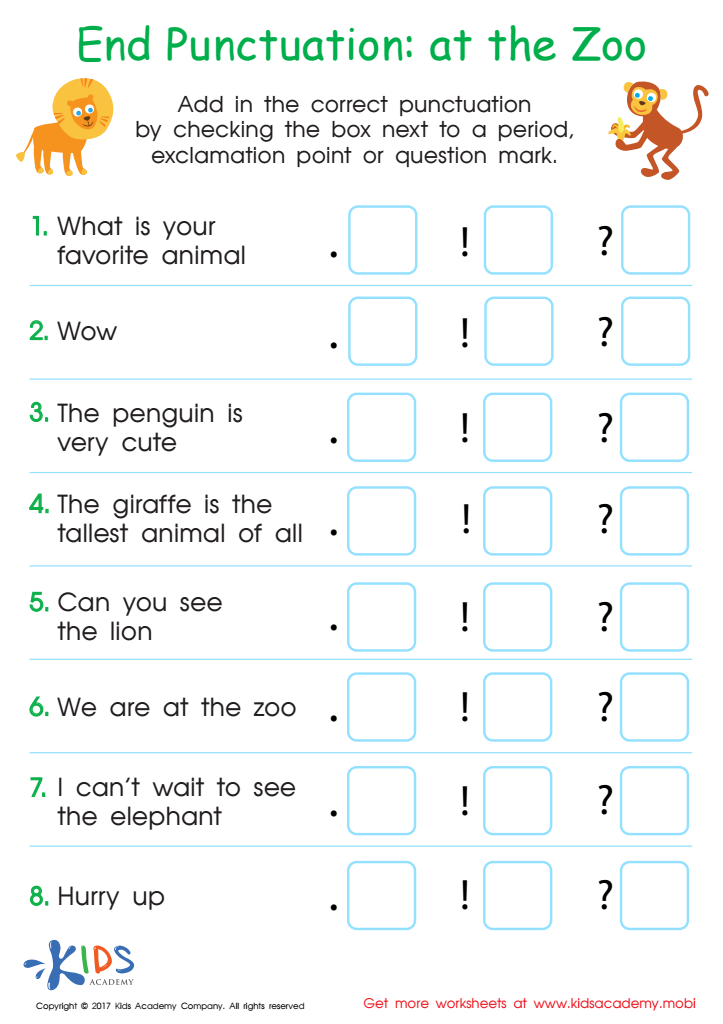
End punctuation worksheet: At the Zoo

End Punctuation: At the Zoo Worksheet
Let your kid hone their sentence and punctuation skills with this cute At the Zoo worksheet. Read it out loud to provide guidance if needed, and help your child find the right punctuation mark for each sentence.
End Punctuation: At the Zoo Worksheet
Worksheet
Which is the Correct Sentence? Worksheet

Which is the Correct Sentence? Worksheet

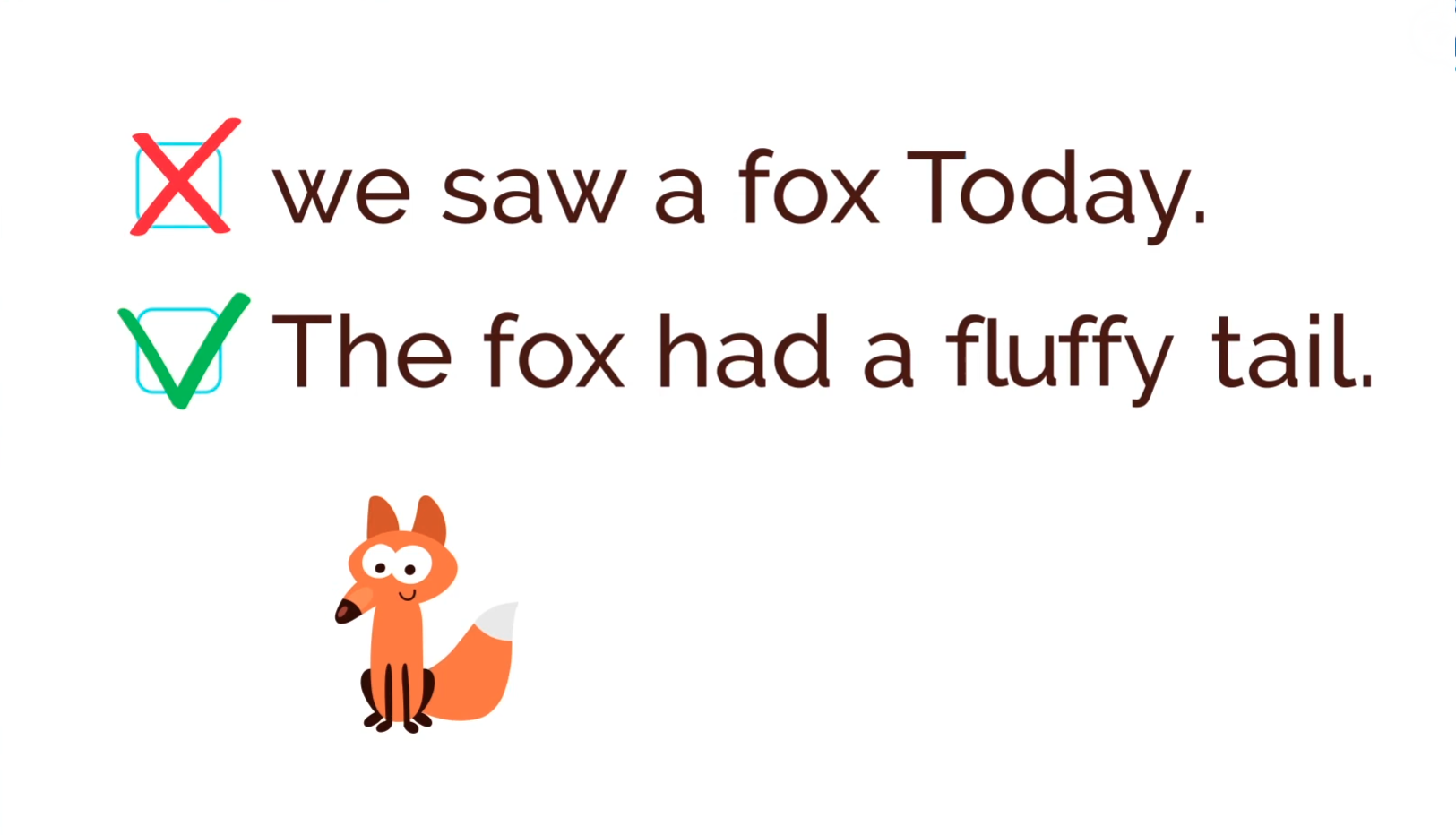
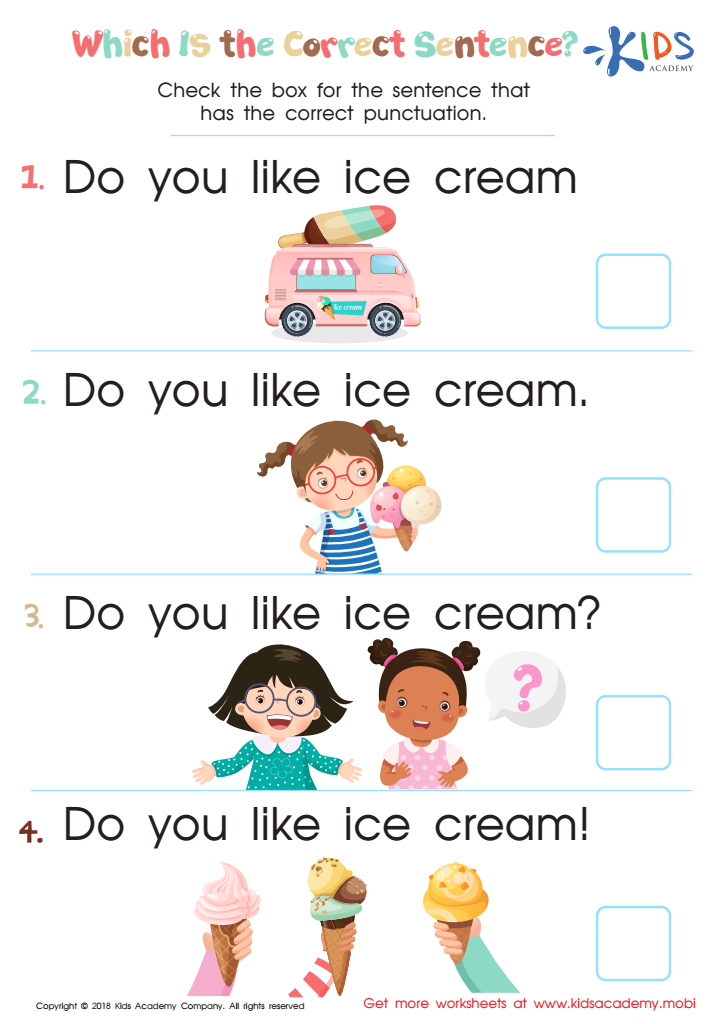
Punctuation is crucial in sentence formation. If your kid still doesn't grasp it, bigger hurdles await when writing sentences. Get them to read simple sentences, then ask if they know the right punctuation. Assist them in selecting the sentence that has the accurate punctuation.
Which is the Correct Sentence? Worksheet
Worksheet
What is the First Word? Worksheet

What is the First Word? Worksheet

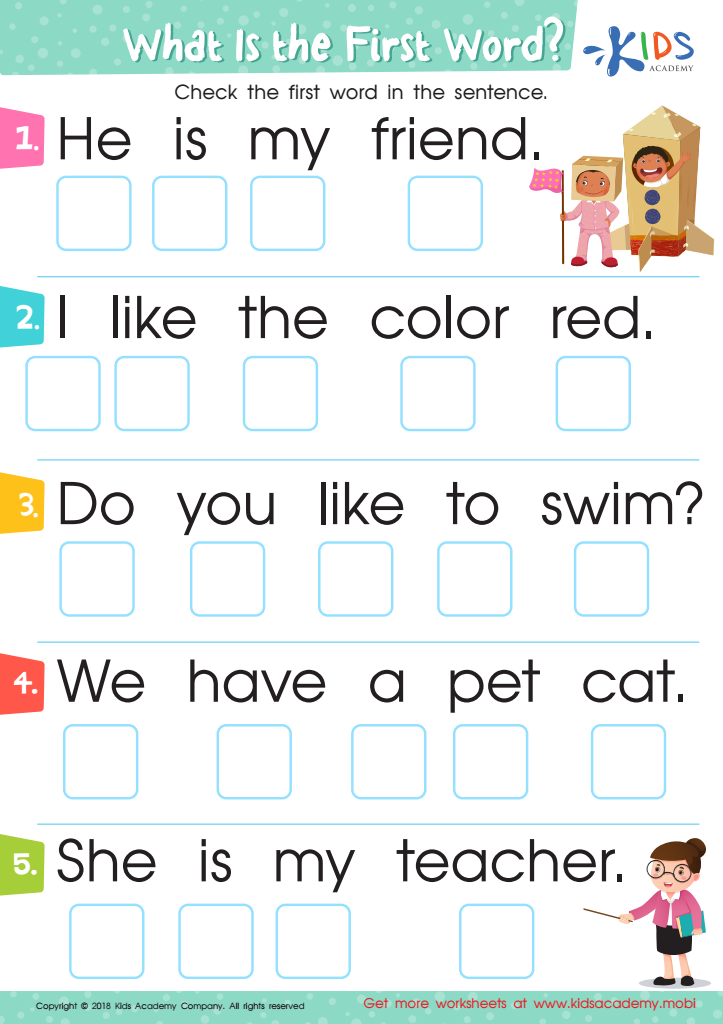
Help your students test their sentence-reading skills with this printout! After teaching the alphabet, have them identify and write the first word in each sentence. With this exercise, they'll gain reading proficiency and be better prepared to write their own sentences.
What is the First Word? Worksheet
Worksheet
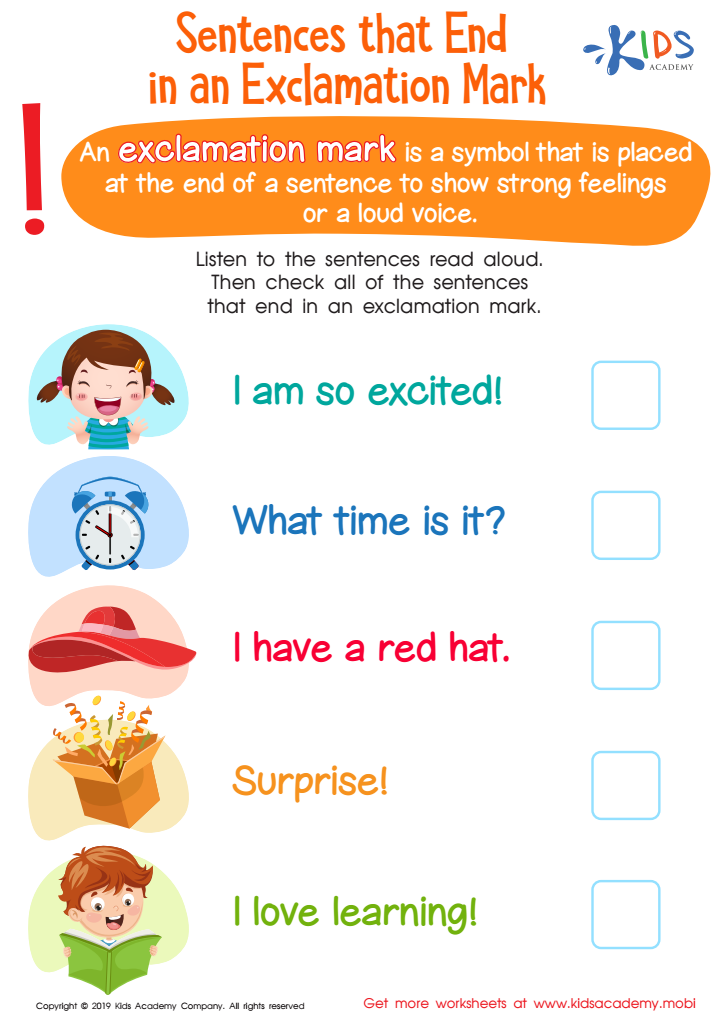
Sentences That End in an Exclamation Mark Worksheet

Sentences That End in an Exclamation Mark Worksheet

This worksheet is a great way to brush up kids' punctuation skills. Period, comma, question mark and exclamation mark are the first four punctuation marks they should learn. Exclamation marks show strong emotion or a noise. Use this printout to teach and test kids' understanding of exclamation marks.
Sentences That End in an Exclamation Mark Worksheet
Worksheet
Finish the Sentence Worksheet


Finish the Sentence Worksheet
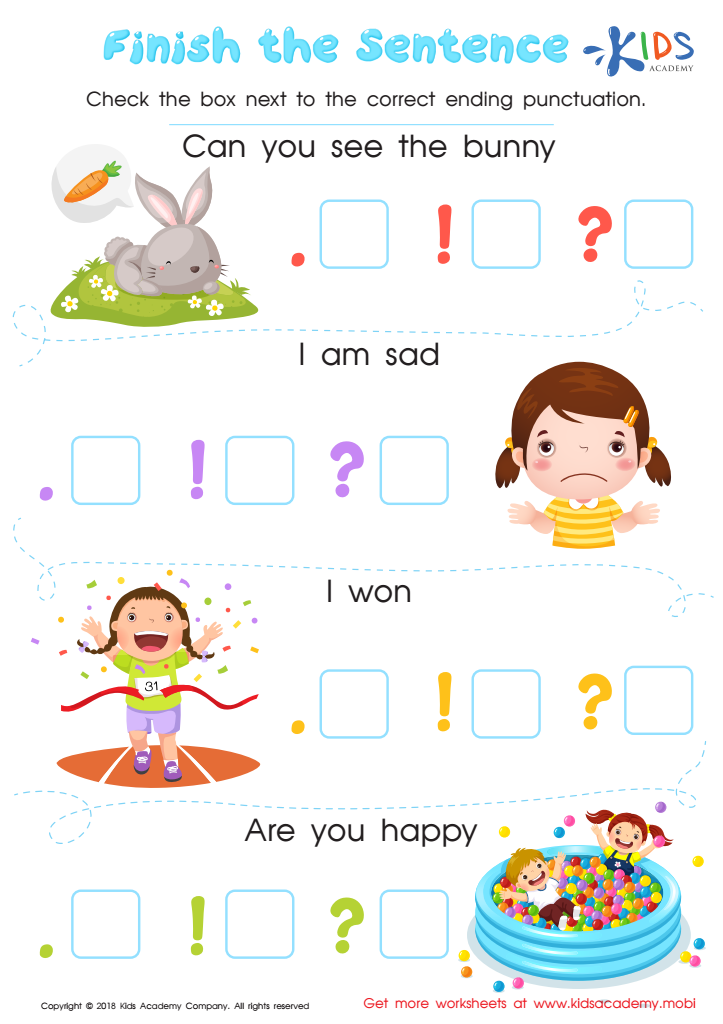
If your students have difficulty with punctuation, have them read sentences aloud and check the box next to the correct ending punctuation with this simple worksheet. Punctuation signals the tone and meaning of sentences. It helps students understand what is being communicated.
Finish the Sentence Worksheet
Worksheet


Reading comprehension and punctuation are essential components in the early literacy development of children aged 3-6. During this critical developmental stage, children begin to build a foundation for language skills that they will carry throughout their lives. Strong reading comprehension allows young learners to understand and interpret stories, fostering a love for reading and enhancing their cognitive skills. By engaging with texts, children learn to make connections, predicting outcomes and imagining new scenarios.

Punctuation, on the other hand, is a key element of clear writing and storytelling. Even though early readers may not decode punctuation marks initially, understanding their purpose helps children grasp the rhythm and flow of language. When teachers and parents emphasize punctuation in shared reading experiences, children become more aware of how it shapes meaning and emotion in texts. This awareness enhances listening and speaking skills, as children start to mimic the expressive reading that punctuation encourages.

Ultimately, prioritizing reading comprehension and punctuation lays the groundwork for effective communication skills, critical thinking, and academic success. Parents and teachers who focus on these aspects are nurturing not just proficient readers but also confident communicators who are curious about the world around them.