
Sight word recognition Tracing Words Worksheets for Ages 3-6
3 filtered results
Difficulty Level
Grade
Age
-
From - To
Subject
Activity
Standards
Transform your child’s early reading journey with our Sight Word Recognition Tracing Words Worksheets designed for ages 3-6. These engaging, easy-to-follow worksheets leverage the power of repetition and fine motor skill development to enhance sight word recognition. Through tracing, children familiarize themselves with common words, boosting confidence and laying a solid foundation for reading fluency. Each worksheet features simple, consistent tasks that gradually build budding readers' proficiency. Perfect for at-home learning or classroom use, these resources are a fun, interactive way to support your child’s education. Start nurturing your child's love for reading today!
Favorites
With answer key
Interactive
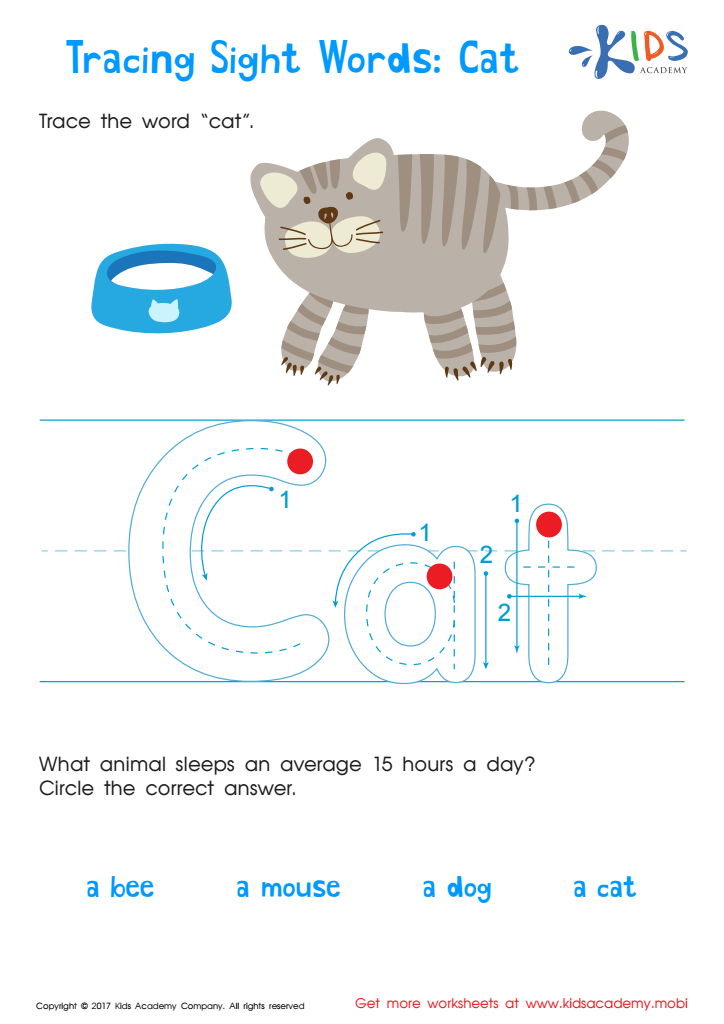
Cat Printable Sight Words Worksheet
Encourage your child's literacy with this fun sight words worksheet: cat PDF! It helps build a solid foundation for reading, featuring activities such as reading and tracing the word cat, and finding it amongst other sight words. With its cute cat, Kids Academy makes learning to read a delight!
 Assign to My Students
Cat Printable Sight Words Worksheet
Worksheet
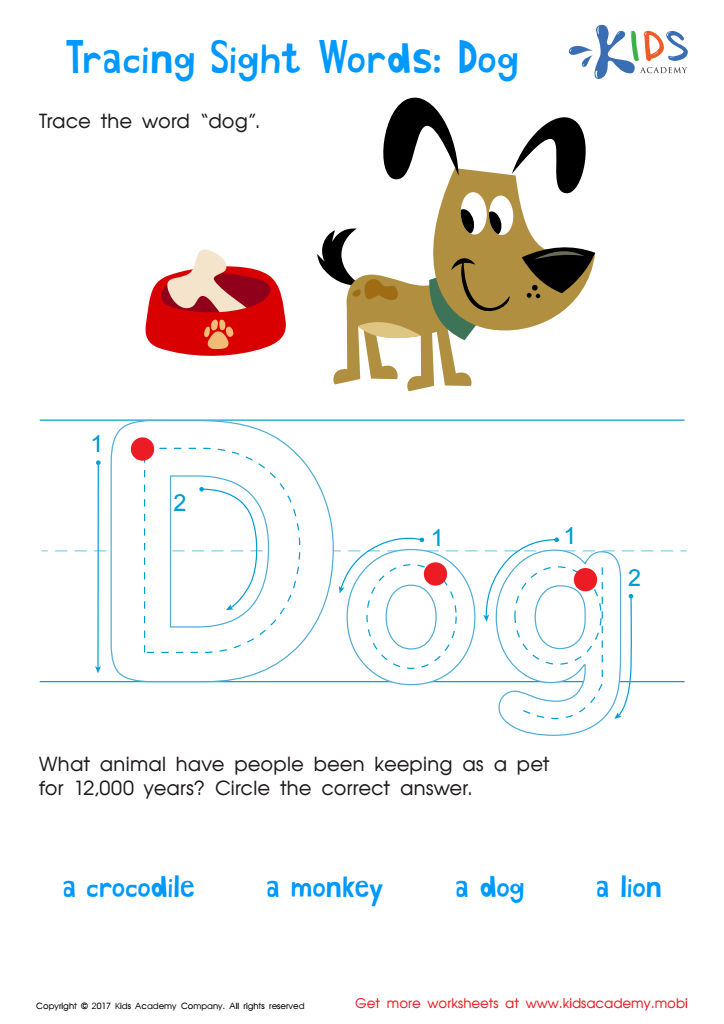
Dog Worksheet Sight Words Worksheet
Get your kids excited to read with our dog-themed sight words worksheet!
Excite your child to read with our sight words worksheet: dog edition! Featuring a lovable dog character to put a smile on any kid's face, this worksheet helps kids practice reading and writing the word "dog". Build a library of words they can read quickly and promote increasing literacy skills with early fluency! Get them ready for reading with our dog-themed sight words worksheet!
Dog Worksheet Sight Words Worksheet
Worksheet
Join Kids Academy for Free
Who is primarily going to use this learning content?







Parents and teachers should prioritize sight word recognition tracing activities for children ages 3 to 6 because it lays a critical foundation for literacy development. In this formative period, children are at the peak of their ability to absorb new information. Sight words are common words that children encounter frequently in text but might not be easily decodable using phonics alone. By recognizing these words on sight, children can read more fluently and with greater comprehension.
Tracing words combines multiple modes of learning: visual, kinesthetic, and auditory. Visual learning occurs as children see the word, kinesthetic learning happens as they trace its shape, and auditory learning can be integrated through verbal repetition. This multisensory approach enhances memory retention and decoding speed, making reading a less laborious process.
Early mastery of sight words boosts children’s confidence and motivation, leading to a more positive attitude toward reading. It also reduces cognitive load, allowing children to focus on understanding the text instead of struggling with individual words. Furthermore, early reading success is closely linked to academic performance in later years, reducing the risk of falling behind. Thus, engaging children in sight word recognition tracing is a crucial step towards setting them on the path to lifelong literacy and learning.








