
Spelling practice Tracing Words Worksheets for Ages 3-6
8 filtered results
Difficulty Level
Grade
Age
-
From - To
Subject
Activity
Standards
Our Spelling Practice Tracing Words Worksheets are perfect for children aged 3-6, making early literacy engaging and fun! These beautifully designed worksheets help young learners develop fine motor skills while promoting early reading and writing. By tracing and spelling commonly used words, kids comprehend the basics of word formation and letter recognition. These activities not only build a strong foundation for spelling but also boost confidence as children accomplish each task. Ideal for parents and teachers alike, our worksheets offer an enjoyable way to reinforce learning at home or in the classroom. Inspire your little ones today with our interactive tracing words worksheets!
Favorites
With answer key
Interactive
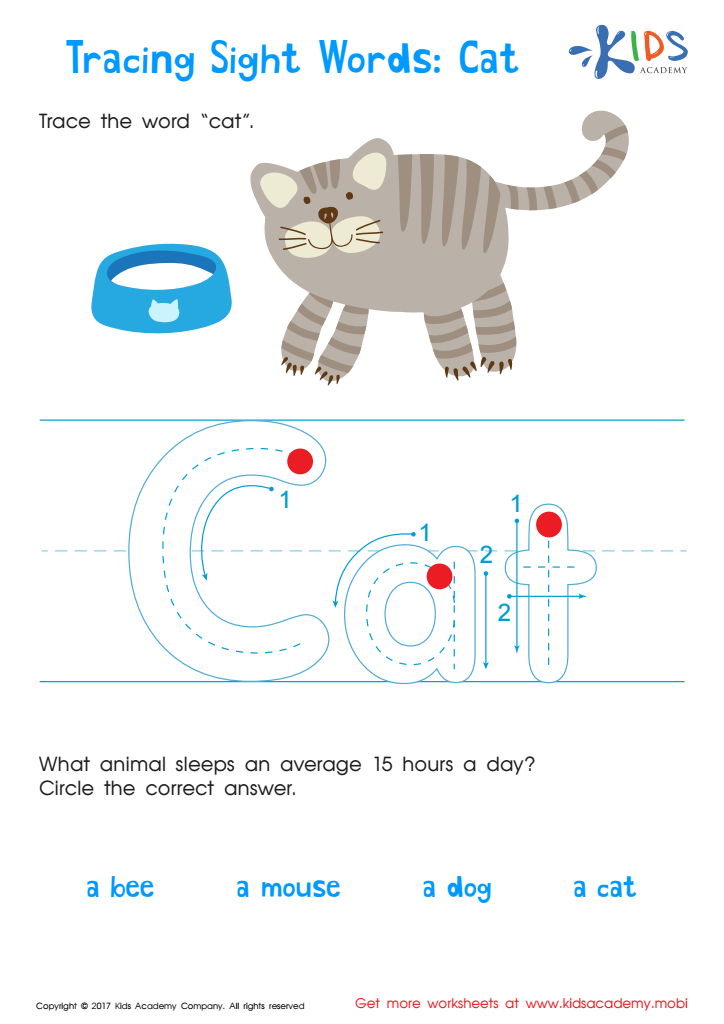
Cat Printable Sight Words Worksheet
Encourage your child's literacy with this fun sight words worksheet: cat PDF! It helps build a solid foundation for reading, featuring activities such as reading and tracing the word cat, and finding it amongst other sight words. With its cute cat, Kids Academy makes learning to read a delight!
 Assign to My Students
Cat Printable Sight Words Worksheet
Worksheet
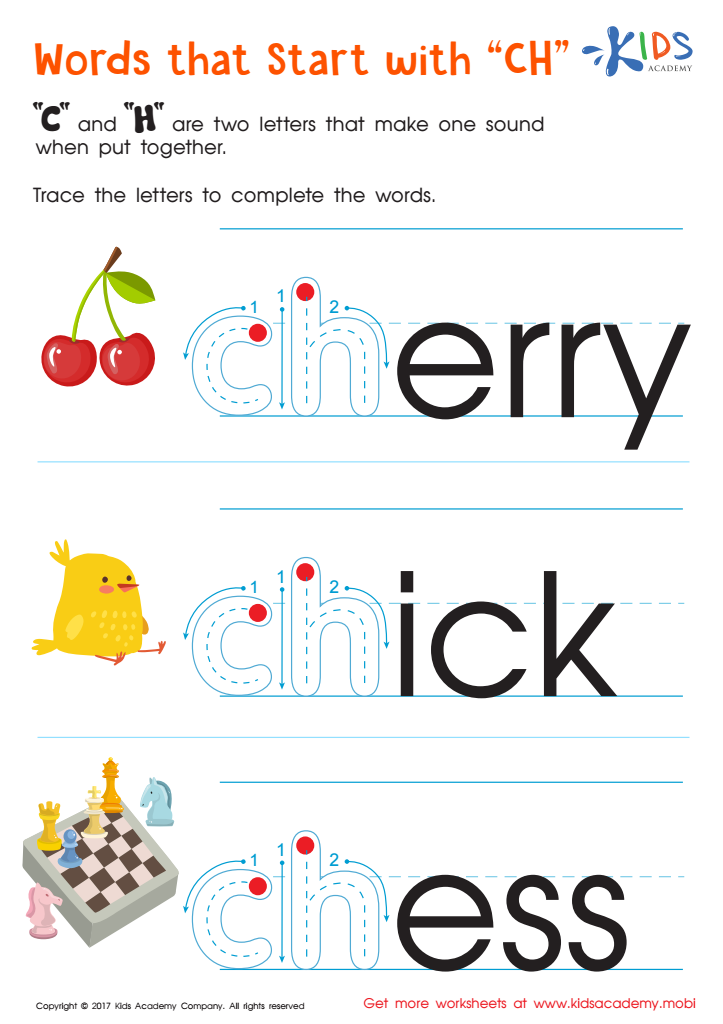
Words That Start with "ch" Spelling Worksheet
With Kids Academy, learning phonics and spelling has never been easier.
Kids Academy's "ch" tracing worksheet makes it easy for your little one to learn phonics and spelling. It features cute, brightly colored images to help them trace familiar words, making learning fun and enjoyable.
Words That Start with "ch" Spelling Worksheet
Worksheet
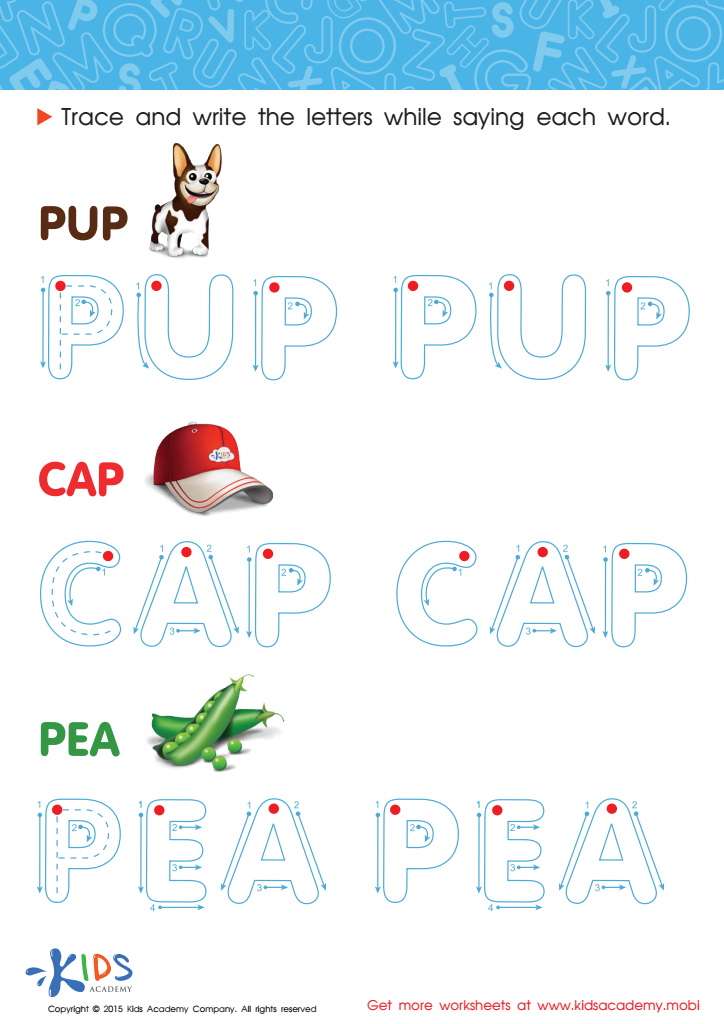
A Pup, a Cap and a Pea Spelling Worksheet
Practice tracing and writing with three new words. Carefully trace each word and try to remember it, then move on to the next one. Head to Kids Academy for more tracing worksheets!
Get your pencils ready! Let's practice tracing and writing three new words on Kids Academy's spelling worksheets. Carefully trace each line and remember the words. Pick more great worksheets on their website to continue practicing. Have fun!
A Pup, a Cap and a Pea Spelling Worksheet
Worksheet
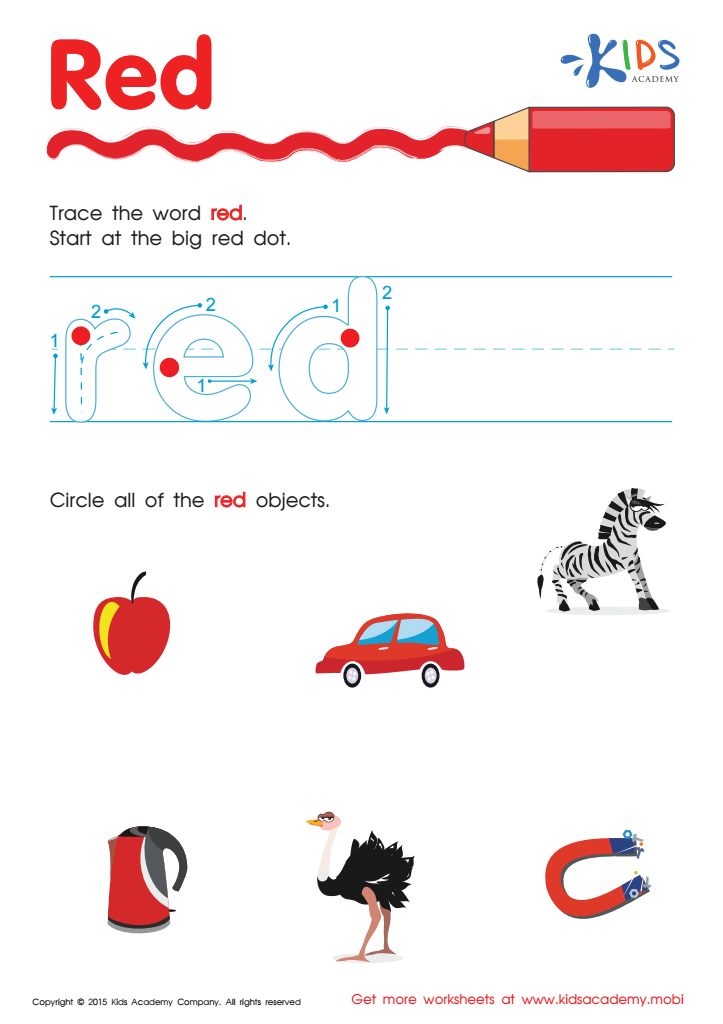
Red Tracing Color Words Printable
Trace red letter by letter, following the arrows and circling all the red objects. Look around your room and find something red. Have fun and become a handwriting master with this worksheet!
Red Tracing Color Words Printable
Worksheet
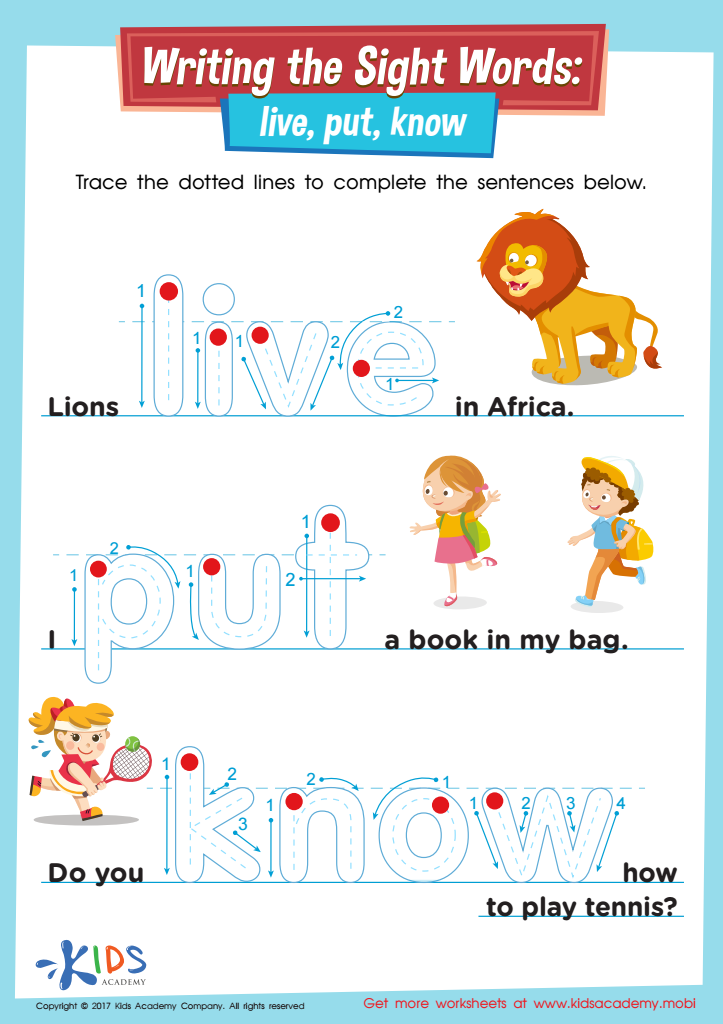
Live, Put, Know Printable Sight Words Worksheet
It encourages memorization and builds their mental library.
Live, Put, Know Printable Sight Words Worksheet
Worksheet
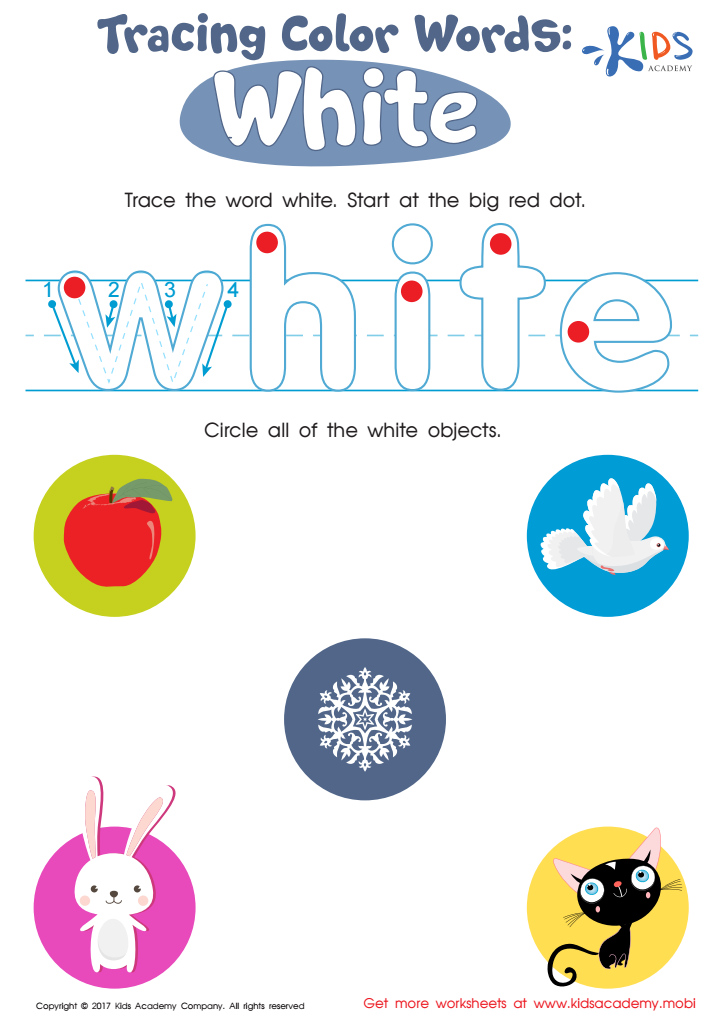
White Tracing Color Words Worksheet
This fun worksheet helps children learn color words quickly. They trace the letters and circle pictures of the color. This helps them practice reading and identifying objects, and they can do it without needing to read phonetically. Download it now and watch your child's skill grow!
White Tracing Color Words Worksheet
Worksheet
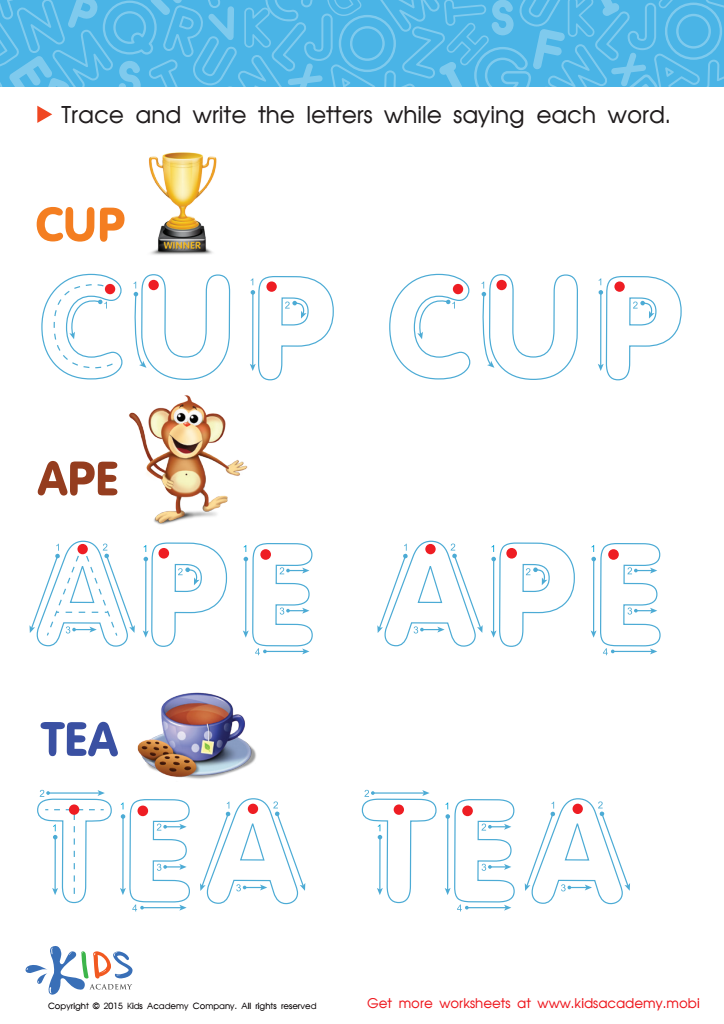
A Cup, an Ape and Tea Spelling Worksheet
Check out Kids Academy's new English vocab worksheet! You'll find three lines with three words each. Practice your pronunciation and writing by writing them one by one. We have more free spelling word worksheets on our website, so download and practice today!
A Cup, an Ape and Tea Spelling Worksheet
Worksheet
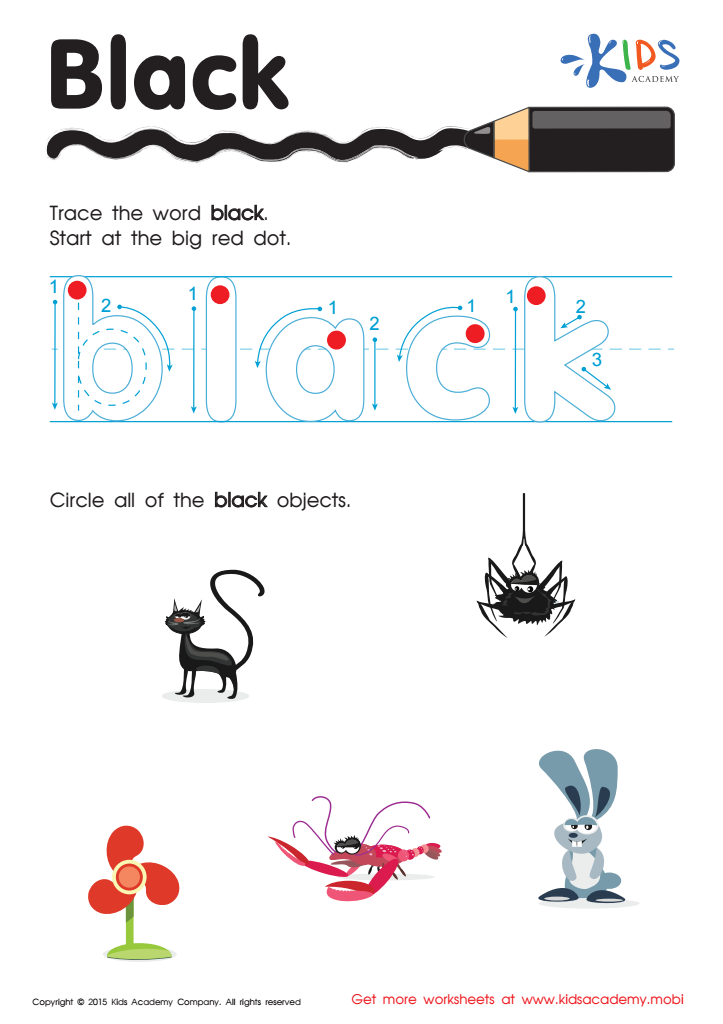
Black Tracing Color Words Printable
Tracing is essential for kids to learn good handwriting and boost their fine motor skills. This handwriting worksheet lets kids trace the word "black" letter by letter using a black crayon and spot all the black items. With this free printable, they'll have fun while writing! For more practice, check out the link.
Black Tracing Color Words Printable
Worksheet
Join Kids Academy for Free
Who is primarily going to use this learning content?








Spelling practice through tracing words is fundamentally important for children aged 3-6 as it lays the groundwork for essential literacy skills. During these formative years, young brains are highly receptive to learning and absorbing new information. Engaging in tracing activities helps children recognize letters and words, reinforcing their alphabet knowledge in a hands-on and interactive manner.
Tracing words aids in fine motor skill development as children use muscles in their hands and fingers to carefully follow the outlined shapes of letters. This physical act of writing also enhances hand-eye coordination and precision, skills that are critical for future writing tasks.
Learning to spell by tracing helps children understand the structure and sequence of words, fostering phonemic awareness—the ability to hear, identify, and manipulate sounds in words. This awareness is crucial for reading development, as it supports decoding skills and contributes to fluent reading.
Furthermore, spelling practice bolster children’s memory and cognitive abilities. Repeated exposure to words through tracing ensures that these words are stored in their long-term memory, facilitating better recall. Spelling practice tracing also promotes self-confidence and a sense of accomplishment as children see their progress over time.
Parents and teachers should prioritize these activities to give children a strong educational foundation, making future literacy learning more accessible and enjoyable.








