
Letter recognition Alphabetizing Worksheets for Ages 3-7
3 filtered results
Difficulty Level
Grade
Age
-
From - To
Subject
Activity
Standards
Discover our engaging "Letter Recognition Alphabetizing Worksheets" designed specifically for children aged 3-7! These fun and interactive worksheets help young learners develop essential letter recognition and alphabetical ordering skills. Each activity encourages kids to identify, sort, and arrange letters in order, enhancing their cognitive abilities while keeping them entertained. Perfect for preschool and early elementary students, our worksheets are easy to print and incorporate into any lesson plan or home learning routine. Foster a love for letters and pave the way for strong literacy skills with our carefully crafted resources! Explore our collection today and watch your child's confidence grow!
Favorites
With answer key
Interactive
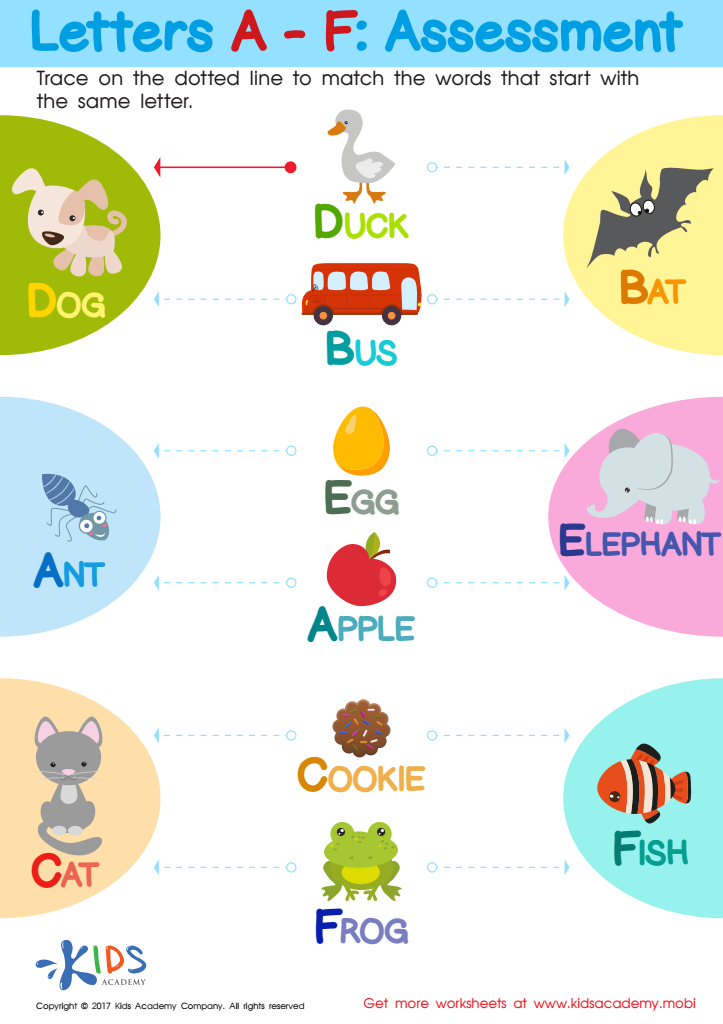
Letters A - F Worksheet
Help your child develop their reading skills with this fun phonics worksheet aimed at preschoolers. They can match letters A-F using colorful words and pictures. Assist your child by sounding out the letters and words - it's a great way to learn!
 Assign to My Students
Letters A - F Worksheet
Worksheet
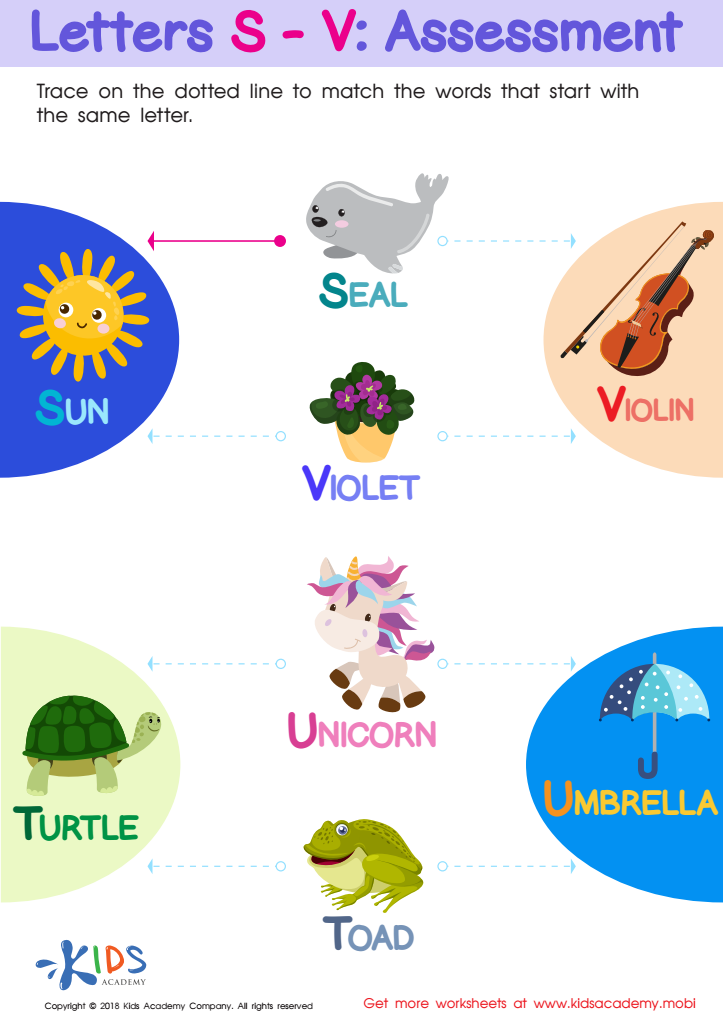
Letters S - V Tracing Worksheet
Kids can have fun learning phonics and reading with this PDF! Trace the lines of letters S-V to match words that start with the same letter. With easy directions and bright pictures, any young learner will love it!
Letters S - V Tracing Worksheet
Worksheet
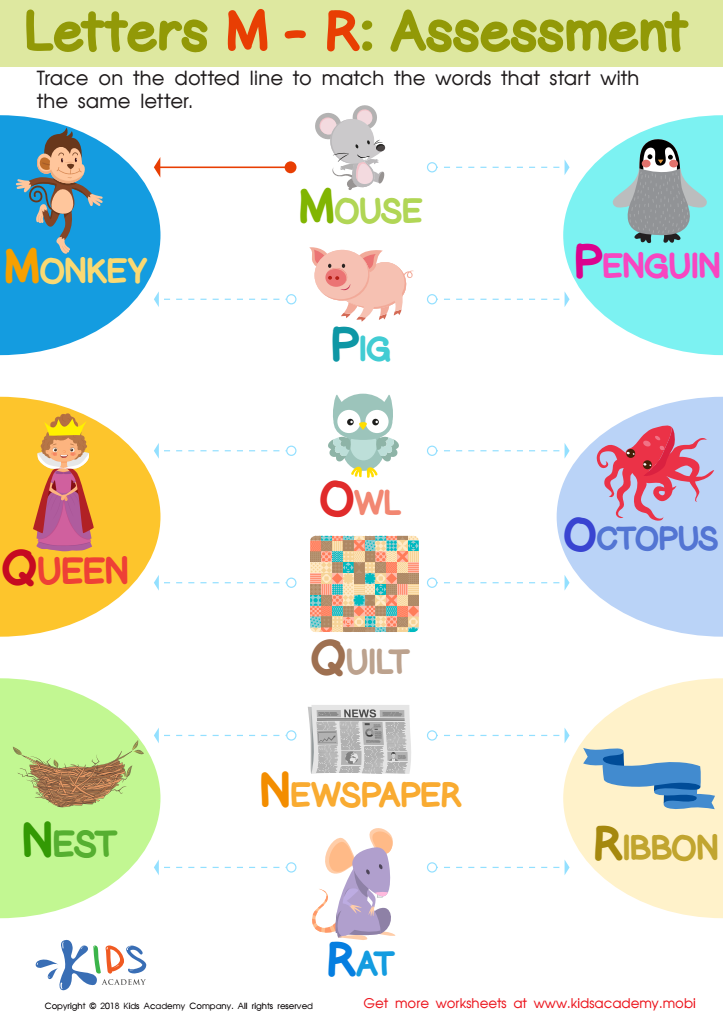
Letters M-R Tracing Worksheet
Does your child like learning to read? This printout is ideal! Kids match words to letters M-R by tracing. You can assist them in sounding out the words to pick the correct letter. Plus, visuals are included to help them recognize words with pictures.
Letters M-R Tracing Worksheet
Worksheet
Join Kids Academy for Free
Who is primarily going to use this learning content?


Letter recognition and alphabetizing are critical foundational skills for children ages 3-7, serving as stepping stones for literacy and overall academic success. At this developmental stage, children's brains are remarkably adept at learning new concepts, making it an ideal time to introduce the alphabet. Recognizing letters fosters phonemic awareness, enabling children to connect sounds to their corresponding symbols—an essential skill for reading.
Parents and teachers play a pivotal role in this process. When children can identify letters, they gain confidence in their ability to read and write, which translates to a love of learning. Furthermore, understanding the alphabetical order aids in organizing information, mastering vocabulary, and succeeding in future educational tasks. It lays the groundwork for important skills, such as sorting and categorizing, which aid in critical thinking and problem-solving.
Additionally, letter recognition often provides a fun, engaging experience when using games and activities, allowing for interactive learning. Investing time in developing these skills ultimately equips children with the tools they need for effective communication, improved academic performance, and a solid start for their educational journey, thus emphasizing why parents and teachers should prioritize this aspect of early literacy development.







