
Vocabulary enhancement Ending Sounds Worksheets for Ages 3-7
3 filtered results
Difficulty Level
Grade
Age
-
From - To
Subject
Activity
Standards
Unlock your child's linguistic potential with our Vocabulary Enhancement Ending Sounds Worksheets, tailored for kids aged 3-7! These engaging, educational sheets are perfect for early learners looking to master word endings and boost their vocabulary. Each sheet is designed to captivate young minds through fun activities, focusing on phonics and sound recognition. By improving their ability to distinguish ending sounds, children not only expand their vocabulary but also strengthen their reading and comprehension skills. Ideal for both classroom and home use, our worksheets make mastering phonetics an enjoyable and rewarding experience for your little ones.
Favorites
With answer key
Interactive
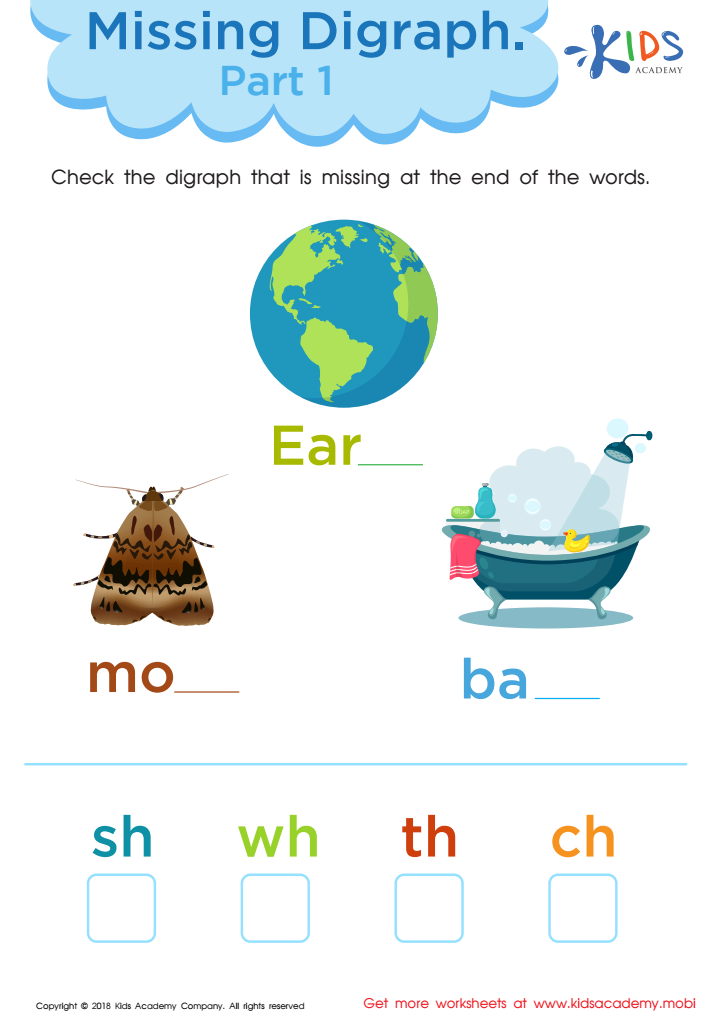
Missing Digraph: Part 1 Worksheet
Practice the 'th' digraph with this worksheet! Ask kids to say the words shown and sound out the letters below each image. Check the box with the correct digraph to complete. Examples include 'earth', 'bath' and 'moth', all ending with the same two letters. Phonics teaches that digraphs are two letters that make one sound.
 Assign to My Students
Missing Digraph: Part 1 Worksheet
Worksheet
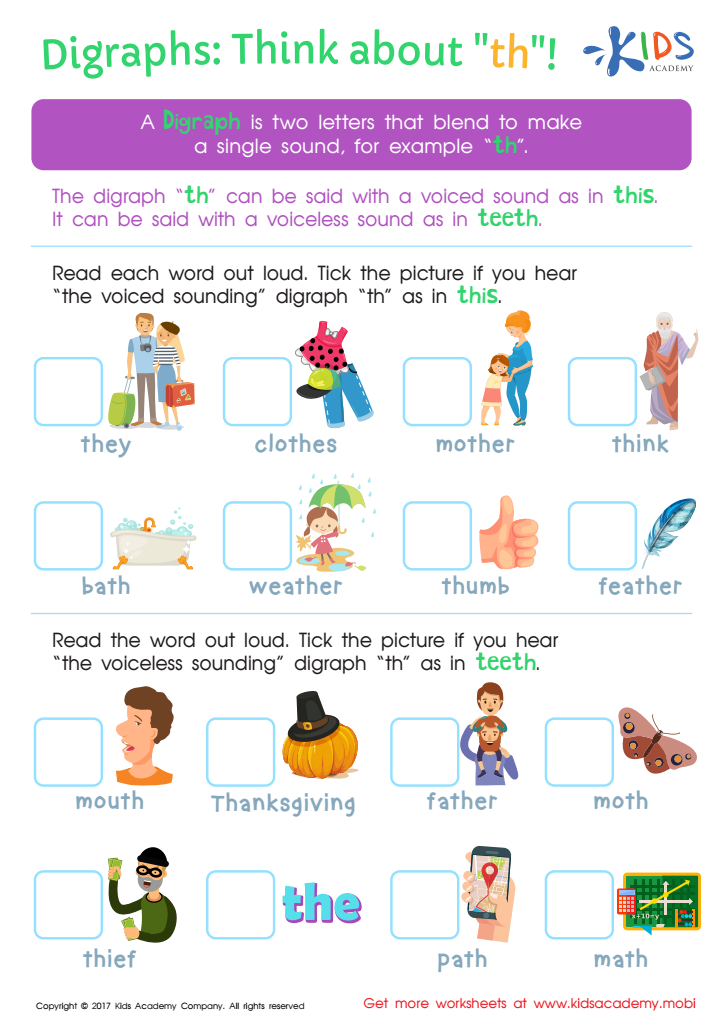
Digraphs: Think About "th" Worksheet
Help your child master phonics with this illustrated digraph Th printable worksheet. It will help recognize "Th" words, differentiate voiced and voiceless sounds and understand key concepts. Use similar words while they work to reap its full benefits!
Digraphs: Think About "th" Worksheet
Worksheet
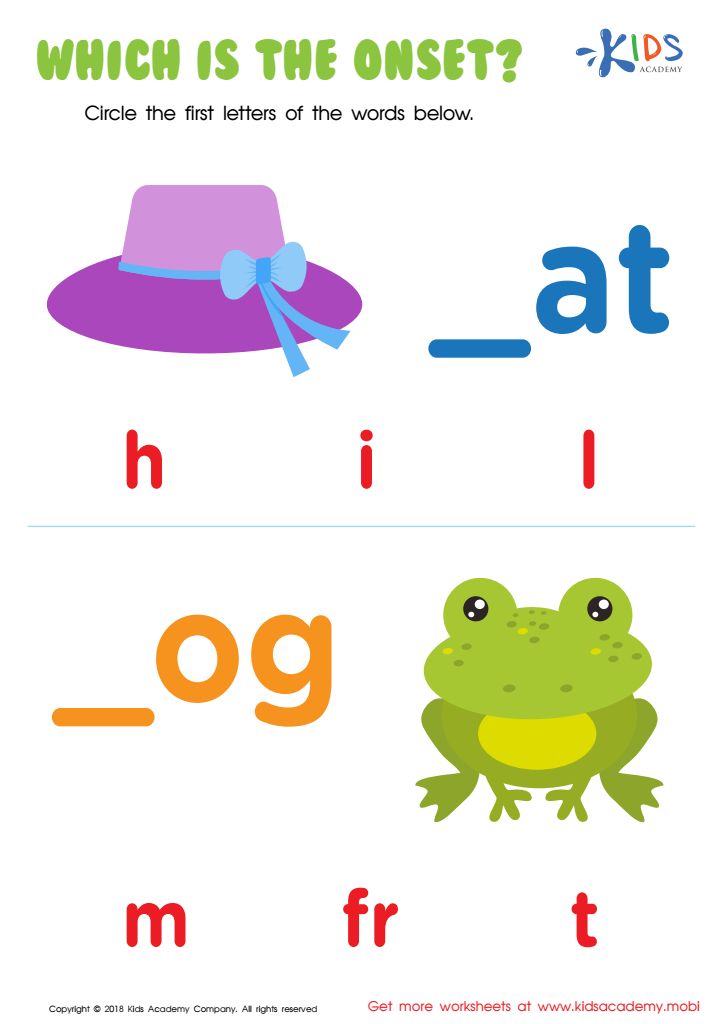
Which Is the Onset? Worksheet
Help your children learn to spell with this bright, fun worksheet. Struggling with spelling small words can make reading and writing sentences difficult. Encourage them to look at the pictures, say the names aloud and circle the correct first letter from the options. They will soon overcome any reluctance to spell.
Which Is the Onset? Worksheet
Worksheet
Join Kids Academy for Free
Who is primarily going to use this learning content?






Vocabulary enhancement with an emphasis on ending sounds is crucial for children aged 3-7 as it forms the foundation for literacy and language proficiency. At this developmental stage, children's brains are highly receptive to sounds, phonetic patterns, and words. Introducing and reinforcing ending sounds helps in decoding words, which is a fundamental skill required for reading. When children develop awareness of ending sounds, they can better recognize word patterns and families, such as -at in cat, hat, and sat, which simplifies the reading and spelling process.
Additionally, early vocabulary expansion plays a vital role in cognitive development. A robust vocabulary helps children express their ideas, emotions, and thoughts more clearly. It also enhances comprehension skills, essential for all areas of learning. For young kids, understanding and correctly pronouncing ending sounds contributes to clearer communication and listening skills.
Incorporating engaging activities such as rhyming games, songs, and storytelling can make learning these sounds enjoyable and memorable. This early targeted effort in vocabulary enhancement and phonemic awareness sets the stage for lifelong success in reading, writing, and overall academic achievement. Therefore, parents and teachers should invest time and resources in vocabulary development during these formative years, as it’s a critical component of early education.








