Phonics improvement Alphabet Worksheets for Ages 3-7
6 filtered results
-
From - To
Unlock your child's reading potential with our "Phonics Improvement Alphabet Worksheets for Ages 3-7". Designed by educational experts, these fun and engaging worksheets help young learners master the fundamentals of phonics through interactive exercises. Each activity introduces and reinforces crucial skills, such as letter recognition, sound association, and word formation, making early reading both enjoyable and effective. Tailored to suit different learning styles, our worksheets ensure that every child builds a strong foundation for literacy. Whether at home or in the classroom, these resources are perfect tools for enhancing phonics skills in a playful, easy-to-understand way.
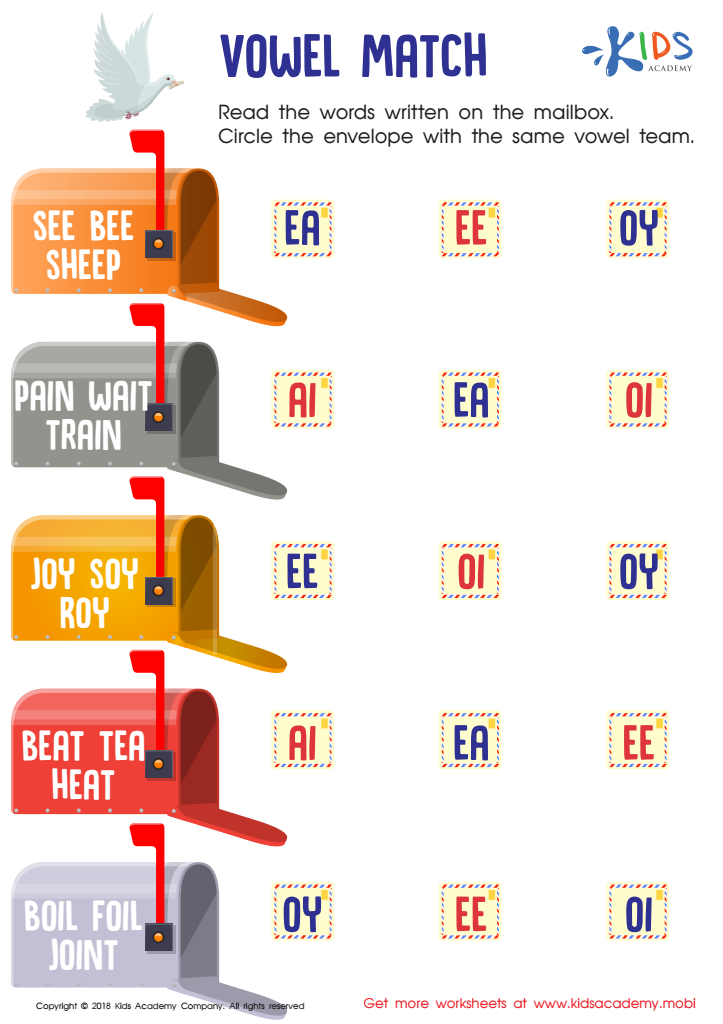
Vowel match Worksheet
 Assign to My Students
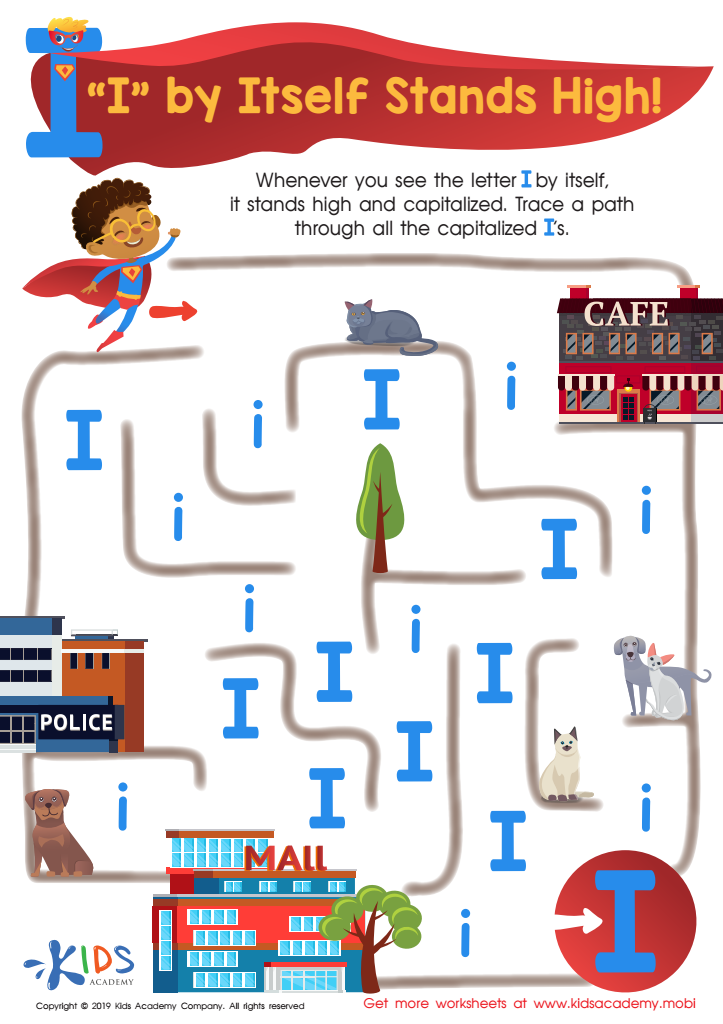
I Stands High Worksheet
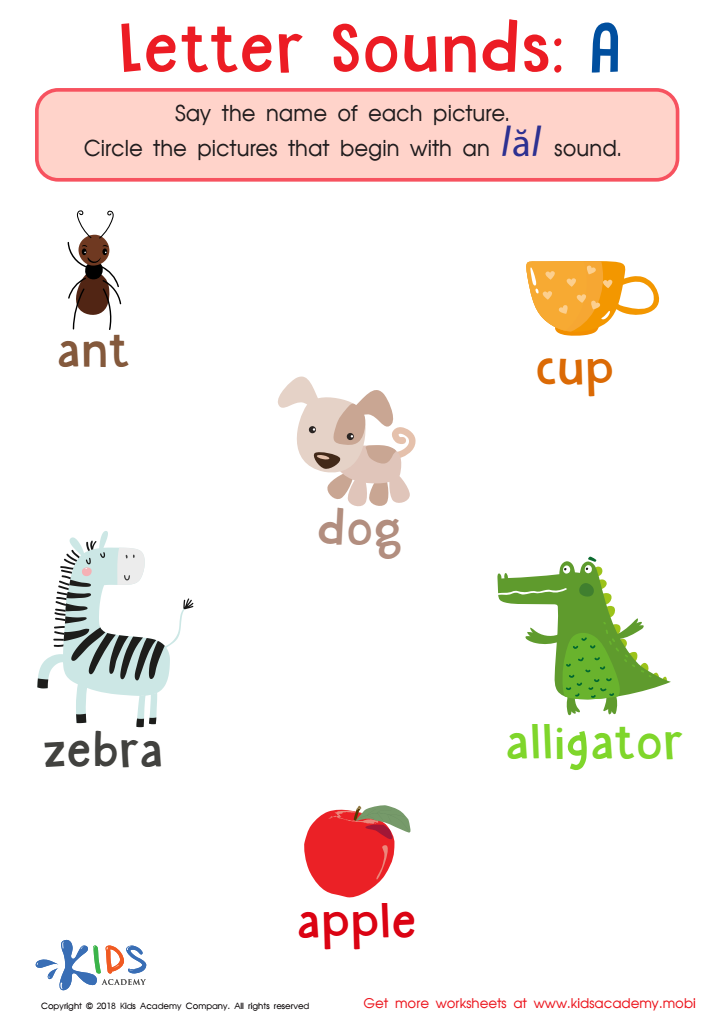
Letter A Sounds Worksheet
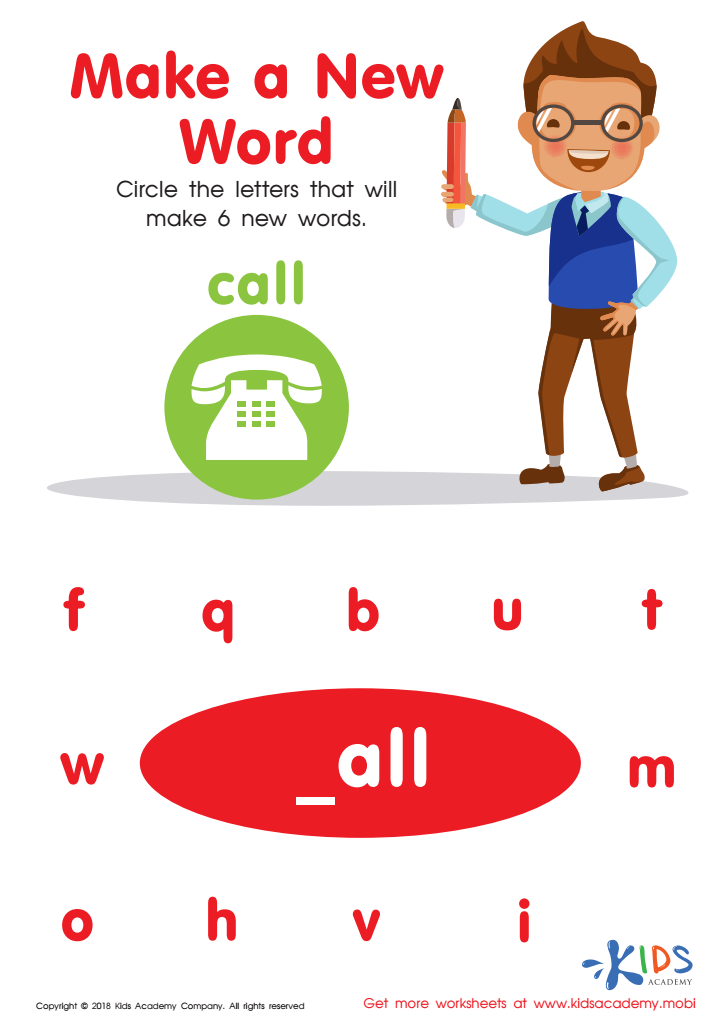
Make a New Word Worksheet
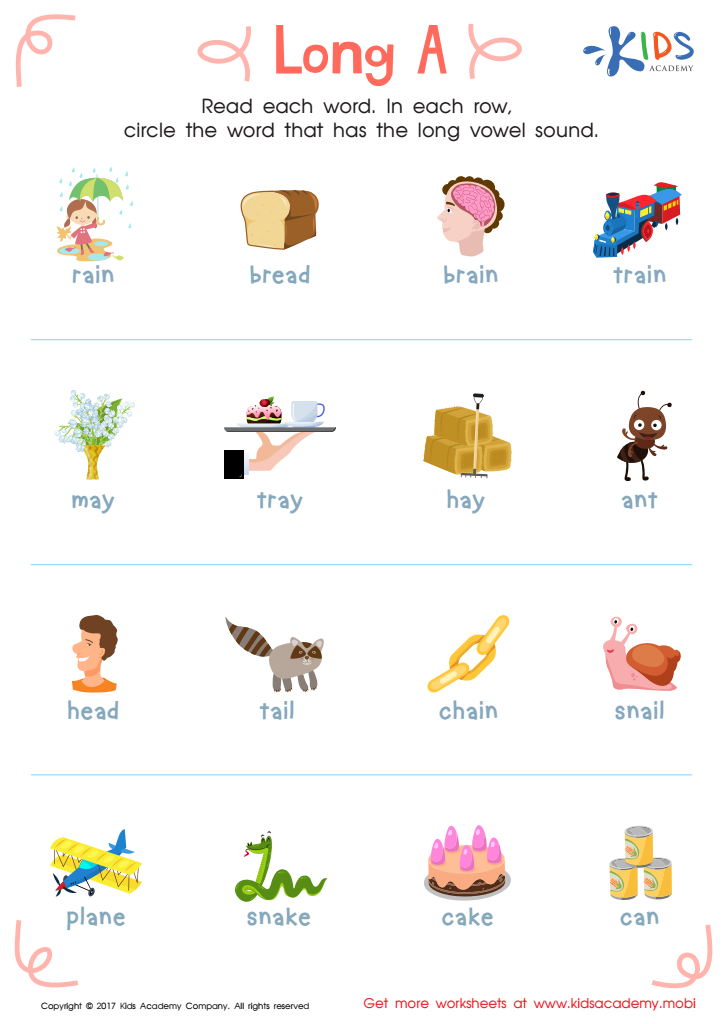
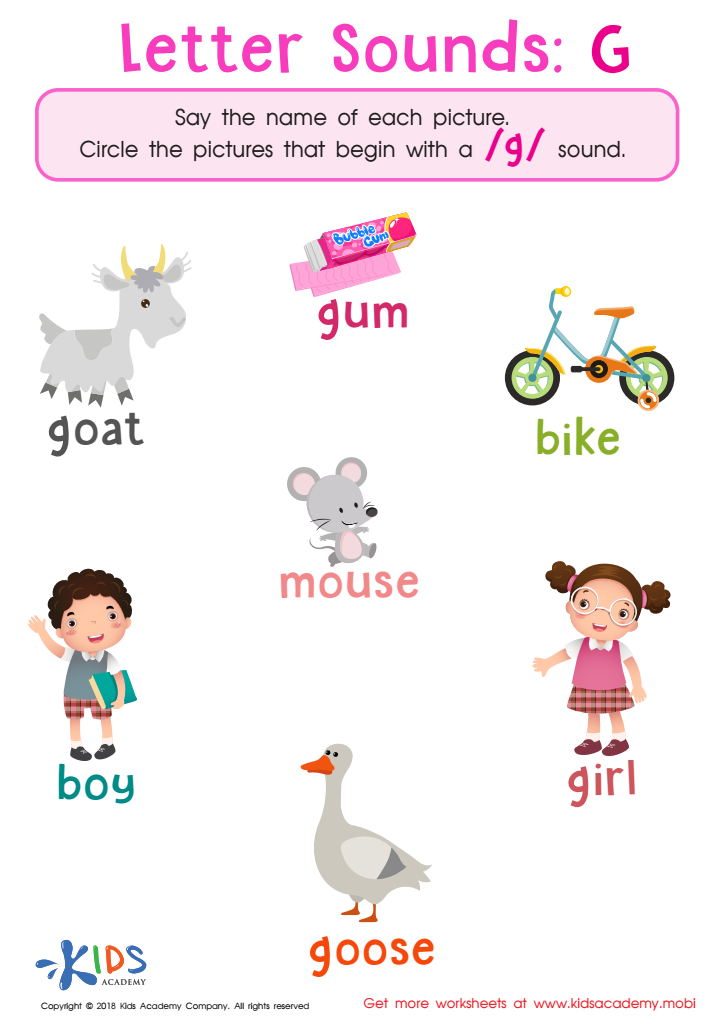
Letter G Sounds Worksheet







Phonics plays a foundational role in literacy development for children aged 3-7. It involves the relationship between sounds and their corresponding letters or groups of letters. Parents and teachers should prioritize phonics improvement for several key reasons.
First, a strong phonics foundation facilitates early reading skills. By understanding the connections between letters and sounds, children can decode new words more easily. This skill boosts their confidence in reading independently, leading to a lifelong love of reading.
Second, phonics is crucial for spelling. Knowing how to segment words into individual sounds helps children spell them correctly. Early proficiency in spelling and reading can also accelerate overall academic progress.
Third, phonics education supports broader language development. Children who excel in phonics often exhibit enhanced vocabulary, better comprehension, and improved fluency in both oral and written communication. These skills are not just beneficial academically but also vital for effective social interaction.
Lastly, mastering phonics at an early age can address learning disparities. It ensures that all children, regardless of their background, have the foundational tools needed for academic success. When parents and teachers invest time in improving phonics, they are setting young learners on a path to literacy and beyond, laying the groundwork for a bright, informed future.







