Letter recognition Letter Q Worksheets for Ages 3-7
4 filtered results
-
From - To
Welcome to our Letter Q Worksheets, designed for children ages 3-7! These engaging worksheets focus on letter recognition, helping young learners identify and familiarize themselves with the letter Q. Through fun activities like tracing, coloring, and phonics practice, these worksheets encourage interactive learning and strengthen essential pre-reading skills. Our resources not only make learning the alphabet enjoyable, but they also support fine motor skills development. Perfect for home or classroom use, these worksheets serve as valuable tools for parents and educators aiming to enhance early literacy. Discover the joy of learning with our vibrant and educational Letter Q activities!
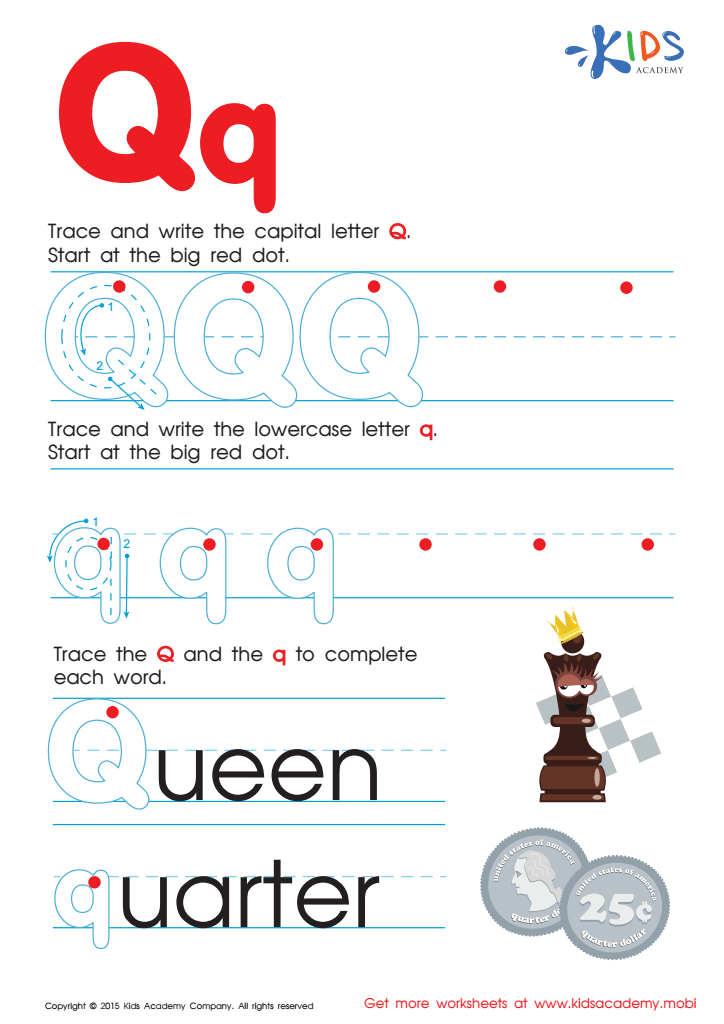
Letter Q Tracing Page
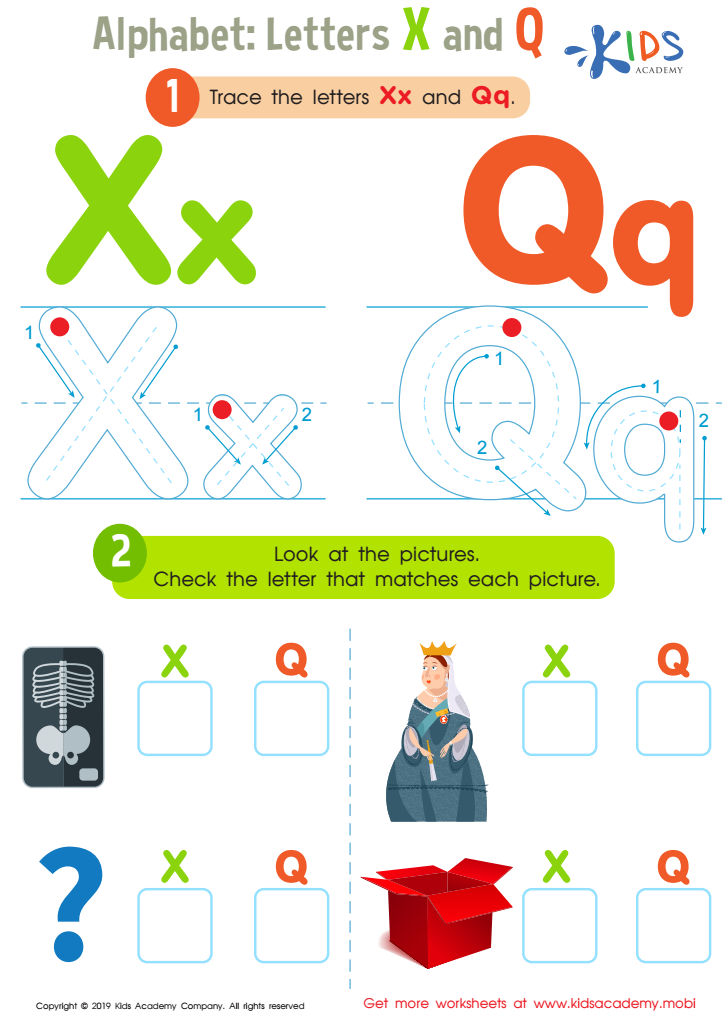
Letters X and Q Tracing Worksheet
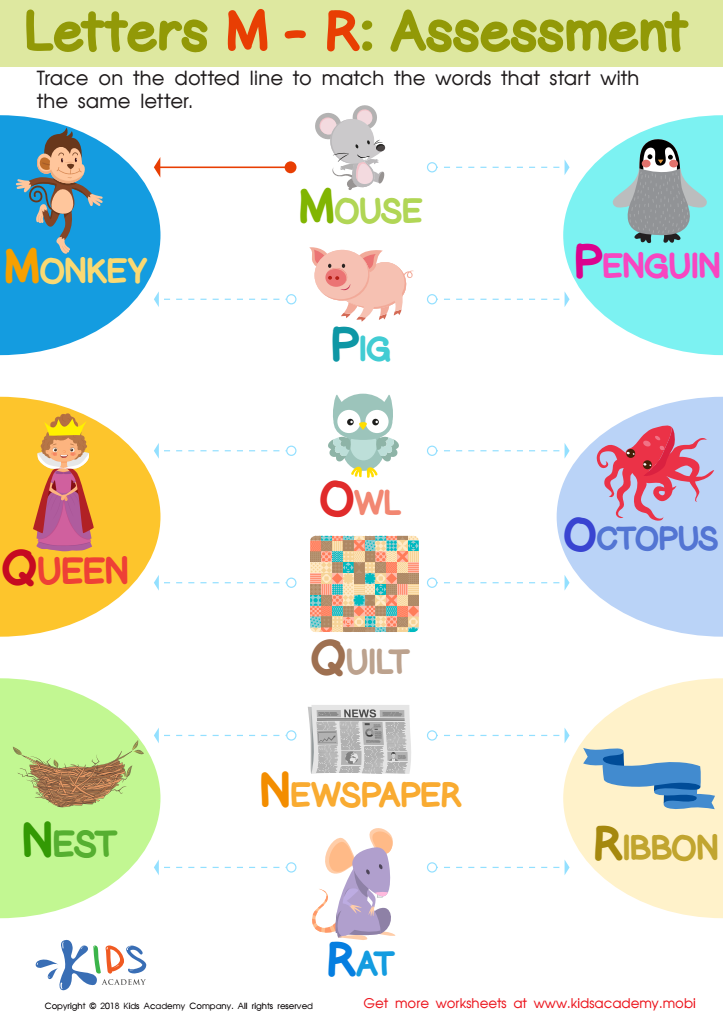
Letters M-R Tracing Worksheet
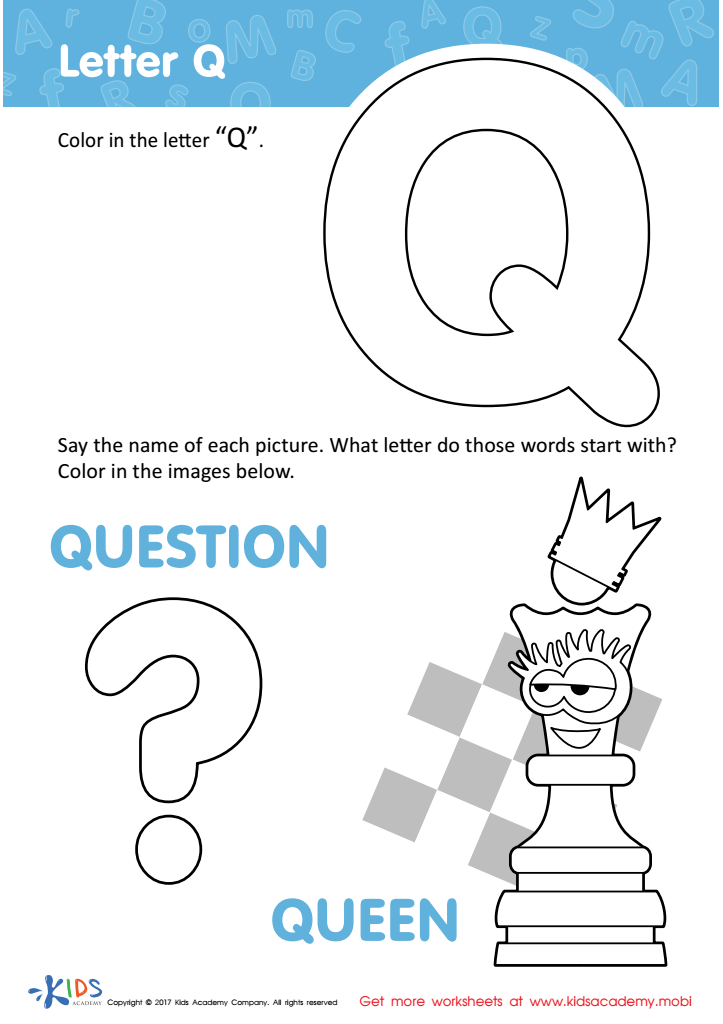
Letter Q Coloring Sheet
 Assign to My Students





Letter recognition, particularly of the letter "Q," is crucial for children aged 3-7 for several reasons. First, it lays the foundation for literacy skills, enabling children to identify and understand the sounds and shapes of letters, which is essential for reading and writing development. Recognizing "Q" allows children to connect with related sounds and words, such as "queen" and "quiet," expanding their vocabulary and phonemic awareness.
Additionally, focusing on letter recognition fosters cognitive development. As children learn to identify different letters, including "Q," they enhance their memory and attention skills. This process also encourages creativity as children explore new words and concepts associated with "Q." Through engaging activities involving "Q," such as storytelling or arts and crafts, parents and teachers can create rich, interactive learning experiences that stimulate curiosity and promote a love for learning.
Moreover, recognizing letters supports social interaction. When children share what they've learned about "Q" with peers or family, it builds confidence in their communication skills and encourages collaborative learning environments. Overall, nurturing letter recognition, including "Q," not only prepares young learners for future academic success but also contributes to their social, emotional, and cognitive growth.