Visual discrimination Letter Recognition Worksheets for Ages 3-7
5 filtered results
-
From - To
Unlock the joy of learning with our Visual Discrimination Letter Recognition Worksheets, designed for ages 3-7! These engaging and educational resources help young learners distinguish between different alphabet letters, enhancing their reading readiness and cognitive skills. Our expertly crafted worksheets offer a variety of fun activities, such as matching, tracing, and identifying letters in various fonts and formats. Perfect for preschoolers and early elementary students, they foster strong literacy foundations while keeping kids entertained. Encourage your child's early academic success with these easy-to-use, printable worksheets from Kids Academy. Make reading fun and effective!
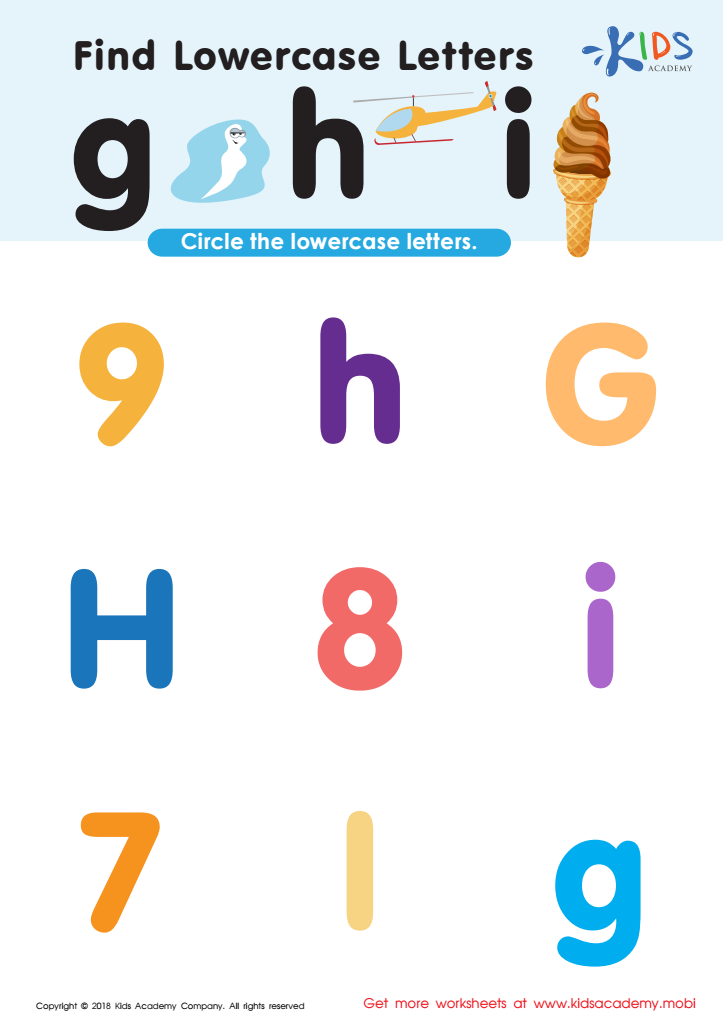
Find Lowercase Letters g h i Worksheet
 Assign to My Students
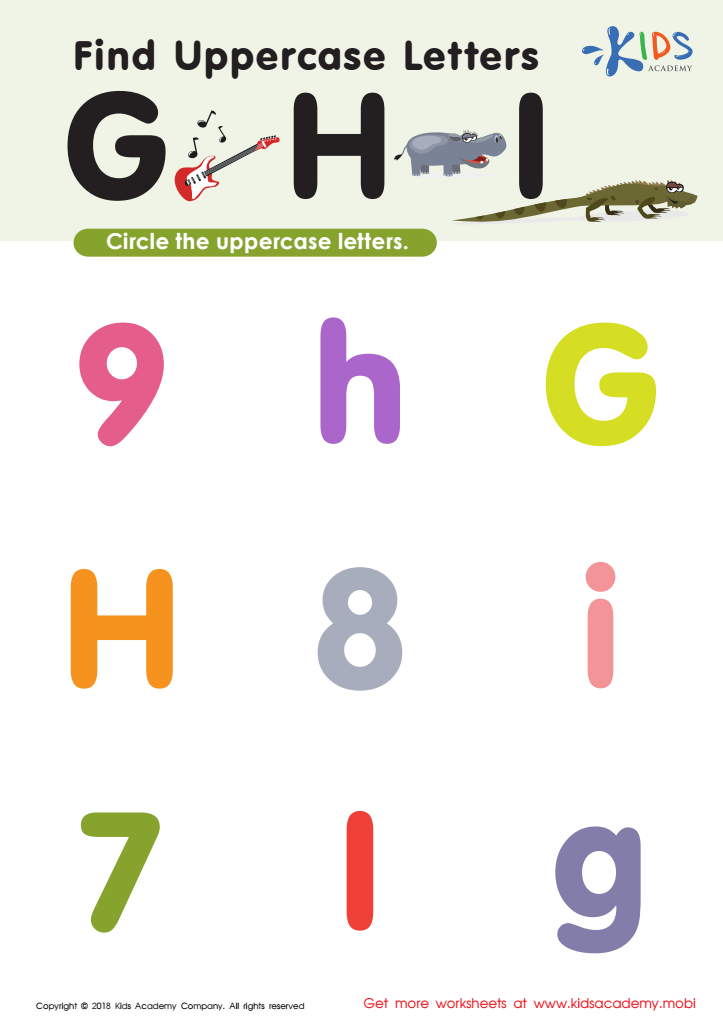
Find Uppercase Letters G, H, and I Worksheet
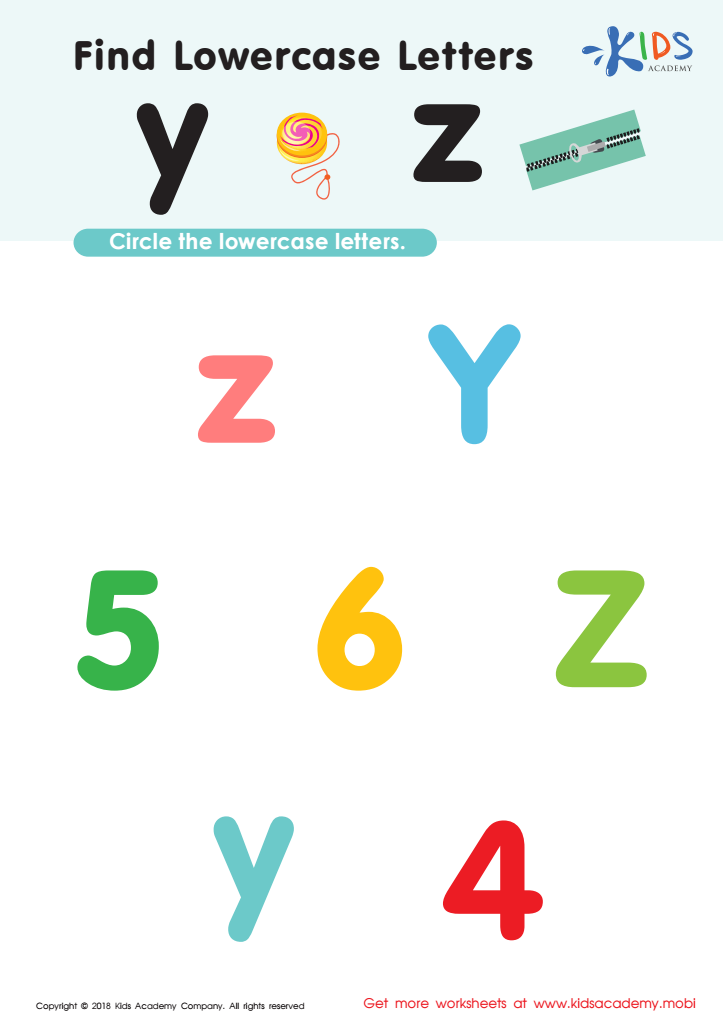
Find Lowercase Letters y z Worksheet
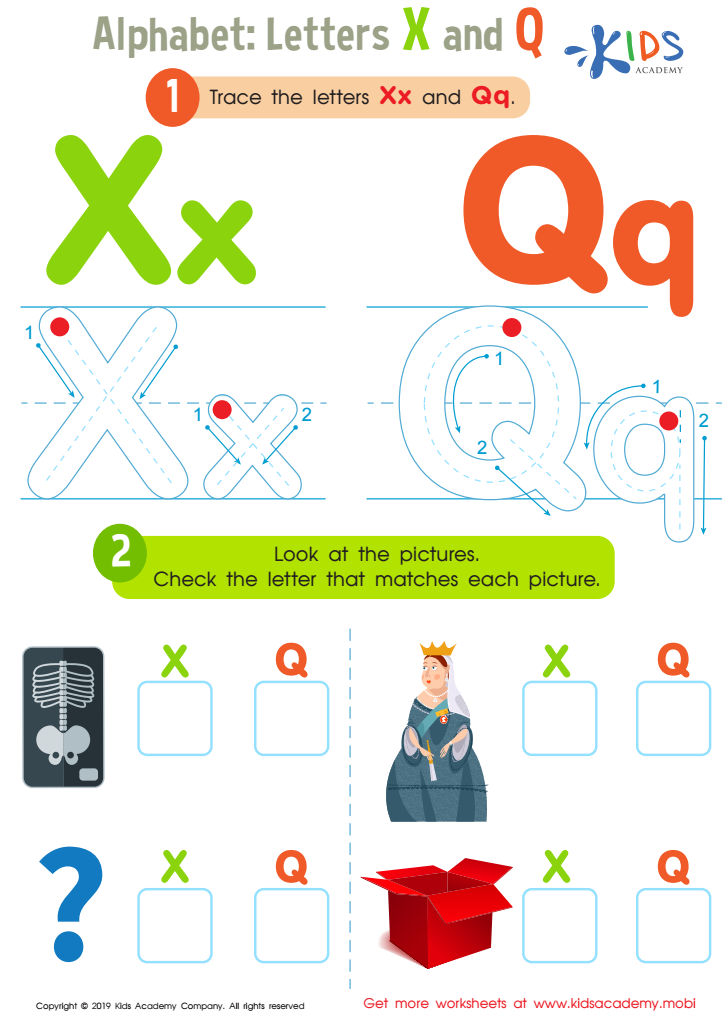
Letters X and Q Tracing Worksheet
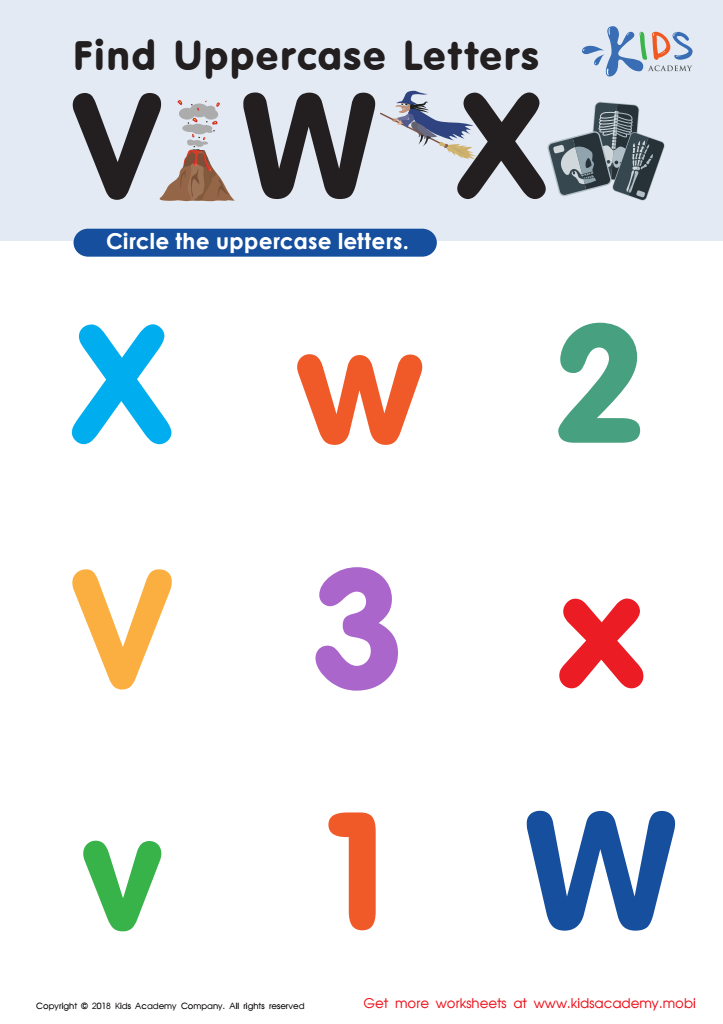
Find Uppercase Letters V, W, X Worksheet








Visual discrimination letter recognition is a foundational skill crucial for early literacy development in children aged 3-7. This ability, which involves distinguishing between different letters based on their shapes and recognizing them in various forms, underpins the ability to read and write effectively.
For parents and teachers, fostering strong visual discrimination letter recognition should be a priority for several key reasons. Firstly, this skill helps children differentiate between visually similar letters (such as 'b' and 'd', or 'p' and 'q'), thereby preventing common reading and spelling errors. Secondly, recognizing letters and understanding their shapes is a critical stepping stone to associating these letters with their corresponding sounds, which is essential for phonemic awareness—a core component of reading proficiency.
Additionally, early mastery of letter recognition boosts children's confidence and motivation to engage with reading material, fostering a positive attitude toward learning. In differentiated classroom settings, having strong visual discrimination skills allows children to more easily follow along with standard or adaptive instructional materials.
Moreover, visual discrimination supports other cognitive skills such as memory, comparison, and attention to detail, benefiting overall academic performance. By investing in visual discrimination letter recognition activities, parents and teachers can significantly enhance a child's reading readiness and long-term educational success. Thus, it is essential to incorporate engaging, multisensory learning experiences that strengthen these skills during early childhood.







