Listening skills Letter Sounds Worksheets for Ages 3-7
4 filtered results
-
From - To
Enhance your child's early literacy with our "Listening Skills Letter Sounds Worksheets for Ages 3-7." Specially designed for young learners, these engaging worksheets help kids recognize and differentiate letter sounds, the foundation of reading success. Fun and interactive exercises involve kids in listening activities that sharpen their auditory skills while associating sounds with corresponding letters. Ideal for preschool and early elementary students, these worksheets support phonemic awareness and boost confidence in reading and writing. Set your child on the path to literacy with tools that make learning lively and enjoyable. Visit and download to jumpstart your child's educational journey!
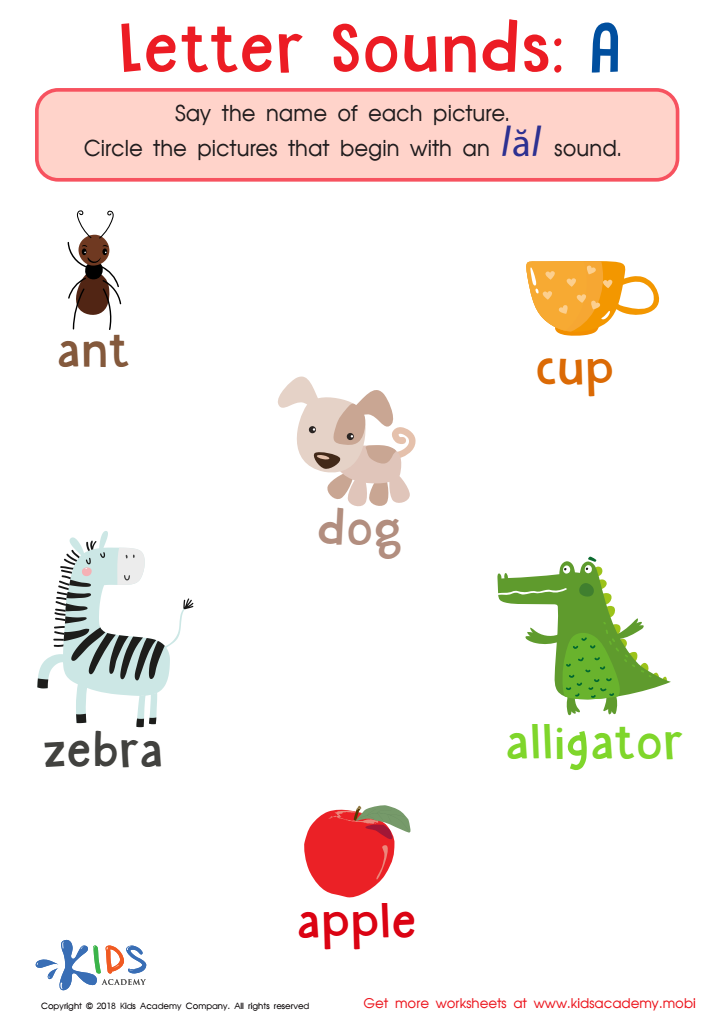
Letter A Sounds Worksheet
 Assign to My Students
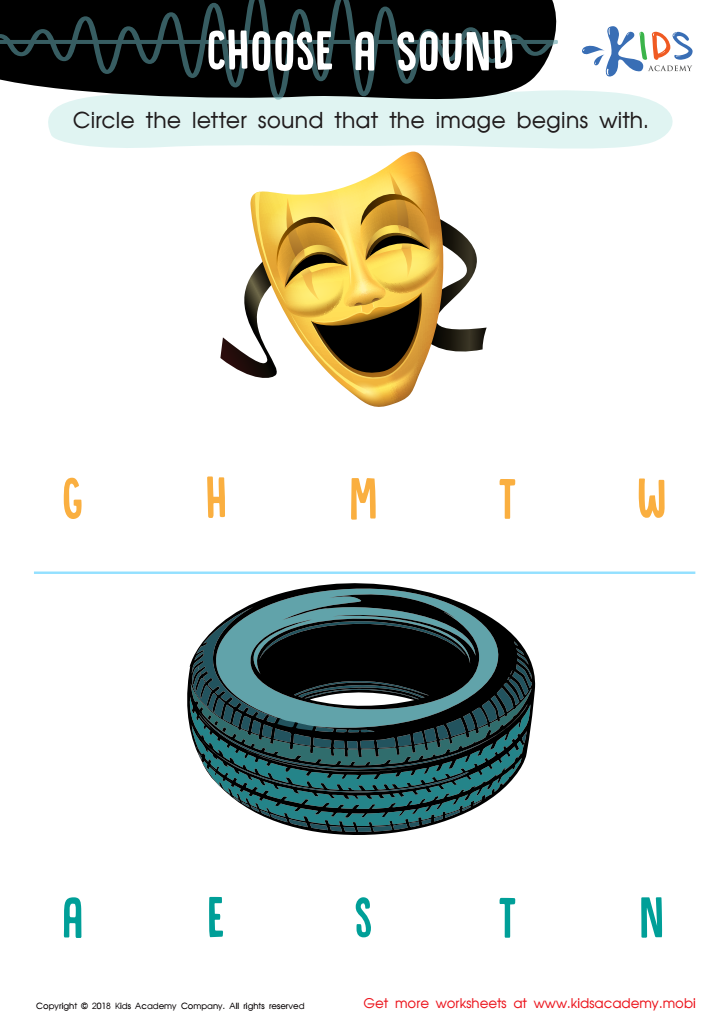
Choose a Sound Worksheet
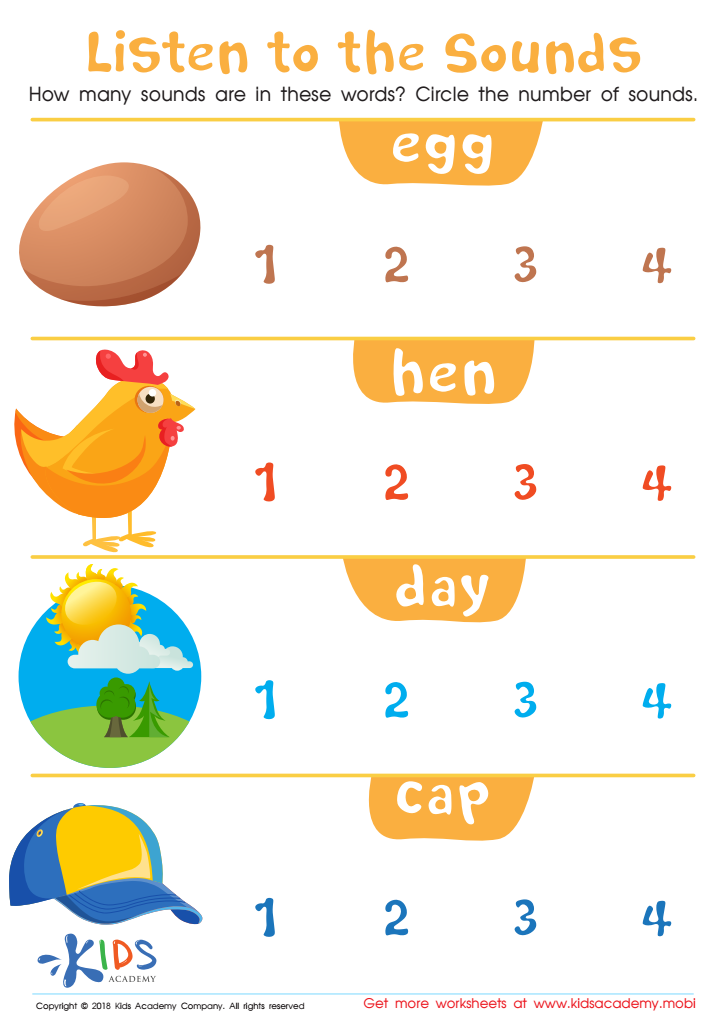
Listen to the Sounds Worksheet
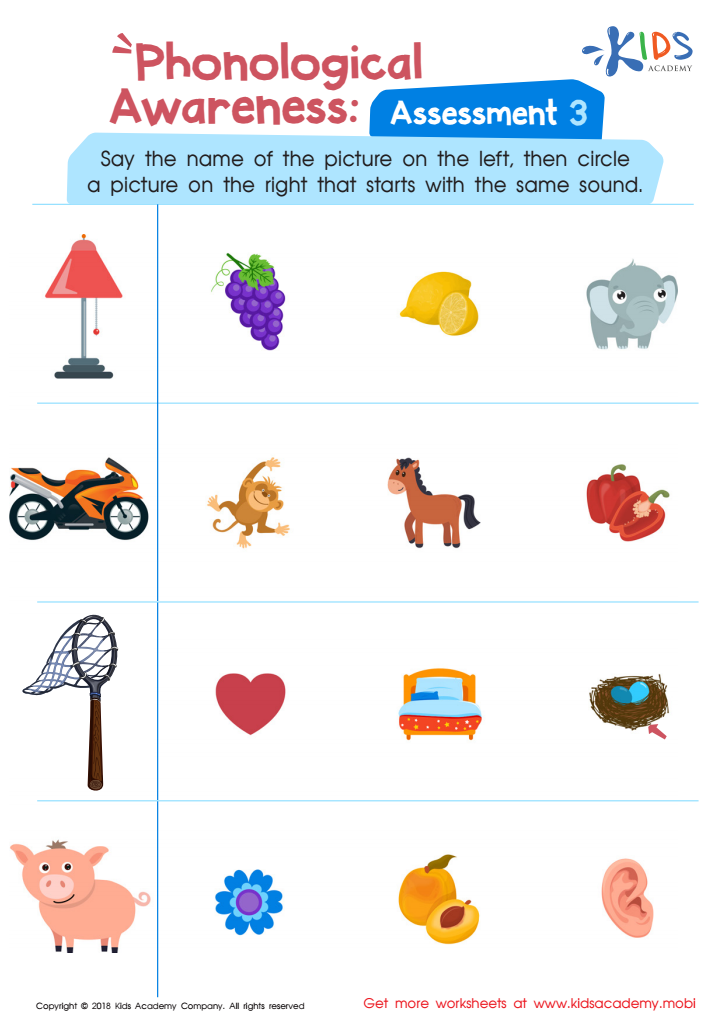
Phonological Awareness: Assessment 3 Worksheet








Listening skills and letter sounds for ages 3-7 lay the foundation for crucial language development and early literacy. Developing these skills at a young age arms children with the tools they need for effective communication, which is integral in all aspects of life. When parents and teachers focus on enhancing listening skills, they help children understand verbal instructions, follow conversations, and engage in social interactions. Improved listening comprehension sets the stage for future learning, as almost all subjects require strong auditory processing abilities.
Understanding letter sounds, or phonemic awareness, is equally important. It is the stepping stone to reading and writing proficiency. When children can identify and manipulate the sounds that make up words (phonics), they become more adept at decoding written text. This early exposure fosters a love for reading, making children more likely to seek out books and further develop their literacy skills independently. In the classroom, strong phonemic awareness leads to better spelling, reading fluency, and overall academic success.
Therefore, investing time in activities that promote listening and phonemic skills, such as reading aloud, playing sound games, and singing, equips children with the foundational abilities necessary for lifelong learning and effective communication.







