Filters

6 filtered results

Clear all filters
Favorites
With answer key
Interactive

6 filtered results

Difficulty Level

Grade


Unlock your child's linguistic potential with our Vocabulary Expansion Vowels and Consonants Worksheets designed for ages 3-7! These engaging activities help young learners distinguish between vowels and consonants while expanding their vocabulary through fun exercises tailored to their developmental stage. Perfect for both classroom and home use, our colorful and interactive worksheets promote reading readiness, phonemic awareness, and language skills. Foster a love for learning with expertly designed materials that make mastering the alphabet enjoyable and effective. Set the foundation for your child's academic success with our comprehensive range of worksheets focused on vowels and consonants exploration!

Check out this FREE Trial Lesson on Vowels and Consonants for age 3-7!

Digraphs

Favorites
With answer key
Interactive
  • 3-7
  • Vocabulary expansion
  • Vowels and Consonants
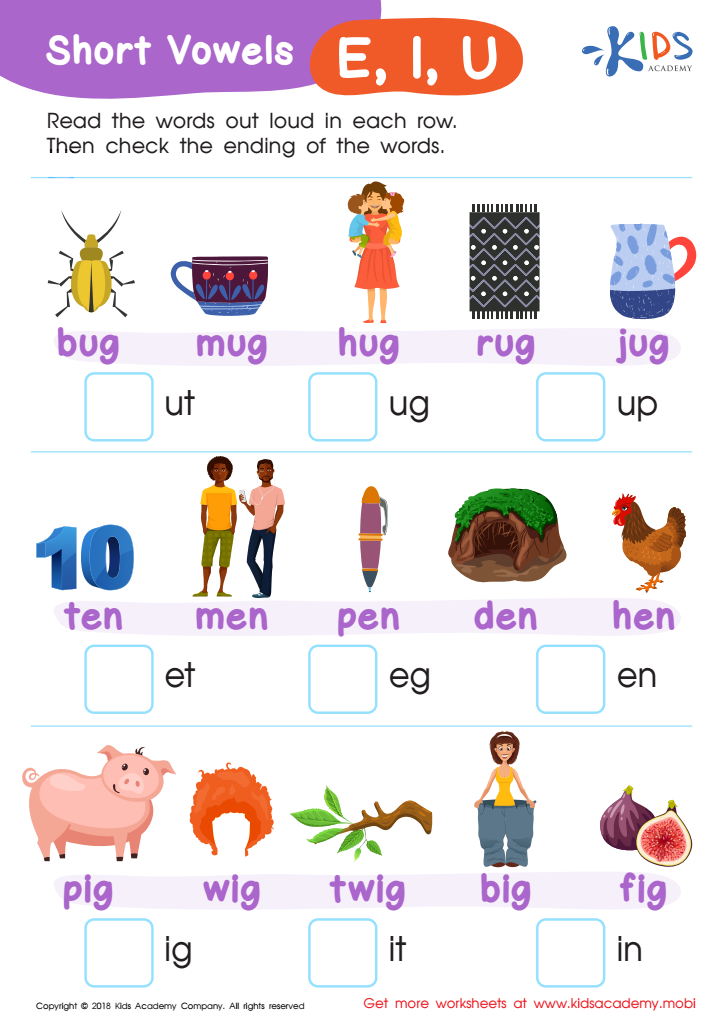
Short Vowels /e/, /i/, and /u/ Worksheet

Short Vowels /e/, /i/, and /u/ Worksheet

Your emergent reader can have fun while practicing their short vowel sounds with this free, brightly colored worksheet. They'll identify one-syllable words by their pictures, then match the correct ending for each. They'll gain an understanding of how short vowel sounds vary in closed syllables with different endings, without even realizing it!
Short Vowels /e/, /i/, and /u/ Worksheet
Worksheet
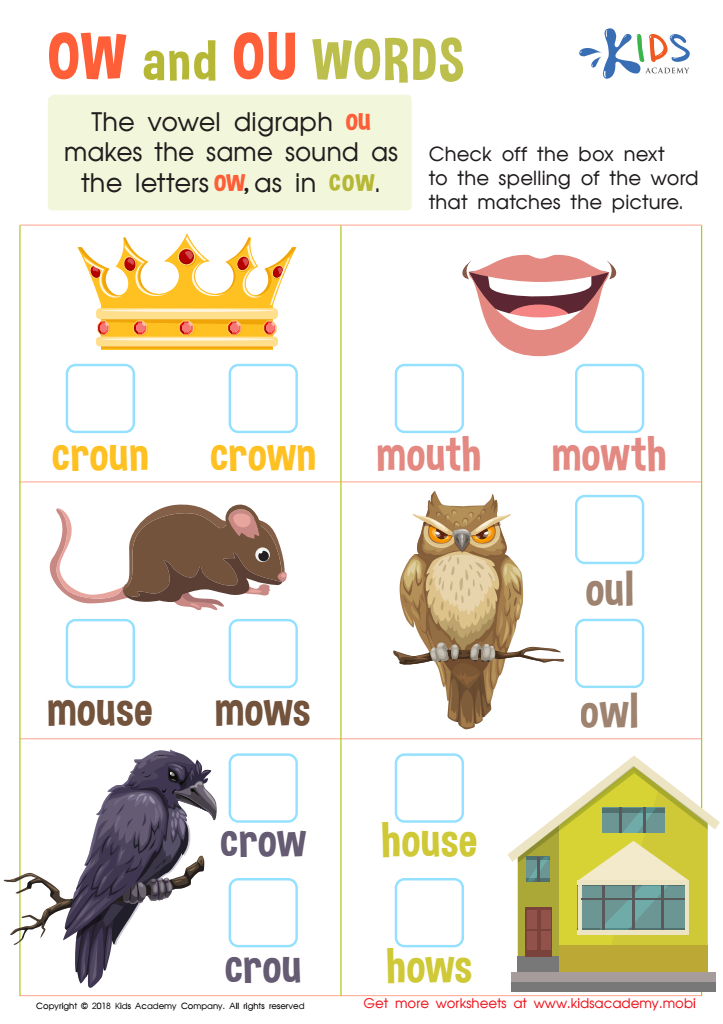
Reading: OW and OU Words Worksheet

Reading: OW and OU Words Worksheet

Help your kids learn phonetics! Explain the different sounds and long/short variations. Emphasize that some vowel sounds are the same, e.g. ou = ow in cow. For practice, have them read aloud the words in the worksheet and check the box next to the spelling that matches the picture.
Reading: OW and OU Words Worksheet
Worksheet
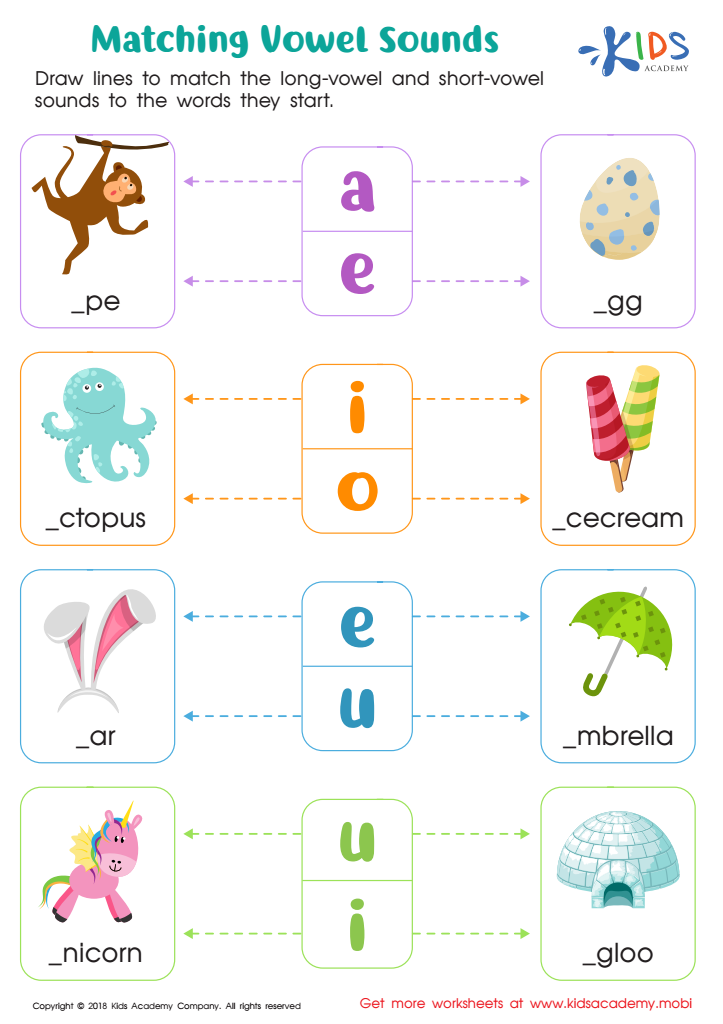
Matching Vowel Sounds Worksheet

Matching Vowel Sounds Worksheet

Teach your child phonics with a fun worksheet! Ask your child to name a vowel sound and listen if it's long or short. Differentiating between long and short vowel sounds can be tricky, but this matching worksheet makes it easy for kids to understand. Have fun and master phonics - the worksheet will help them understand the difference between long and short vowel sounds!
Matching Vowel Sounds Worksheet
Worksheet
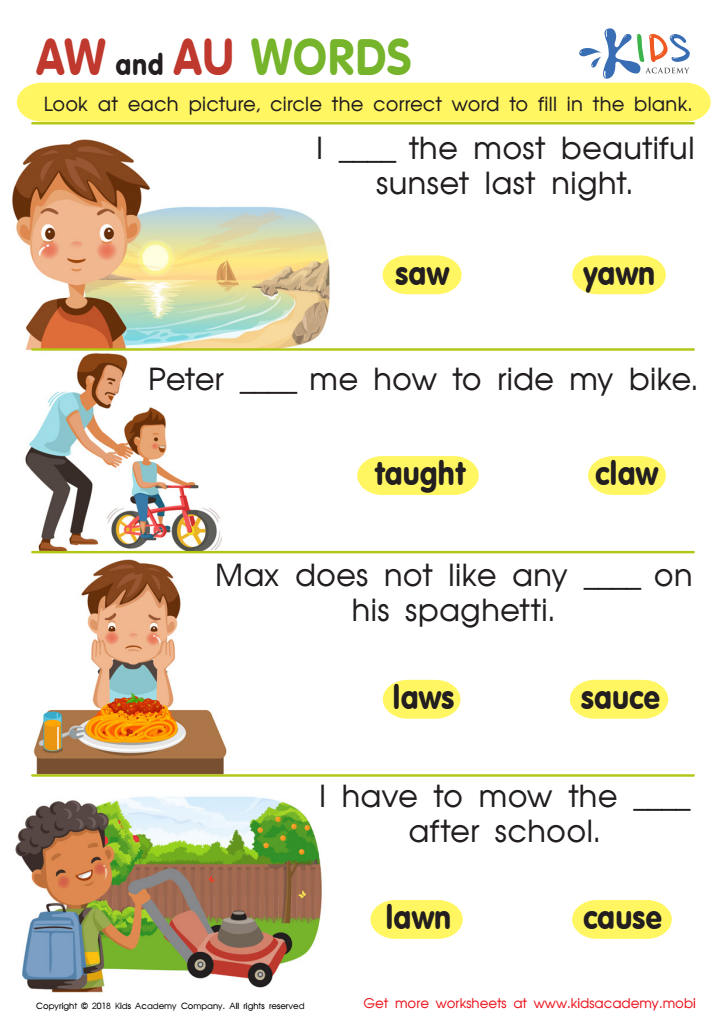
Reading: AW and AU Words Worksheet

Reading: AW and AU Words Worksheet

This worksheet helps kids recognize that /au/ and /aw/ can make the same sound. Students read sentences and pick the correct word with one of the digraphs. Understanding digraphs improves decoding and reading fluency. Perfect for reading and phonics classes.
Reading: AW and AU Words Worksheet
Worksheet
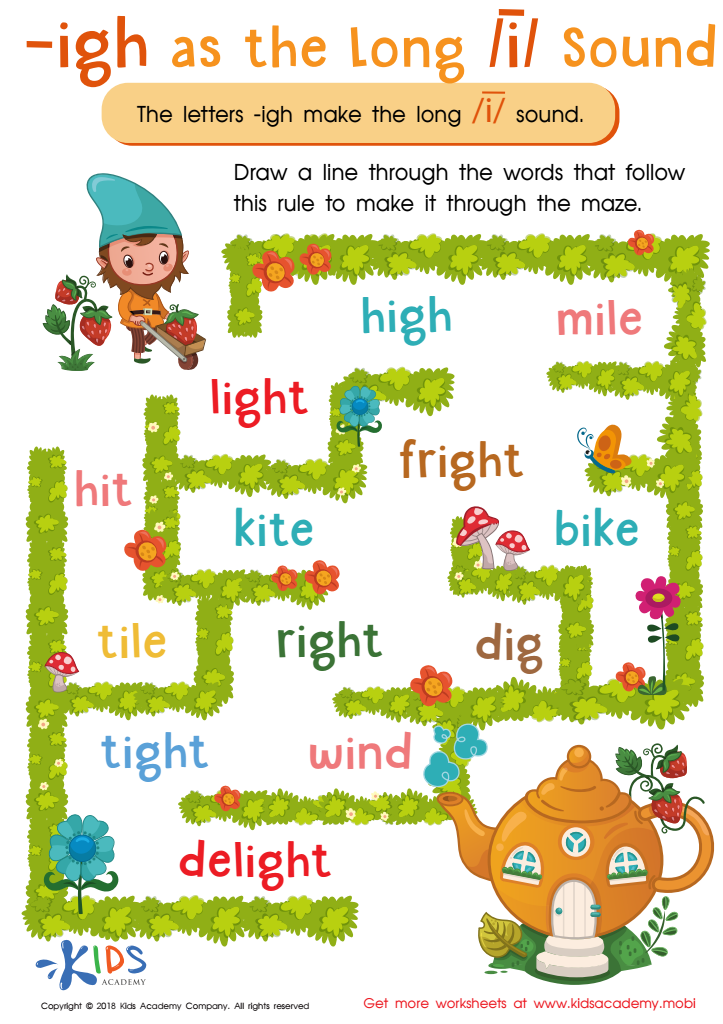
Reading: IGH as Long I Worksheet

Reading: IGH as Long I Worksheet

Kids can have fun and learn with this maze! They'll look for and read words with the 'long I' sound spelled 'igh'. Most words ending with 'T' have this spelling. Decode words while learning about long vowel sounds and their spellings.
Reading: IGH as Long I Worksheet
Worksheet
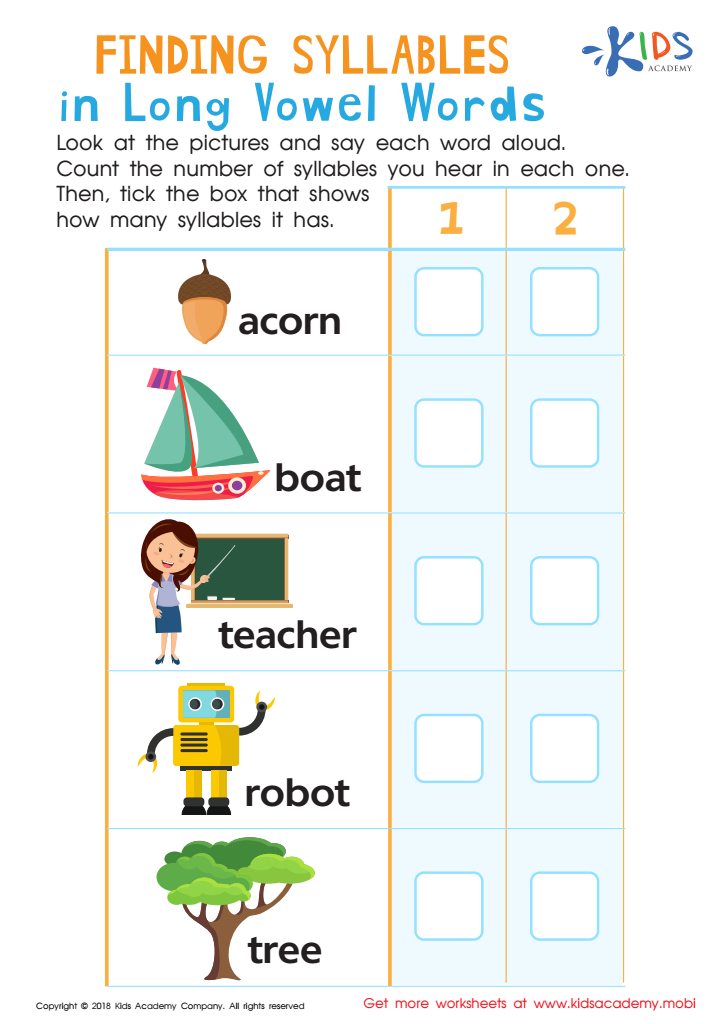
Finding Syllables in Long Vowel Words Worksheet


Finding Syllables in Long Vowel Words Worksheet

Help your kids identify objects and better count syllables in words. Look at the printout images with them and have them say each word out loud. Ask them to count syllables and tick the box with the correct number. With this worksheet, your kids will become more skilled.
Finding Syllables in Long Vowel Words Worksheet
Worksheet


Vocabulary expansion and understanding vowels and consonants are crucial for children aged 3-7, laying the foundation for future literacy skills. At this stage, kids are highly receptive to learning new words and sounds, which form the building blocks of language. Prioritizing vocabulary growth helps expand their communication skills, improve their ability to express themselves, and enhance comprehension abilities.

Knowing vowels and consonants aids in phonemic awareness, which is understanding the distinct sounds within words. This skill allows children to decode words while reading and supports accurate spelling and pronunciation. Understanding the differences between vowels and consonants helps children recognize word patterns and enhances their ability to sound out unfamiliar words, promoting early reading fluency.

Moreover, a richer vocabulary supports cognitive development by enabling more complex thinking and problem-solving. It also fosters social skills, as children can better describe their thoughts, feelings, and needs, facilitating more meaningful interactions. This early focus sets children on a path where reading becomes an enjoyable and less frustrating experience, likely leading to stronger academic performance in later years. Thus, investing in vocabulary expansion and phonemic knowledge during these formative years equips children with essential skills for their educational journey.