Sound Association Vowels Worksheets for Ages 3-7
3 filtered results
-
From - To
Welcome to our "Sound Association Vowels Worksheets" designed for children aged 3-7! These engaging worksheets help young learners explore vowels through sound association, enhancing their phonetic abilities. Each activity is tailored to make learning fun and interactive, ensuring kids develop essential reading and writing skills while identifying vowel sounds. Activities may include matching pictures to their vowel sounds, filling in the blanks, and tracing letters. Our worksheets support early literacy development and are perfect for teachers, parents, and caregivers looking to reinforce learning at home or in the classroom. Start fostering a love for vowels today!
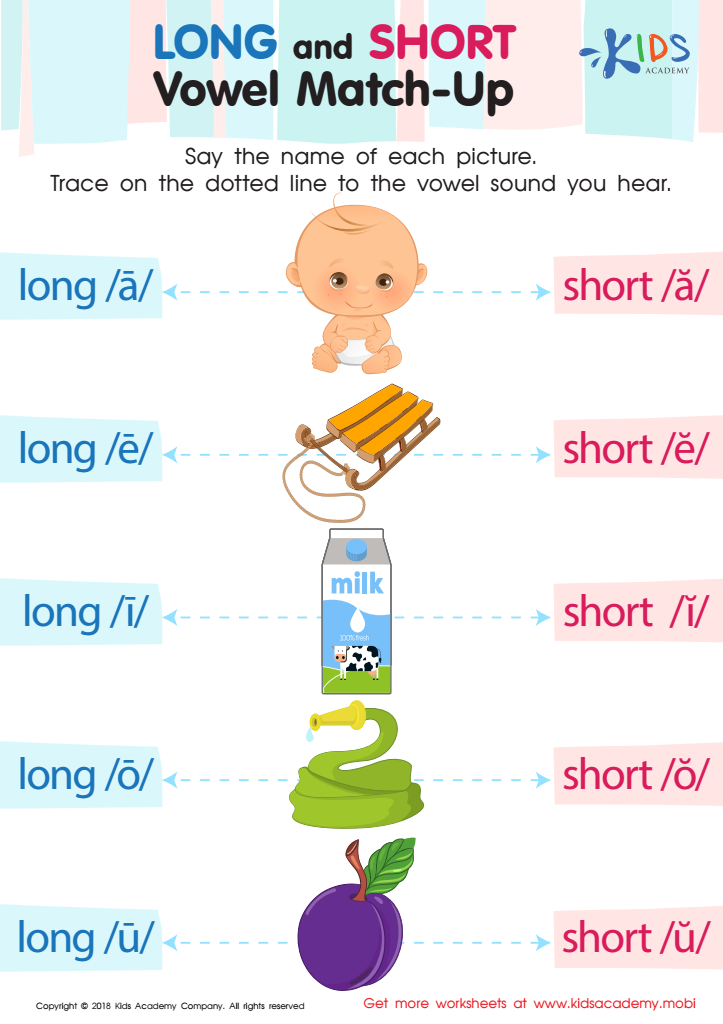
Long and Short Vowel Match up Reading Worksheet
 Assign to My Students
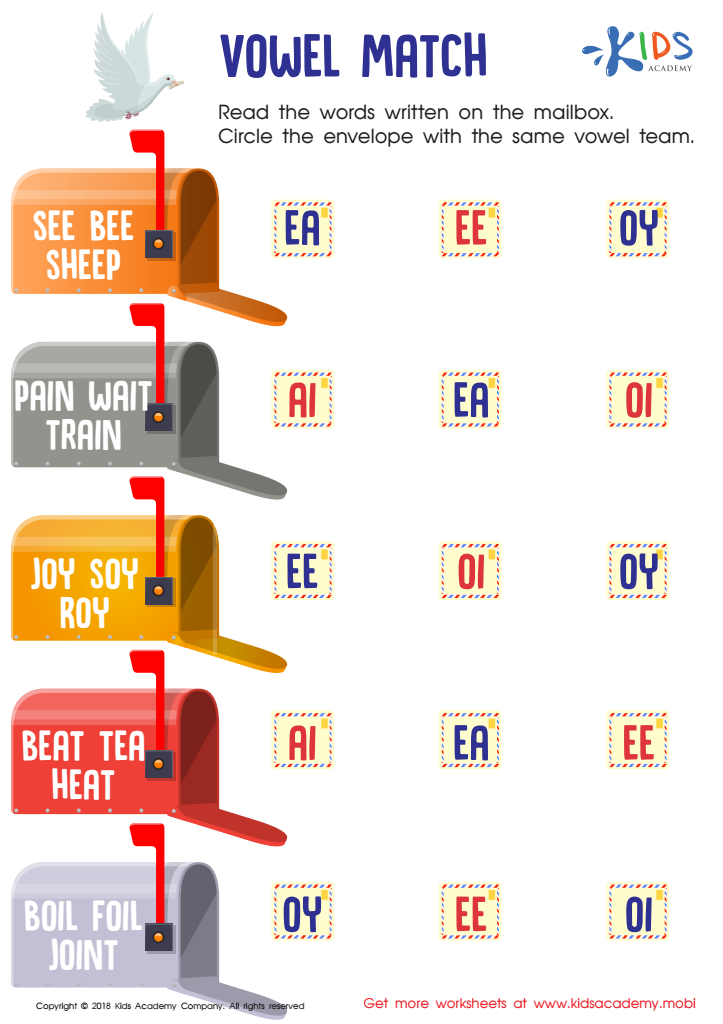
Vowel match Worksheet
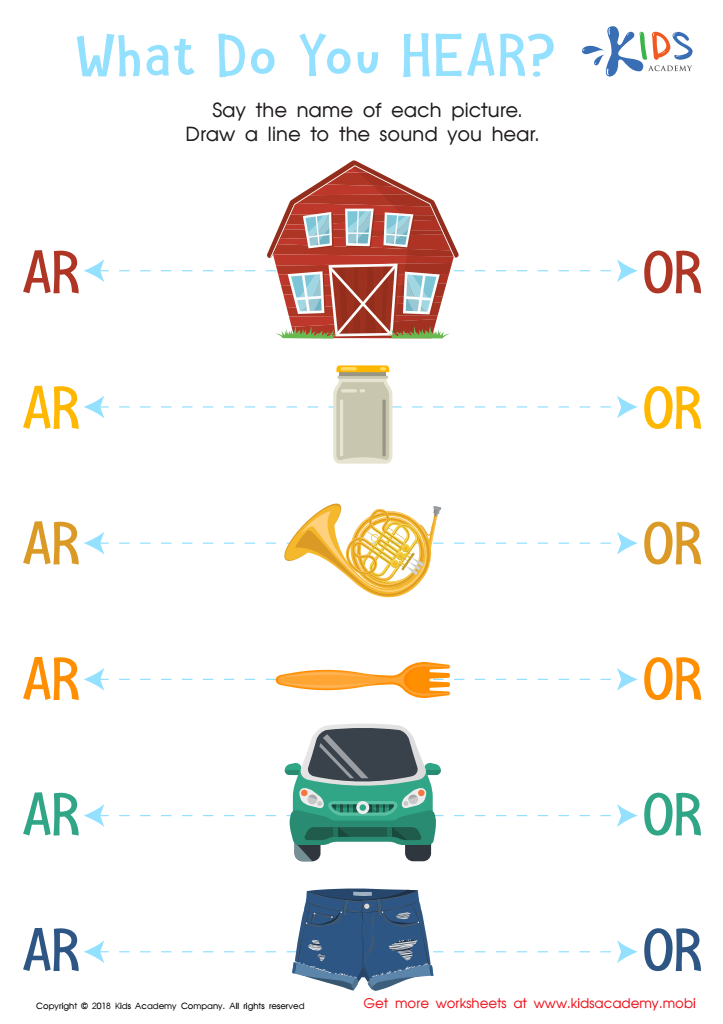
What do you hear Worksheet





Sound Association Vowels are crucial for children aged 3-7 as they form the foundation of reading and language development. At this age, children are naturally curious and absorb information quickly. Introducing the concept of vowels—specifically the sounds associated with them—helps reinforce their phonemic awareness, an essential skill for literacy.
Vowels represent significant building blocks inphonics, making it easier for children to decode and understand words. When children grasp the sounds of vowels, they can segment and blend sounds more effectively, leading to greater reading fluency. Early exposure to vowel sound associations also nurtures spelling skills, a vital aspect of writing.
Moreover, engaging with vowels through playful activities encourages a positive attitude toward learning. Songs, games, and storytelling that focus on vowel sounds not only make the process enjoyable but also enhance memory retention. This foundational knowledge equips children to tackle more complex language tasks as they progress in their education.
Parents and teachers play a pivotal role in fostering this aspect of learning, guiding children through activities that support sound recognition. By prioritizing vowel sound association in early education, they set the stage for a love of reading and learning that can last a lifetime.







