Logical thinking improvement Chess Worksheets for Ages 3-7
3 filtered results
-
From - To
Enhance your child’s critical thinking skills with our Logical Thinking Improvement Chess Worksheets for Ages 3-7. These engaging worksheets are designed to introduce young minds to the strategic world of chess, fostering essential cognitive skills such as problem-solving, pattern recognition, and forward-thinking. Perfect for both beginners and budding enthusiasts, each worksheet features age-appropriate challenges and fun illustrations to keep your little ones eager to learn. Cultivate intellectual growth and provide a head start in logical reasoning with activities tailored for growing minds. Dive into the exciting realm of chess and watch your child’s mental agility soar!
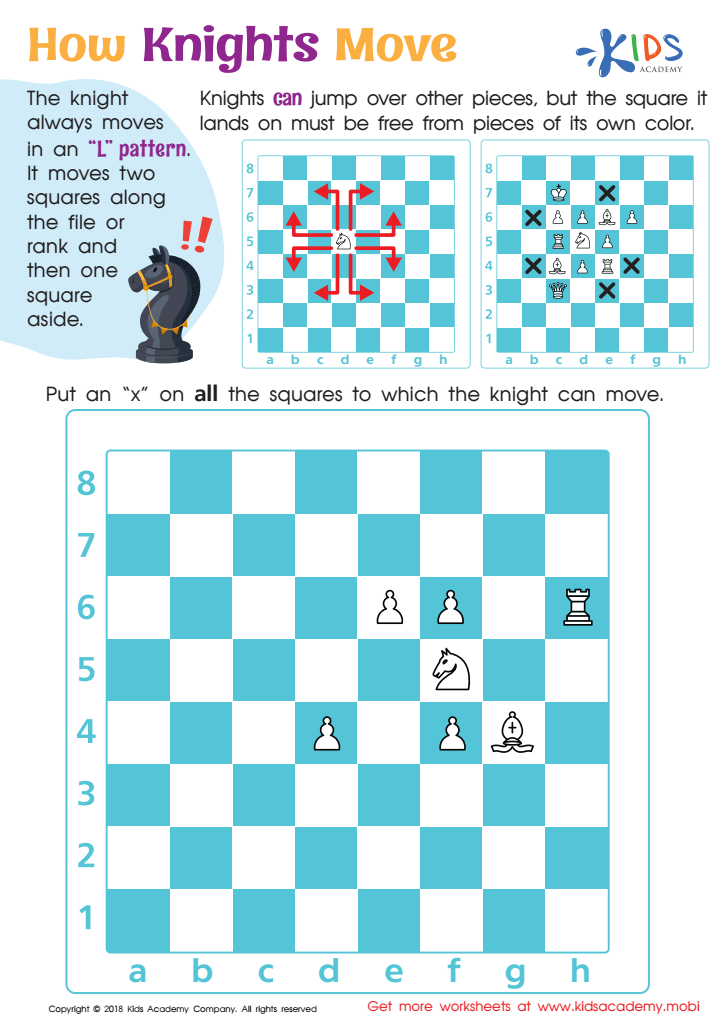
How Knights Move Worksheet
 Assign to My Students
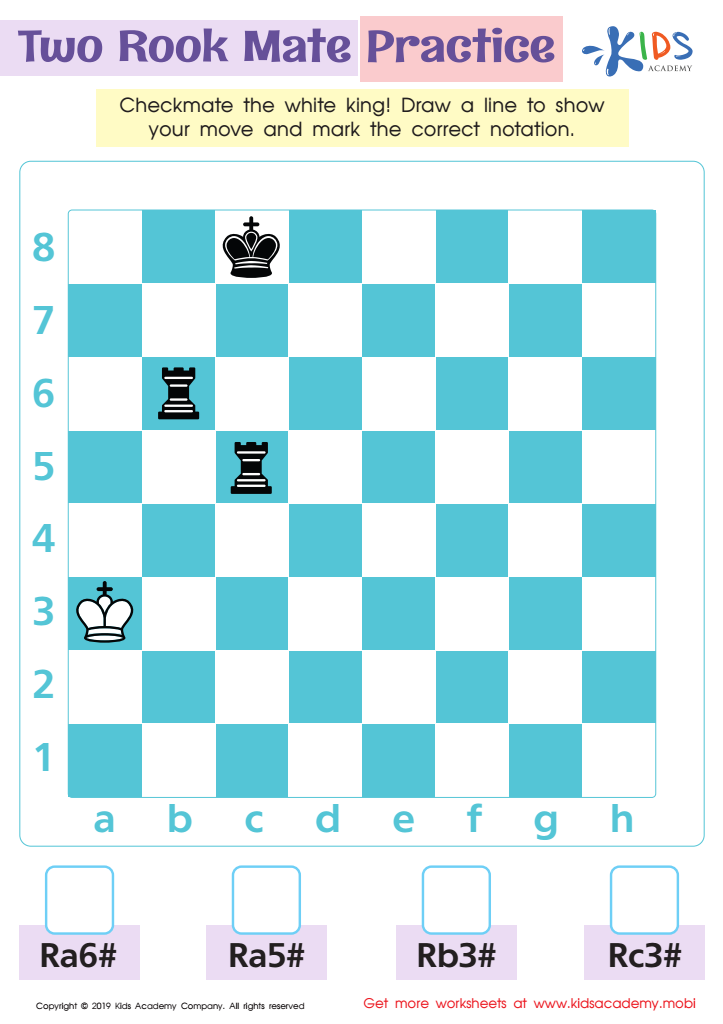
Two Rook Mate Practice Worksheet
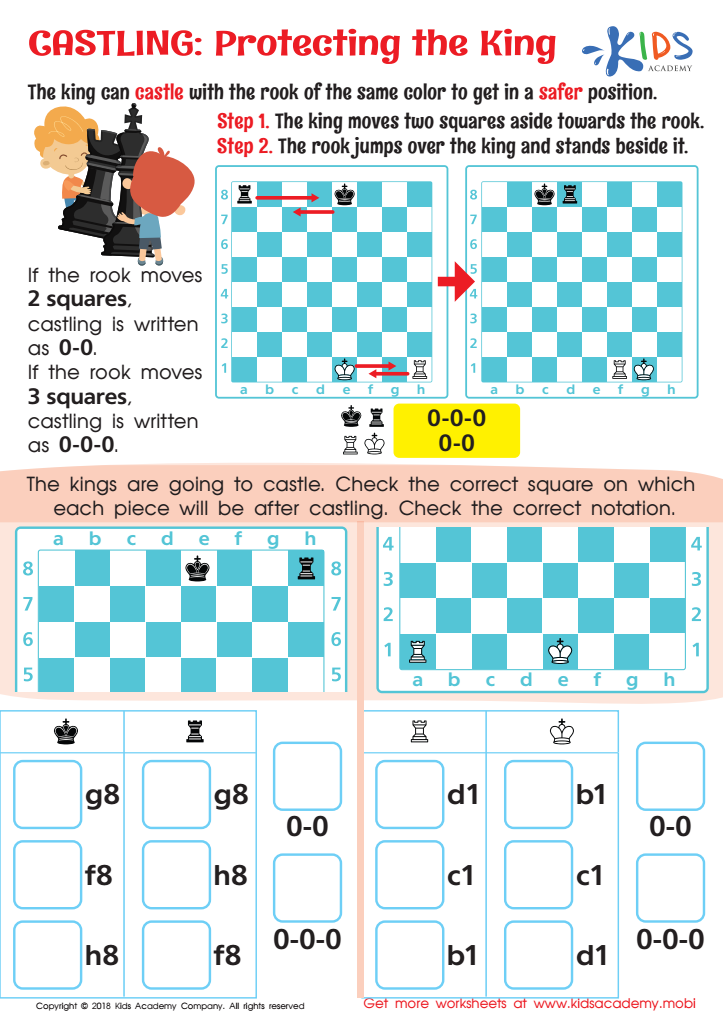
Castling: Protecting the King Worksheet






Parents and teachers should care about improving logical thinking through chess for young children, ages 3-7, because it plays a crucial role in early cognitive development. At this tender age, children's brains are highly malleable, and introducing them to chess offers numerous educational benefits. Chess encourages children to think several steps ahead, improving their ability to foresee consequences—a skill that’s essential in both academics and life situations.
Additionally, chess enhances problem-solving abilities. By figuring out strategies to counter their opponents' moves, children learn to navigate challenges methodically. This skill can translate to better performance in subjects such as mathematics and science, where logical sequencing and critical thinking are vital.
Furthermore, chess helps develop concentration and patience. Young children often have short attention spans, but the immersive nature of chess forces them to stay focused for more extended periods. This improved concentration can benefit their overall classroom behavior and academic diligence.
Chess also fosters healthy competition and teaches the value of sportsmanship. By learning to win graciously and lose with dignity, children develop emotional intelligence and resilience.
In sum, teaching chess at an early age equips children with a robust toolkit of cognitive and emotional skills, setting a strong foundation for their future educational journeys and personal growth.