Problem-solving practice Chess Worksheets for Ages 3-7
3 filtered results
-
From - To
Welcome to our Problem-Solving Practice Chess Worksheets for Ages 3-7! Our engaging and interactive worksheets are designed to boost critical thinking and problem-solving skills in young learners while introducing them to the exciting game of chess. Each worksheet features fun activities that foster analytical reasoning and decision-making as children tackle unique challenges inspired by chess concepts. Perfect for parents and educators, these resources not only promote cognitive development but also encourage patience and strategic thinking. Discover how our expertly crafted worksheets can make learning enjoyable and effective. Start your child's chess journey today and watch them develop essential life skills!
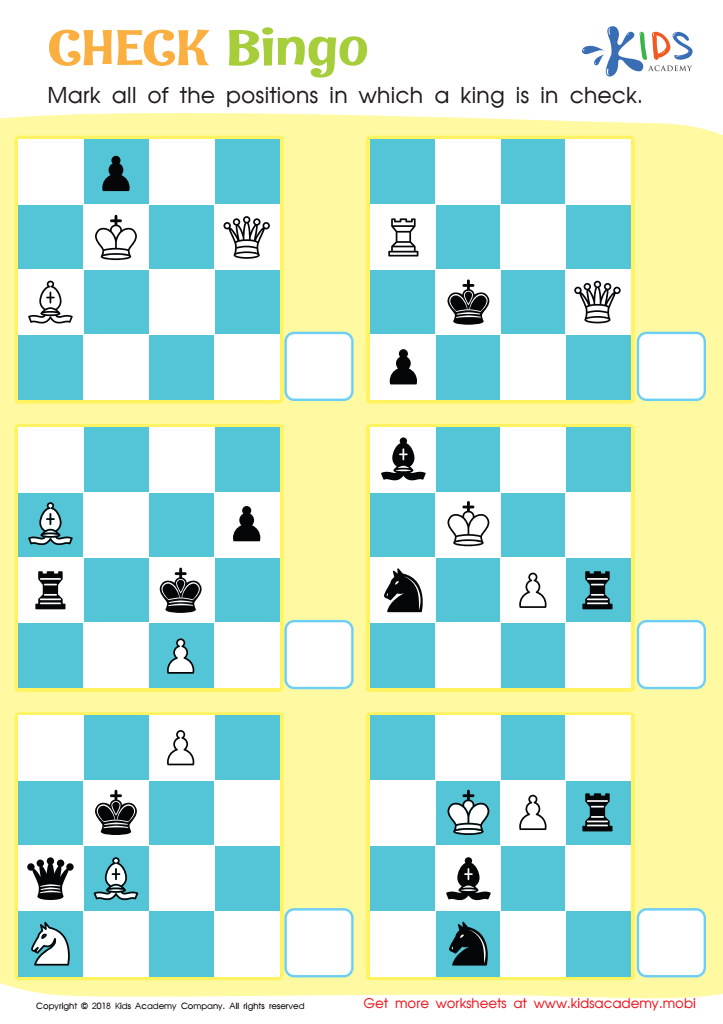
Check Bingo Worksheet
 Assign to My Students
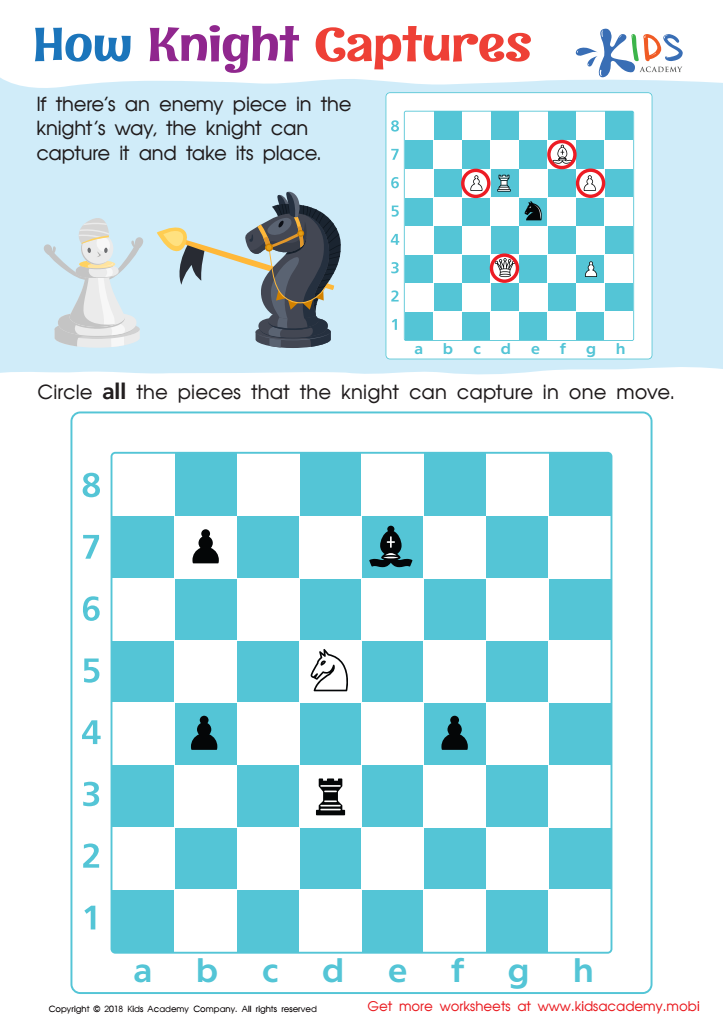
How Knight Captures Worksheet
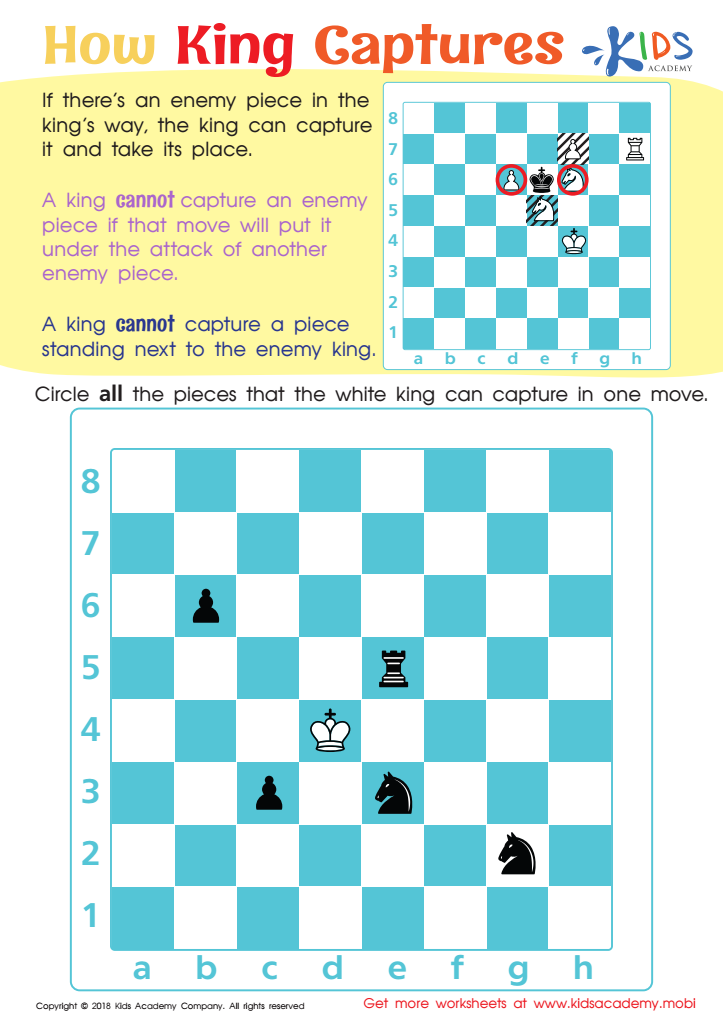
How King Captures Worksheet


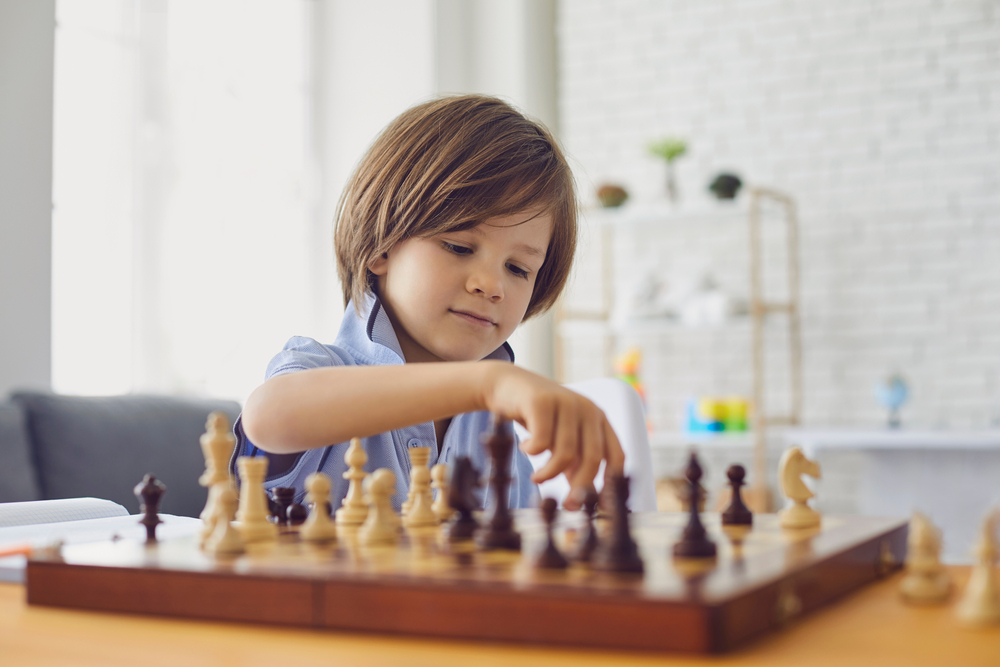
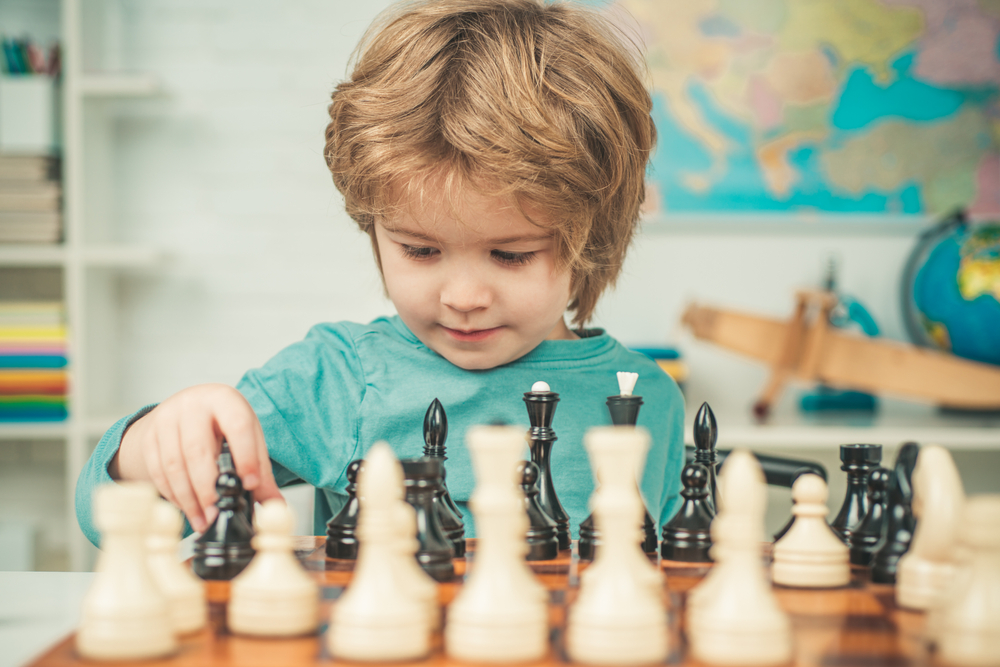

Parents and teachers should prioritize problem-solving practice through chess for children ages 3-7 for several compelling reasons. Firstly, chess uniquely fosters critical thinking and strategic planning. By engaging with the game, children learn to analyze positions, anticipate their opponent's moves, and devise viable strategies, skills that serve them beyond the chessboard.
Moreover, early exposure to chess enhances cognitive development. Research indicates that playing chess improves memory, concentration, and logical reasoning abilities. These foundational skills are crucial as children prepare for more complex academic challenges in later years.
In addition, chess promotes social interaction and emotional intelligence. In a game setting—whether with peers or family—children learn sportsmanship, patience, and the importance of teamwork, crucial skills for navigating social dynamics in school and life.
Furthermore, the game can cultivate a growth mindset. Children learn that losses provide valuable lessons, instilling resilience and a love for learning.
Lastly, introducing chess at a young age can enhance a child's academic performance, particularly in subjects like math and reading. By making problem-solving practice a fun and engaging activity through chess, parents and teachers can lay the groundwork for lifelong skills that promote success in various aspects of a child's life.