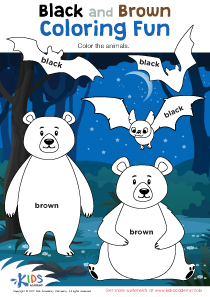
Letter tracing skills English for Beginners Worksheets for Ages 3-7
3 filtered results
-
From - To
Enhance your child's letter tracing skills with our engaging English worksheets designed for beginners aged 3 to 7! These printable activities provide a fun, interactive way for young learners to develop fine motor skills and letter recognition. Each worksheet features vibrant illustrations and simple instructions to keep children motivated and focused. As they trace each letter, they will strengthen their handwriting proficiency and build confidence in their English language journey. Perfect for teachers and parents, our letter tracing worksheets offer a comprehensive resource that caters to young learners at home or in the classroom. Start your child's writing adventure today!
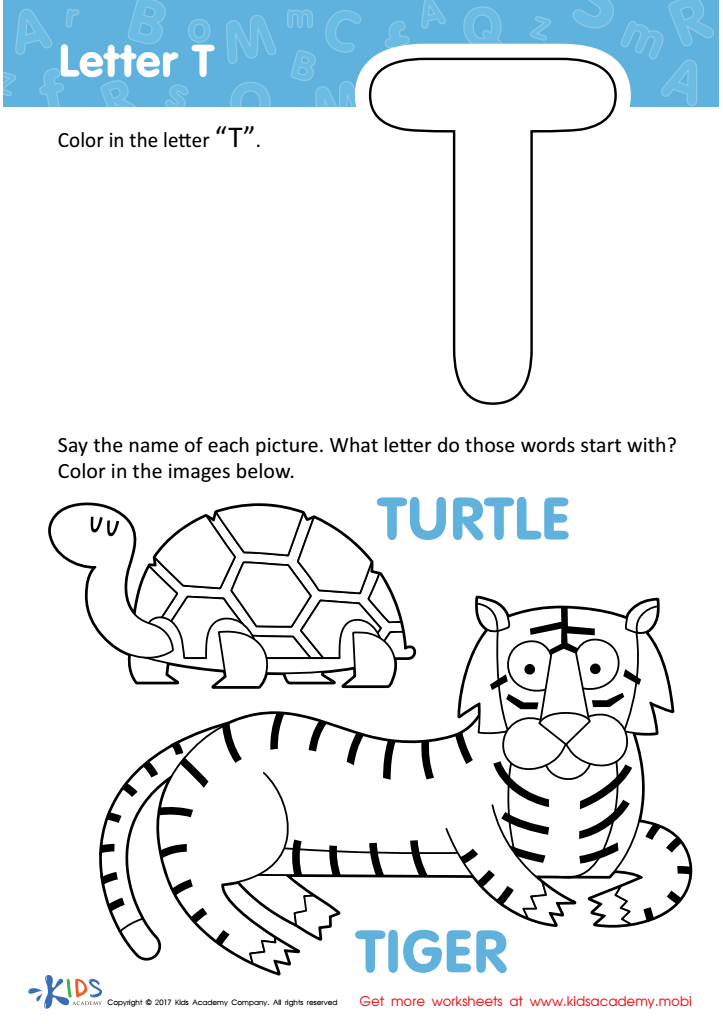
Letter T Coloring Sheet
 Assign to My Students
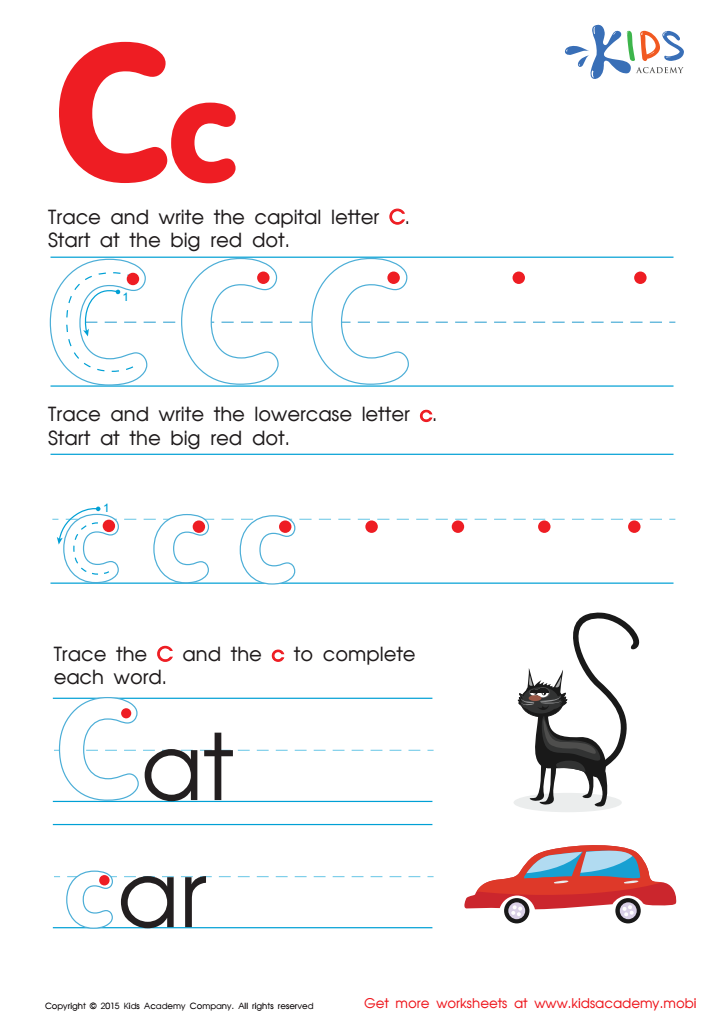
Letter C Tracing Page
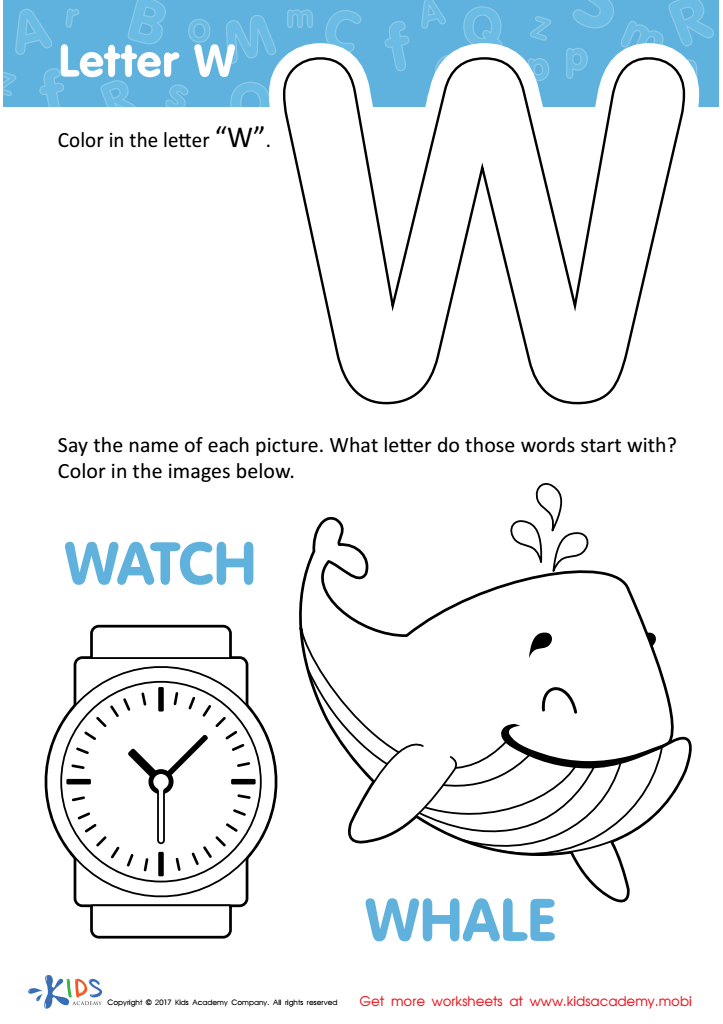
Letter W Coloring Sheet
Assign to My Students





Letter tracing skills are vital for young learners aged 3-7 as they serve as the foundation for early literacy and fine motor development. At this crucial stage, children begin to forge critical connections between letters and sounds, which are essential for reading and writing. Tracing letters helps reinforce their shapes and aids in the recognition of letters, thereby enhancing phonemic awareness, which is linked to future reading success.
Moreover, letter tracing supports fine motor skills, promoting hand-eye coordination and dexterity. These skills are not only important for writing but also for various everyday tasks, boosting children's overall confidence and independence. Engaging in tracing activities can stimulate cognitive development, as children learn to focus, follow directions, and develop patience.
Furthermore, letter tracing can be a fun, interactive way for parents and teachers to bond with children during learning activities. The enjoyment and sense of accomplishment that come from mastering letter formation can foster a love of learning, encouraging eagerness to explore written communication further.
In summary, prioritizing letter tracing skills for young learners begets crucial lifelong benefits, reinforcing the importance of these efforts for parents and educators alike.