Analog clock reading Worksheets for Ages 3-7
4 filtered results
-
From - To
Welcome to our Analog Clock Reading Worksheets for Ages 3-7! Designed to introduce young learners to the concepts of time, our engaging activities help children identify numbers, understand clock positions, and read both hours and minutes. Each worksheet is colorful and age-appropriate, making learning fun and interactive. With a variety of exercises, including matching, coloring, and time-telling challenges, kids will develop essential math skills while gaining confidence in their ability to read analog clocks. Perfect for home or classroom use, our worksheets are a fantastic tool for nurturing a lifelong understanding of time. Start your child's learning journey today!
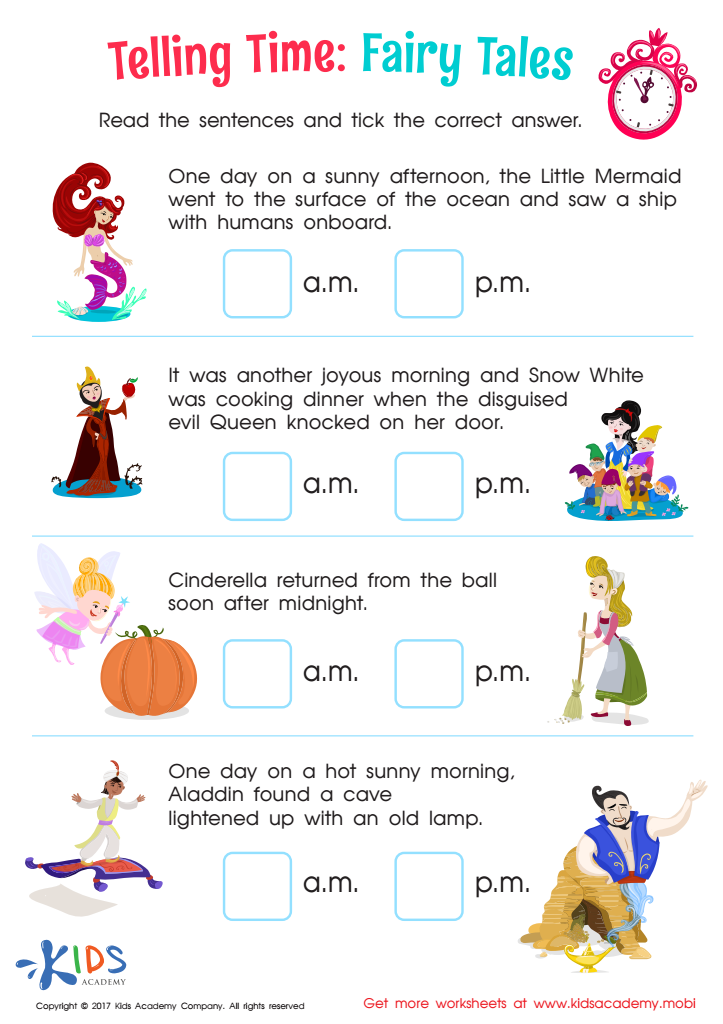
Telling Time: Fairy Tales Worksheet
 Assign to My Students
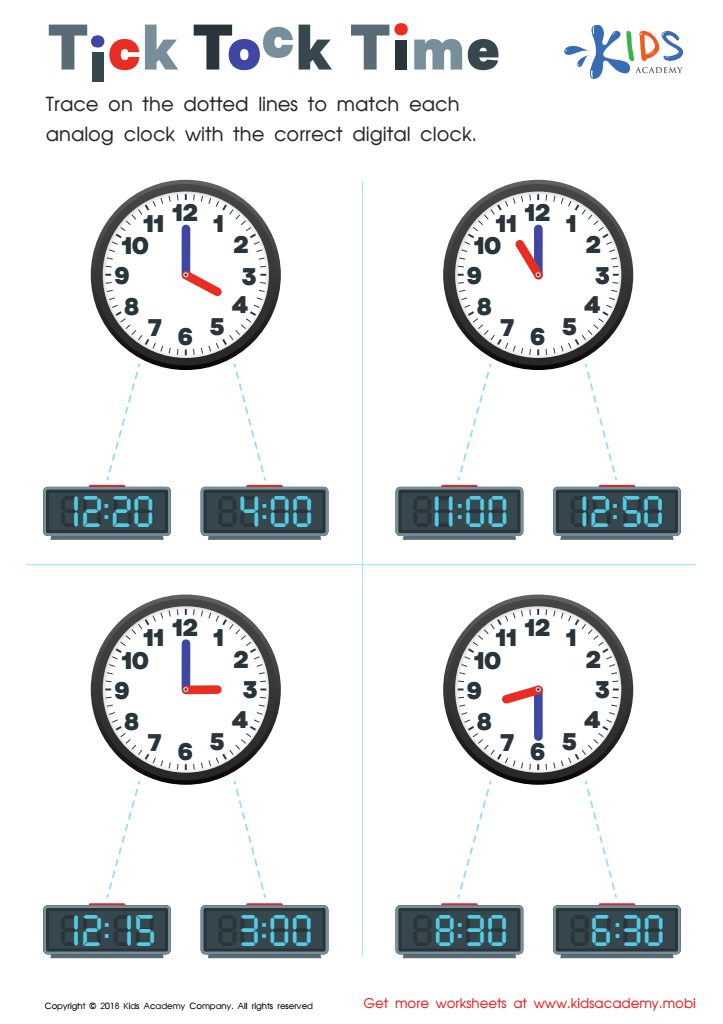
Tick Tock Time Worksheet
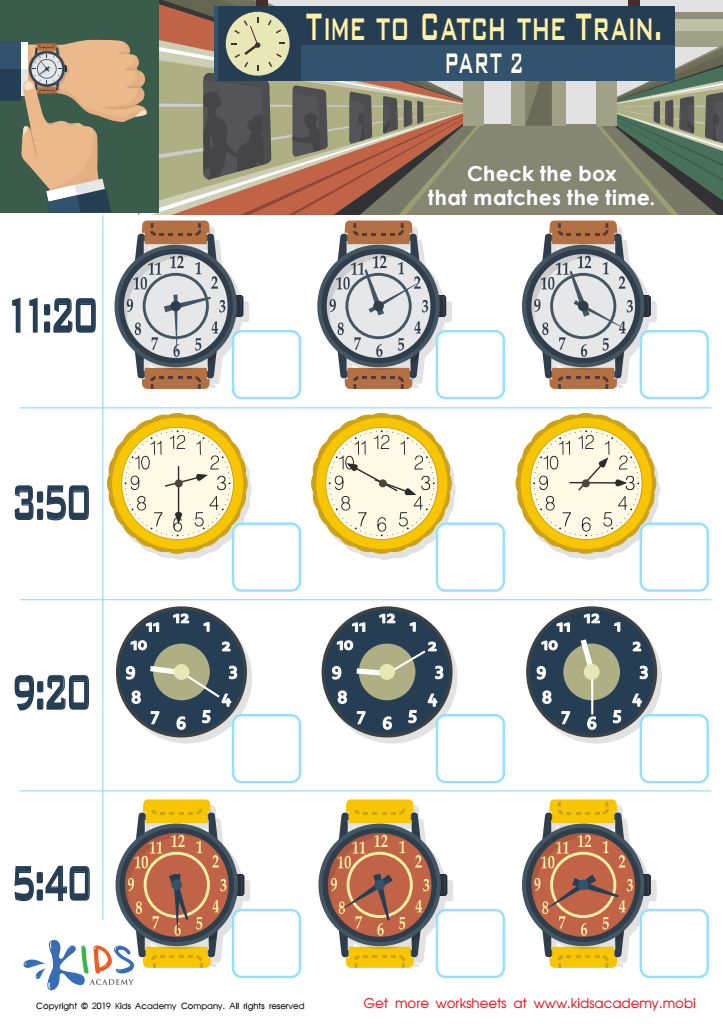
Time to Catch the Train Part 2 Worksheet








Teaching young children, ages 3 to 7, how to read an analog clock is crucial for several reasons. Firstly, it lays a foundation for understanding time management and responsibility. As children grow, knowing how to read the time helps them navigate their daily routines and organize their activities, such as playtime and homework.
Moreover, reading an analog clock involves enhancing critical thinking and math skills. Children learn to differentiate between numbers, understand concepts such as greater and lesser values, and grasp the significance of hour and minute hands. This cognitive development is beneficial across subject areas.
Analog clocks promote a strong sense of patience and awareness. When children observe how time progresses in a visual format, they develop an appreciation for waiting and the passage of time itself. This is often lost with digital time displays, which can lead to a superficial understanding.
Teaching children to read an analog clock also instills a sense of nostalgia and connection to traditional skill sets. In an increasingly digital world, maintaining this skill can remind children of simpler, timeless ways of experiencing time. For parents and teachers, nurturing this skill is a worthwhile investment for lifelong learning and personal growth.








