Applying math skills Worksheets for Ages 3-7
3 filtered results
-
From - To
Explore our engaging "Applying Math Skills Worksheets for Ages 3-7" to make learning math fun and interactive! Our expertly designed worksheets help children develop essential math skills, such as counting, addition, subtraction, and pattern recognition. Tailored for young learners, these activities encourage critical thinking and problem-solving through colorful visuals and hands-on exercises. Perfect for both classroom and at-home learning, our worksheets cater to various learning styles, ensuring every child can confidently build foundational math skills. Visit Kids Academy to give your little ones a head start in math with our enjoyable and educational resources!
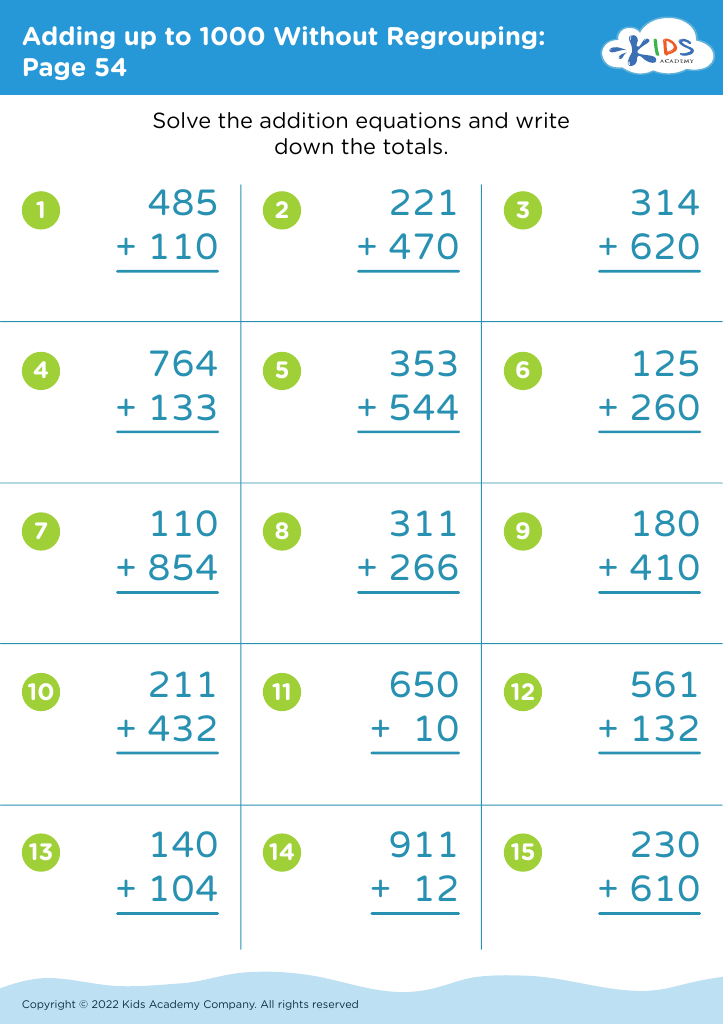
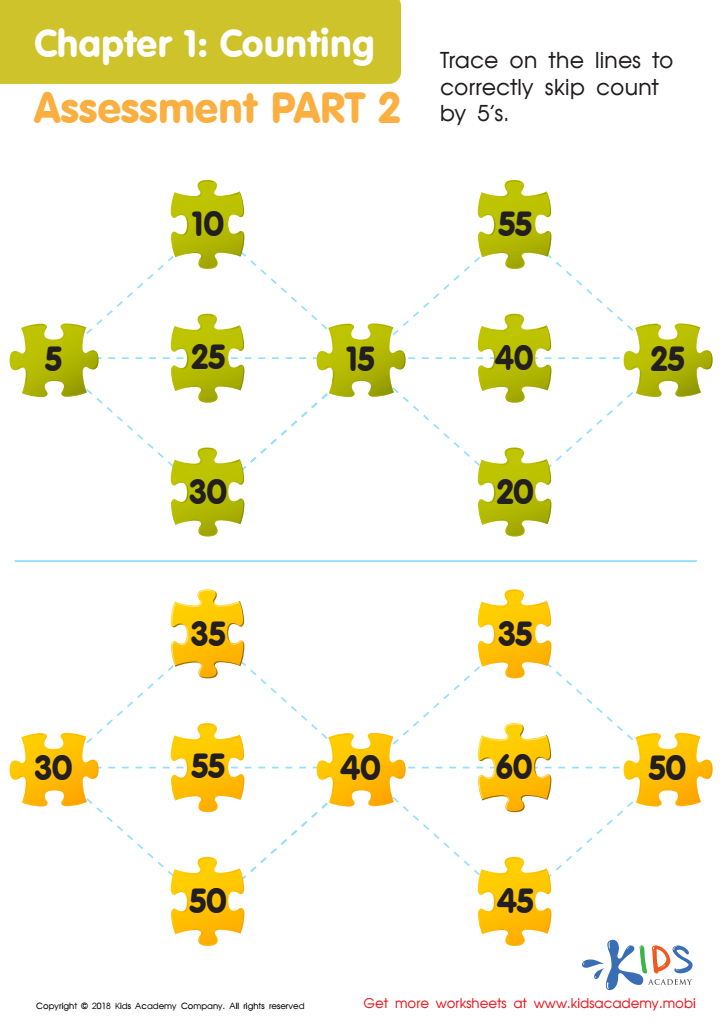
Counting: Assessment 2 Worksheet
 Assign to My Students
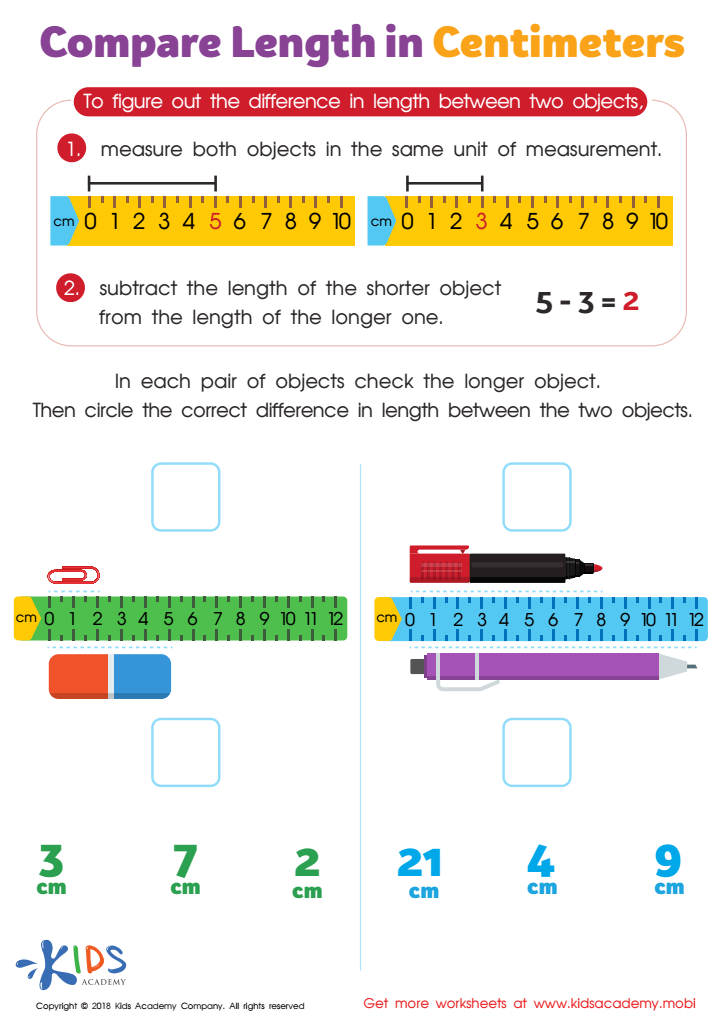
Compare Length in Centimeters Worksheet




.jpg)


Parents and teachers should prioritize applying math skills for children aged 3-7 because it lays the foundation for essential cognitive development and future academic success. At this young age, children's brains are rapidly developing, and engaging with basic math concepts helps to strengthen neural connections. Early exposure to math fosters critical thinking, problem-solving, and logical reasoning skills that are crucial not just for math-related subjects, but across all areas of learning.
Moreover, early math proficiency has been strongly linked to later academic achievement. Studies indicate that early math skills are better predictors of future academic success than early reading skills. Introducing math concepts such as counting, sorting, and recognizing patterns helps children develop numeric literacy, which becomes fundamental as they progress through school.
Additionally, making math a part of daily life at an early age instills a positive attitude towards the subject. It helps to demystify math, making it seem less intimidating, and encourages a growth mindset where children learn to appreciate the value of effort and persistence. Activities that incorporate math in a fun and engaging manner, such as counting games, puzzles, or cooking, spark natural curiosity and enjoyment.
In conclusion, integrating math skills in early childhood education supports well-rounded cognitive development, lays a vital academic foundation, and fosters a lifelong appreciation for learning and critical thinking.








