Basic addition practice Worksheets for Ages 3-7 - Page 2
26 filtered results
-
From - To
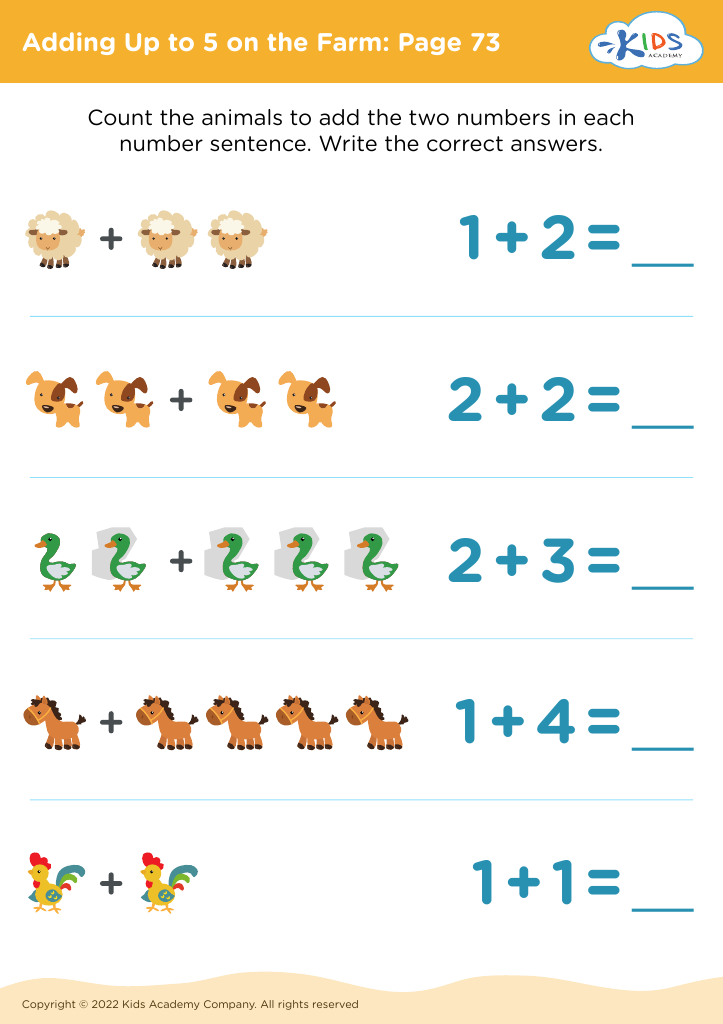
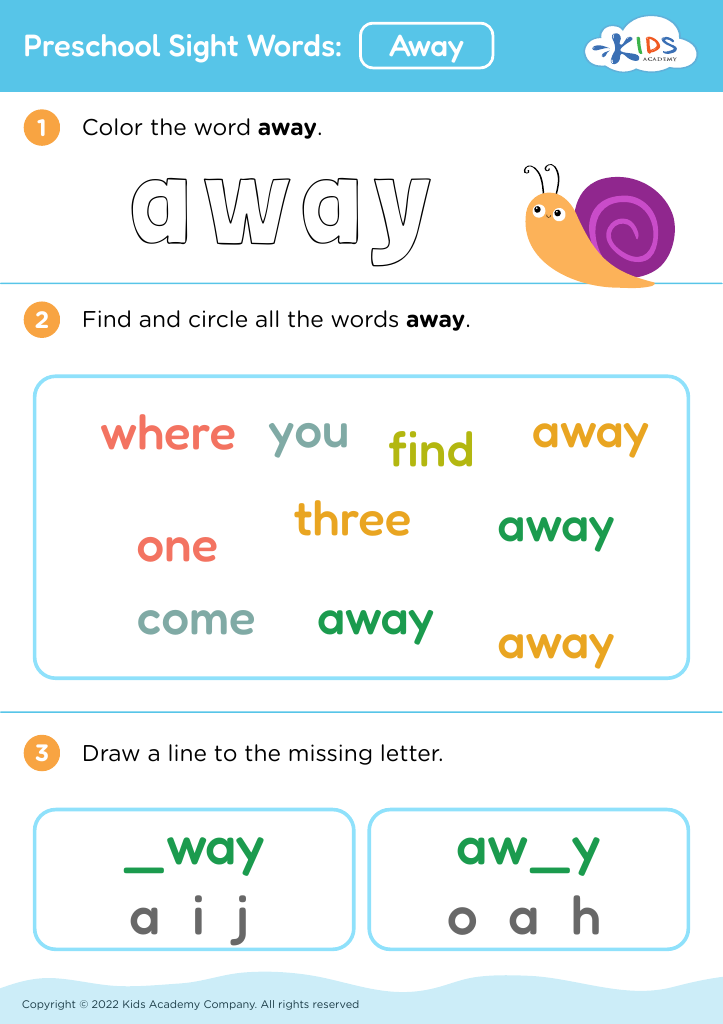








Basic addition practice for ages 3-7 is crucial as it lays the foundation for future mathematical understanding and cognitive development. At this age, children are highly impressionable and their brains are developing rapidly, making it an ideal time to introduce fundamental math concepts. Early math skills are strong predictors of later academic success, not only in math but across other subjects as well.
Engaging young children in basic addition exercises helps to enhance their number sense, enabling them to understand relationships between numbers and how they interact in sums. This foundational understanding is critical for tackling more complex math problems they will encounter later in their education. Additionally, mastering basic addition boosts a child's confidence and reduces math anxiety, transforming attitudes towards the subject into more positive perceptions.
Moreover, early exposure to math concepts supports overall cognitive development, including improvements in memory, attention, and problem-solving skills. These are key abilities that children use both in and out of school.
For parents and teachers, regular practice should be playful and engaging to keep young learners interested. Games, songs, and hands-on activities can make learning addition enjoyable, fostering a love for learning and cooperation from an early age. Neglecting this crucial period could lead to gaps in understanding, making future learning more challenging. Therefore, both parents and teachers should prioritize basic addition practice to support a child's long-term academic and personal development.








