Basic math learning Worksheets for Ages 3-7
3 filtered results
-
From - To
Enhance your child's early math skills with our engaging Basic Math Learning Worksheets designed for ages 3-7. These fun, printable worksheets are perfect for young learners, offering a variety of activities that promote foundational math concepts such as counting, addition, and number recognition. Each worksheet is thoughtfully crafted to keep children entertained while they develop essential skills through colorful visuals and interactive exercises. Ideal for parents and educators, our resources support early education and provide a fun learning experience at home or in the classroom. Explore our collection today and watch your child's confidence and math abilities soar!
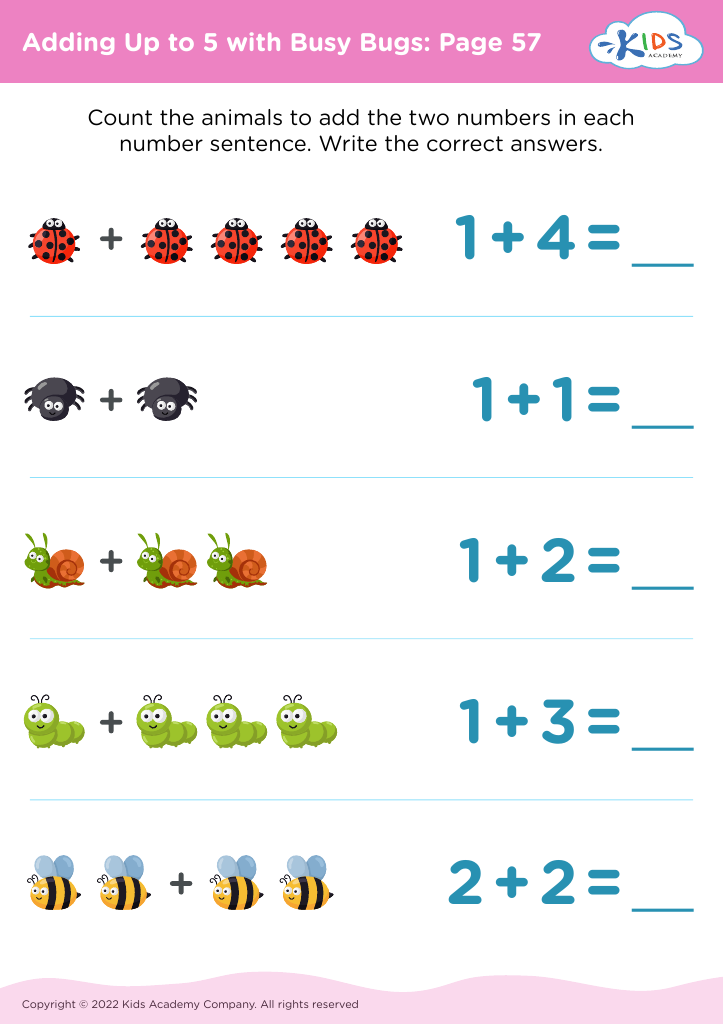
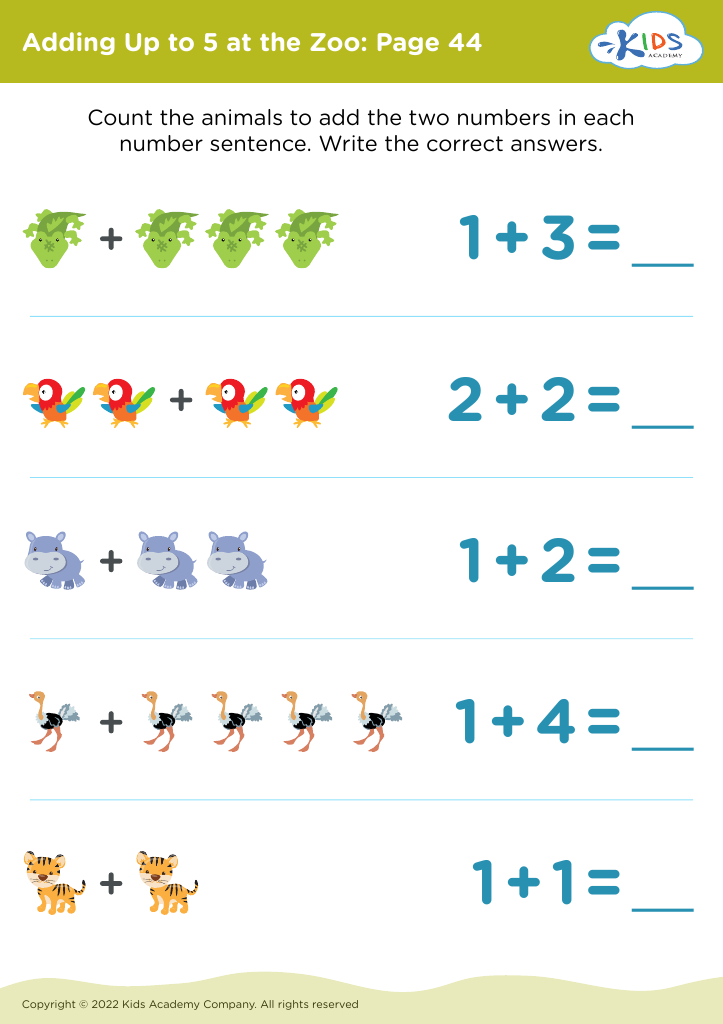
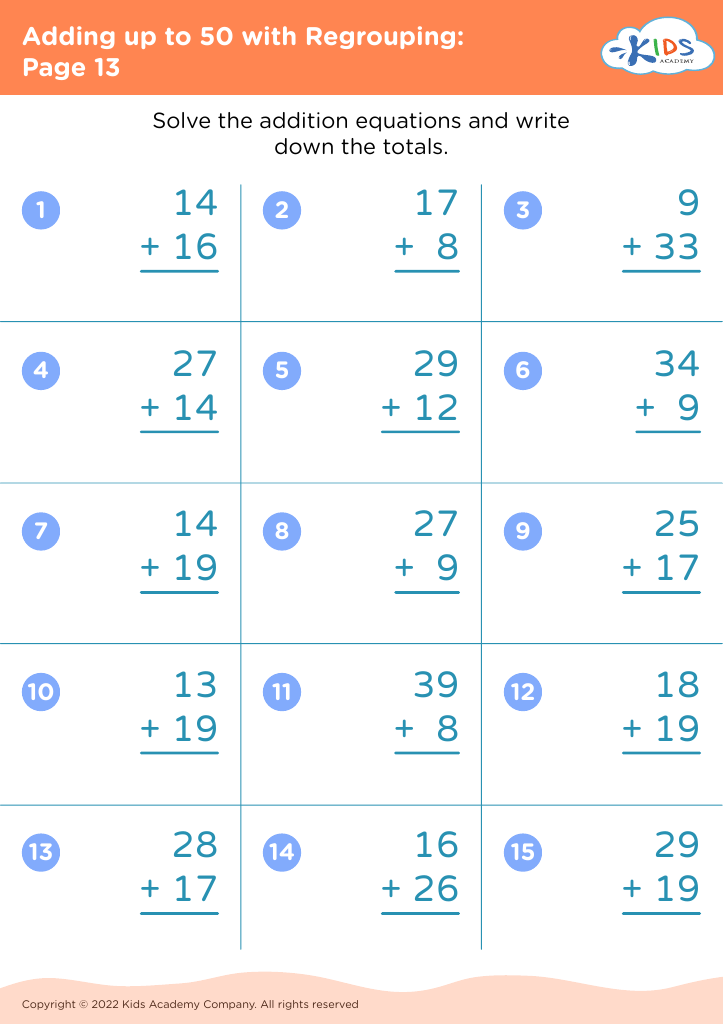








Basic math learning for children aged 3-7 lays the foundation for future academic success and everyday problem-solving skills. During these early years, children develop critical cognitive and social-emotional skills through simple mathematical concepts such as counting, measuring, and understanding shapes. Engaging with basic math encourages curiosity, promotes logical thinking, and enhances their ability to recognize patterns and relationships.
Moreover, math learning in early childhood supports language development, as children learn to articulate their understanding of quantities and descriptions, fostering communication skills. Early exposure to math also builds self-confidence; children gain a sense of achievement as they grasp basic concepts, making them more willing to tackle complex challenges in later stages of education.
Involving parents and teachers in this learning process is crucial. Parents can create a supportive home environment through everyday math-related activities such as cooking, shopping, and playtime games. Teachers can implement engaging classroom experiences that stimulate mathematical thinking. Collaboratively, they help children develop a positive attitude toward mathematics, which combats common anxiety associated with the subject. Ultimately, nurturing early math skills equips children to navigate a world increasingly driven by numerical understanding, ensuring they are well-prepared for their academic journeys ahead.








