Building vocabulary Worksheets for Ages 3-7
7 filtered results
-
From - To
Discover our engaging "Building Vocabulary Worksheets for Ages 3-7," designed to help young learners expand their language skills through fun and interactive activities. These worksheets encourage children to explore new words, enhance their understanding, and improve their communication abilities. Tailored to various skill levels, our resources include matching games, picture-word associations, tracing exercises, and fill-in-the-blank challenges. Perfect for both home and classroom use, these printable worksheets make vocabulary building enjoyable and effective. Empower your child’s learning journey with colorful, age-appropriate activities that instill a love for words and a solid foundation for future literacy success. Explore our collection today!
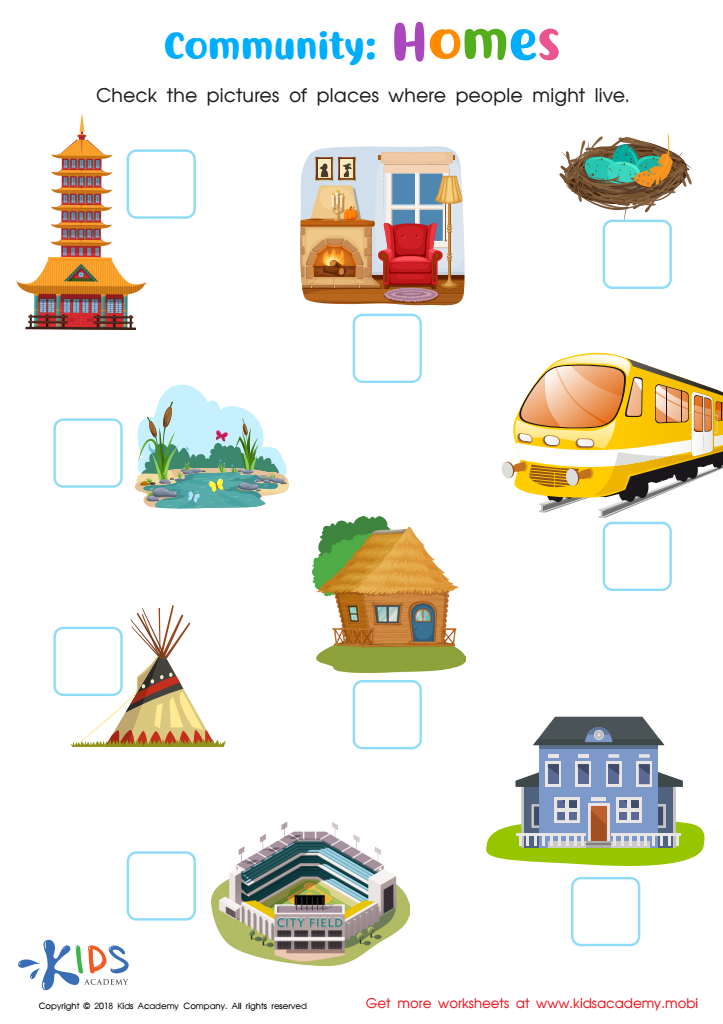
Community: Homes Worksheet
 Assign to My Students
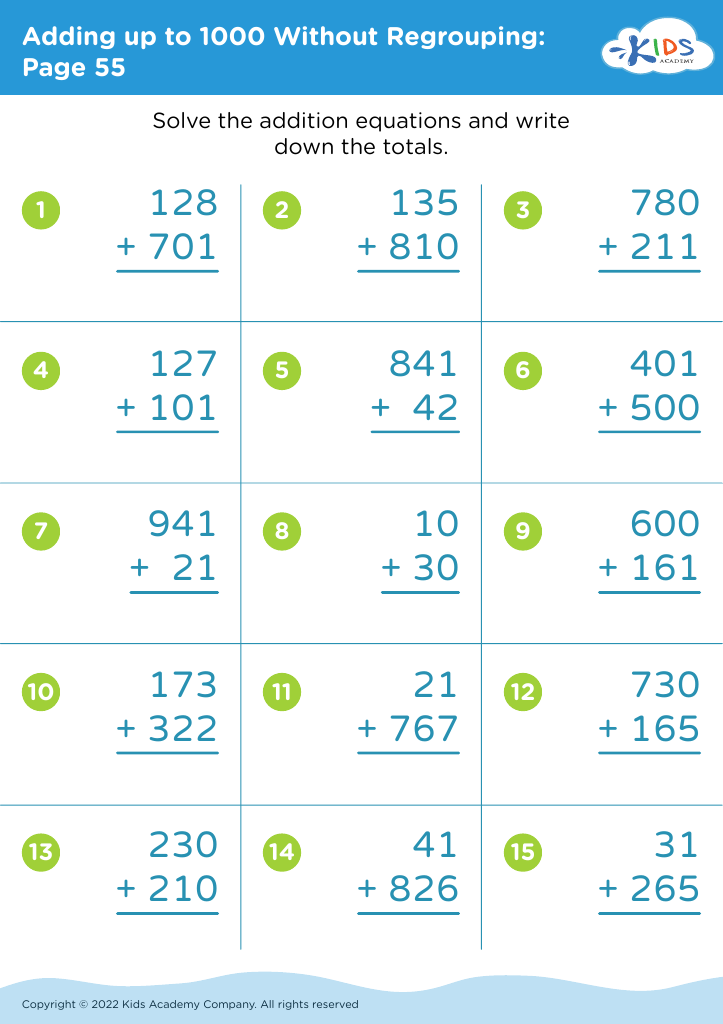
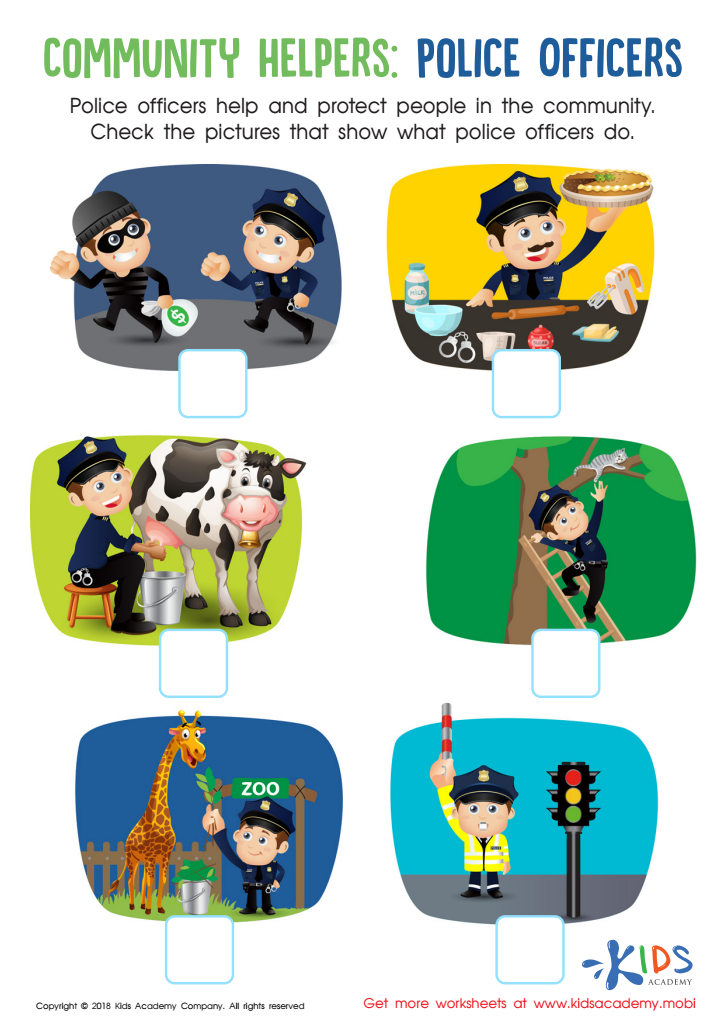
Police Officers Community Helpers Worksheet
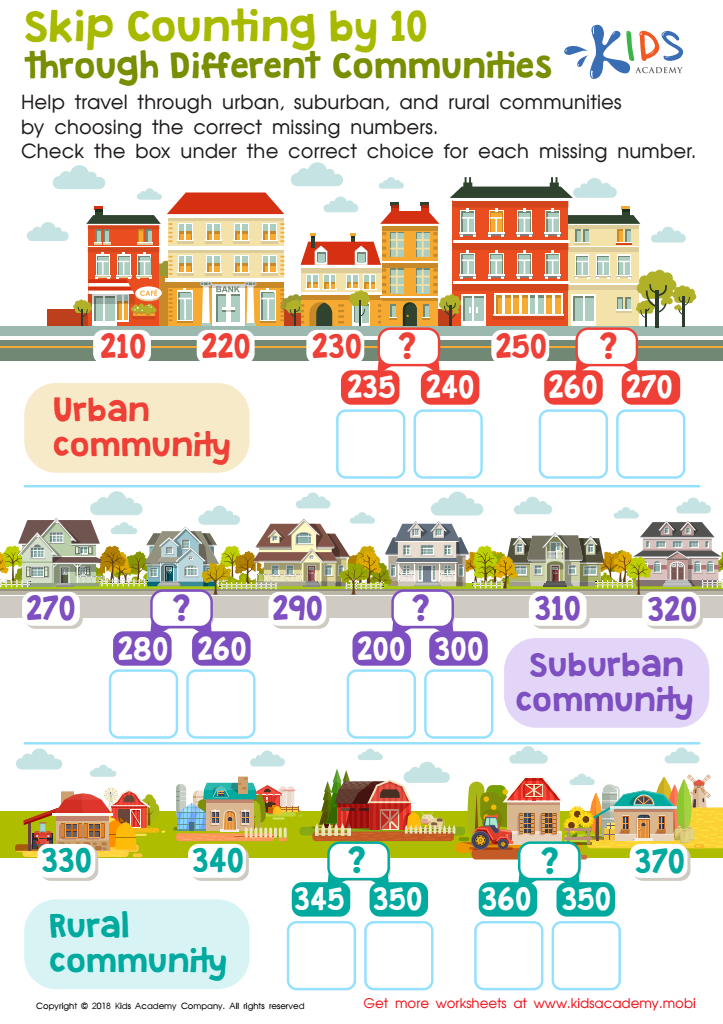
Skip Counting by 10 through Different Communities Worksheet
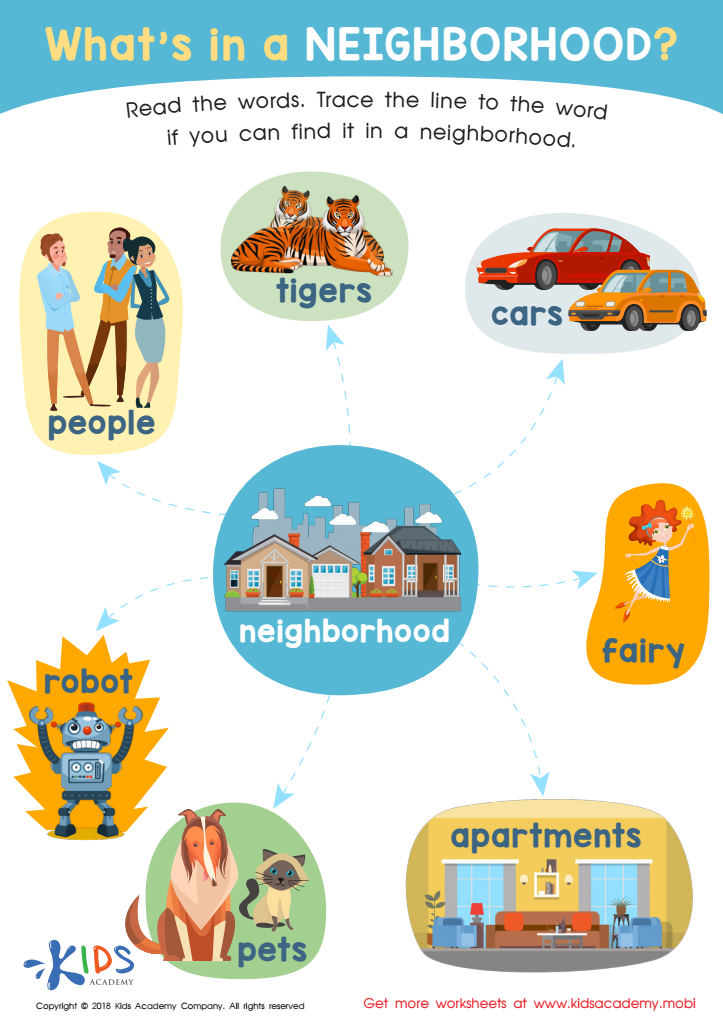
What's in a Neighborhood? Worksheet
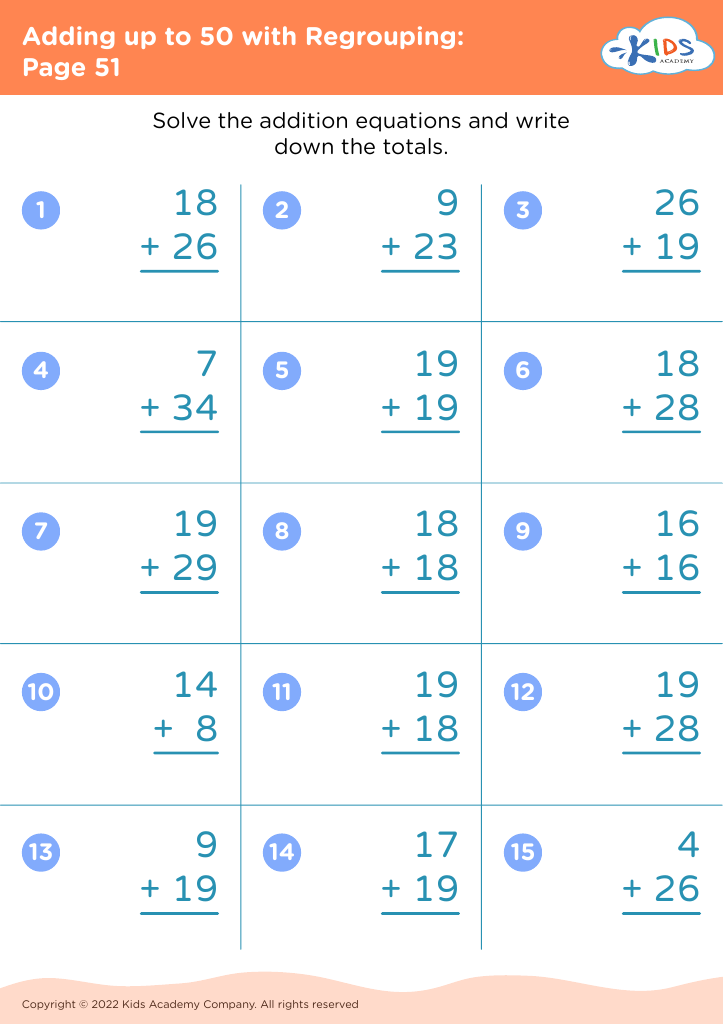
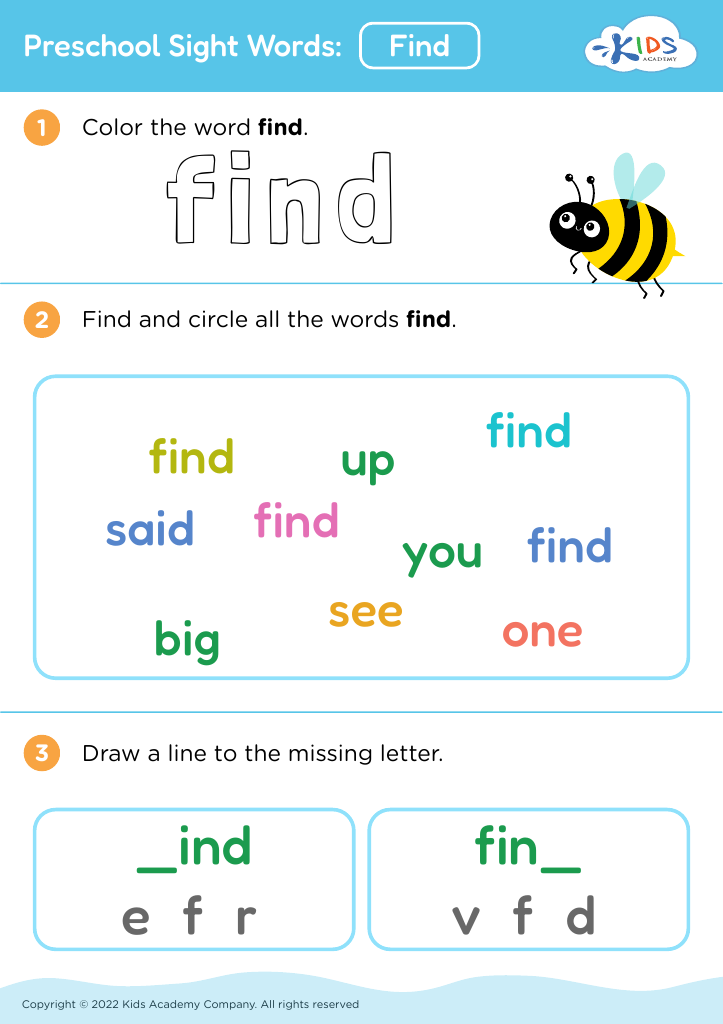








Building vocabulary in children aged 3-7 is vital for their overall development, impacting language acquisition, reading comprehension, and social skills. During these formative years, children's brains are exceptionally receptive to language, making it an ideal time to expand their vocabulary. A rich vocabulary not only enhances their ability to express thoughts and emotions clearly but also boosts their confidence in communicating with peers and adults.
Parents and teachers play a crucial role in vocabulary development through everyday interactions. Engaging children in conversations, reading age-appropriate books, and introducing new words in context fosters an enriching environment. Vocabulary acquisition is closely linked to academic success; children with stronger language skills are more likely to excel in reading and writing, which supports their performance throughout their educational journey.
Moreover, a robust vocabulary helps children understand the world around them and promotes critical thinking skills. By being exposed to diverse words and concepts, they can make connections between different ideas, enhancing their cognitive development. Ultimately, investing in vocabulary building through consistent, interactive practices will equip children with essential tools for effective communication and lifelong learning. Therefore, parents and teachers should prioritize vocabulary development as an integral aspect of nurturing young minds.








