
Character analysis Worksheets for Ages 3-7
5 filtered results
Difficulty Level
Grade
Age
-
From - To
Subject
Activity
Standards
Unlock the power of character analysis for young learners with our engaging worksheets designed for ages 3-7! These printable resources encourage children to explore and understand characters from their favorite stories. Through fun activities like drawing, matching, and storytelling prompts, kids develop critical thinking and comprehension skills in an interactive way. Our worksheets are perfect for parents and educators seeking to enrich literacy lessons while nurturing creativity and emotional intelligence. Foster a love for reading and storytelling by helping children connect with characters on a deeper level. Get started today and watch your little ones become budding literary analysts!
Favorites
With answer key
Interactive
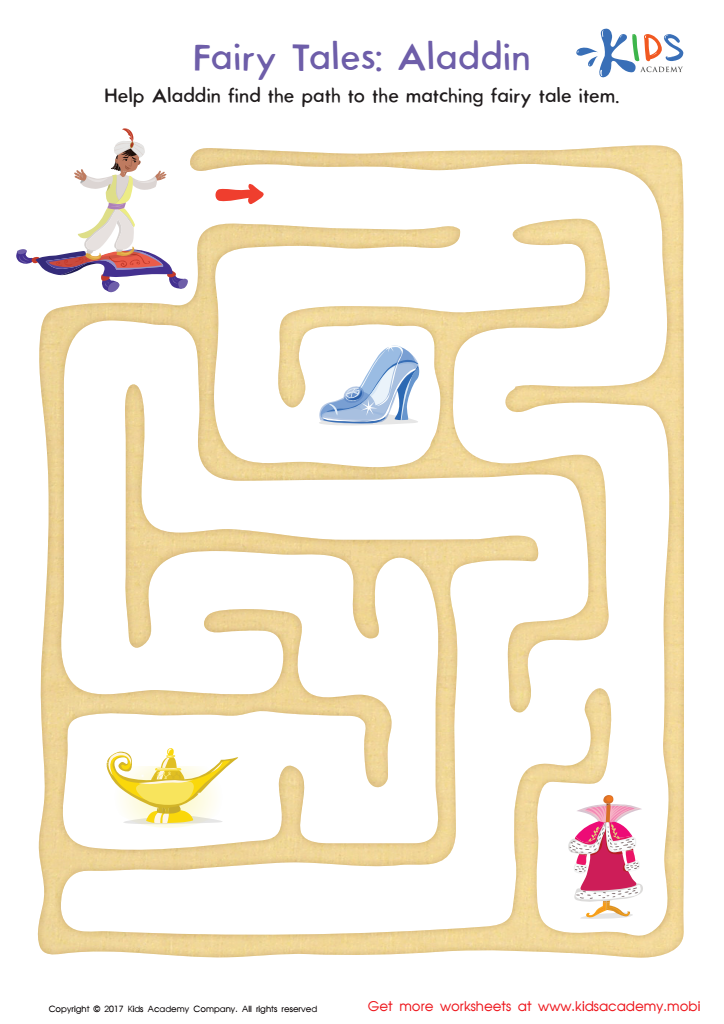
Fairy Tales Aladdin Printable
Test your child's reading recall with this challenge: the Aladdin maze worksheet! Guide your learner to identify objects linked to the story, then ask them to retell it afterwards. Hone those memory skills while having fun!
 Assign to My Students
Fairy Tales Aladdin Printable
Worksheet
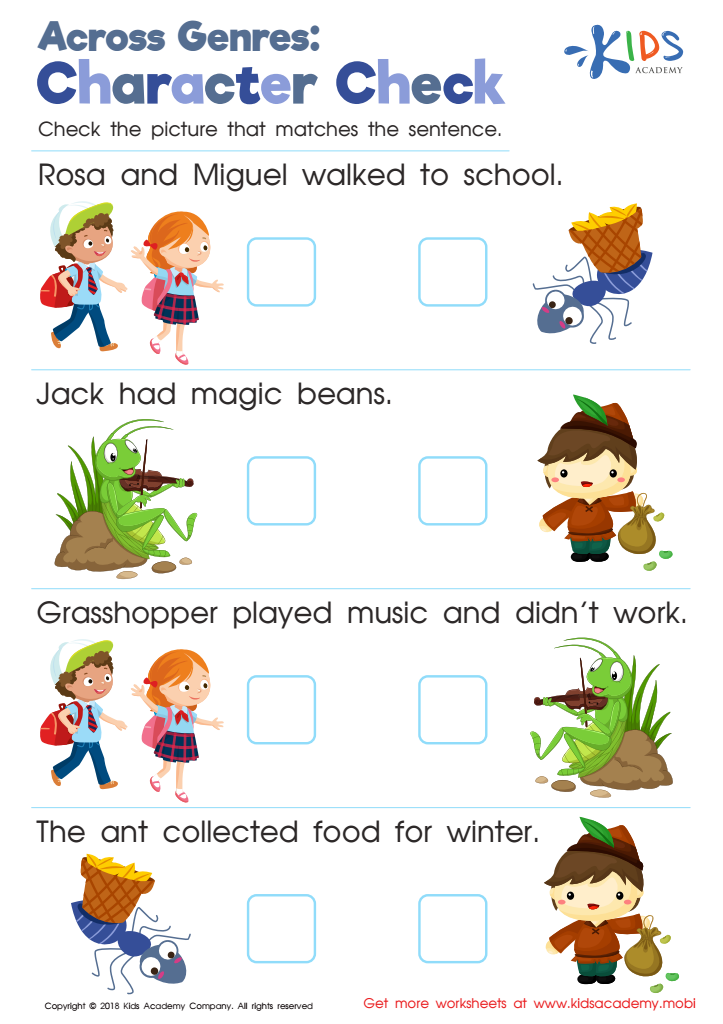
Across Genres: Character Check Worksheet
Read the sentences to your kids, then have them match the pictures to them. Ask them to look at the pictures and help them check which one goes with the sentence. The aim is to see how well they can do this exercise. (80 words)
Across Genres: Character Check Worksheet
Worksheet
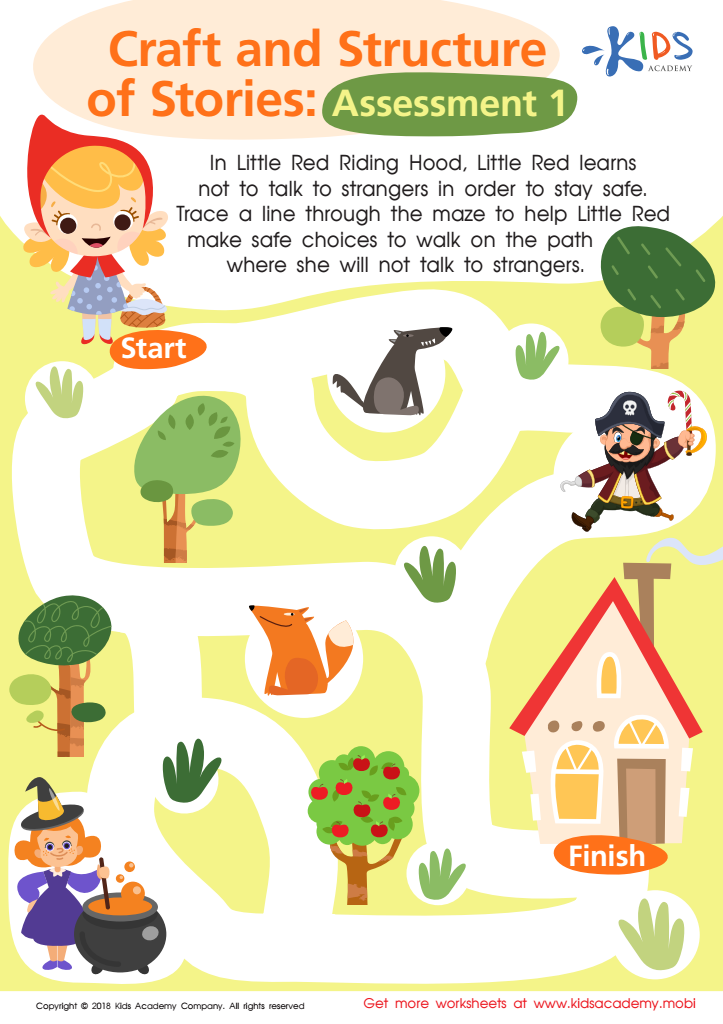
Craft and Structure of Stories: Assessment 1 Worksheet
Turn Little Red Riding Hood into a maze to review author's craft and characterization. Kids must lead her through the woods, avoiding strangers. Give them the main theme of not talking to strangers and watch as they draw a path to her grandmother's house. Fun and educational!
Craft and Structure of Stories: Assessment 1 Worksheet
Worksheet
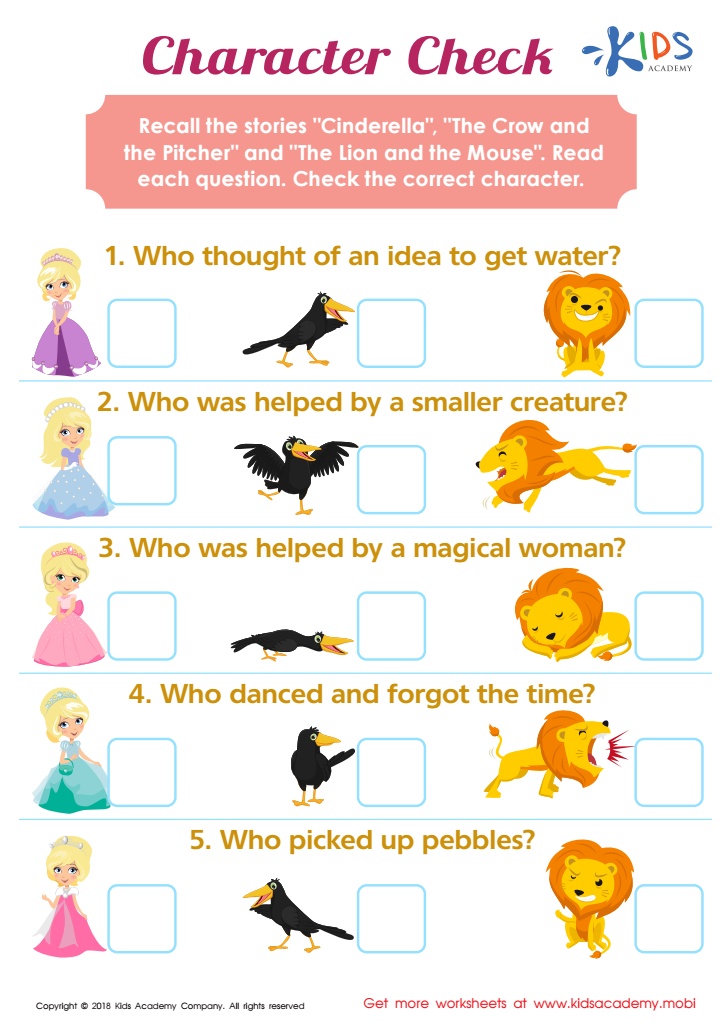
Character Check Worksheet
Ensure your child has read "Cinderella," "The Crow and the Pitcher" and "The Lion and the Mouse" before using this worksheet to assess their reading comprehension and characterization skills. Read each question and have them check the box next to the correct character to complete the task!
Character Check Worksheet
Worksheet
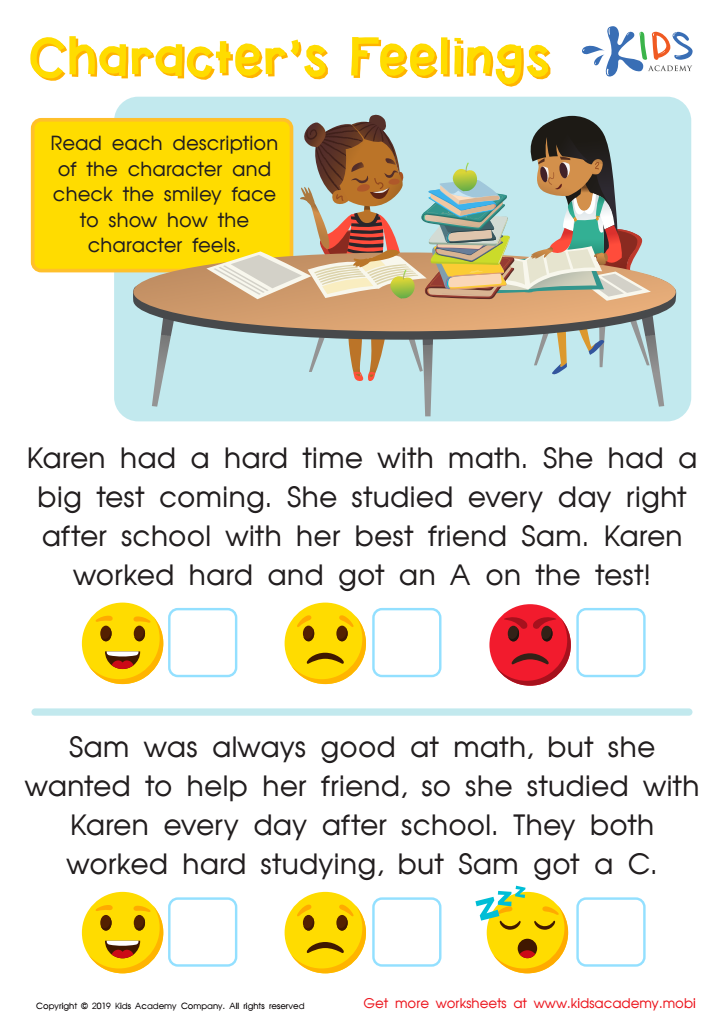
Character’s Feelings Worksheet
To help your child with reading and writing, encourage them to read simple texts and comprehension passages. This will help them learn new words, build their grammar and practice their reading skills. Go through a worksheet together, read the character descriptions then ask your child to pick the smiley face which shows how the character feels.
Character’s Feelings Worksheet
Worksheet
Join Kids Academy for Free
Who is primarily going to use this learning content?







Character analysis for children aged 3-7 is crucial for several reasons. At this formative stage, children begin to develop empathy, social understanding, and critical thinking skills. By analyzing characters in stories—whether in books, cartoons, or films—children learn to recognize and discuss emotions, motivations, and behaviors. This not only enhances their comprehension skills but also allows them to explore moral dilemmas in a safe context.
Understanding characters helps children relate to their own experiences and feelings, making literature a mirror for their personal growth. As they identify with characters and their choices, children begin to form their own values and beliefs, promoting ethical development.
Furthermore, character analysis fosters communication skills. When discussing what characters say and do, children practice articulating their thoughts and emotions, improving their language development. Teachers and parents can guide discussions and ask probing questions that spur creative thinking.
Finally, examining diverse characters allows children to appreciate different perspectives and cultures, nurturing inclusivity and compassion. For educators and parents, fostering these skills enriches children’s literacy, emotional intelligence, and prepares them for social interactions in the broader world. Engaging with character analysis is an investment in a child’s holistic development.








