Comparing weights Worksheets for Ages 3-7
3 filtered results
-
From - To
Welcome to our "Comparing Weights Worksheets" page, designed for children ages 3-7! Here, young learners will develop essential skills in comparing different weights through engaging activities. Our printable worksheets feature fun illustrations and interactive exercises that help kids understand how to measure and compare the weight of various objects. These hands-on activities promote critical thinking and enhance their ability to observe differences in weight. Easy to use and perfect for home or classroom settings, these resources aim to make learning about weight enjoyable and interactive. Start your child's journey into the world of weights with our colorful and educational worksheets today!
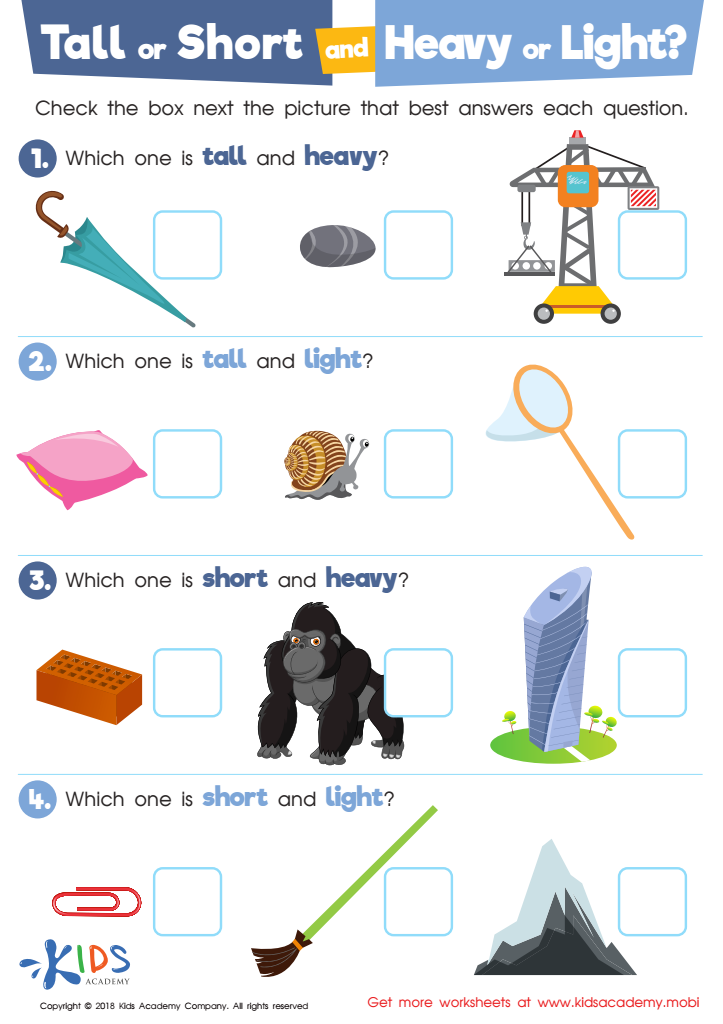
Tall or Short and Heavy or Light? Worksheet
 Assign to My Students
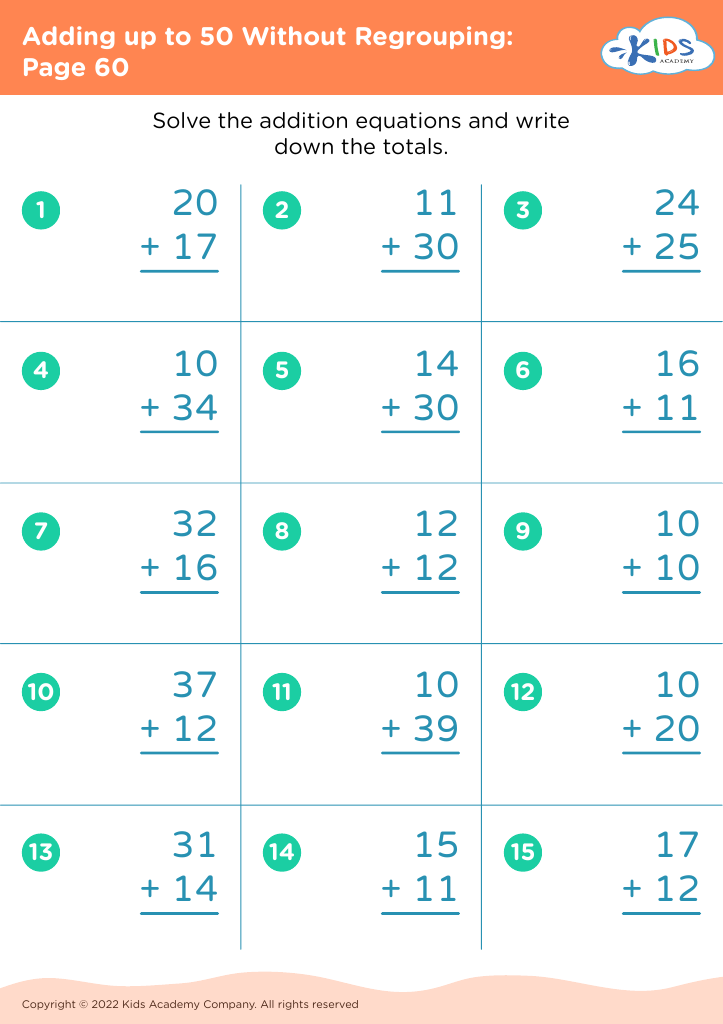
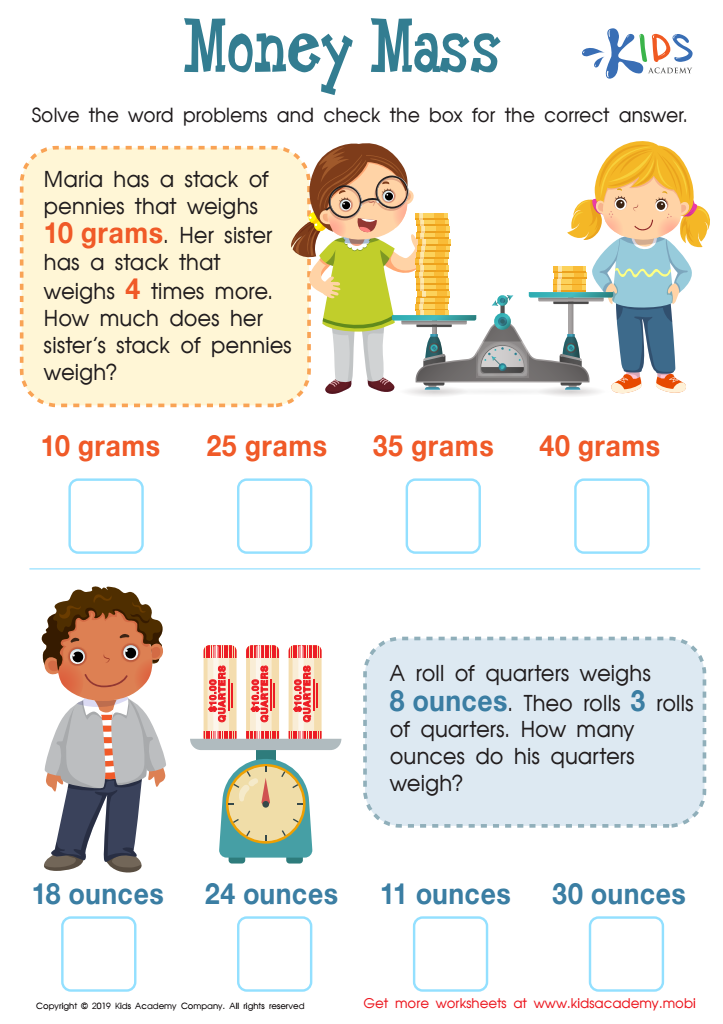
Money Mass Worksheet




.jpg)


Comparing weights is an essential skill for children aged 3-7, and parents and teachers should care about its significance for multiple reasons. At this age, children are naturally curious about their environment and engage in hands-on activities. Introducing concepts like weight comparison can enhance their understanding of measurement and develop early mathematical skills.
Understanding weight allows children to make connections with everyday experiences; for example, distinguishing between lighter and heavier items, or deciding how much they can carry. This foundational skill supports reasoning and problem-solving abilities, which are crucial as they progress in their education.
Moreover, weight comparison activities promote fine motor skills through handling objects and materials, while encouraging social interaction during group activities. It also fosters critical thinking, as children explore why certain objects weigh more or less and how weight can affect balance and motion.
Additionally, discussing and comparing weights can lead to discussions about health and nutrition, promoting a holistic understanding of physical wellbeing. By engaging in these activities, parents and teachers not only enhance cognitive development but also create a nurturing environment that instills a love of learning and curiosity in young children.








