Counting money Worksheets for Ages 3-7
3 filtered results
-
From - To
Introduce your little ones to the exciting world of money with our Counting Money Worksheets designed specifically for ages 3 to 7! These engaging and interactive worksheets help young learners develop essential counting and money recognition skills in a fun and playful way. From identifying coins to counting bills, our activities cater to various skill levels, ensuring your child builds confidence in basic math concepts. Each worksheet is colorful and easy to follow, making learning enjoyable for both kids and parents. Perfect for at-home practice or classroom use, these resources set the foundation for vital financial literacy skills. Start counting today!
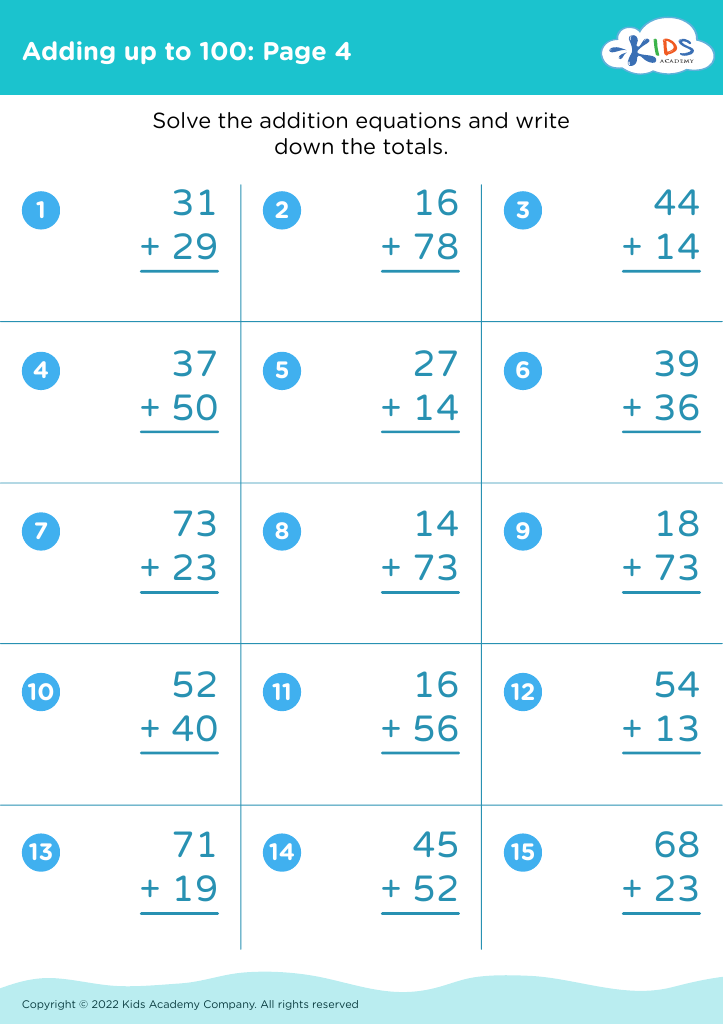
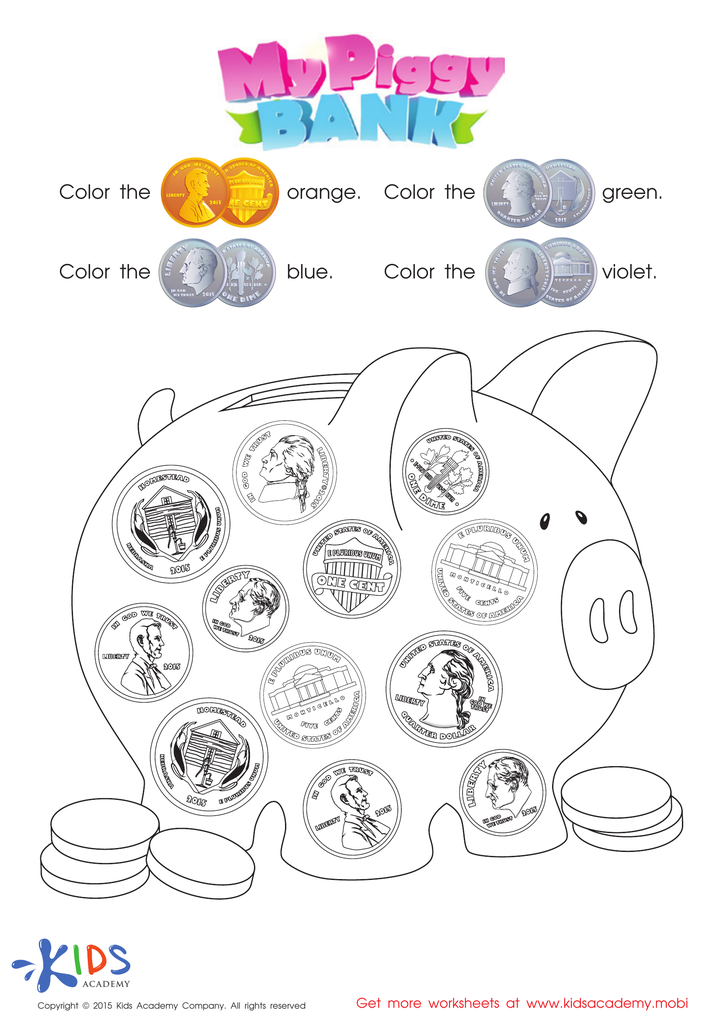
Recognizing Money Money Worksheet
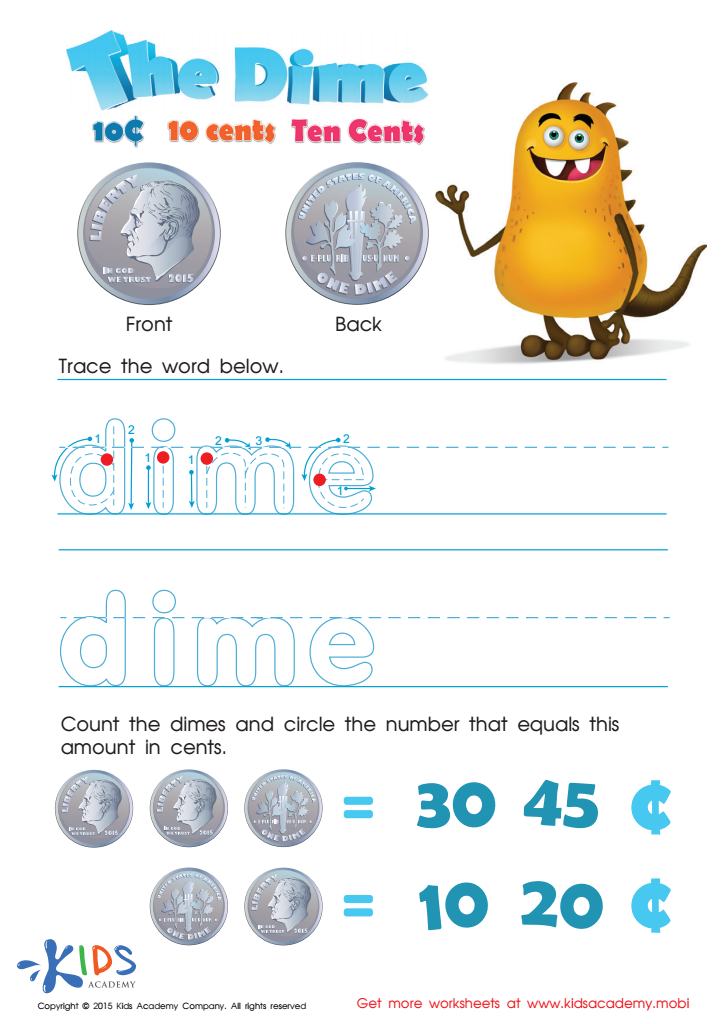
Ten Cents or the Dime Money Worksheet
 Assign to My Students







Counting money is a fundamental skill that offers numerous benefits for children aged 3-7, making it essential for parents and teachers to prioritize this learning area. First, introducing young children to money helps develop their basic math skills. Kids learn to recognize numbers, understand quantity, and grasp the concept of value, which forms the foundation for future math concepts.
Additionally, counting money teaches children about financial literacy from an early age. It builds a strong understanding of the idea that money has value, which is crucial as they begin to make purchases and decisions about saving, spending, and sharing.
Furthermore, handling coins and bills can improve fine motor skills and hand-eye coordination as children physically manipulate different denominations. Engaging children in meaningful, hands-on activities—like pretending to shop—can enhance their cognitive development and promote problem-solving skills.
When parents and teachers prioritize counting money, they provide children with practical life skills while making learning enjoyable. Ultimately, fostering an early interest in money management lays the groundwork for responsible financial habits in adulthood, empowering children to become informed consumers and smart decision-makers later in life.








