
Encourage creativity Worksheets for Ages 3-7
3 filtered results
Difficulty Level
Grade
Age
-
From - To
Subject
Activity
Standards
Discover a delightful collection of "Encourage Creativity Worksheets" tailored specifically for young learners aged 3-7! Our engaging worksheets are designed to inspire imagination and foster creativity through playful activities. Each worksheet promotes critical thinking and self-expression, allowing children to explore their artistic abilities while developing essential skills. Featuring a variety of themes and formats, these worksheets encourage drawing, coloring, and storytelling, making learning fun! Ideal for homeschooling, classroom use, or supplemental learning, our resources help cultivate a love for creativity in every child. Download now and watch as your little ones’ imaginations come alive through art and exploration!
Favorites
With answer key
Interactive
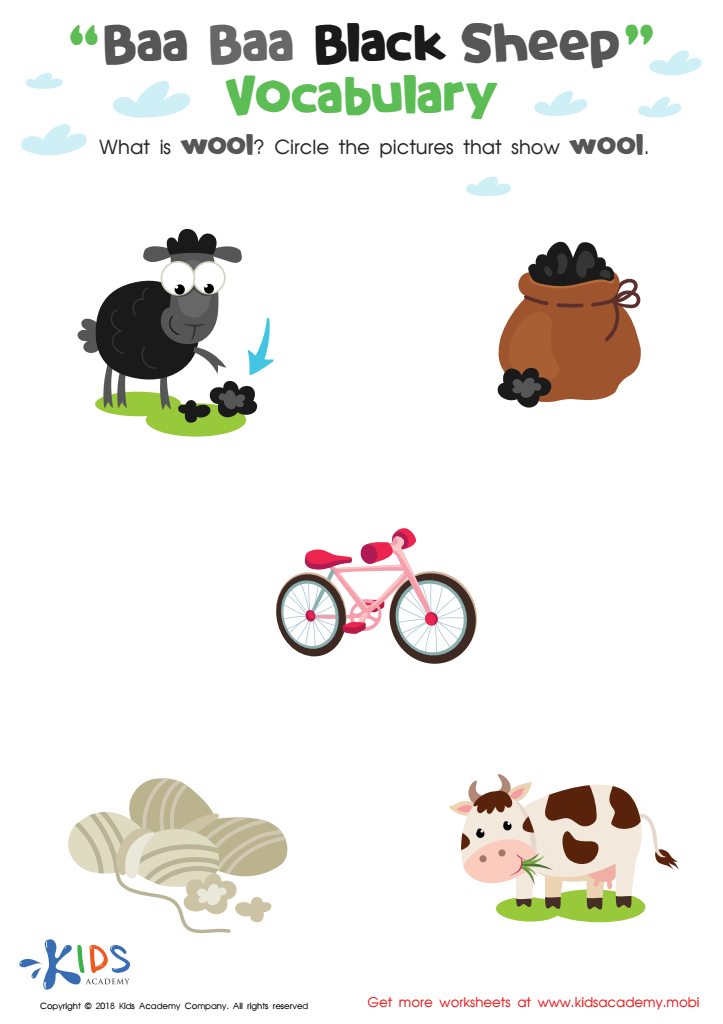
Baa Baa Black Sheep: Vocabulary Worksheet
Exposing readers to various vocab helps their reading abilities grow. This cheery worksheet uses pictures to show what wool is and isn't, helping readers with visual discrimination. Having concrete images for new words is essential for emerging readers, and this is an enjoyable way to strengthen the skill.
 Assign to My Students
Baa Baa Black Sheep: Vocabulary Worksheet
Worksheet
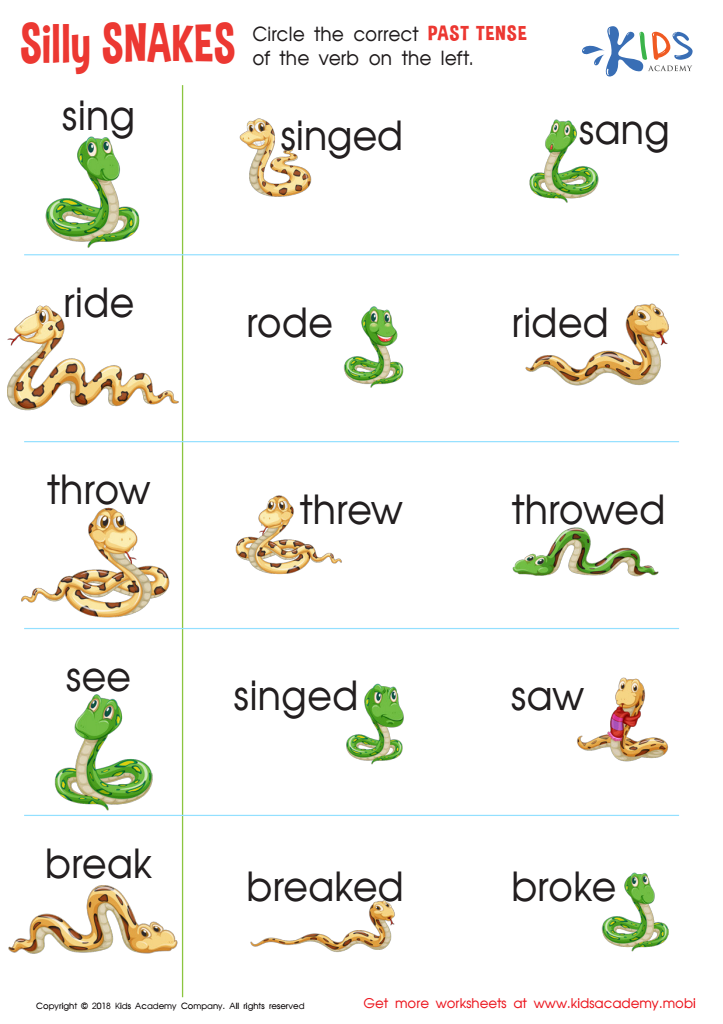
Silly Snakes Worksheet
Kids will get a giggle out of these silly snakes! They're helping to find past tense verbs in this fun worksheet. Have your child look at each snake in the left column and read the word. Then, choose the correct past tense verb from the two options in each row.
Silly Snakes Worksheet
Worksheet
Join Kids Academy for Free
Who is primarily going to use this learning content?







Encouraging creativity in children aged 3-7 is crucial for their overall development and well-being. At this young age, children's brains are highly receptive and adaptable, making them particularly susceptible to influences that can shape their future. Creativity fosters essential cognitive skills like problem-solving, critical thinking, and innovation. When children engage in creative activities—whether through art, music, or imaginative play—they learn to express themselves, communicate ideas, and explore divergent ways of thinking.
Moreover, creative activities enhance emotional intelligence; children are more likely to process their feelings and relate to others through storytelling and role-playing. Additionally, nurturing creativity aids in building self-confidence as children take risks, learn from mistakes, and explore new concepts without the fear of failure.
In an educational environment increasingly focused on standardized testing and strict guidelines, creativity can sometimes take a back seat. However, parents and teachers should promote creative expression, understanding its long-term benefits not just for individual growth but also for societal improvement. Encouraging creativity in these formative years helps prepare children to navigate an ever-changing world, encouraging them to become adaptable and resourceful adults. Thus, prioritizing creativity in early childhood fostering allows children to thrive both academically and socially.








