Enhance vocabulary knowledge Worksheets for Ages 3-7
3 filtered results
-
From - To
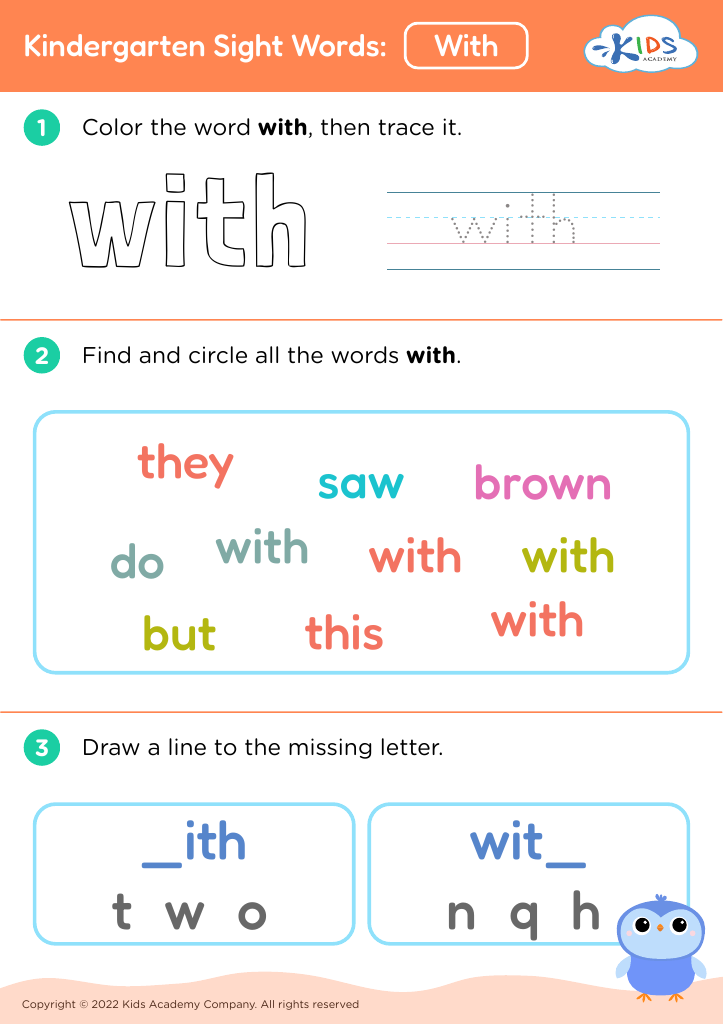
Enhance your child’s vocabulary with our engaging and educational worksheets tailored for ages 3-7. At Kids Academy, we offer a diverse collection of printable worksheets designed to make learning new words fun and interactive. Each activity is crafted to boost language skills through playful exercises and illustrative content. From identifying objects to learning synonyms and antonyms, our resources cater to different learning styles. These expertly designed worksheets not only bolster vocabulary but also foster confidence in young learners. Unlock their potential with Kids Academy’s vocabulary enhancement resources, setting a strong foundation for future academic success.








Enhancing vocabulary knowledge for children aged 3-7 is crucial due to its profound impact on various aspects of their development and future success. During these formative years, children's brains are highly receptive to language acquisition. A rich vocabulary is the foundation for effective communication, allowing children to express themselves clearly and understand others better.
Moreover, vocabulary knowledge is tightly linked to reading comprehension. Children with a broad vocabulary are more likely to decipher and understand new words, which boosts their reading abilities and fosters a love for reading. This, in turn, lays the groundwork for academic success across all subjects as they progress in school.
From a cognitive perspective, a robust vocabulary enhances children's thinking skills. It equips them with the words they need to comprehend complex concepts, engage in higher-level discussions, and develop critical thinking abilities. Emotionally and socially, children with strong vocabularies are better able to navigate social interactions, build relationships, and handle conflicts, as they can articulate their thoughts and emotions clearly.
Parents and teachers play a pivotal role in this development by creating language-rich environments, engaging in meaningful conversations, reading together, and introducing a variety of words through stories, songs, and everyday activities. Nurturing vocabulary early on sets children on a path of lifelong learning and communication proficiency.








