Graph reading Worksheets for Ages 3-7
3 filtered results
-
From - To
Discover our engaging graph reading worksheets designed specifically for children aged 3-7! These interactive activities introduce young learners to essential graphing skills, making math fun and accessible. Our worksheets feature colorful visuals and age-appropriate exercises that teach kids how to interpret simple graphs, charts, and data sets. By exploring the concepts of sorting, counting, and classification, children will enhance their critical thinking and analytical skills. Perfect for home or classroom use, our resources provide a solid foundation for future mathematical learning. Help your child develop confidence in their graph reading abilities with our easy-to-use worksheets!
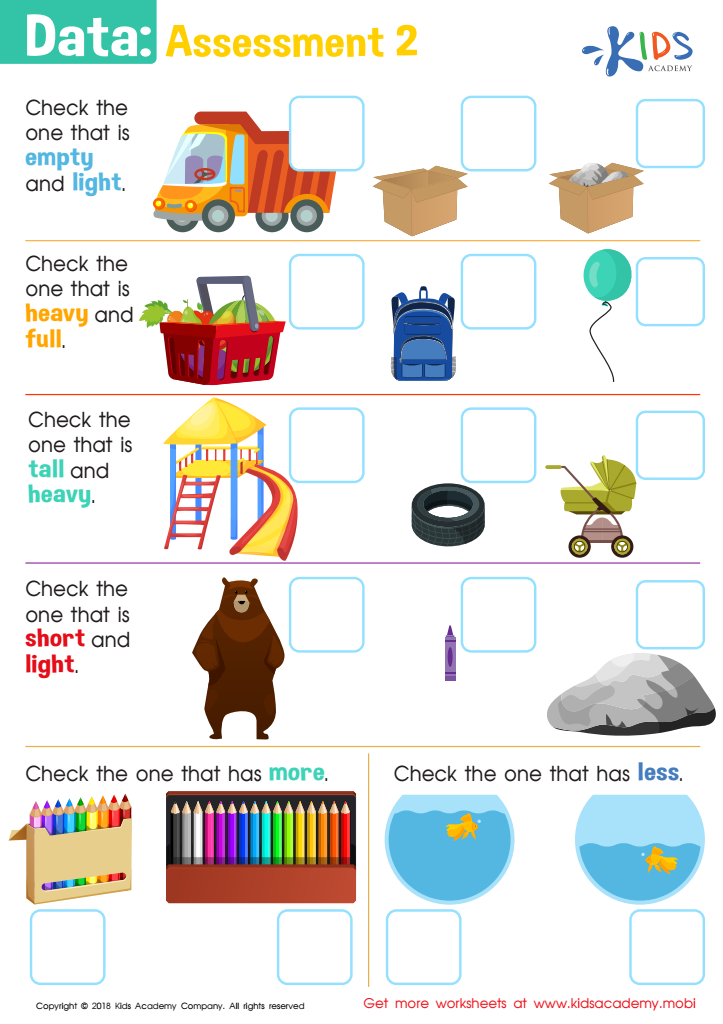
Data: Assessment 2 Worksheet
 Assign to My Students
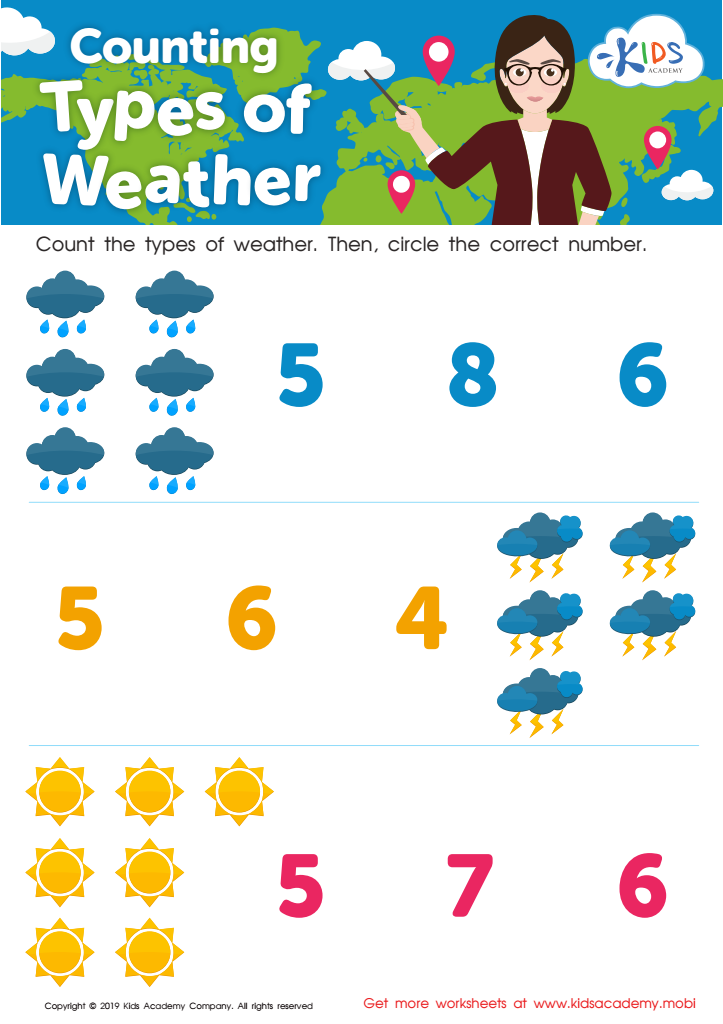
Counting Types of Weather Worksheet
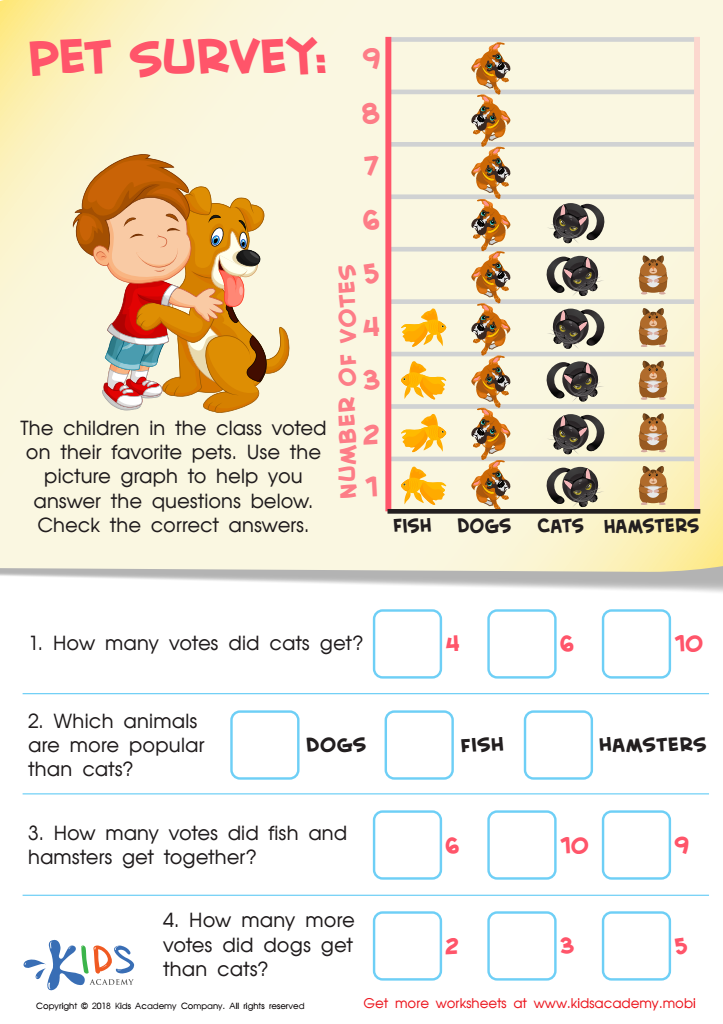
Pet Survey Worksheet








Graph reading is a vital skill for children ages 3-7, as it lays the groundwork for critical thinking and cognitive development. At this young age, children start to grasp relationships between different pieces of information, which is crucial for understanding the world around them. Graphs, whether they are pictograms, bar graphs, or simple line graphs, help children visualize data and comparisons in a clear and engaging way.
Parents and teachers should care about graph reading because it enhances mathematical literacy and statistical reasoning, which are essential for academic success later on. Early exposure to graphs encourages children to make predictions, analyze trends, and draw conclusions based on visual data represented. Additionally, fostering these skills at an early age improves problem-solving abilities and decision-making, promoting a more analytical mindset.
Moreover, engaging with graphs provides opportunities to develop language skills, as children learn to describe what they see, interpret different elements, and communicate their thoughts clearly. As today's world increasingly relies on data-driven decisions in various fields, equipping young learners with graph-reading skills ensures they are prepared for future academic and professional challenges. Overall, supporting graph literacy in early education promotes a well-rounded, informed, and capable future generation.








