Identifying story elements Worksheets for Ages 3-7
4 filtered results
-
From - To
Discover our engaging "Identifying Story Elements Worksheets" designed for children ages 3-7! These interactive and fun worksheets help young learners explore the fundamental components of storytelling, including characters, settings, and plots. By engaging with these materials, children enhance their reading comprehension and critical thinking skills while fostering a love for narratives. Ideal for homes and classrooms, our worksheets are easy to use and adaptable to various learning styles. Encourage your child’s imagination and understanding of stories today! Dive into our collection and make storytelling an exciting adventure for your little ones. Visit our site to start learning and having fun!
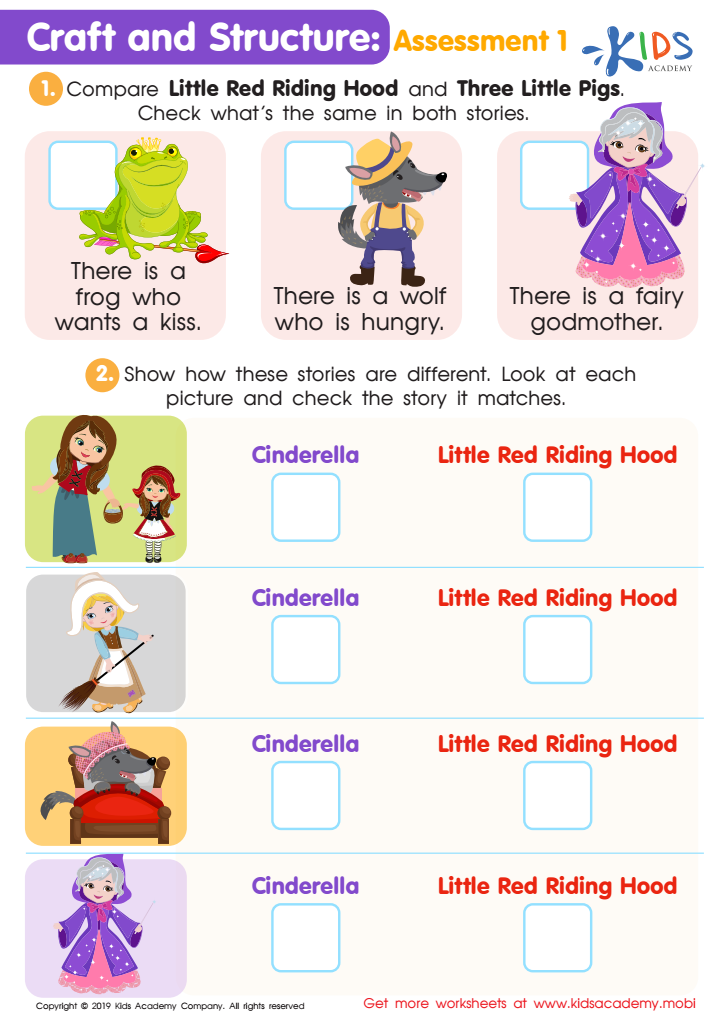
Craft and Structure: Assessment 1 Worksheet
 Assign to My Students
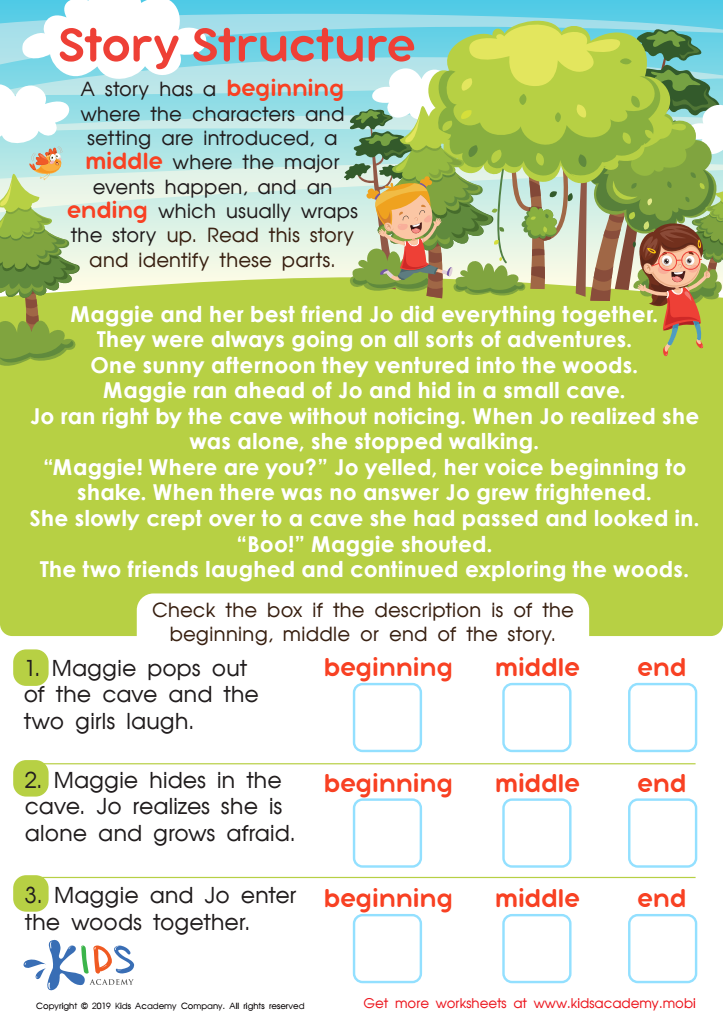
Story Structure Worksheet
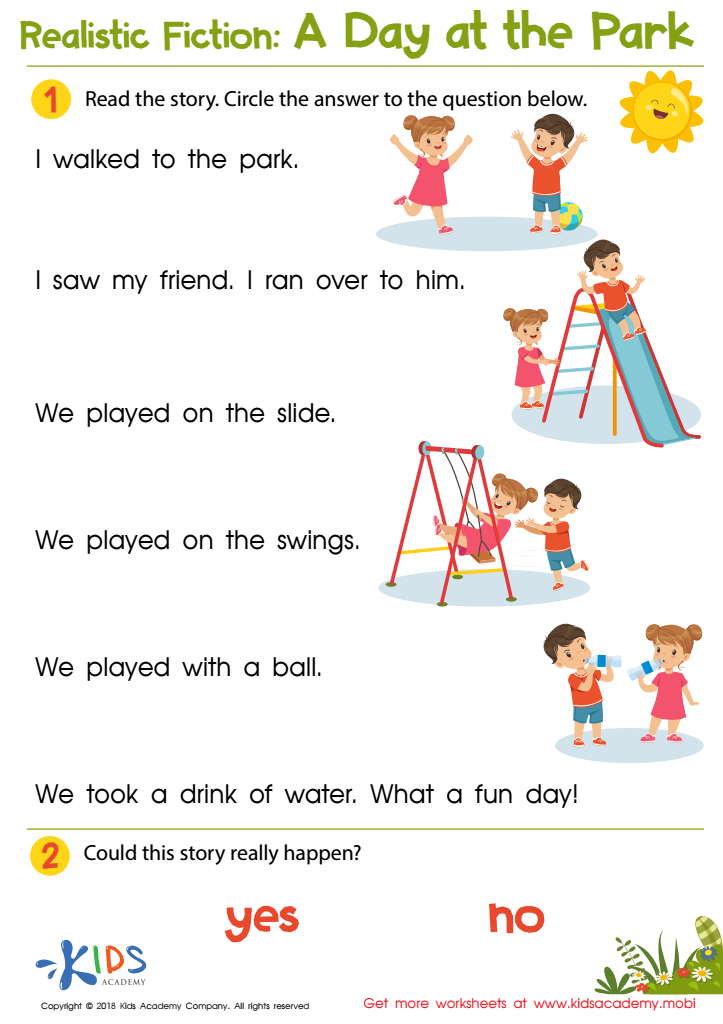
A Day at the Park Worksheet
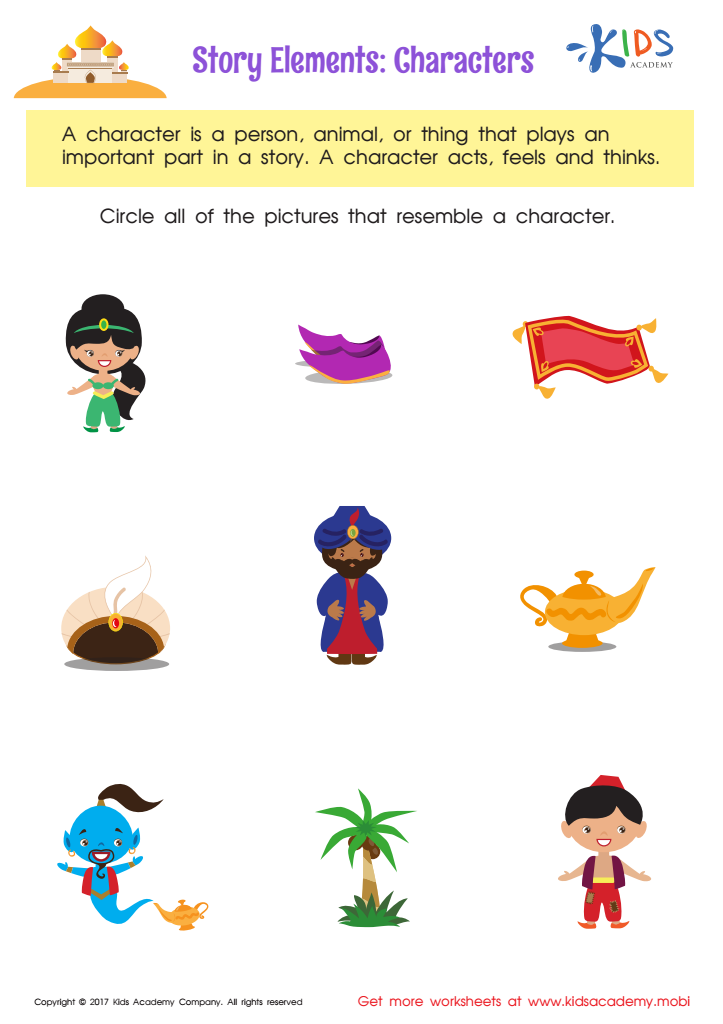
Story Elements Printable



.jpg)


Identifying story elements is crucial for children aged 3-7, as it lays the foundation for their reading and comprehension skills. At this developmental stage, children are naturally curious and eager to explore narratives. By understanding key story elements—such as characters, setting, plot, conflict, and resolution—parents and teachers can enhance literacy development and critical thinking.
When children recognize these elements, they become more engaged readers who can make connections between the story and their own lives. This helps foster imagination and creativity while encouraging them to express preferences and opinions on various plots and characters. Additionally, discussing story elements aids in vocabulary expansion, as children learn new words associated with different narrative components.
Moreover, identifying story elements promotes listening skills and comprehension. Children learn to anticipate what might happen next, which deepens their understanding of cause and effect. For parents and teachers, highlighting these elements during reading time creates opportunities for meaningful conversations, enriching the bonding experience.
Ultimately, an early focus on identifying story elements supports literacy development and sets the stage for lifelong learning, ensuring that young readers develop strong foundational skills that are critical for academic success and personal growth.








