Improve problem-solving abilities Worksheets for Ages 3-7
3 filtered results
-
From - To
Unlock your child’s potential with our specially designed "Improve Problem-Solving Abilities" worksheets for ages 3-7. These engaging, age-appropriate activities are crafted to enhance cognitive development, boost critical thinking, and develop essential problem-solving skills. Through fun puzzles, logical challenges, and creative exercises, children will learn to approach problems with confidence and ingenuity. Our expertly curated worksheets are suitable for both home and classroom use, providing a strong foundation for lifelong learning. Start nurturing your child's problem-solving skills today with our educational, easy-to-use printable worksheets, available now at Kids Academy.
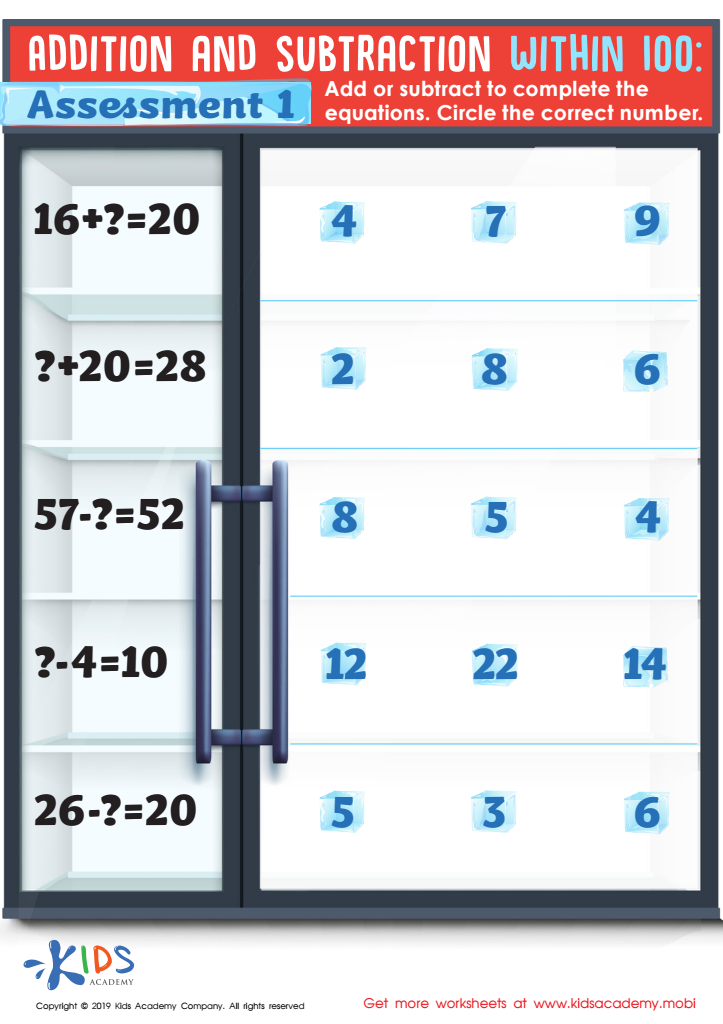
Addition and Subtraction within 100: Assessment 1 Worksheet
 Assign to My Students
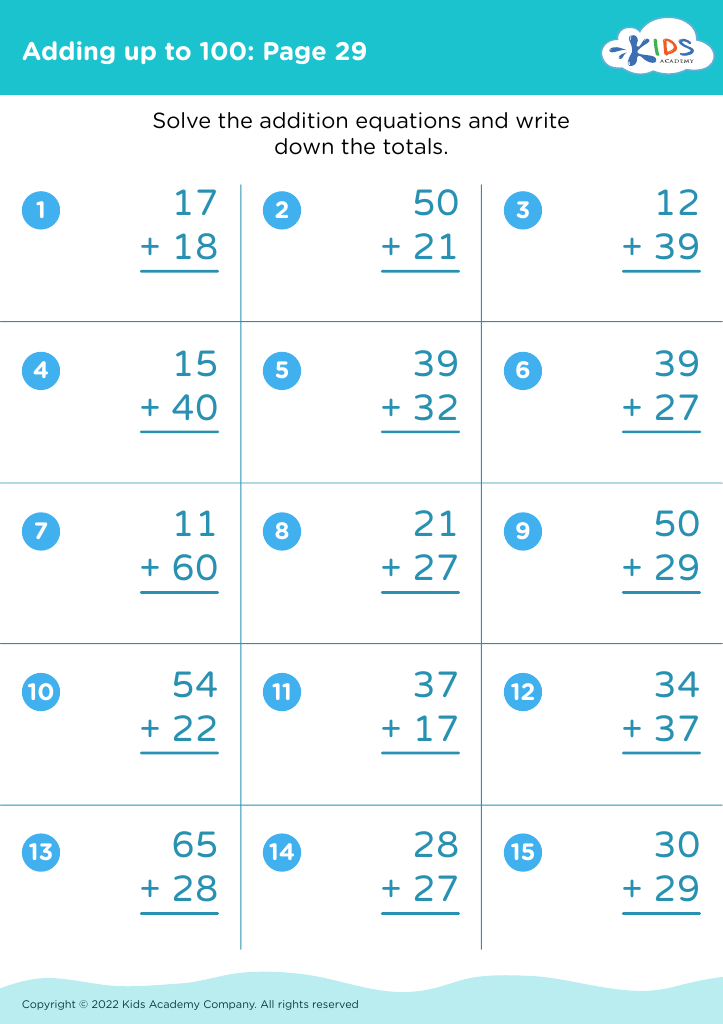
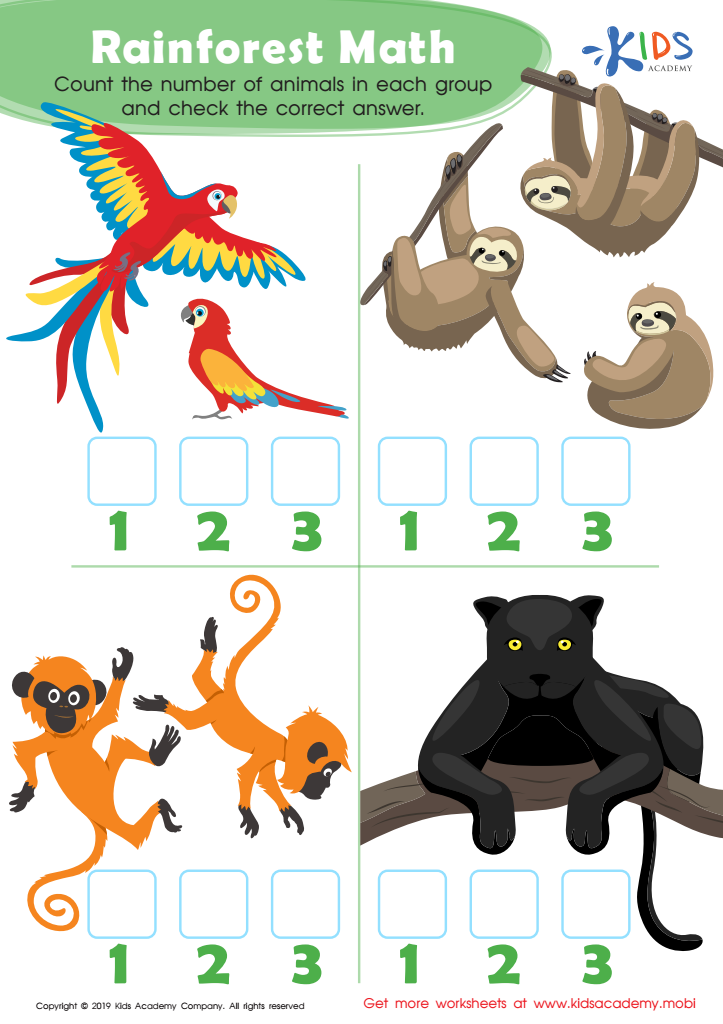
Rainforest Math Worksheet








Understanding the importance of developing problem-solving skills in children aged 3-7 is essential for both parents and teachers. During these critical early years, children's brains are highly adaptable and receptive to learning new concepts. By nurturing problem-solving abilities, adults can lay the foundation for cognitive development, analytical thinking, and emotional resilience.
Firstly, problem-solving skills enable children to navigate challenges independently, fostering autonomy and confidence. These abilities are crucial not only for academic success but also for everyday tasks, setting kids up for long-term achievement in various aspects of life. Through problem-solving, children learn critical thinking and reasoning, which enhance their ability to understand complex concepts later in their educational journey.
Additionally, engaging in problem-solving exercises promotes social and emotional development. By working through problems, children learn patience, perseverance, and how to cope with setbacks. They also develop empathy by understanding different perspectives when solving social conflicts or group tasks. This emotional intelligence is pivotal in forming healthy relationships and effective communication skills.
In essence, cultivating problem-solving skills in early childhood serves as a cornerstone for lifelong learning and personal growth. By focusing on these abilities, parents and teachers can help children build a toolkit of strategies that will benefit them throughout their lives, both academically and socially.








