
Increase vocabulary knowledge Worksheets for Ages 3-7
4 filtered results
Difficulty Level
Grade
Age
-
From - To
Subject
Activity
Standards
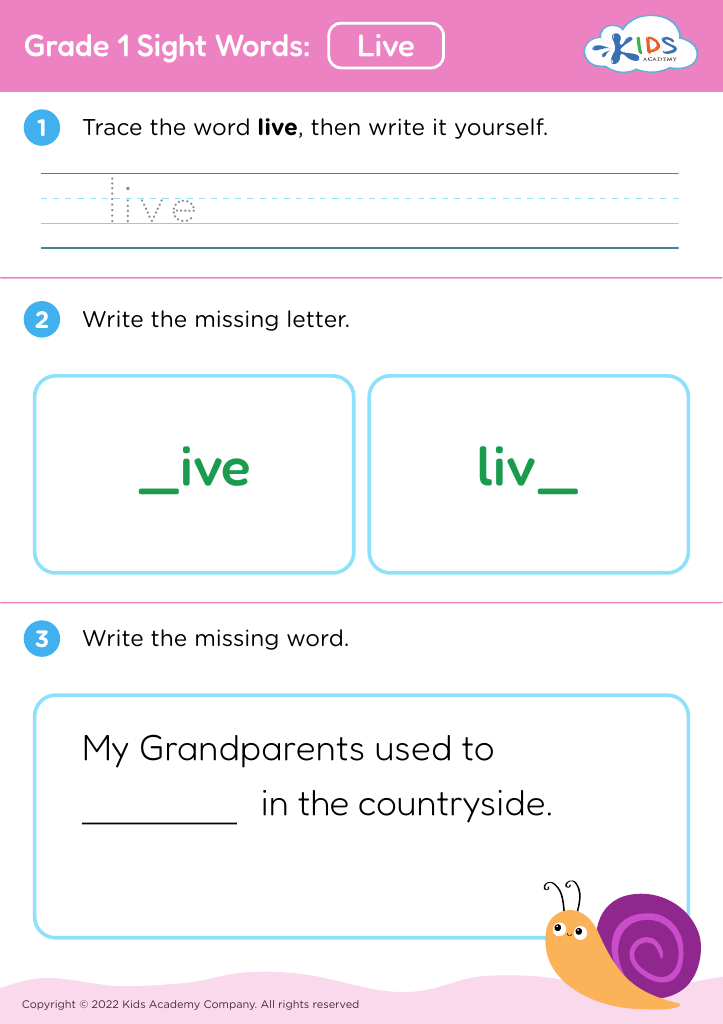
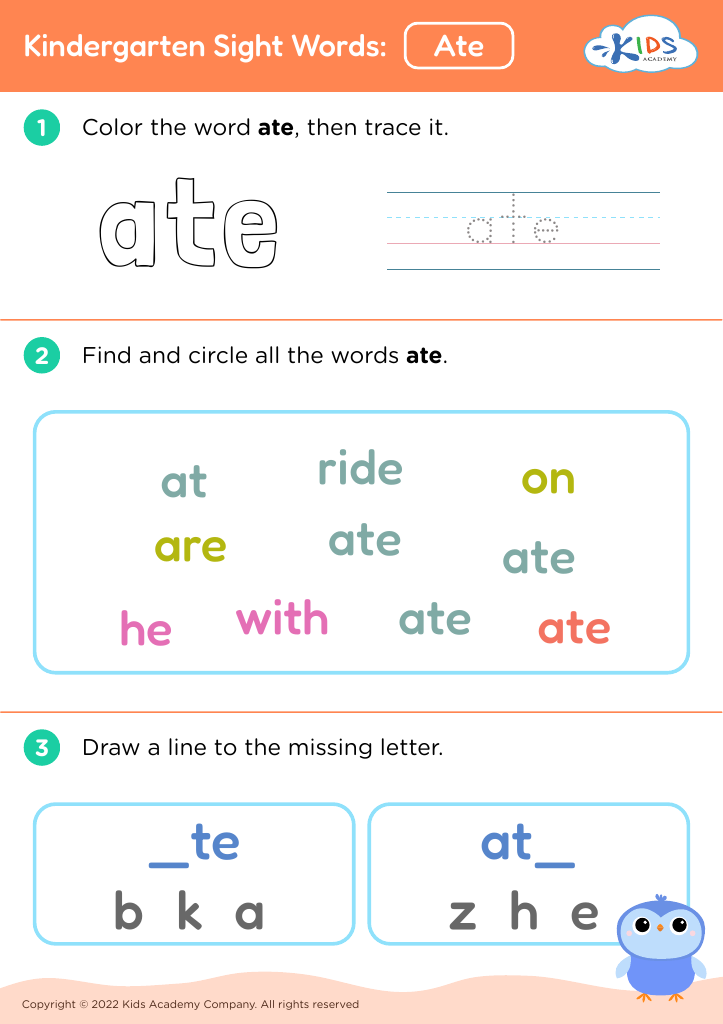
Boost your child’s language development with our "Increase Vocabulary Knowledge Worksheets" designed for ages 3-7. These engaging and educational worksheets provide a fun and effective way to enhance your child's word recognition and comprehension skills. Crafted by experienced educators, each worksheet combines colorful illustrations with interactive activities to keep young learners motivated. Encourage early reading and communication proficiency with our wide range of themed worksheets, tailored to expand vocabulary in a playful manner. Ideal for preschoolers, kindergarteners, and first graders, these resources are perfect for home learning or classroom use. Help your child master new words today!
Favorites
With answer key
Interactive
Join Kids Academy for Free
Who is primarily going to use this learning content?






Increasing vocabulary knowledge for children aged 3-7 is fundamental for their overall cognitive, social, and emotional development. At this age, children's brains are highly receptive and capable of absorbing new information rapidly. A rich vocabulary lays the foundation for effective communication, enabling children to express their thoughts, desires, and emotions clearly and confidently.
Developing a robust vocabulary also significantly enhances reading comprehension and literacy skills. When children understand the words they encounter, they are better equipped to make sense of sentences and stories, thereby fostering a love for reading. This, in turn, supports academic achievement across various subjects.
Moreover, an extensive vocabulary acts as a critical thinking tool. It enables children to classify objects, describe experiences accurately, and problem-solve effectively. Socially, a well-developed vocabulary helps children interact more successfully with peers and adults, building stronger relationships and better teamwork skills.
Emotionally, the ability to express oneself accurately can reduce frustration and boost self-esteem. Parents and teachers play a crucial role in promoting vocabulary development by engaging children in conversations, reading aloud to them, and providing a language-rich environment. Prioritizing vocabulary early on equips children with essential tools for lifelong learning and success.








