Learning about ecosystems Worksheets for Ages 3-7
3 filtered results
-
From - To
Explore our collection of "Learning about Ecosystems" worksheets, specifically designed for children ages 3-7. These engaging and educational printables help young learners discover the diverse world of ecosystems, including forests, oceans, deserts, and more. With colorful illustrations and fun activities, kids will develop critical learning skills while understanding the importance of plants, animals, and their habitats. Perfect for both classroom and home use, these worksheets stimulate curiosity and boost early scientific knowledge in a joyful way. Set the foundation for a lifelong appreciation of nature with our expertly crafted ecosystem worksheets.
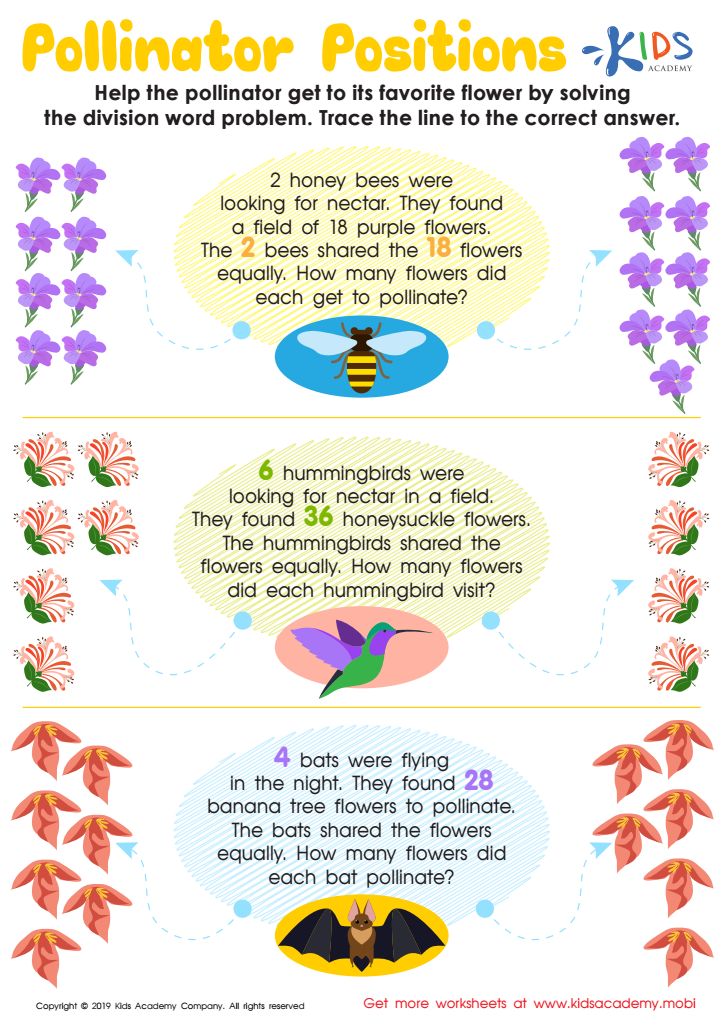
Pollinator Positions Worksheet
 Assign to My Students
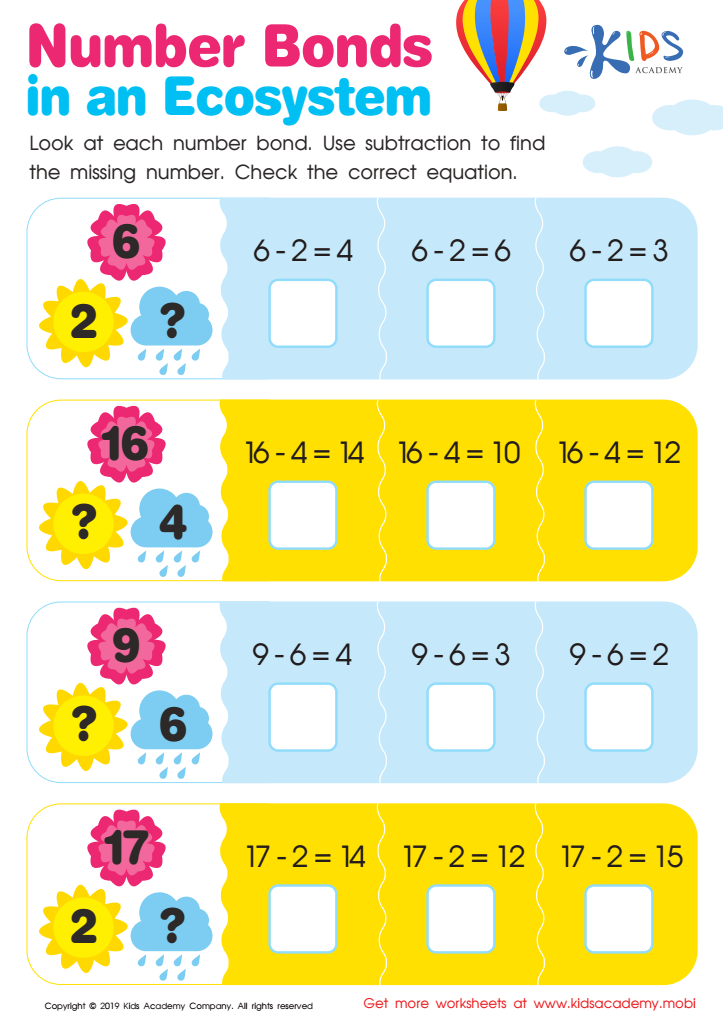
Number Bonds in an Ecosystem Worksheet
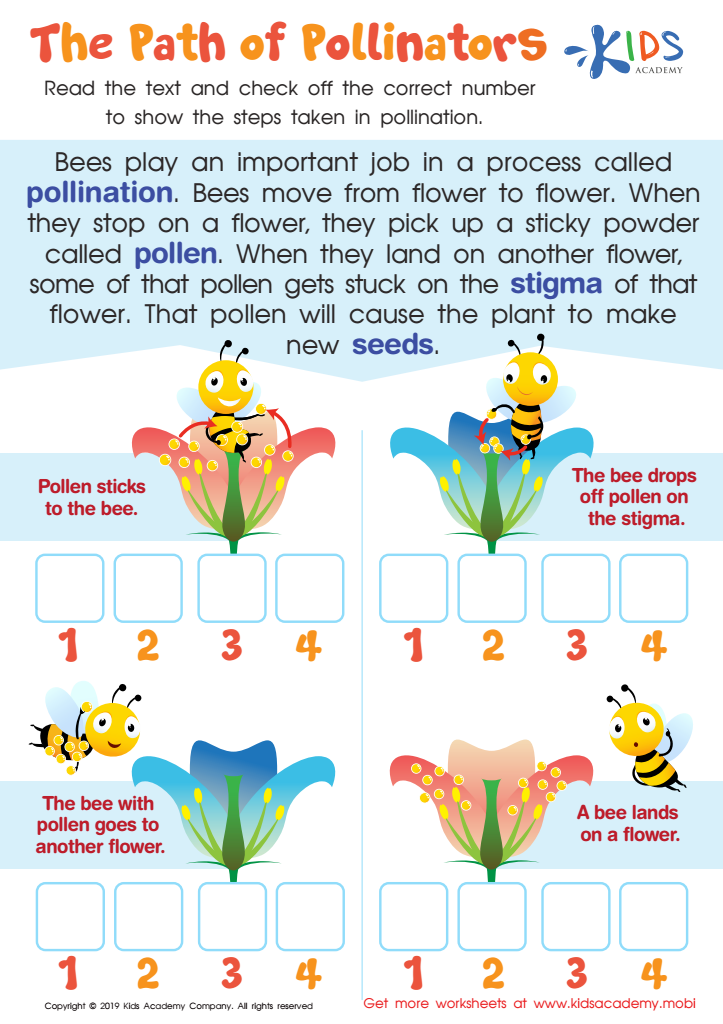
The Path of Pollinators Worksheet







Parents and teachers should prioritize introducing ecosystems to children aged 3-7 because early childhood is a critical period for cognitive development and curiosity. Learning about ecosystems fosters an appreciation for nature, helping young children understand the interdependence of living organisms and their environments. Early exposure to concepts like plants, animals, weather, and habitat encourages observational skills and critical thinking.
Teaching about ecosystems also nurtures empathy and responsibility towards the environment. By understanding how their actions affect nature, children develop a sense of stewardship for the planet, which is crucial in today's context of environmental challenges. Interactive activities such as observing plants grow, identifying insects, or noticing weather changes make learning tangible and fun, thus fostering a lifelong interest in science.
Moreover, early lessons on ecosystems align with key educational standards and help build a foundation for later, more complex scientific learning. Children who are knowledgeable about ecosystems are better equipped with the vocabulary and conceptual understanding necessary for advanced studies in biology and environmental science.
In essence, introducing ecosystem concepts at a young age not only enriches a child's educational journey but also instills habits and values that contribute to a more sustainable and informed future.








