Map reading Worksheets for Ages 3-7
3 filtered results
-
From - To
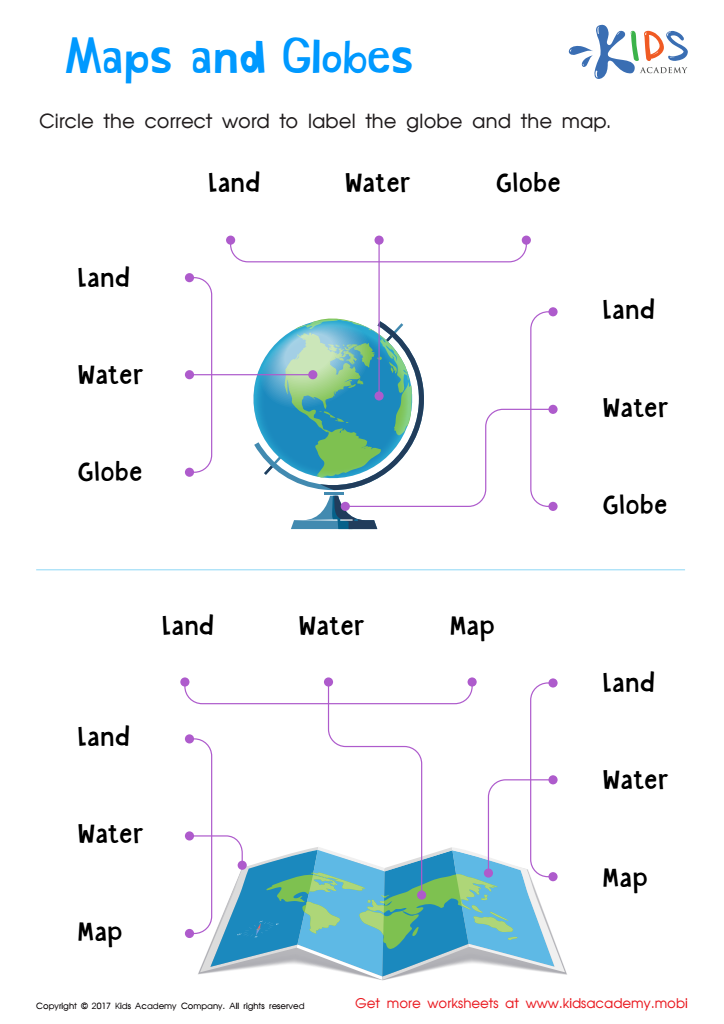
Introduce your young explorer to the world of navigation with our Map Reading Worksheets for Ages 3-7 by Kids Academy. Tailored for early learners, these engaging activities develop crucial skills like spatial awareness, direction, and critical thinking. Each worksheet provides a fun, hands-on experience, incorporating colorful maps, familiar landmarks, and simple instructions suitable for preschool and early elementary levels. Perfect for both classroom and home settings, these resources make geography exciting and accessible. Start your child's geographic adventure today and watch as they confidently navigate their way through new territories. Download your worksheets now and embark on the journey of discovery!
 Assign to My Students
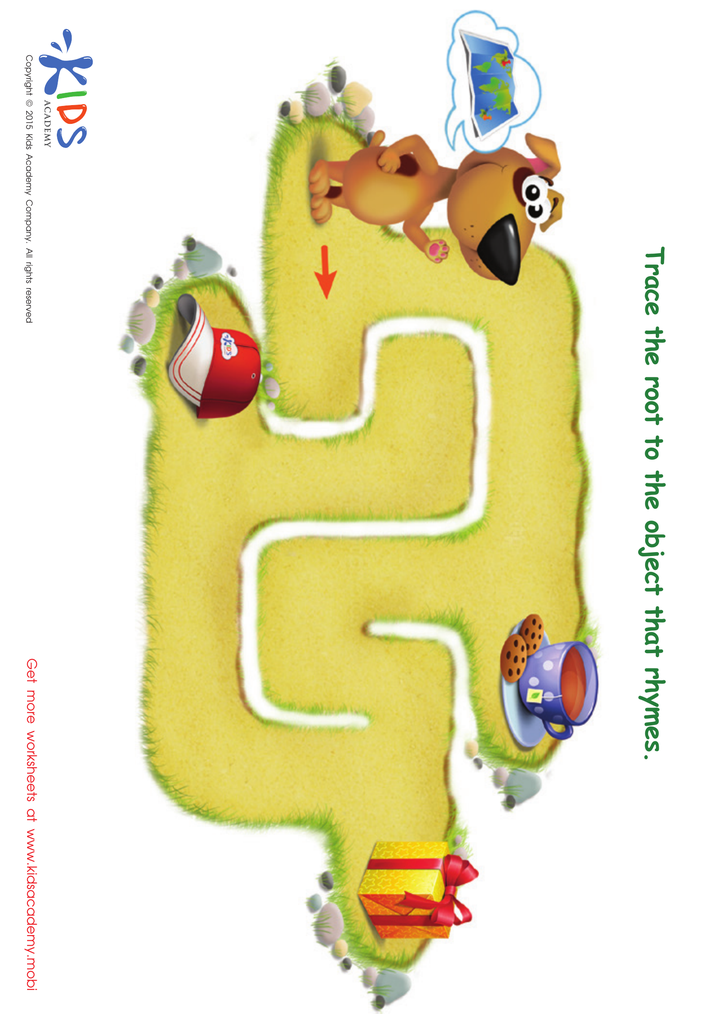
Map Rhyming Words Worksheet
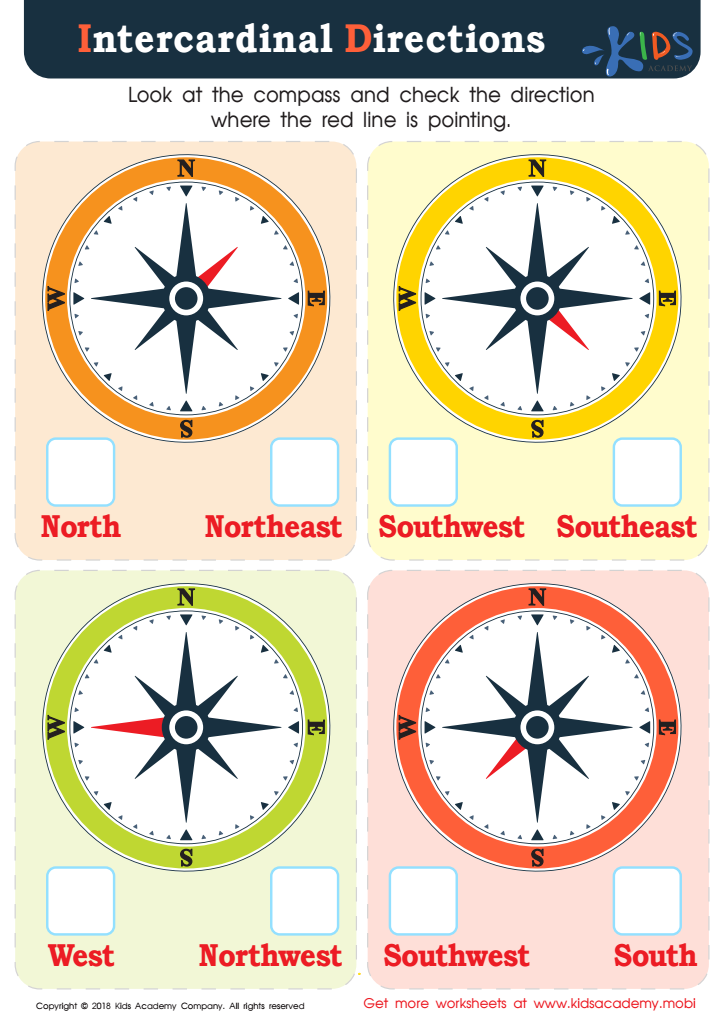
Intercardinal Directions Worksheet





Map reading is a fundamental skill that serves as the building block for developing a child's spatial awareness, cognitive development, and critical thinking abilities. Introducing map reading to children between the ages of 3 and 7 can provide numerous benefits that extend well beyond geography.
Firstly, map reading nurtures spatial awareness. Young children learn to recognize shapes, distances, and directions, which can improve their understanding of their immediate environment. This skill not only contributes to better navigation in their daily lives but also translates to improved performance in subjects like math and science.
Secondly, engaging with maps enhances cognitive development. It encourages children to think abstractly and symbolically, understanding that a small picture represents a larger, real-world space. This symbolic thinking is crucial for literacy and numeracy development, as it helps children understand the concept of representations, such as letters and numbers symbolizing sounds and quantities.
Moreover, map reading fosters critical thinking and problem-solving skills. While interpreting a map, children are prompted to ask questions, make observations, and draw conclusions, which cultivates their analytical abilities.
Lastly, it promotes a sense of curiosity and exploration. Maps naturally pique interest in learning about different places, cultures, and environments, setting the stage for lifelong learning.
Therefore, by investing time in teaching map reading to young children, teachers and parents can significantly contribute to their overall intellectual and personal growth.








