Mathematical reasoning Worksheets for Ages 3-7 - Page 3
59 filtered results
-
From - To
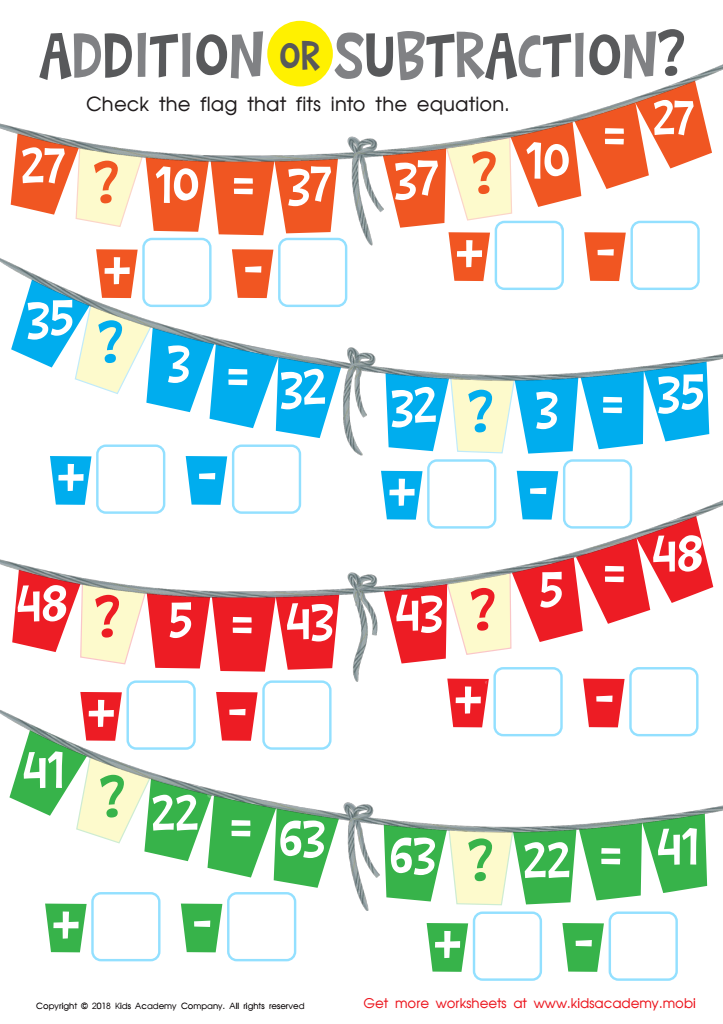
Addition or Subtraction? Worksheet
 Assign to My Students
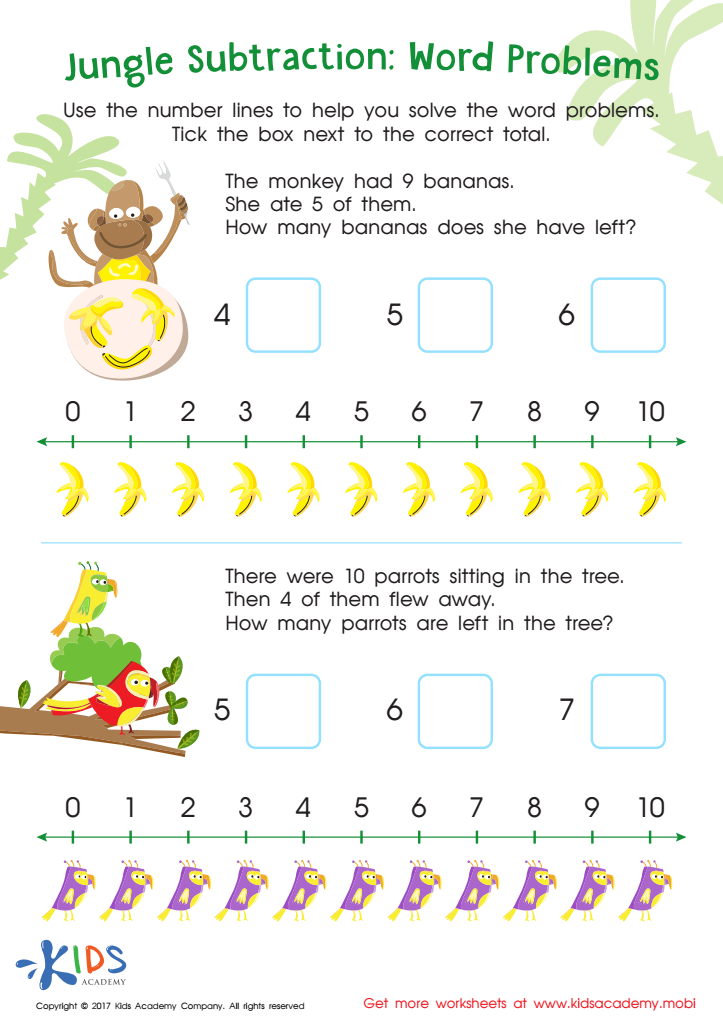
Jungle Subtraction Word Problems Substraction Worksheet
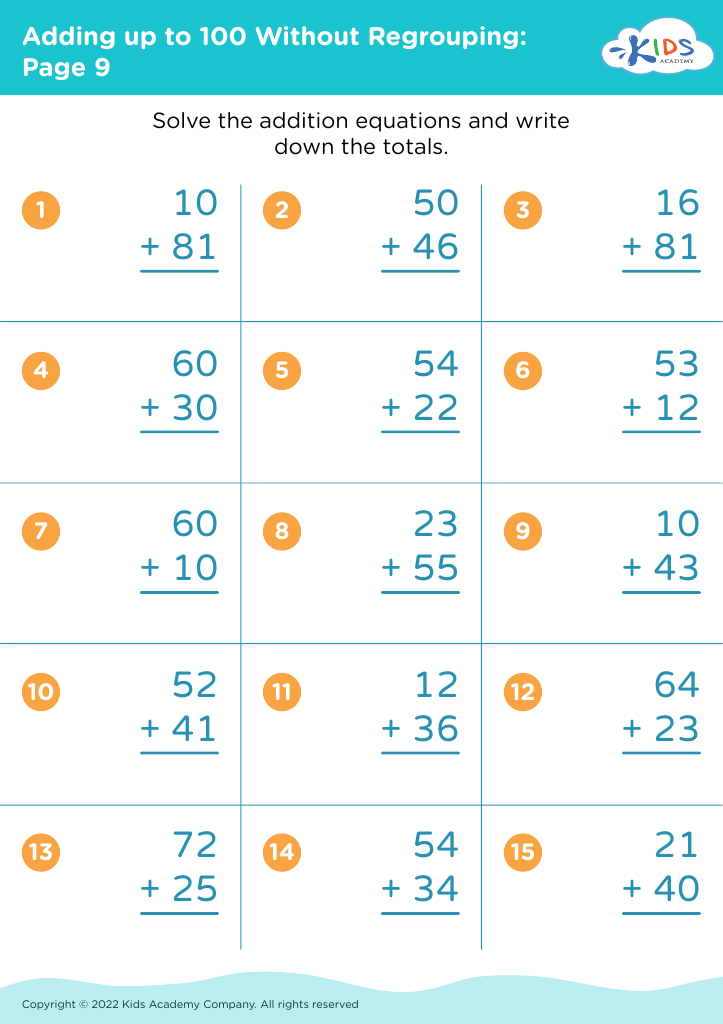







Mathematical reasoning is vital for children ages 3-7 because it lays the foundation for future learning and cognitive development. During these early years, children's brains are incredibly receptive and capable of making connections that shape their understanding of the world. Introducing mathematical reasoning helps kids develop critical thinking, problem-solving skills, and logical reasoning.
When young children explore concepts like counting, sorting, and pattern recognition, they are not just learning math; they are engaging in activities that boost their general cognitive abilities. This early exposure aids in the development of a growth mindset, where they understand that challenges can be overcome through effort and perseverance.
For parents and teachers, fostering an environment that emphasizes mathematical reasoning promotes intellectual curiosity and confidence in children. Interactive activities like puzzle solving, playing with building blocks, or simple addition and subtraction games can make math both fun and relatable. These experiences will nurture a lifelong appreciation and excitement for learning.
Furthermore, math skills are essential for everyday life, from telling time to managing money or understanding science and technology principles. By prioritizing mathematical reasoning in early childhood, children will be better equipped to navigate school curricula and everyday challenges, setting the stage for academic success and informed decision-making in adulthood.








