Filters

826 filtered results

Clear all filters
Favorites
With answer key
Interactive

826 filtered results

Difficulty Level

Grade


Check out this FREE "Number Recognition" Trial Lesson for age 3-7!

How Many? 11-20

Favorites
With answer key
Interactive
  • 3-7
  • Number Recognition
Growing with 15 Worksheet

Growing with 15 Worksheet

Remind your kids that adding different sets of numbers can give the same total (e.g. 2+3=5, 4+1=5). Test their understanding by asking them for more examples. Move onto the worksheet: count objects, then trace the line to the number making a total of 15.
Growing with 15 Worksheet
Worksheet
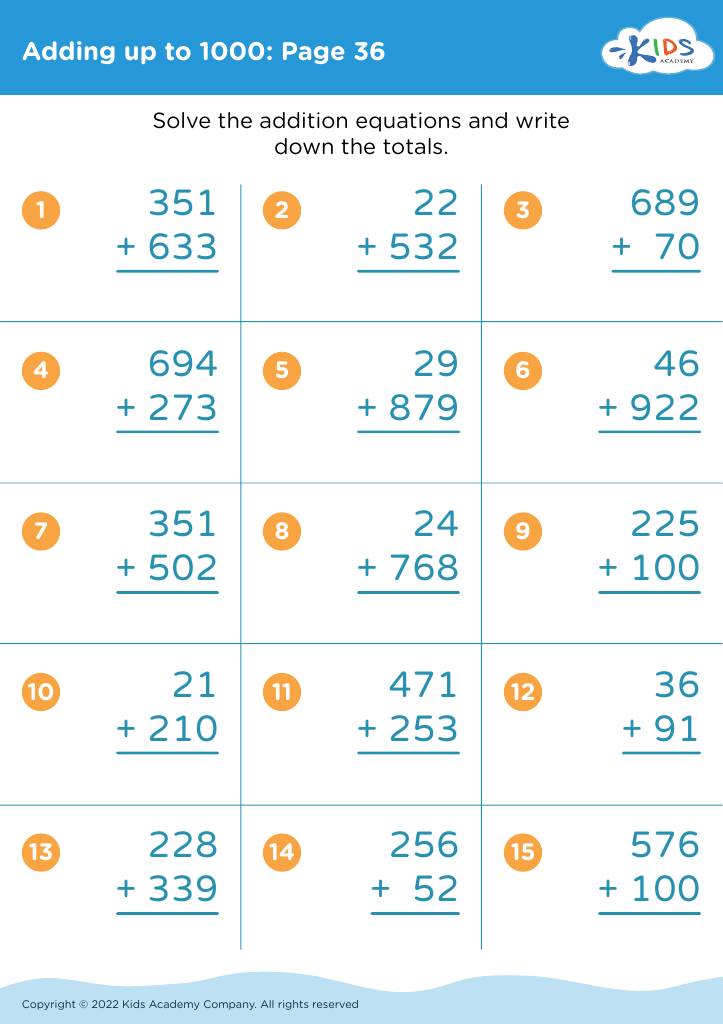
Adding up to 1000: Page 36

Adding up to 1000: Page 36

Adding up to 1000: Page 36
Worksheet
Kindergarten math worksheets

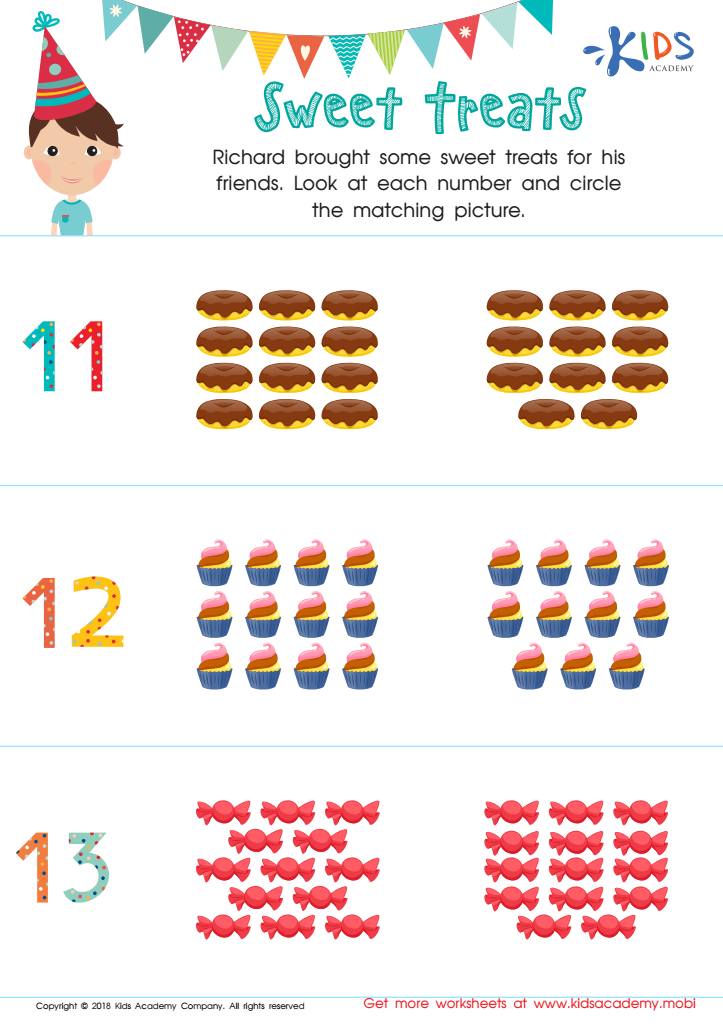
Kindergarten Math Worksheet Matching Numbers

Counting is fun with these kindergarten math worksheets! Richard brought cupcakes and candy - help your child count each treat and circle the picture that matches the number. Let the party begin!
Kindergarten Math Worksheet Matching Numbers
Worksheet
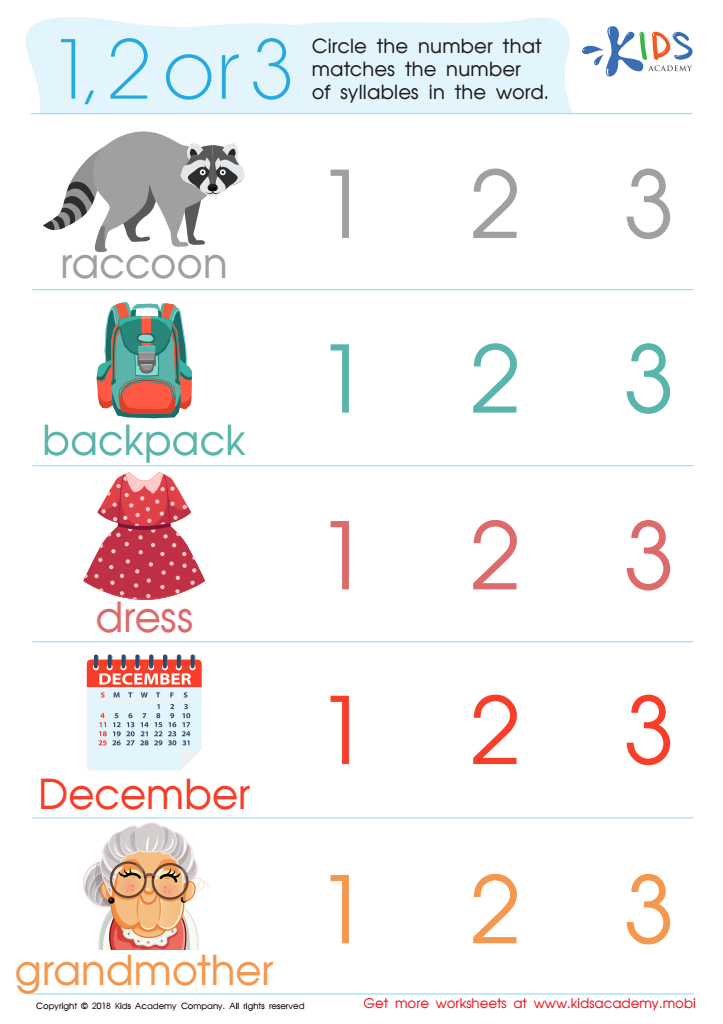
1, 2 or 3? Worksheet

1, 2 or 3? Worksheet

Do your kids know about syllables? Test their understanding with this worksheet. Read the words aloud and ask them to say them with you. Help them circle the number that matches the number of syllables in each word. Perfect for expanding knowledge or testing how much they've already learned.
1, 2 or 3? Worksheet
Worksheet
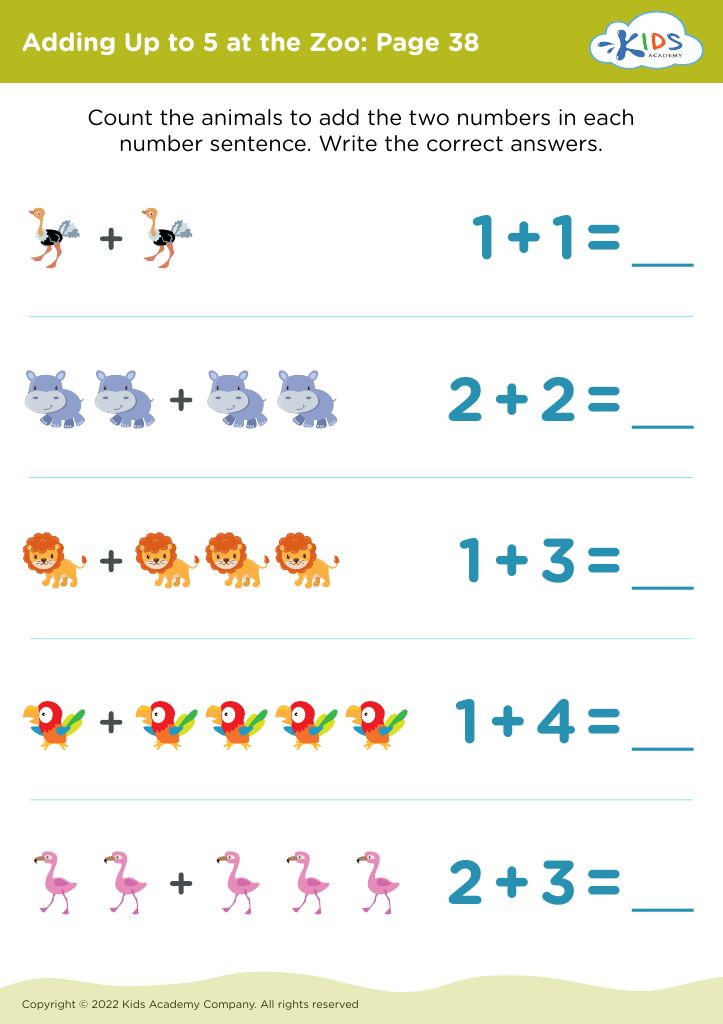
Adding Up to 5 at the Zoo: Page 38
Worksheet
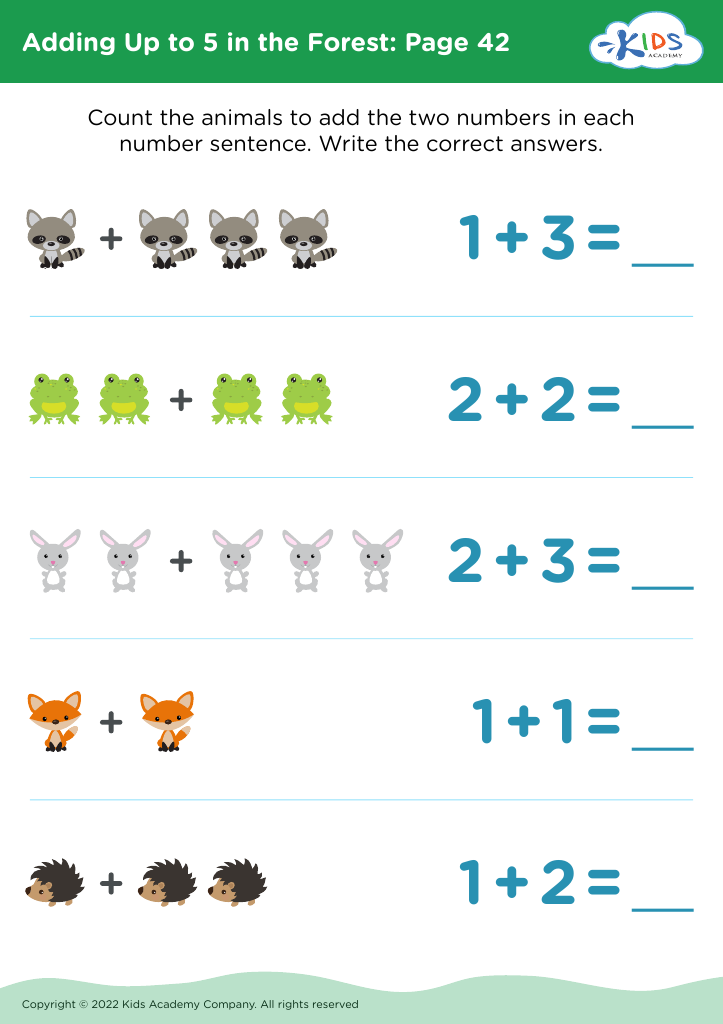
Adding Up to 5 in the Forest: Page 42
Worksheet
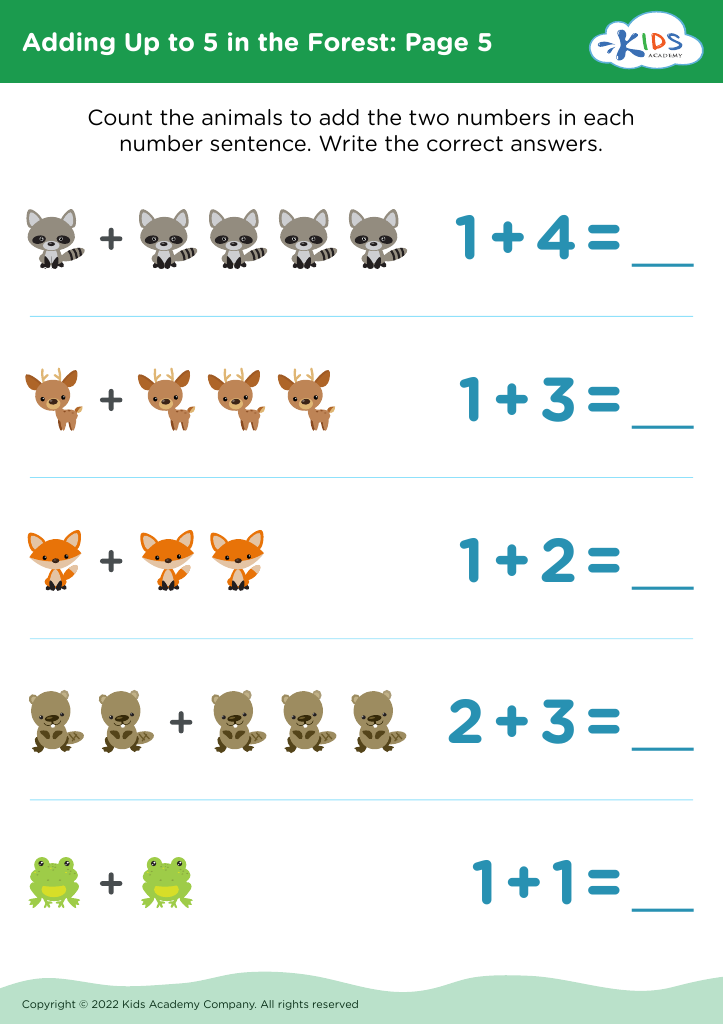
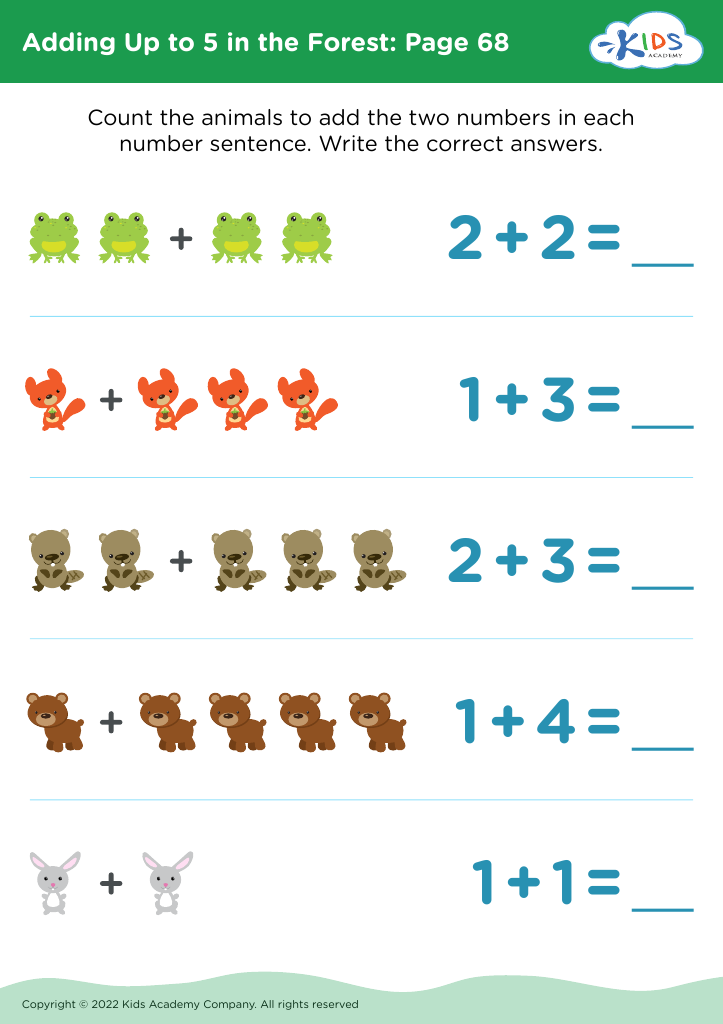
Adding Up to 5 in the Forest: Page 68
Worksheet
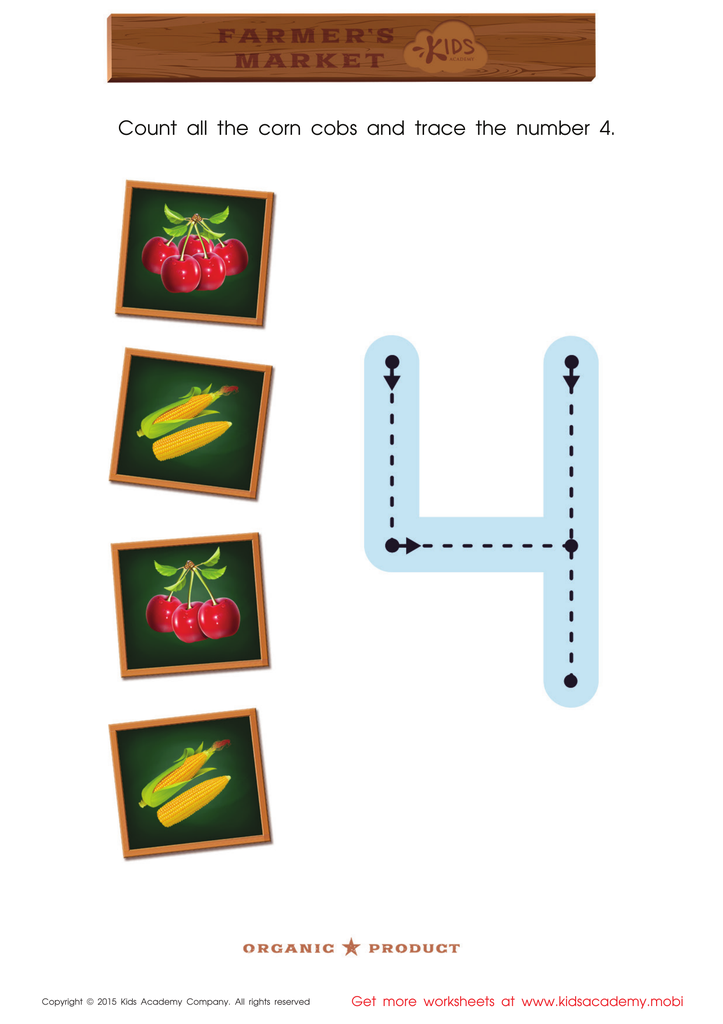
Math Game: Count the Corncobs and Trace the Number 4

Count the Corncobs and Trace the Number 4 Worksheet
Download this free math worksheet to get your little mathematician counting, tracing numbers and practicing addition. The Singapore Math method is used to help visualize and solve addition problems. For more Kids Academy math worksheets, check out here!
Count the Corncobs and Trace the Number 4 Worksheet
Worksheet
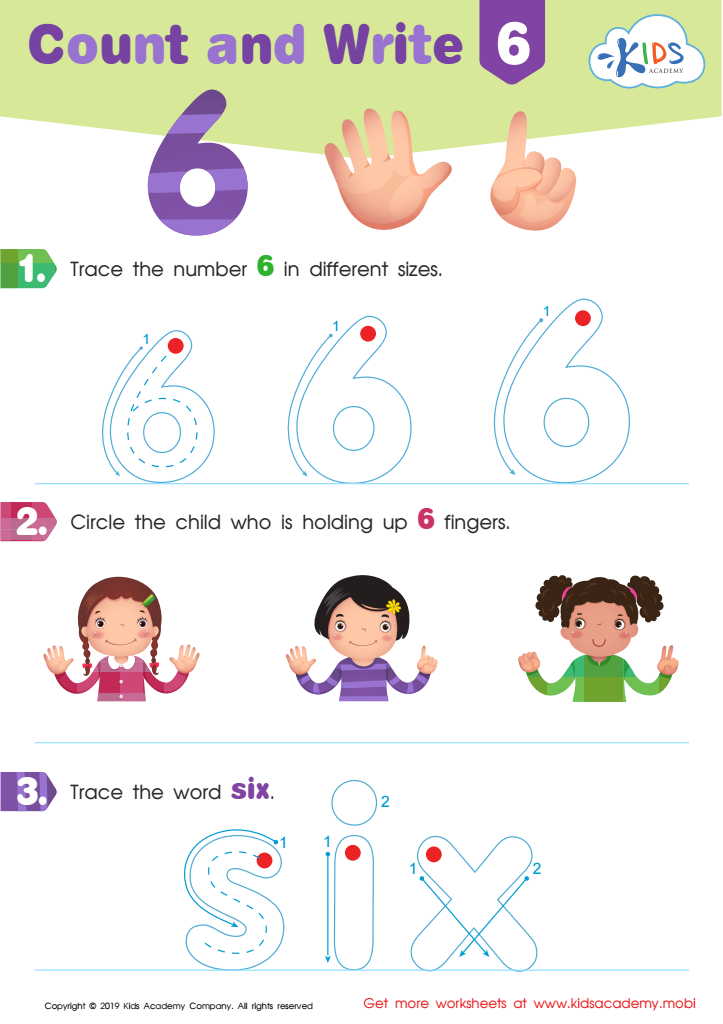
Count and Write 6 Worksheet

Count and Write 6 Worksheet

Kids begin math by mastering recognition skills. This worksheet helps with that by giving them practice writing "six" and the numeral 6, with guide dots and traceable lines. Giving kids multiple ways to learn the basics helps them build a strong math foundation.
Count and Write 6 Worksheet
Worksheet
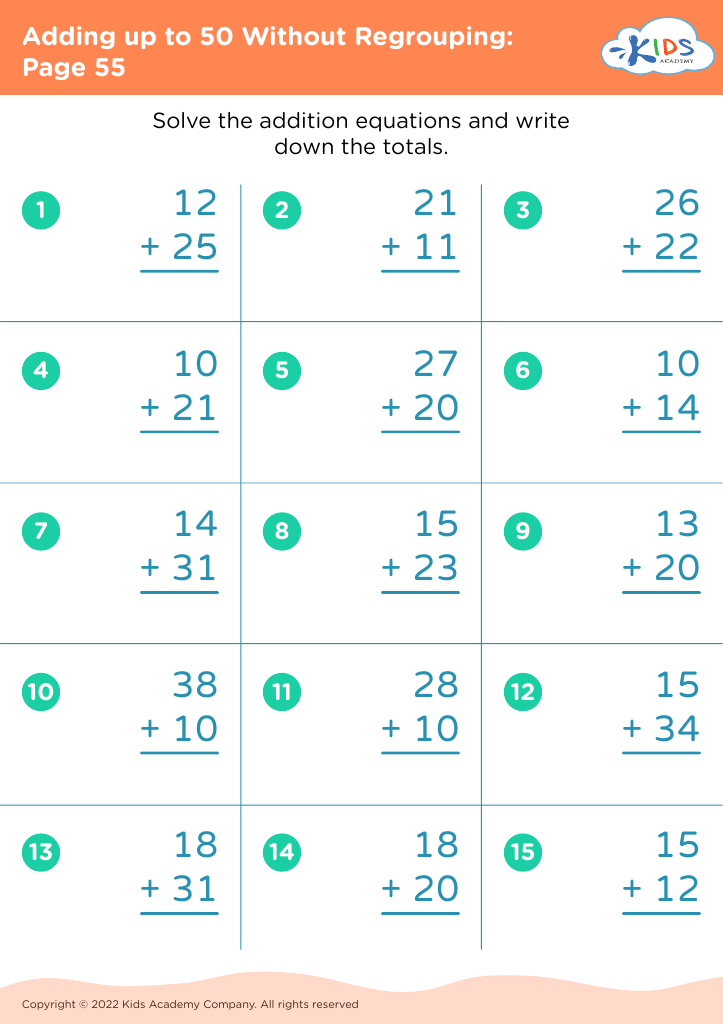
Adding up to 50 Without Regrouping: Page 55
Worksheet
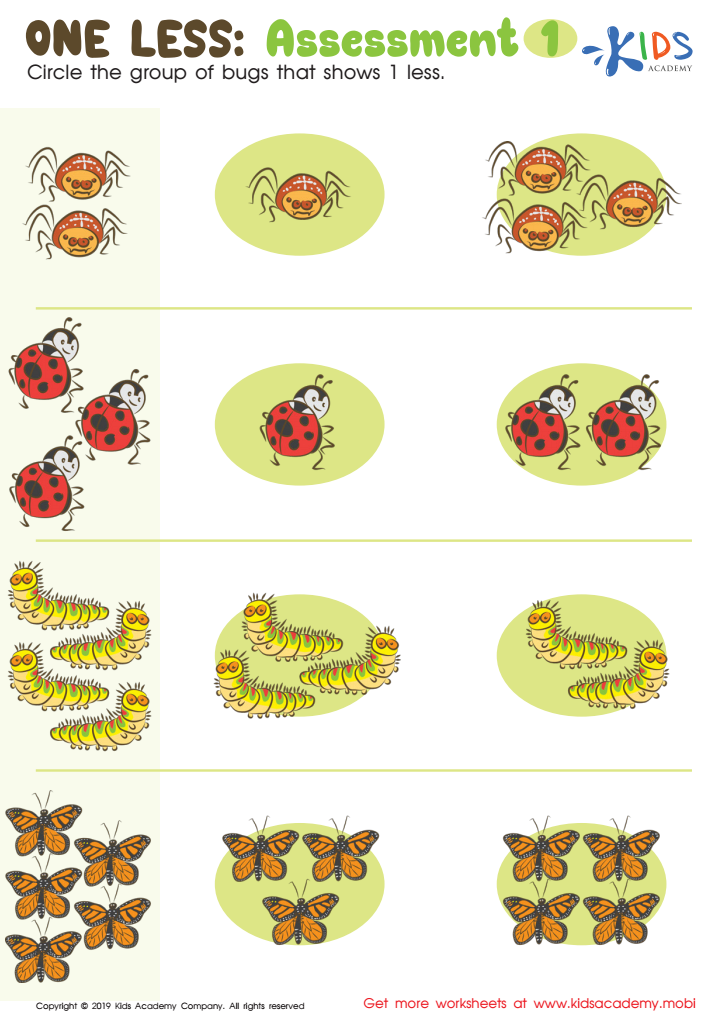
One Less: Assessment 1 Worksheet
One Less: Assessment 1 Worksheet
Help your kids with counting using this worksheet that has pictures of bugs! There are four different bugs and insects. Show them each one and ask them to count, then circle the group that has 1 less than the previous group. Don't worry if your kids don't like bugs - it's just a picture!
One Less: Assessment 1 Worksheet
Worksheet
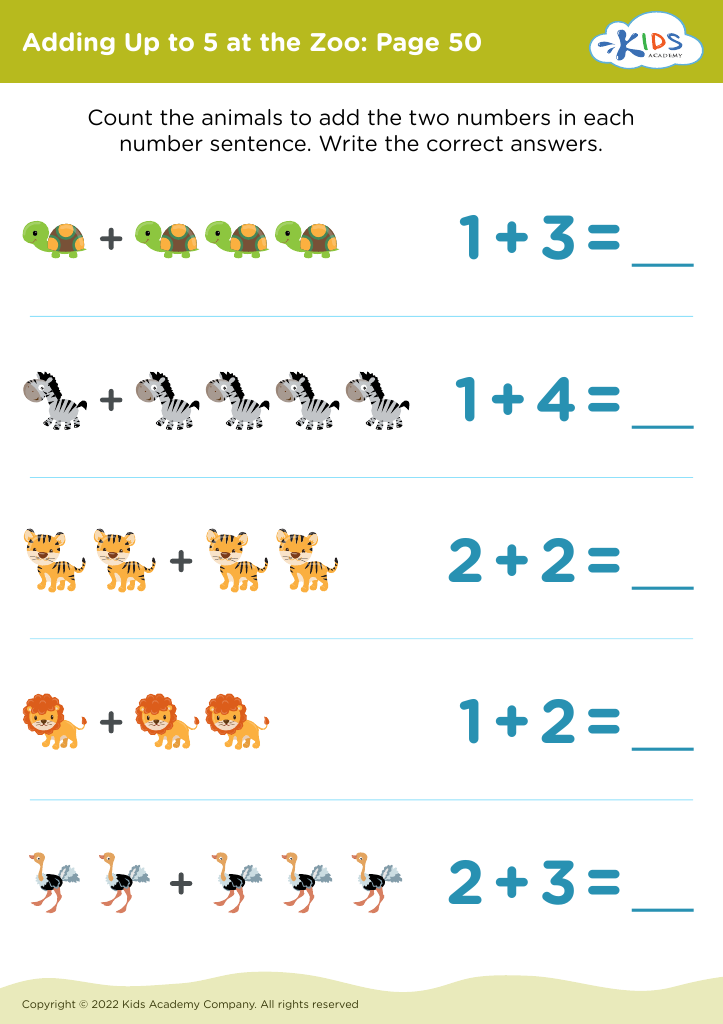
Adding Up to 5 at the Zoo: Page 50
Worksheet
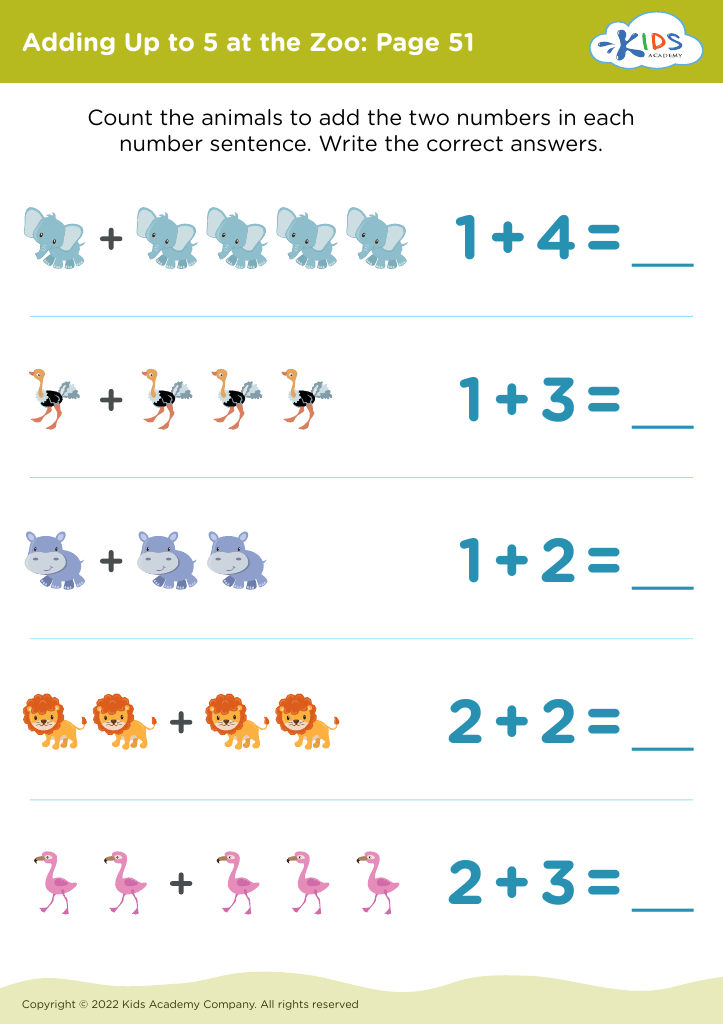
Adding Up to 5 at the Zoo: Page 51
Worksheet
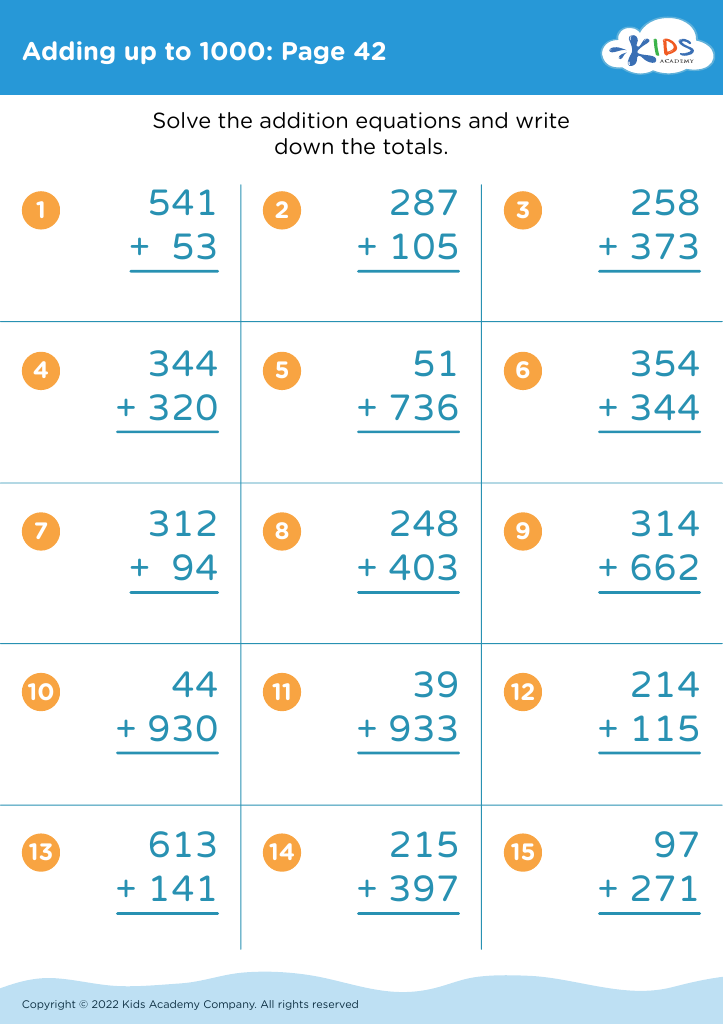
Adding up to 1000: Page 42

Adding up to 1000: Page 42

Adding up to 1000: Page 42
Worksheet
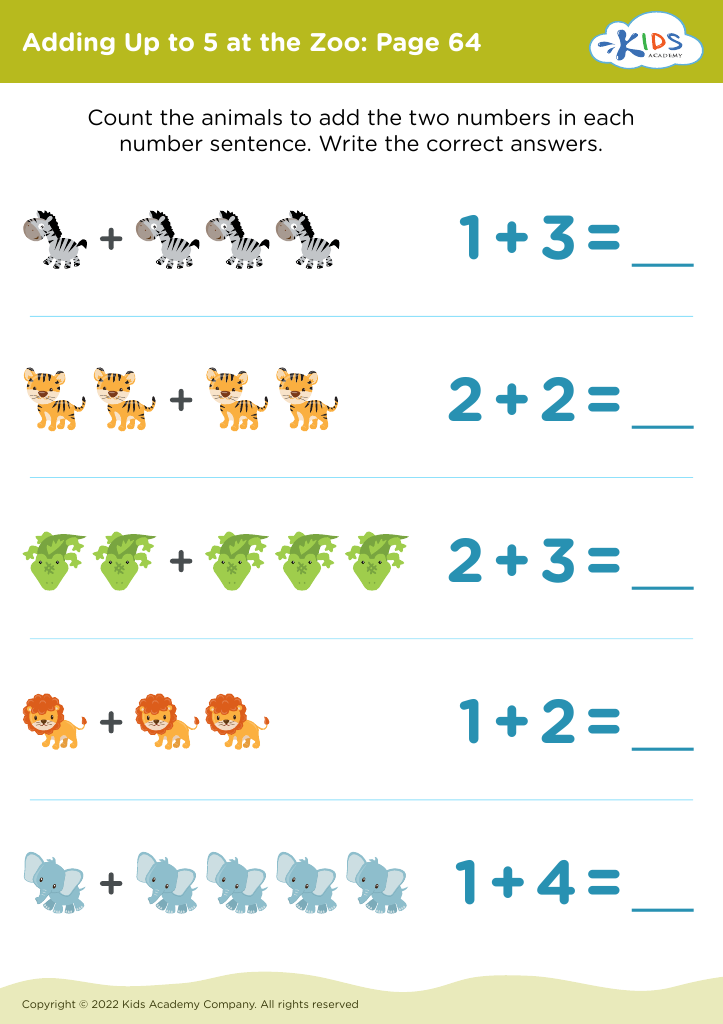
Adding Up to 5 at the Zoo: Page 64
Worksheet
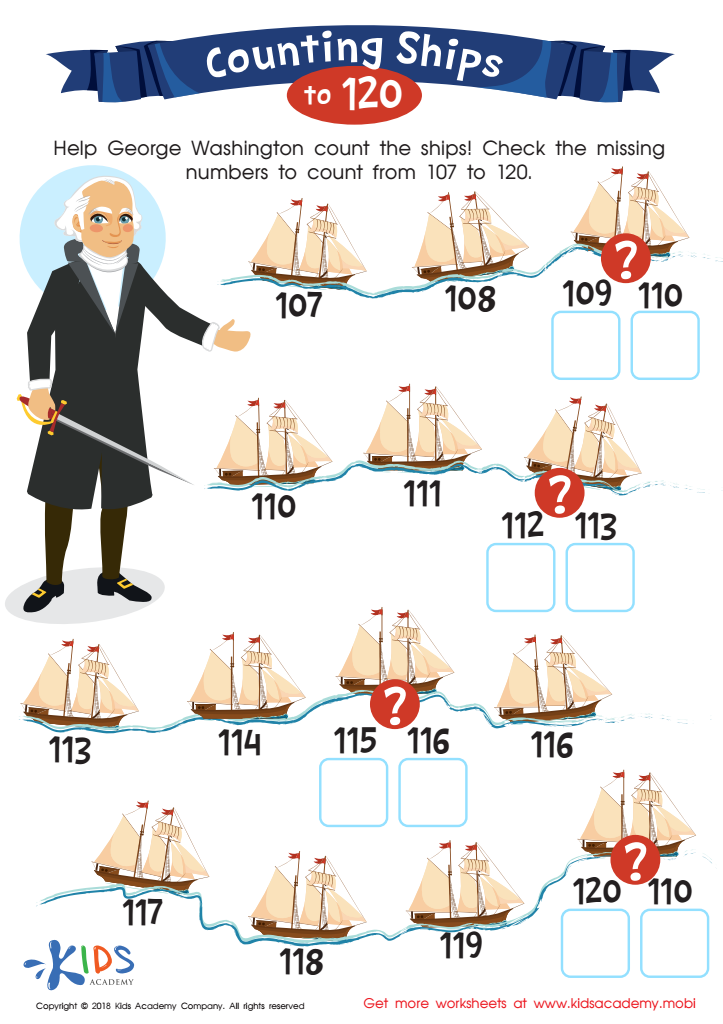
Counting Ships to 120 Worksheet

Counting Ships to 120 Worksheet

Introduce your child to George Washington and his contributions to our country's history. If they already know their numbers, have them help George count the ships! Challenge them to fill in the missing numbers between 107 and 120.
Counting Ships to 120 Worksheet
Worksheet
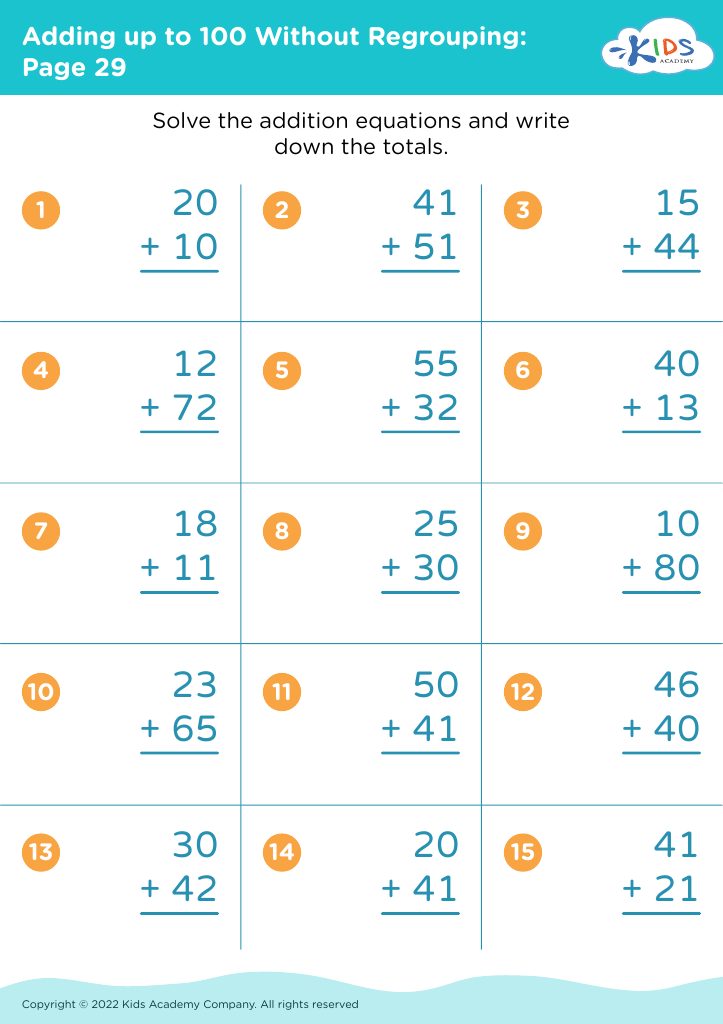
Adding up to 100 Without Regrouping: Page 29
Worksheet
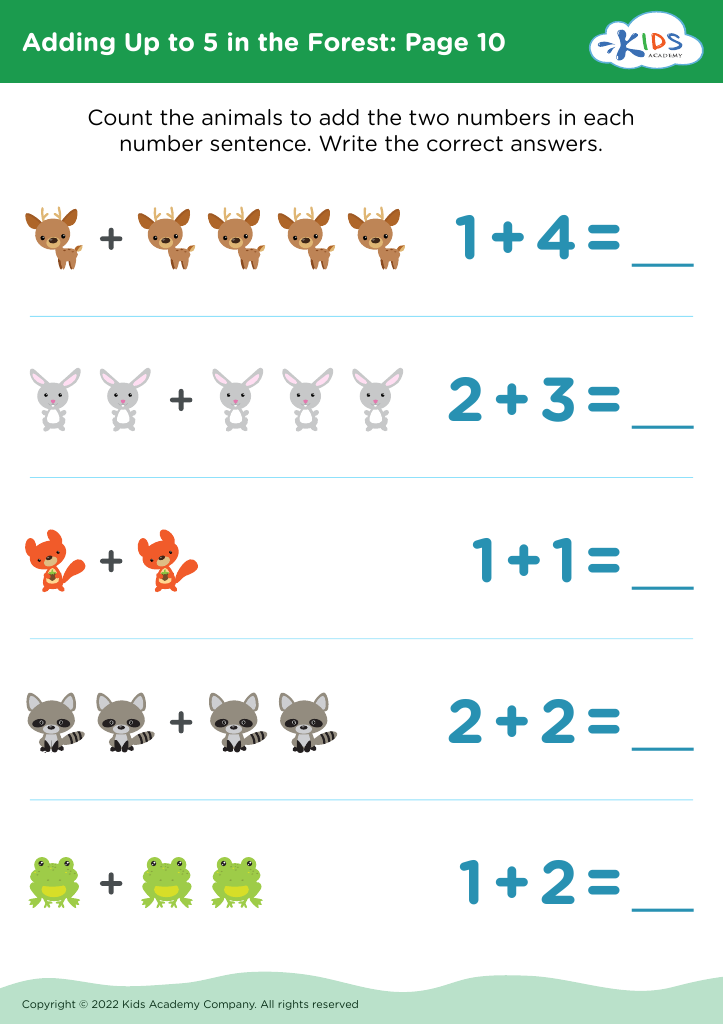
Adding Up to 5 in the Forest: Page 10
Worksheet
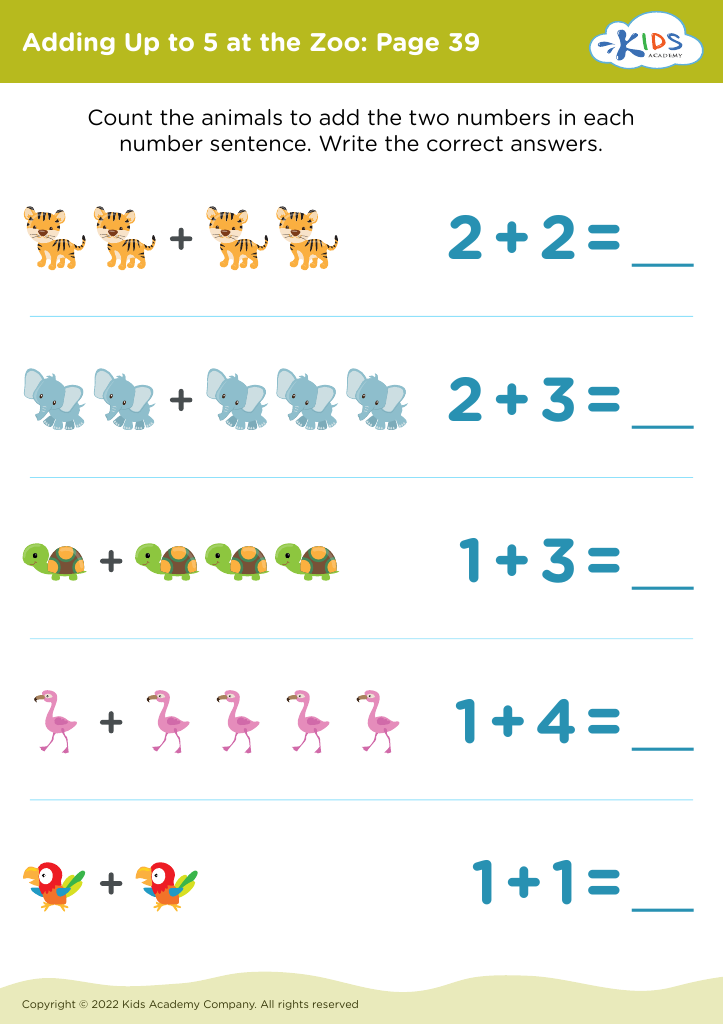
Adding Up to 5 at the Zoo: Page 39
Worksheet
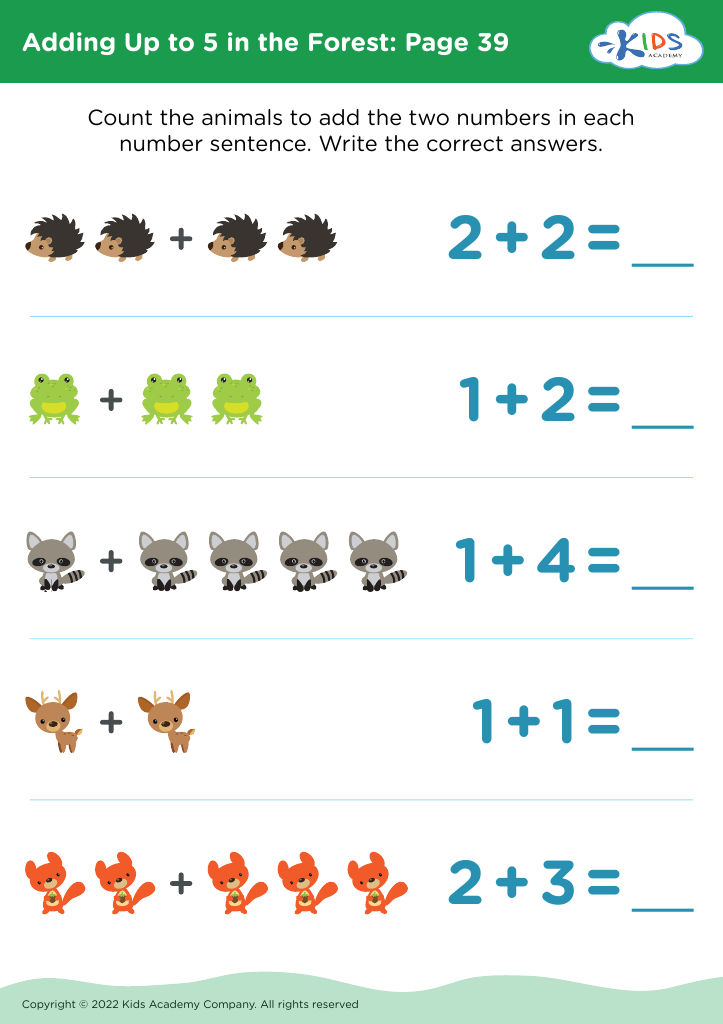
Adding Up to 5 in the Forest: Page 39
Worksheet
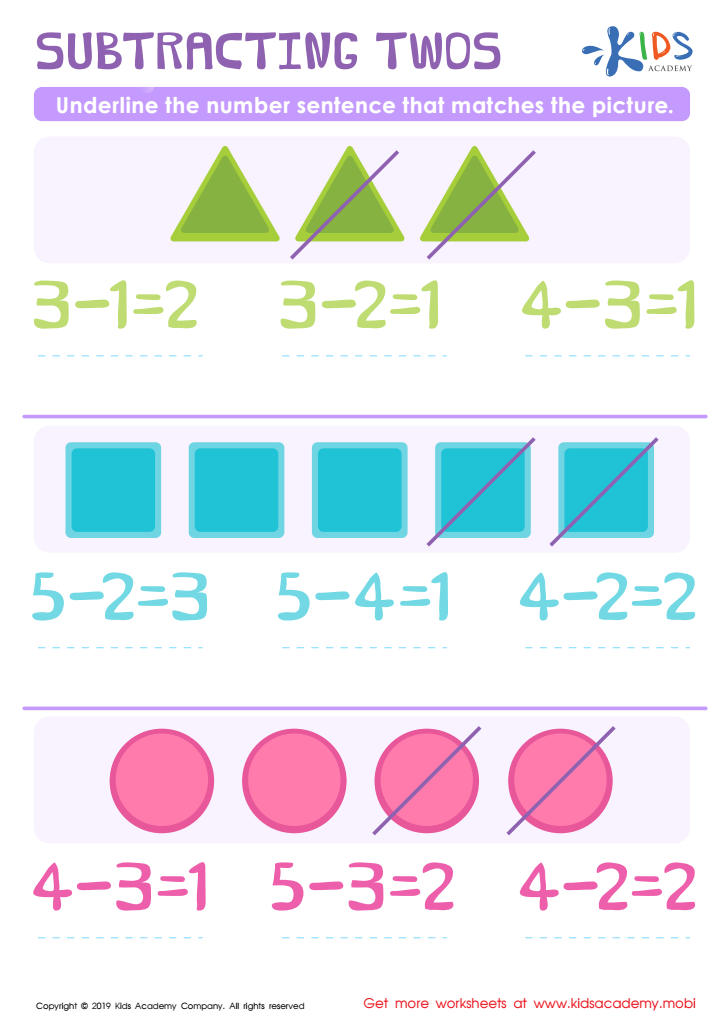
Subtracting Twos Worksheet
Subtracting Twos Worksheet
Help your children learn the basics of math with this worksheet. It has three number sentences they can match up with the pictures. Start by making math an enjoyable subject and help your kids underline the equation that matches up. This will give them a strong foundation to build on for the rest of their math journey.
Subtracting Twos Worksheet

Worksheet
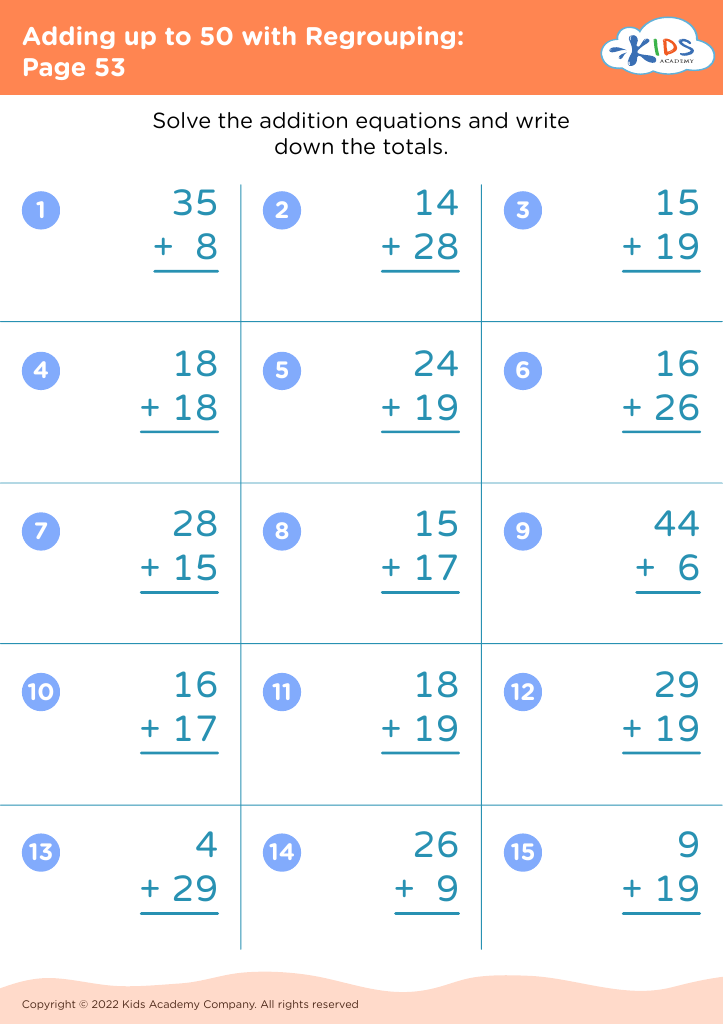
Adding up to 50 with Regrouping: Page 53
Worksheet
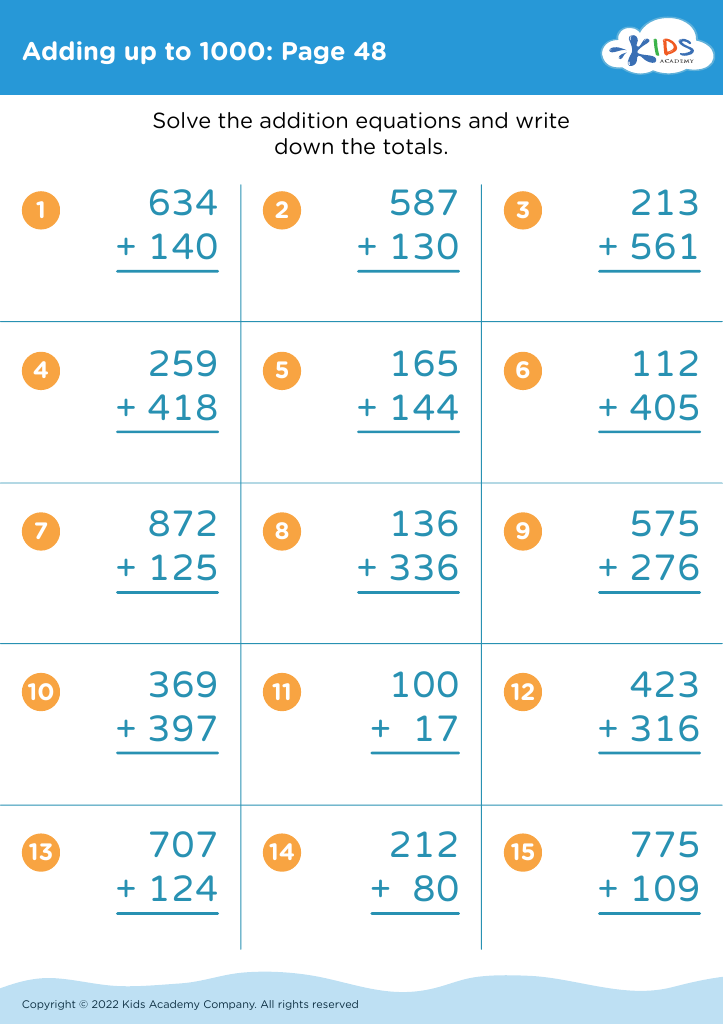
Adding up to 1000: Page 48

Adding up to 1000: Page 48

Adding up to 1000: Page 48
Worksheet
Marching Ants Worksheet

Marching Ants Worksheet

Assess and help your kids practice counting with this worksheet. Ask them to identify the four groups of ants in the picture. Guide them as they count each group and trace the lines to the corresponding number.
Marching Ants Worksheet
Worksheet


Number recognition is a foundational skill that sets the stage for future mathematical understanding and overall cognitive development in children aged 3-7. At this young age, children's brains are exceptionally pliable, making it the optimal time for learning basic numerical concepts. Recognizing numbers is the gateway to many other important mathematical operations such as counting, addition, and subtraction.

For parents and teachers, fostering number recognition skills can have a broad array of benefits. For one, it nurtures a child's sense of confidence and independence as they begin to make sense of the world around them in quantifiable terms. Children who can recognize and understand numbers are more likely to enjoy math and feel less intimidated by it later in life.

Additionally, early number recognition is strongly linked with problem-solving skills. When children distinguish numbers, they can categorize, compare, and contrast objects, which enhances their critical thinking abilities. These competencies have value not just academically, but in everyday decision-making and task management.

Finally, the connection between number recognition and literacy should not be overlooked. Patterns, sequencing, and categorization are essential skills for reading as well. Therefore, investing time and effort into teaching number recognition can have a well-rounded positive impact on a child's overall educational journey.

Overall, parents and teachers play a critical role in supporting this vital learning stage, setting children up for future academic and life success.