Pattern identification Worksheets for Ages 3-7
9 filtered results
-
From - To
Enhance your child's cognitive development with engaging pattern identification worksheets designed for ages 3-7. Our expertly crafted activities help young learners recognize, predict, and create patterns, laying a strong foundation for math and critical thinking skills. With vibrant visuals and fun exercises, these worksheets not only captivate children's interest but also support key developmental milestones. Tailored to be age-appropriate, the worksheets gradually increase in complexity to challenge and improve your child’s abilities. Ideal for use at home or in the classroom, these pattern identification worksheets are the perfect tool to foster joyful and effective early learning.
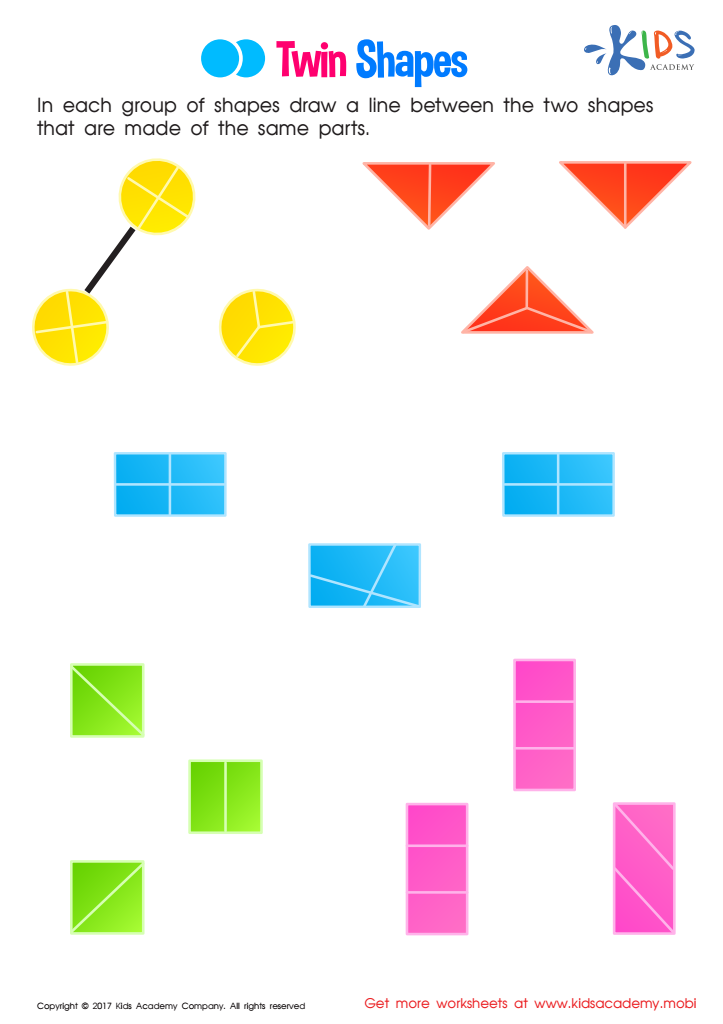
Twin Shapes Worksheet
 Assign to My Students
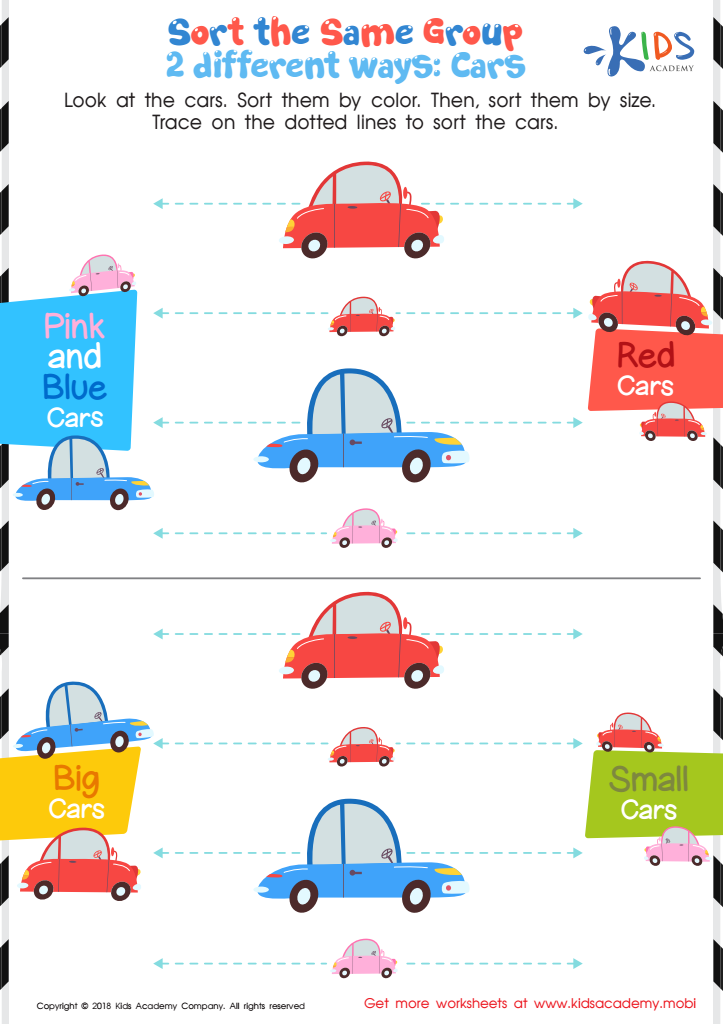
Sort the Same Group 2 Different Ways: Cars Worksheet
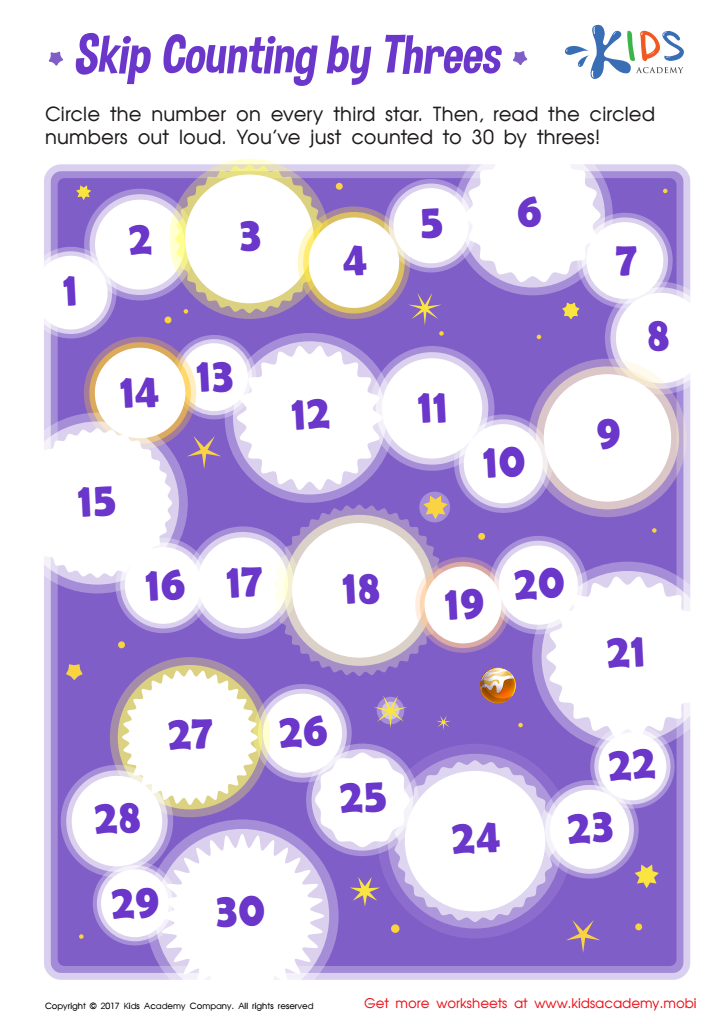
Skip Counting By Three Printable
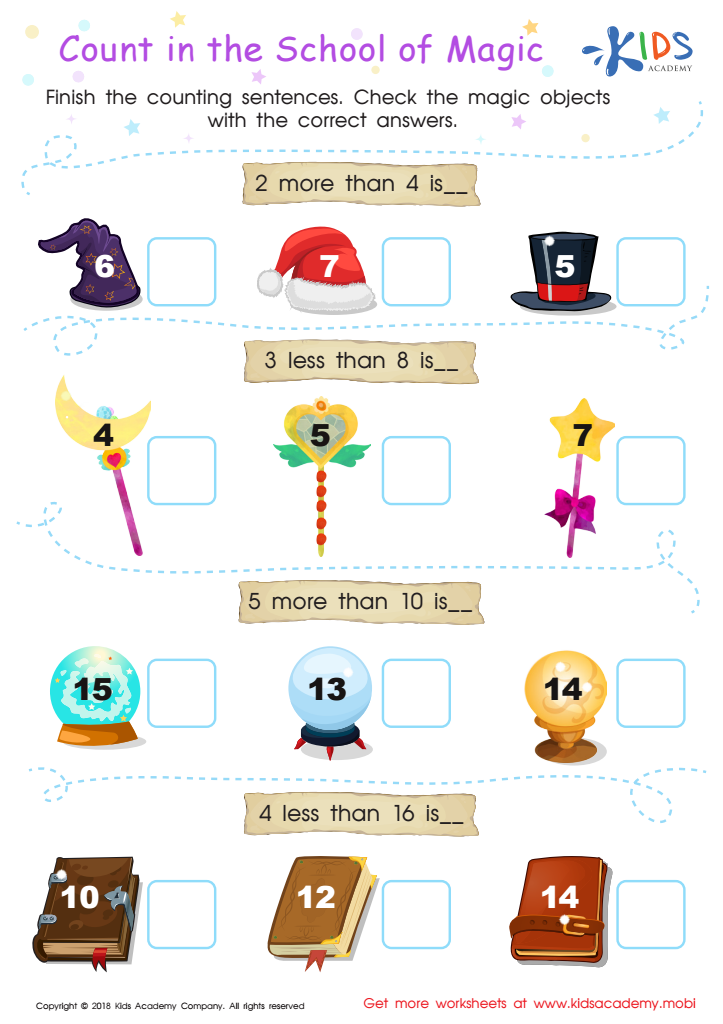
Count in the School of Magic Worksheet
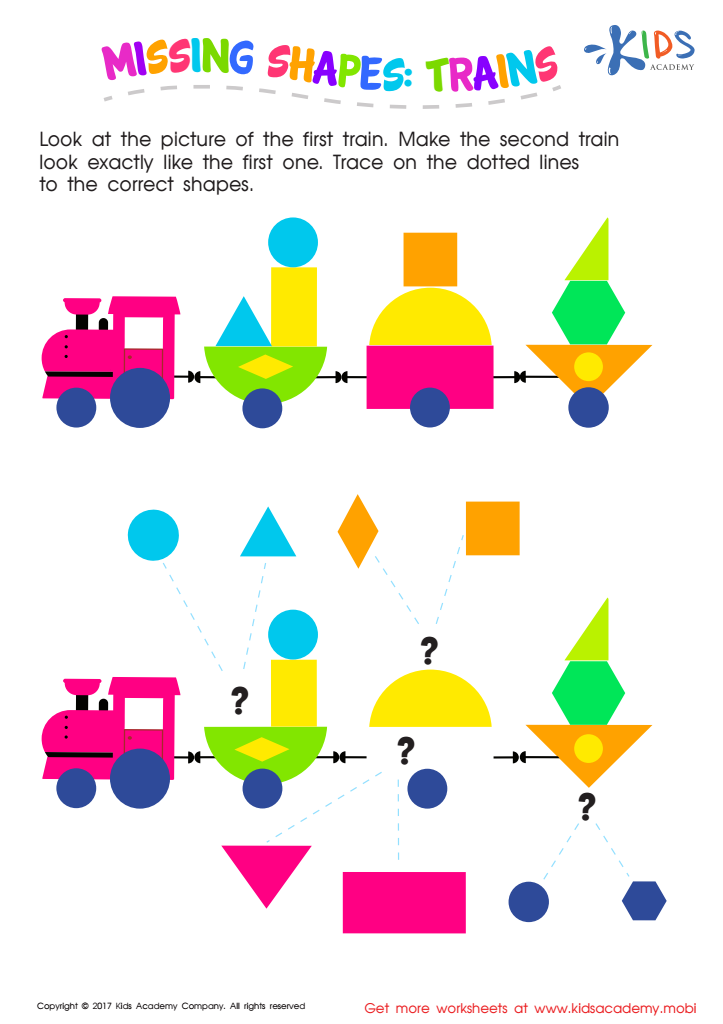
Missing Shapes: Trains Worksheet
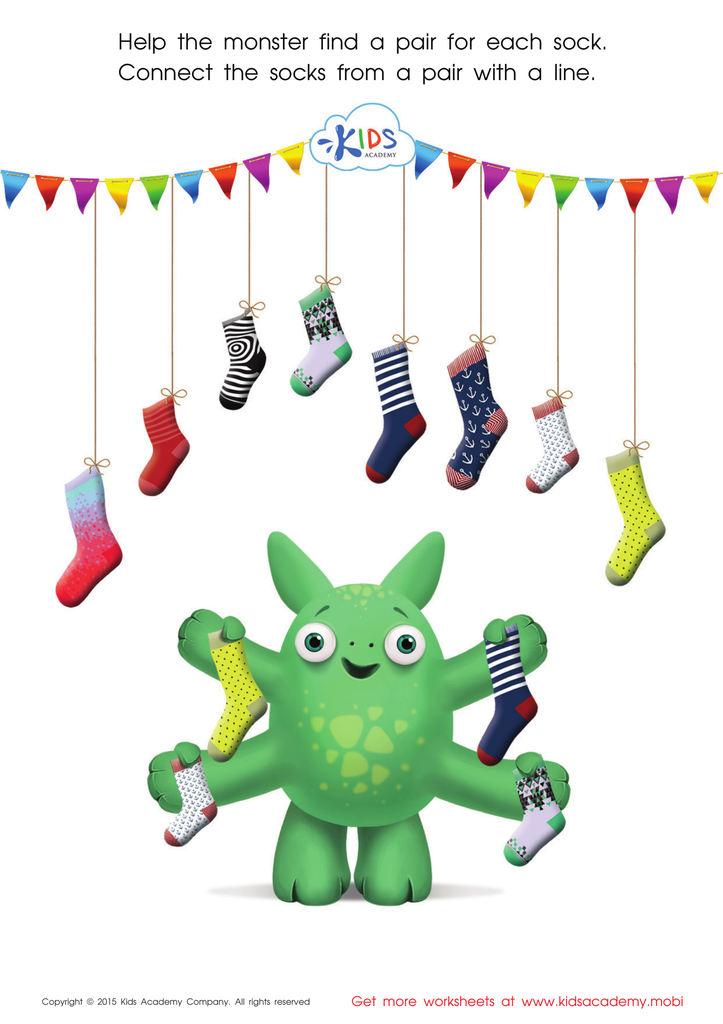
Math Matching Pairs Game: Monsterв's Socks Worksheet
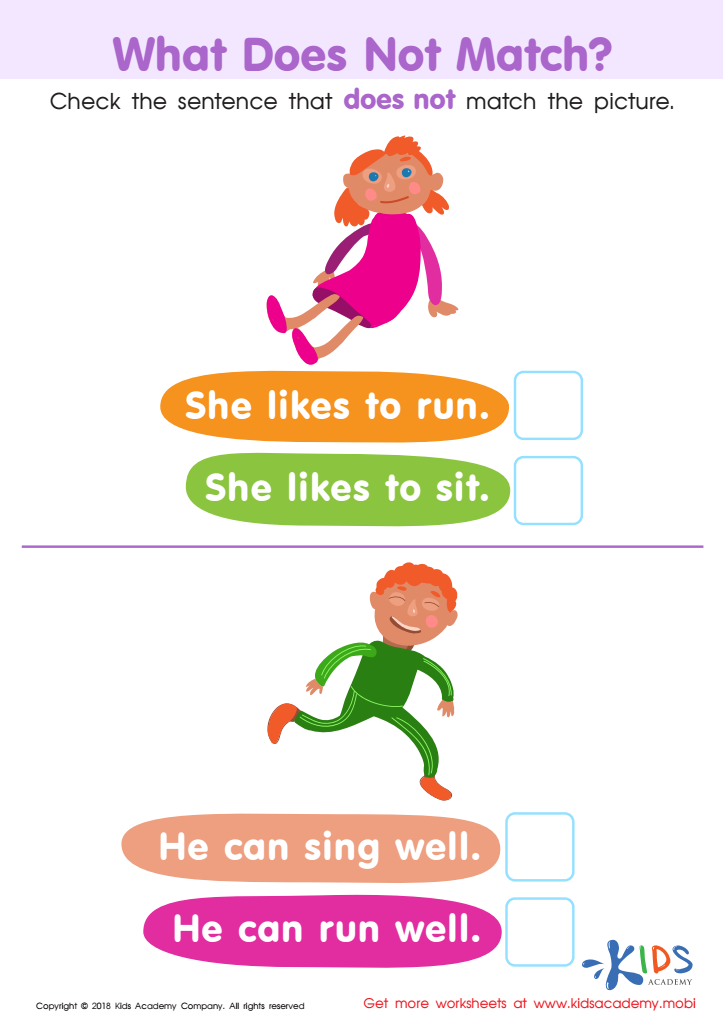
What Does Not Match? Worksheet







Pattern identification is a fundamental skill crucial for children aged 3-7 as it lays the groundwork for various cognitive and academic abilities. Parents and teachers should care about this not only because it is a natural curiosity in young minds but also because it directly contributes to a child's overall development.
Firstly, patterns help children with mathematical concepts. Recognizing sequences helps with understanding numbers, operations, and algebraic thinking later on. Identifying patterns also enhances problem-solving skills as children learn to predict what comes next and recognize relationships between objects or numbers.
Secondly, patterns aid in language development and literacy. Children learn to recognize patterns in words, such as rhymes and rhythms, which contribute to phonological awareness. This is essential for reading and writing skills, laying the foundation for future academic success.
Moreover, fine motor skills and hand-eye coordination improve as children identify and create patterns using objects, colors, or shapes. This kind of play fosters creativity and critical thinking.
Emotionally, understanding patterns provide a sense of order and predictability, making the world feel more understandable and less chaotic. Overall, pattern recognition is an essential early skill that supports academic learning and cognitive development, and thus it’s beneficial to nurture this in preschool and early education settings.








