Phonemic awareness Worksheets for Ages 3-7
3 filtered results
-
From - To
Discover our engaging phonemic awareness worksheets designed for young learners aged 3-7! These resources aim to enhance foundational literacy skills through fun, interactive activities. Our worksheets focus on sound recognition, blending, and segmenting words, promoting essential early reading capabilities. The activities are suitable for both home and classroom settings, making them perfect for educators and parents alike. With vibrant illustrations and varied exercises, children will enjoy developing their phonemic awareness while fostering a love for learning. Download our worksheets today and set the stage for your child's reading success! Explore our collection and watch young minds thrive in literacy!
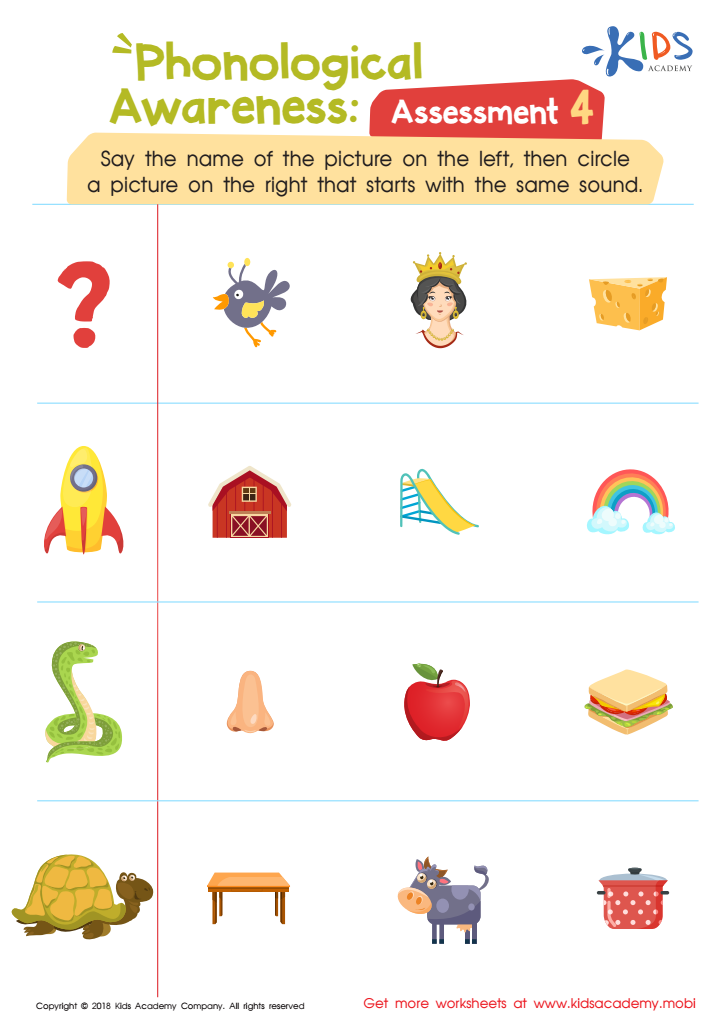
Phonological Awareness: Assessment 4 Worksheet
 Assign to My Students
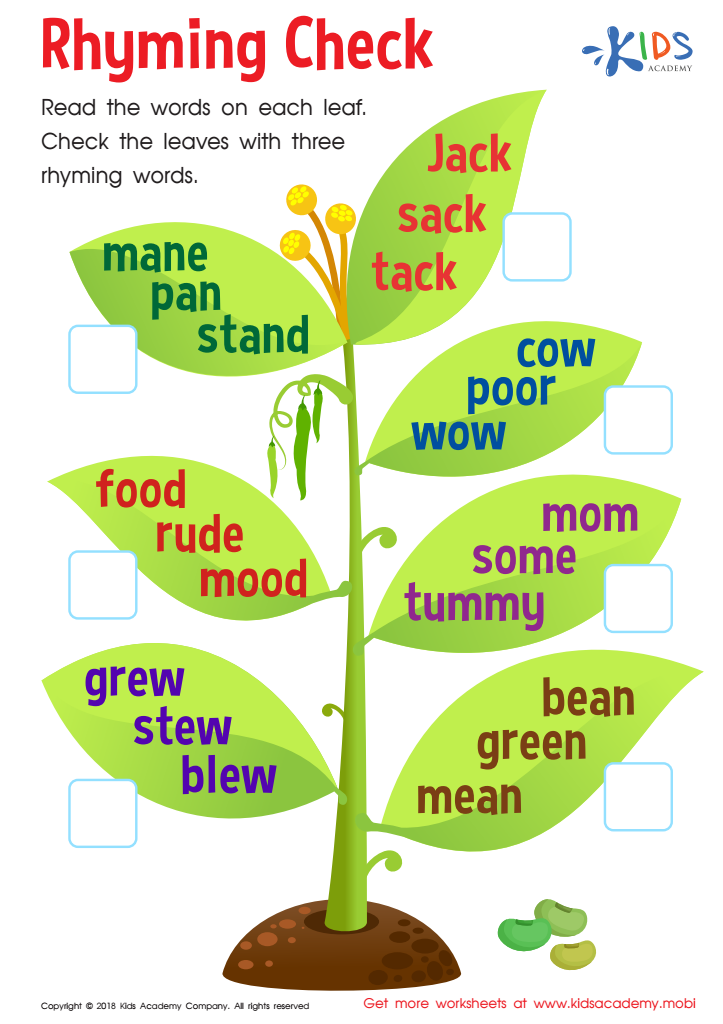
Rhyming Check Worksheet
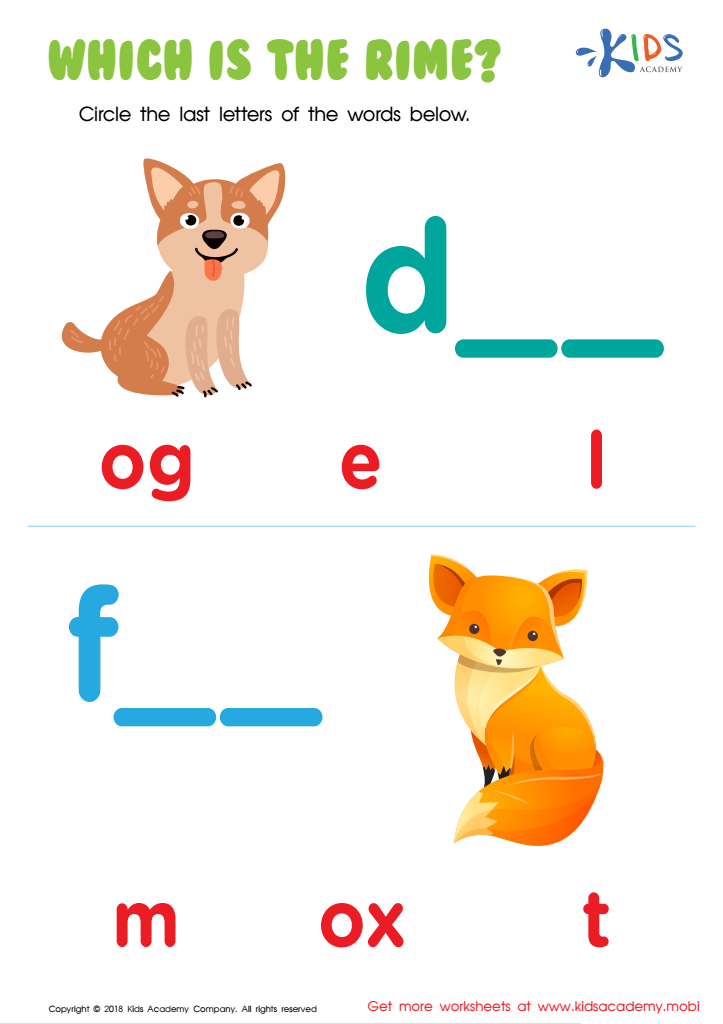
Which Is the Rime? Worksheet



.jpg)




Phonemic awareness is crucial for early literacy development in children aged 3 to 7, laying the foundation for their reading and writing skills. It refers to the ability to hear, identify, and manipulate individual sounds (phonemes) in spoken words. Understanding these sounds helps children decode words and recognize the phonetic patterns essential for fluent reading.
Parents and teachers should care about phonemic awareness because it is a strong predictor of future reading success. When children can segment and blend sounds, they become more proficient at sounding out unfamiliar words, facilitating a smoother transition to reading. This awareness also promotes spelling skills because children learn to relate sounds to letters, forming the basis for effective writing.
Furthermore, engaging in phonemic activities enhances language development, expands vocabulary, and supports overall cognitive growth. Activities like rhyming, sound games, and storytelling can make learning fun and interactive.
By prioritizing phonemic awareness, both parents and teachers can provide children with the tools they need for academic achievement, fostering a love for reading that lasts a lifetime. Investing time and effort in developing these skills during these formative years will pay significant dividends in a child's educational journey.








