Practicing subtraction Worksheets for Ages 3-7
4 filtered results
-
From - To
Discover engaging subtraction worksheets designed for children aged 3-7 to enhance their early math skills! Our collection of printable resources is tailored to make learning subtraction fun and interactive. With colorful illustrations and age-appropriate content, these worksheets foster a solid understanding of basic subtraction concepts. Ideal for preschool and kindergarten classrooms or home learning, our materials cater to various learning styles, promoting both independent practice and guided instruction. Boost your child’s confidence in math with activities that encourage problem-solving and critical thinking. Start your journey towards subtraction mastery today with our easy-to-use worksheets!
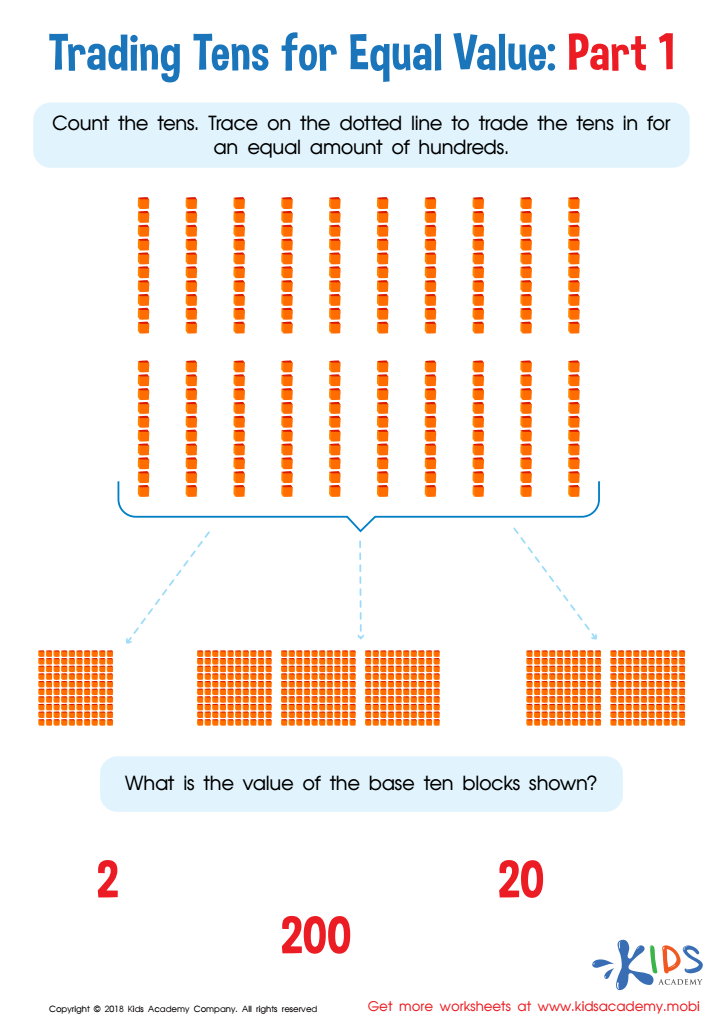
Trading Tens for Equal Value Worksheet: Part 1
 Assign to My Students
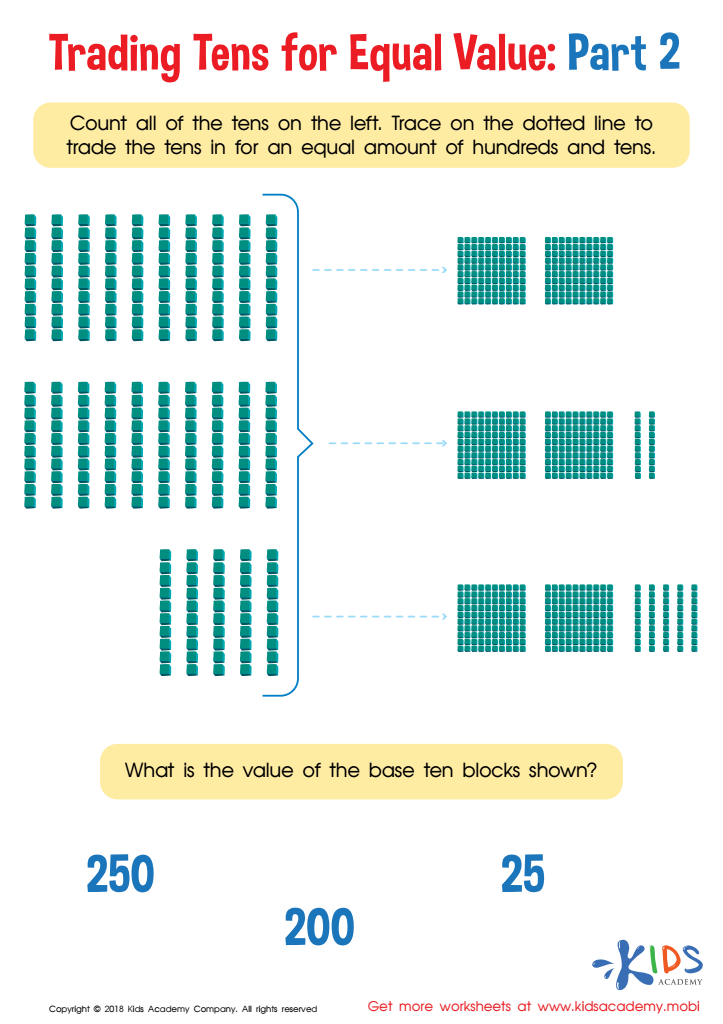
Trading Tens for Equal Value Worksheet: Part 2
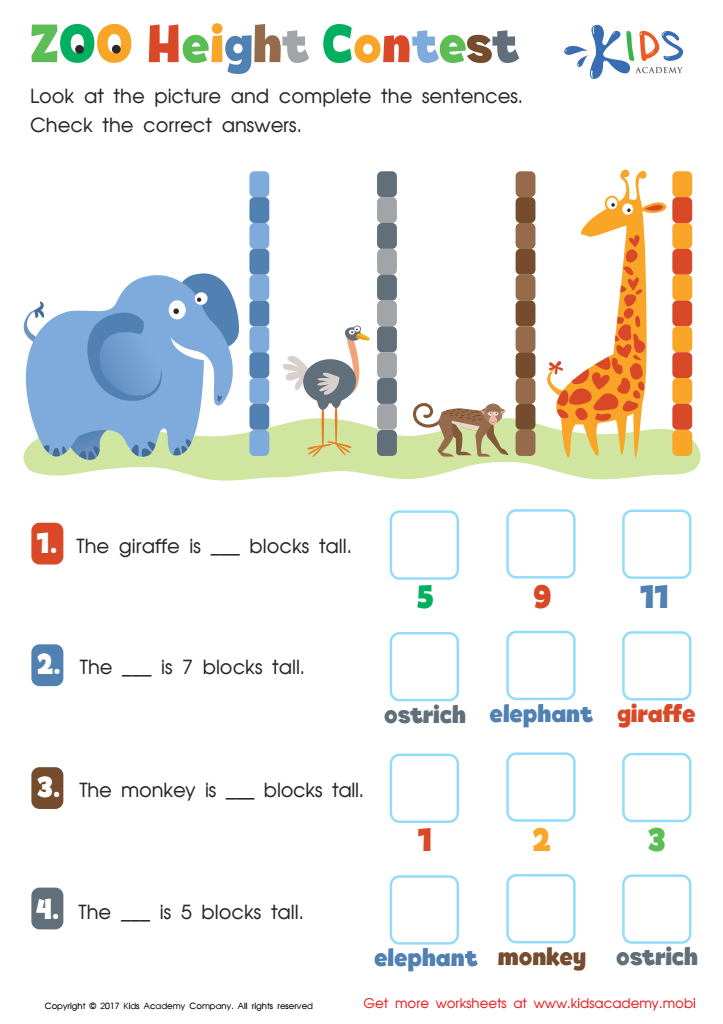
Zoo Height Contest Worksheet
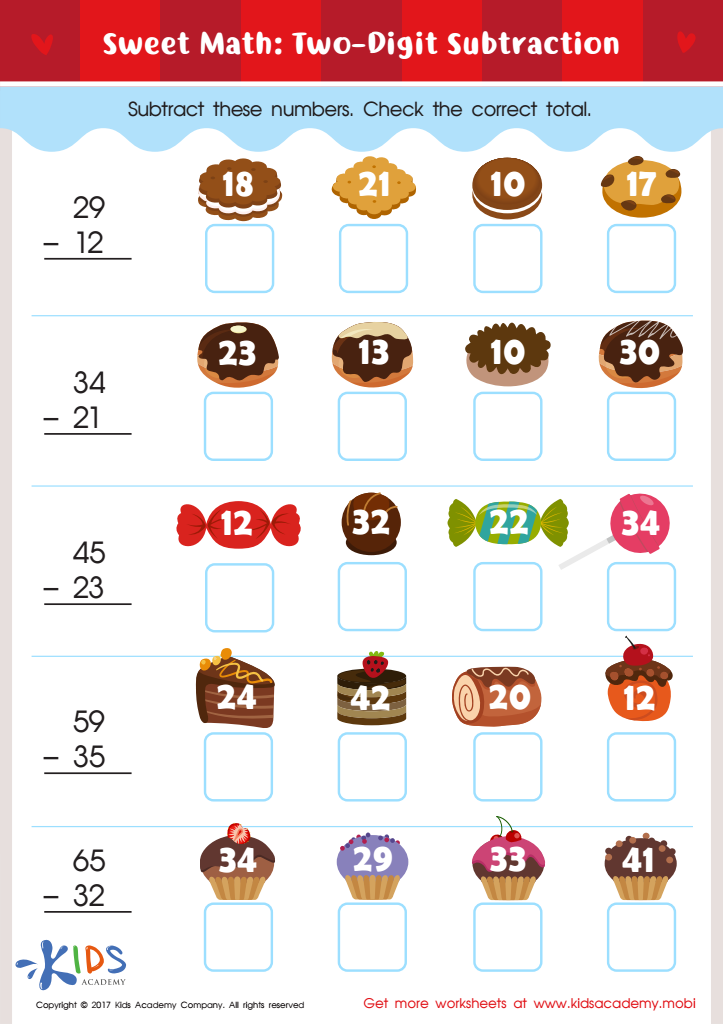
Two Digit Subtraction Worksheet






Practicing subtraction with children aged 3-7 is crucial for their cognitive development and foundational mathematical skills. At this age, children are in the early stages of understanding numbers and basic arithmetic concepts. Learning subtraction not only improves their ability to perform calculations but also enhances critical thinking and problem-solving skills.
Engaging in subtraction activities helps children understand the idea of taking away—an essential concept in mathematics. This foundational understanding will support their future learning in addition, multiplication, and division. Furthermore, subtraction promotes number sense, encouraging children to visualize numbers and their relationships, which is beneficial for their overall mathematical literacy.
In addition to academic growth, practicing subtraction fosters perseverance and a growth mindset. It allows children to encounter challenges, learn to tackle them, and celebrate achievements, boosting their confidence in retrying difficult tasks.
Finally, regular practice creates opportunities for meaningful interactions between parents, teachers, and children, thereby strengthening relationships. Through fun games or everyday scenarios, both parents and educators can effectively engage children in subtracting, making learning enjoyable and relatable, which is vital for motivation and retaining interest in math as they progress in their education.








