Problem solving enhancement Worksheets for Ages 3-7
3 filtered results
-
From - To
Enhance your child's cognitive development with our Problem Solving Enhancement Worksheets for Ages 3-7. Designed to stimulate young minds, these engaging activities help develop critical thinking, logical reasoning, and decision-making skills. Our worksheets cover a range of themes from simple puzzles to complex problem-solving scenarios, encouraging children to think independently and creatively. Perfect for both classroom and at-home use, they provide a fun and interactive way for kids to learn and grow. Foster essential learning skills with our expertly crafted and age-appropriate resources that make problem-solving an exciting adventure.
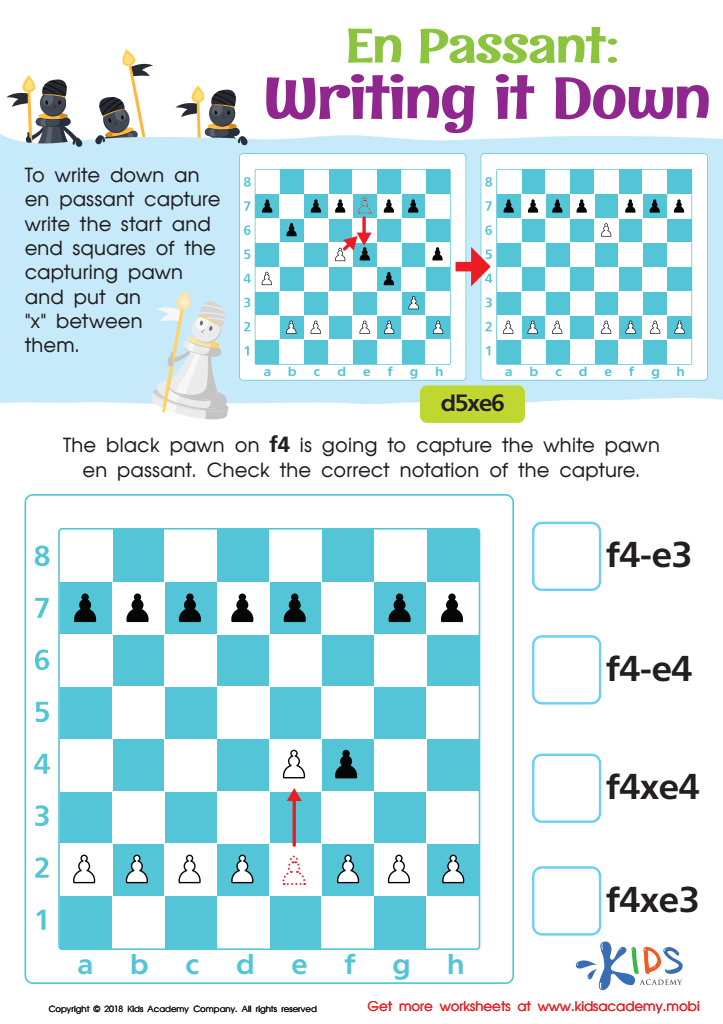
En Passant: Writing it Down Worksheet
 Assign to My Students
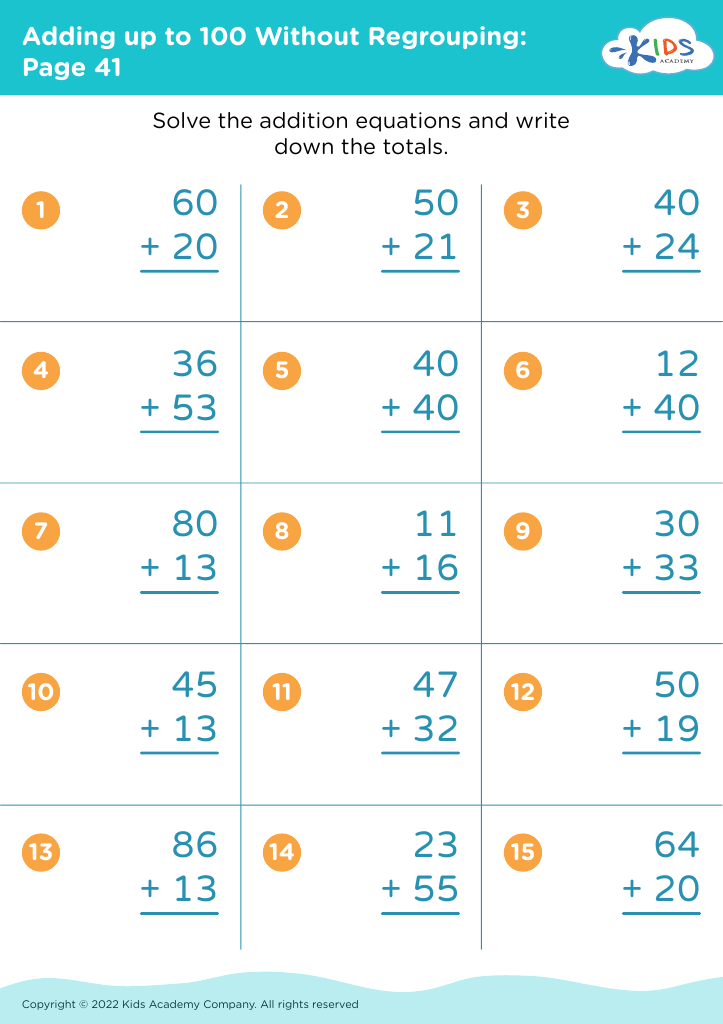
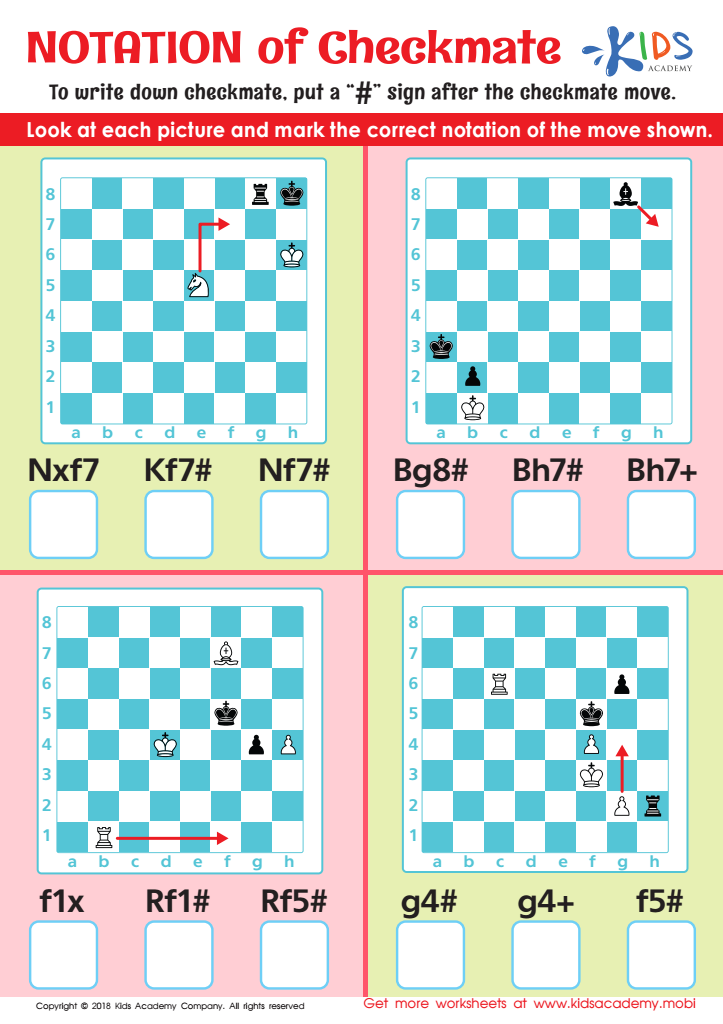
Notation of Checkmate Worksheet





.jpg)


Parents and teachers should give significant attention to enhancing problem-solving skills for children aged 3-7 because this critical developmental phase lays the foundation for future cognitive, emotional, and social abilities. At this young age, children's brains are incredibly receptive and adaptable, forming connections that influence lifelong learning and behavior.
Problem-solving skills help children learn how to approach challenges and persist in finding solutions. These skills foster independent thinking, increase confidence, and promote resilience. In everyday scenarios—like solving a puzzle, negotiating play with peers, or figuring out a new task—children practice patience, creativity, and logical reasoning. This, in turn, nurtures a growth mindset, where they view challenges as opportunities for learning and growth rather than obstacles.
Moreover, fostering problem-solving abilities early on boosts academic readiness and achievement. Skills such as counting, recognizing patterns, and understanding cause and effect are closely tied to early problem-solving practice. These foundational concepts translate directly to later success in math, science, reading, and beyond.
Socially, effective problem-solving enhances cooperative play and conflict resolution. Children learn to communicate effectively, empathize with others, and develop strong interpersonal relationships. In sum, focusing on problem-solving for young children equips them with essential tools for academic success, emotional well-being, and positive social interactions throughout life.








