Sentence structure understanding Worksheets for Ages 3-7
5 filtered results
-
From - To
Discover our engaging Sentence Structure Understanding Worksheets designed specifically for children aged 3-7! These interactive activities aim to enhance early language skills by introducing your little learners to the fundamentals of sentence construction. Each worksheet provides fun exercises that articulate subject, verb, and object identification, helping kids develop their understanding of how sentences are formed. Perfect for home or classroom use, our worksheets encourage creativity and expression, making learning enjoyable. Equip your child with essential communication skills early on and watch their confidence grow as they master the art of sentence structure through play and exploration!
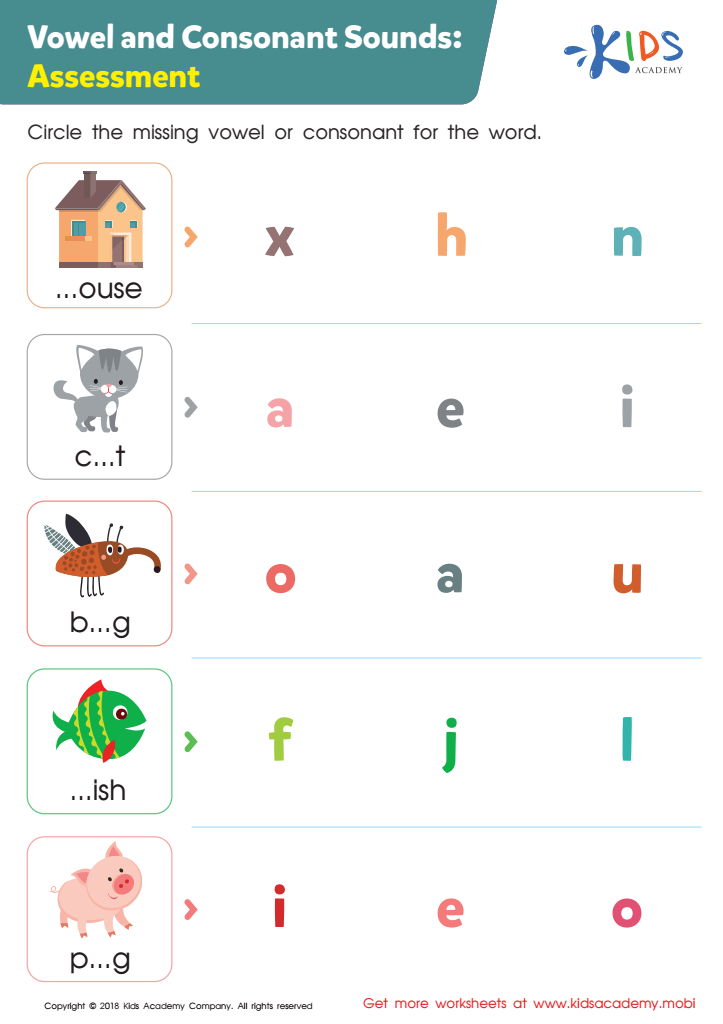
Vowel and Consonant Sounds: Assessment Worksheet
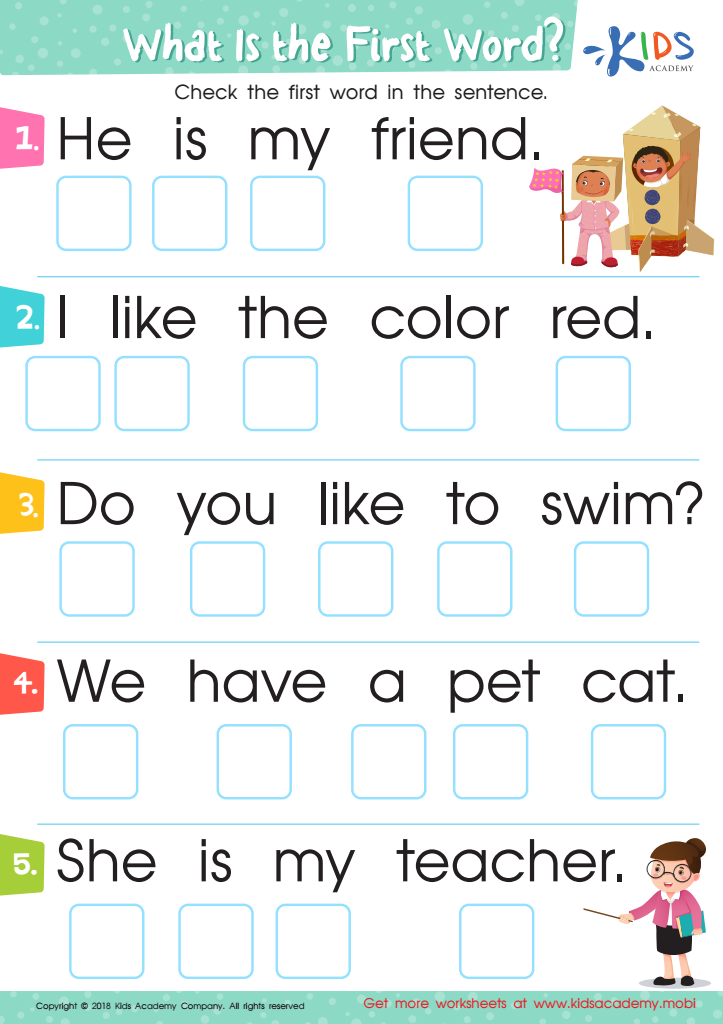
What is the First Word? Worksheet
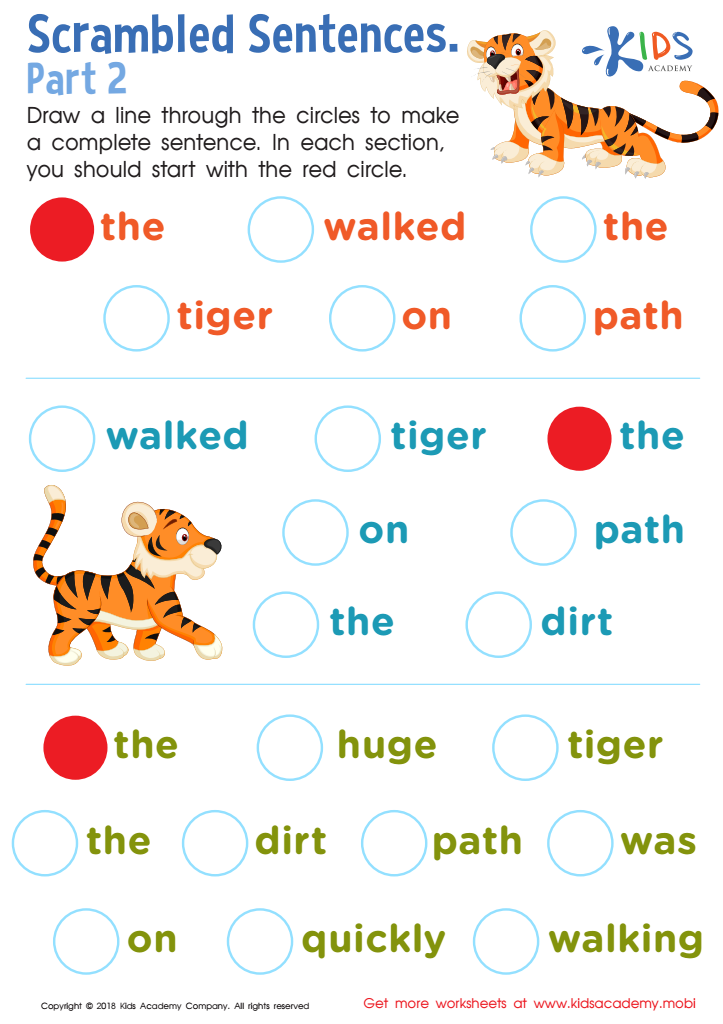
Scrambled Sentences Part 2 Worksheet
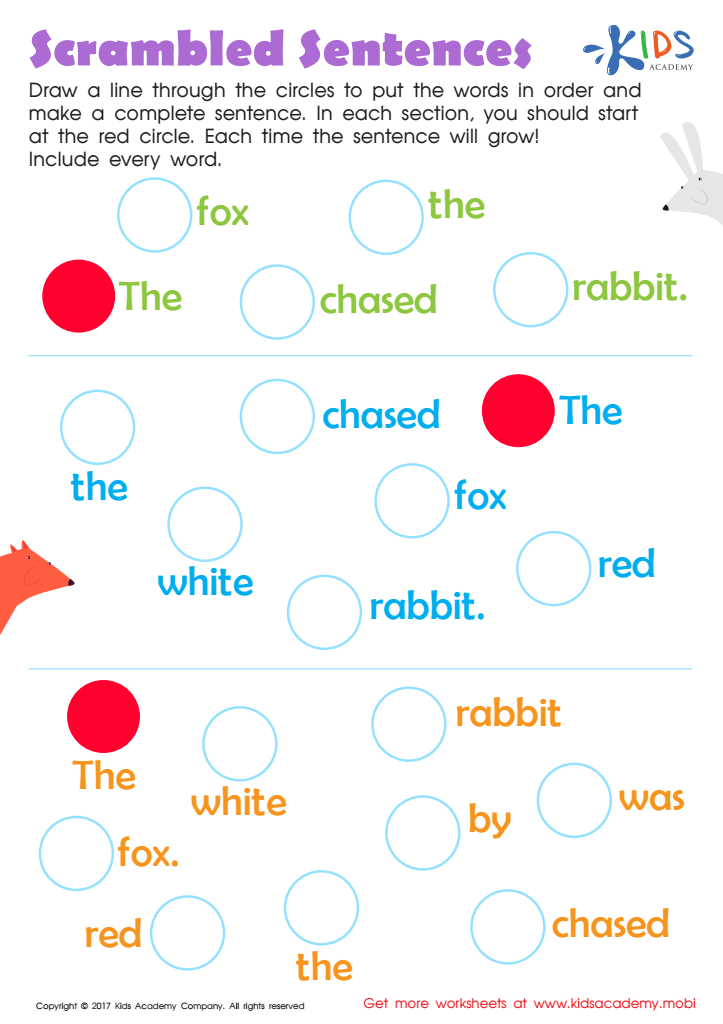
Scrambled Sentences Worksheet
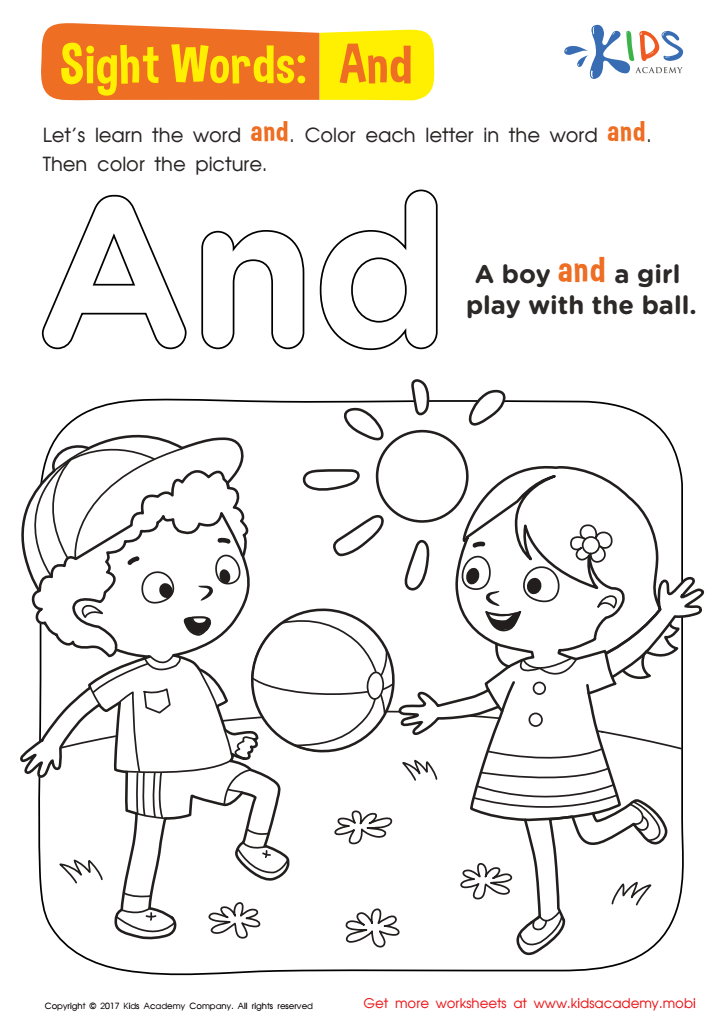
And Worksheet Sight Words Worksheet
 Assign to My Students


.jpg)


.jpg)


Understanding sentence structure is crucial for children ages 3-7 as it lays the foundation for effective communication and literacy skills. During early childhood, children are in a pivotal stage of language development where they start to express ideas, share stories, and engage in conversations. When parents and teachers emphasize sentence structure, they help children learn how to form complete thoughts, which leads to clearer expression and comprehension.
Moreover, a solid grasp of sentence structure enhances reading and writing abilities. As children decode text, they must understand how sentences are organized to derive meaning. Familiarity with structure also aids in writing, as children need to construct sentences with appropriate grammar and punctuation to convey their messages effectively.
Furthermore, understanding sentence structure fosters critical thinking and cognitive abilities. It encourages children to analyze how words combine to create meaning, promoting creativity as they experiment with language.
By prioritizing sentence structure, parents and teachers can equip children with vital skills for academic success and interpersonal communication, ultimately nurturing confident learners and expressive individuals. This foundational knowledge sets the stage for lifelong literacy and communication competence, essential in today's interconnected world.








