Shape comparison Worksheets for Ages 3-7
4 filtered results
-
From - To
Introduce young learners to the world of shapes with our Shape Comparison Worksheets specially designed for ages 3-7! These engaging and educational activities offer a fun way to compare, contrast, and identify various shapes, helping children develop critical thinking and visual discrimination skills. With vibrant illustrations and interactive tasks, every worksheet is crafted to captivate young minds while reinforcing fundamental concepts in geometry. Perfect for home or classroom use, our worksheets provide a strong foundation in early math skills, ensuring your child or student gains confidence and mastery in recognizing and categorizing shapes. Explore now and watch your child’s skills grow!
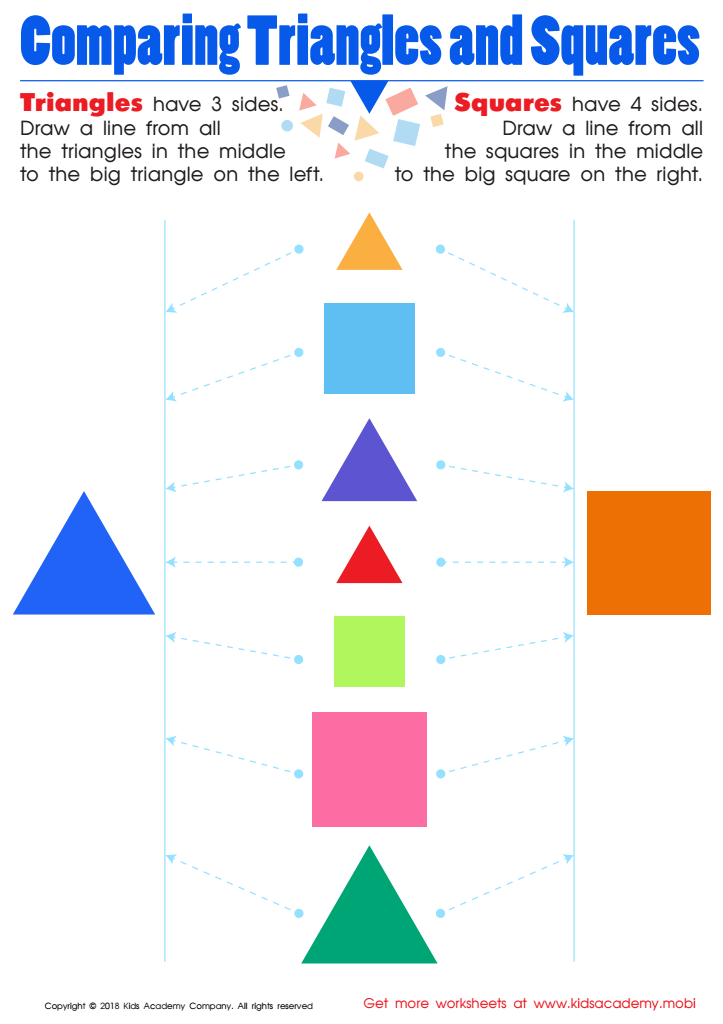
Comparing Triangles Squares Worksheet
 Assign to My Students
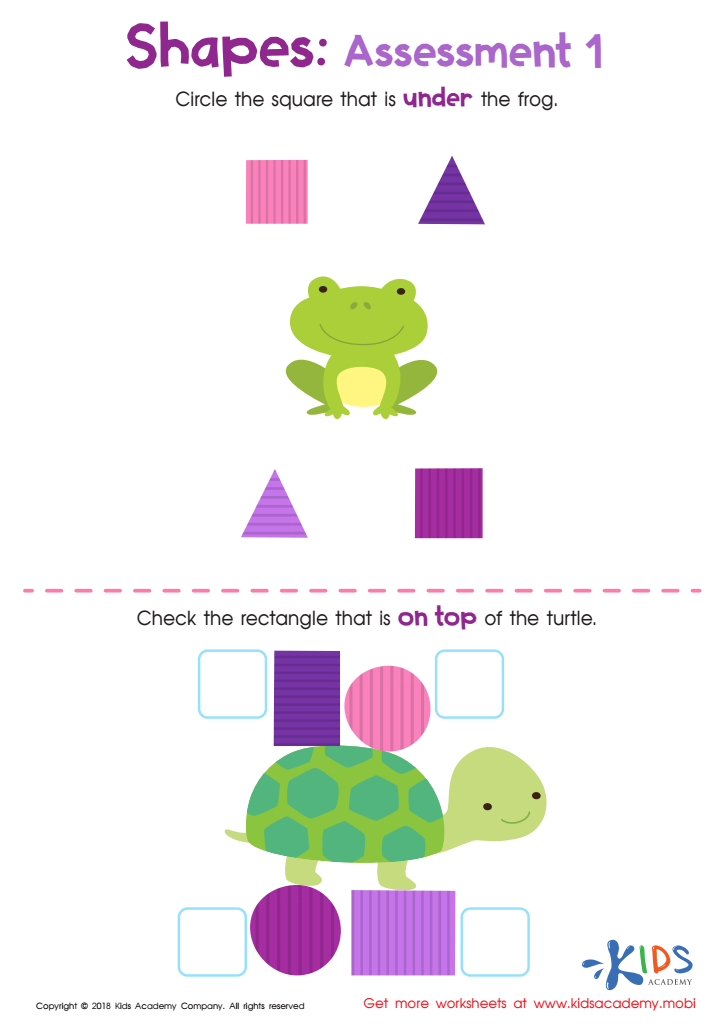
Geometry – Assessment 1 Worksheet
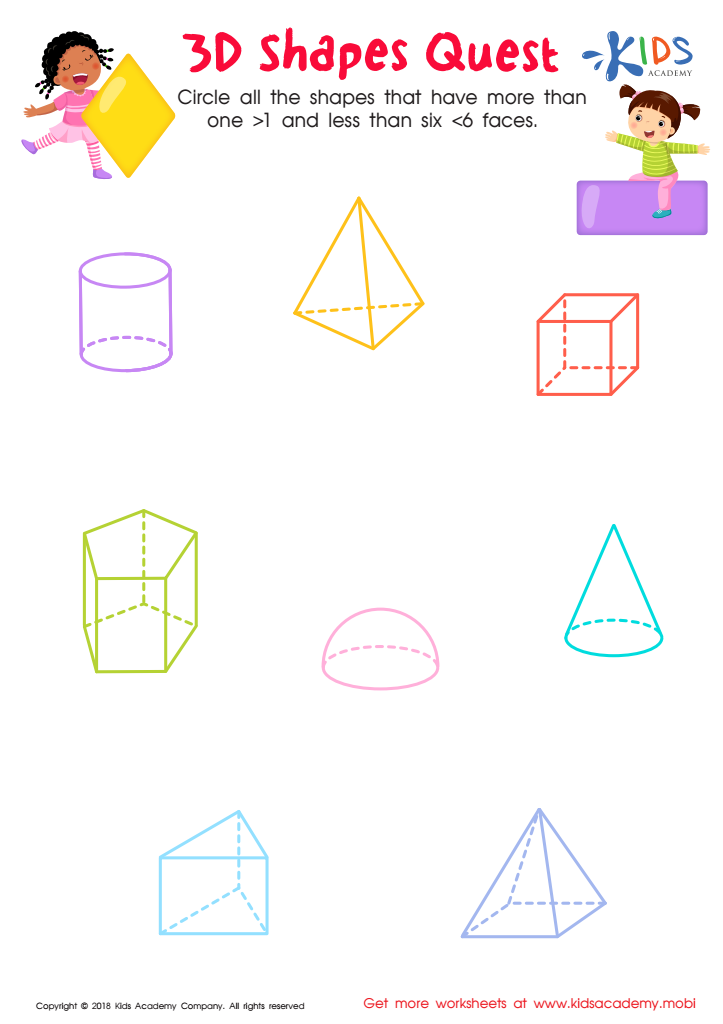
3D Shapes Quest Worksheet
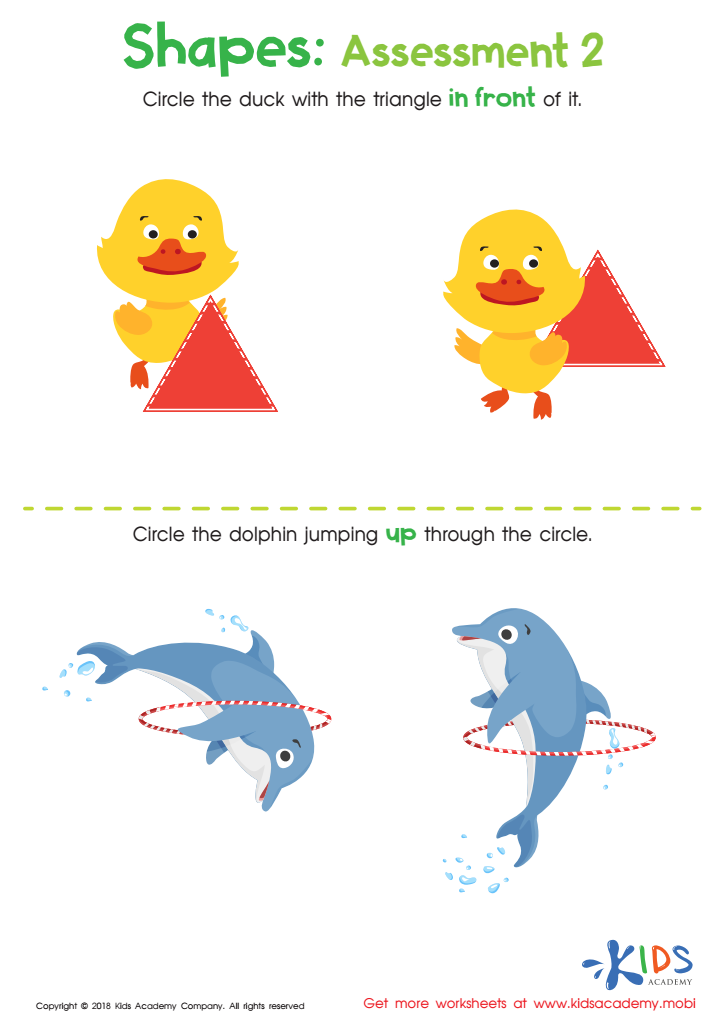
Geometry – Assessment 2 Worksheet






Shape comparison is fundamental for young children (ages 3-7) as it lays the groundwork for crucial cognitive and mathematical skills. First, shape comparison helps in developing visual-spatial awareness. By identifying differences and similarities in shapes, children learn to observe closely, boosting their attention to detail. This aids in recognizing patterns, a critical skill in both math and reading as they grow older.
Second, through comparing shapes, language development is enhanced. Children learn descriptive language such as "bigger," "smaller," "taller," "shorter," "round," and "square," enriching their vocabulary and communication skills. Expressing these observations also supports their ability to articulate thoughts clearly and coherently.
Additionally, shape comparison activities promote problem-solving and critical thinking skills. When children sort or match shapes, they are engaging in basic classification and analysis, essential components of logical reasoning and geometry. They start understanding properties of shapes, such as number of sides or angles, which forms the basis for further geometric concepts.
Moreover, integrating social and interactive play with shape comparison fosters cooperative learning and social skills. Sharing ideas and working together on puzzles or other shape-related activities develops teamwork and empathy.
Therefore, both parents and teachers should recognize and encourage shape comparison activities to stimulate foundational developmental aspects, ensuring a well-rounded early childhood education.








