Spatial awareness Worksheets for Ages 3-7 - Page 3
53 filtered results
-
From - To
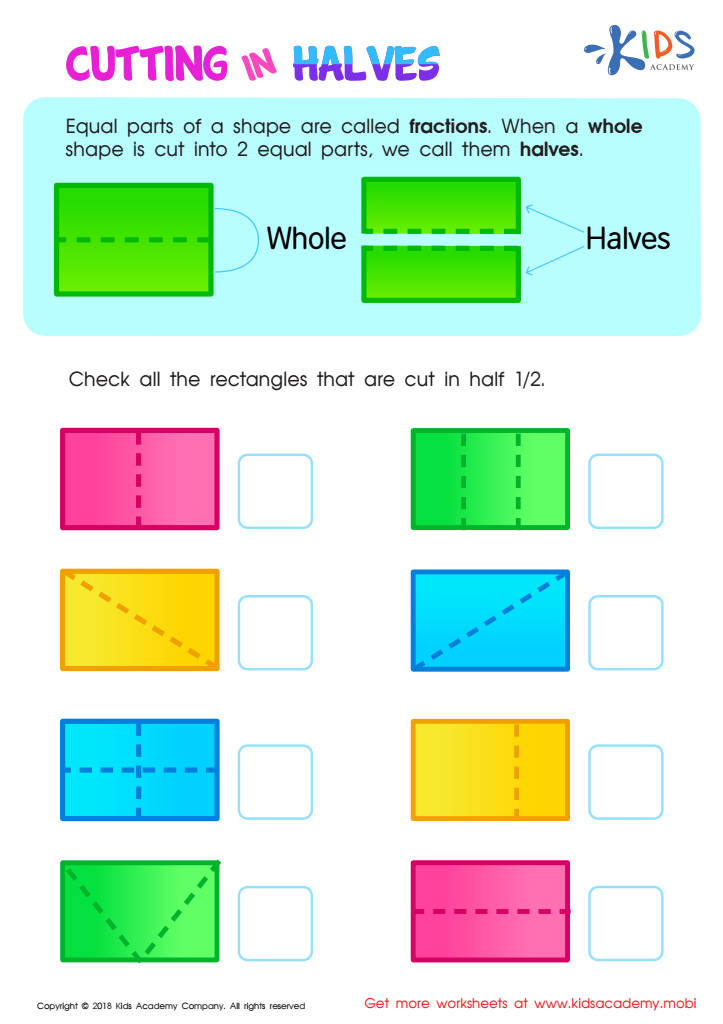
Cutting in Halves Worksheet
 Assign to My Students
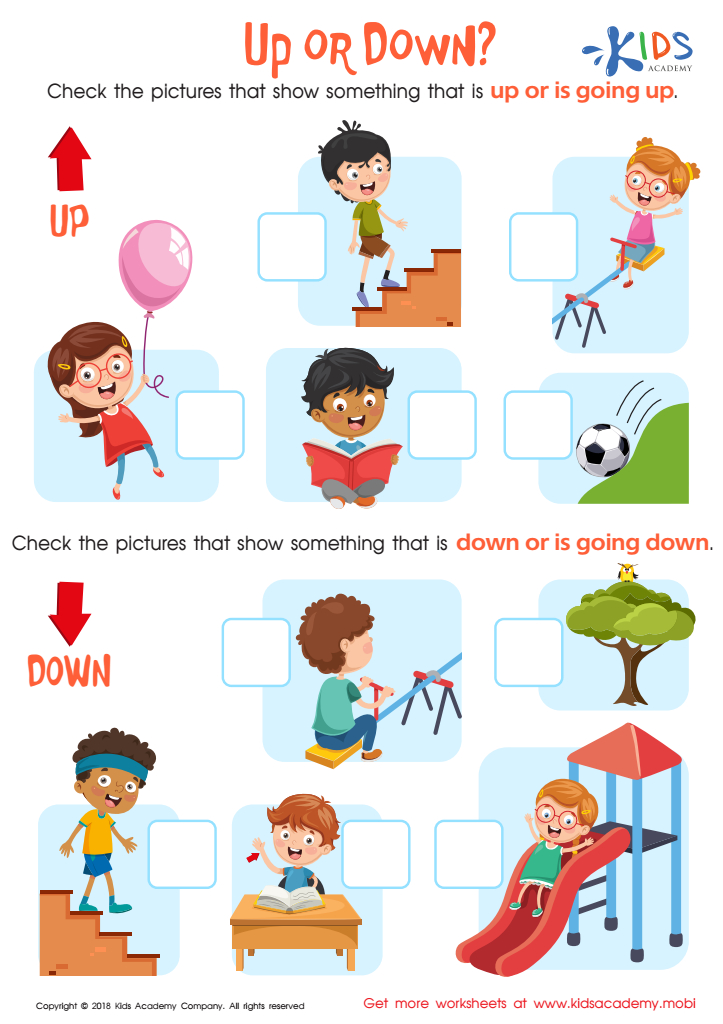
Up or Down Worksheet
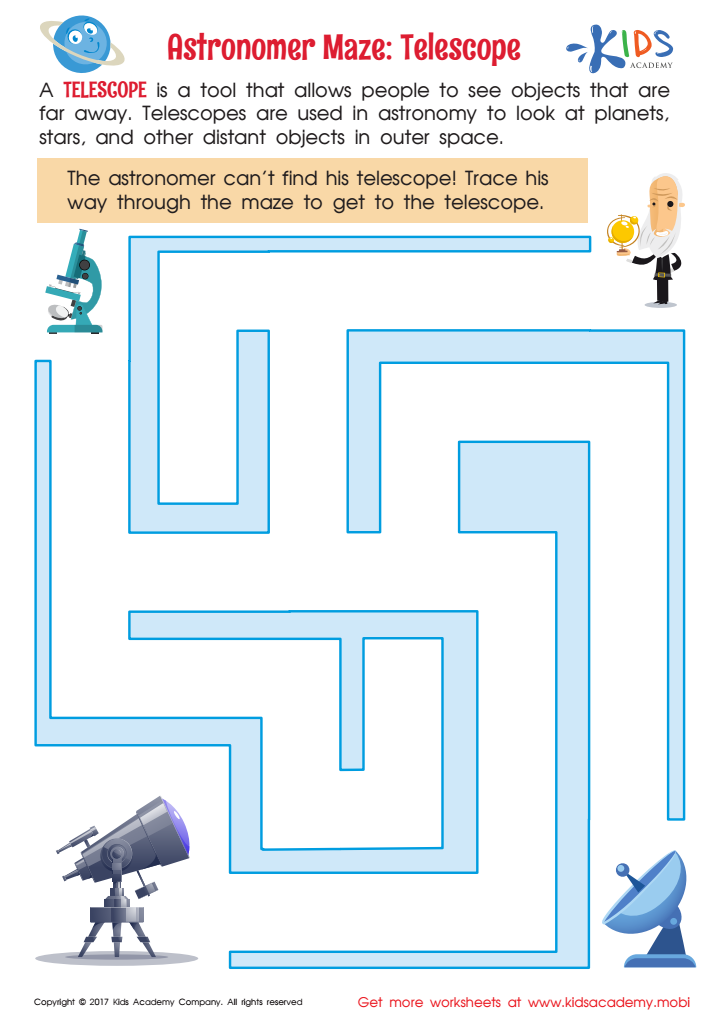
Astronomer Maze: Telescope Worksheet
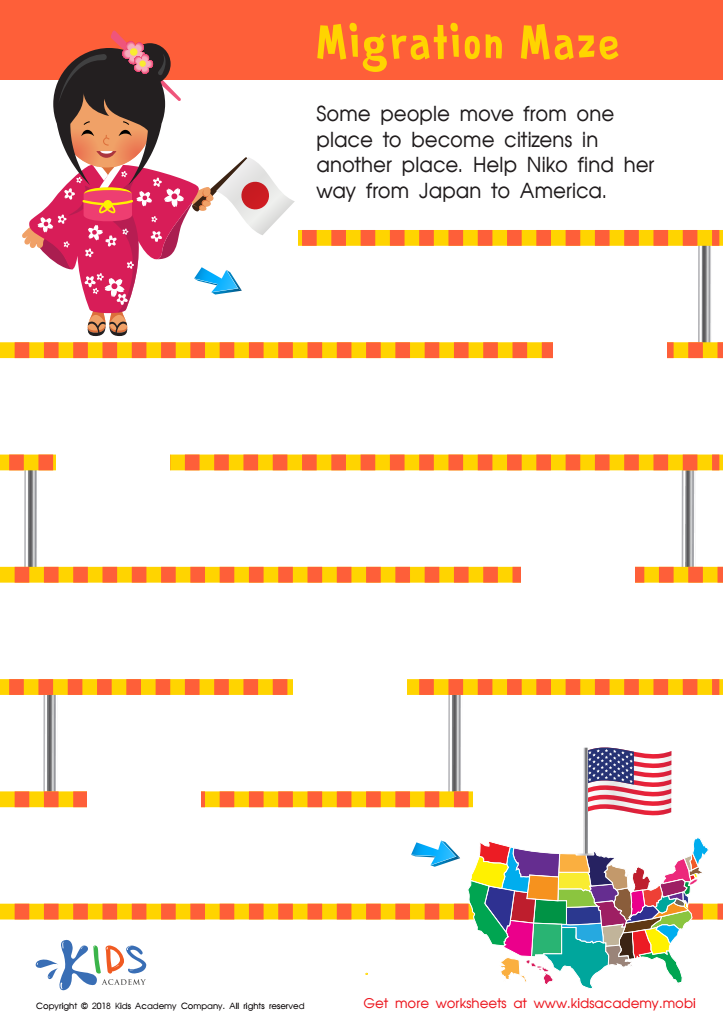
Migration Maze Worksheet
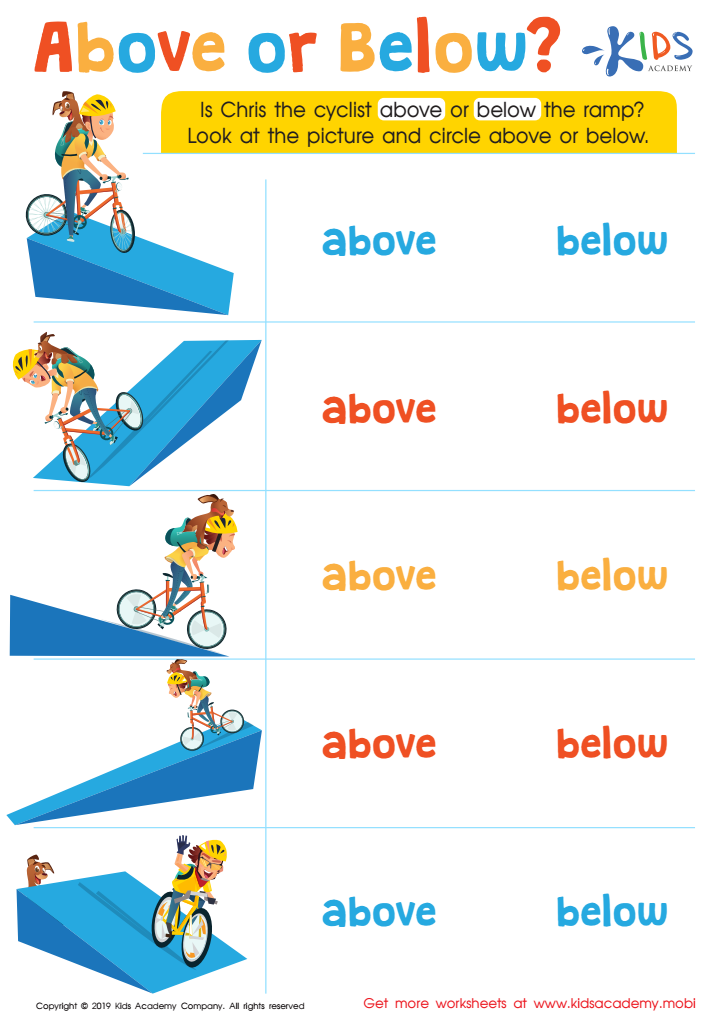
Above or Below? Worksheet








Spatial awareness is a critical aspect of child development that parents and teachers should carefully nurture in children aged 3-7. This concept involves understanding the relationship between objects and one’s own body in space, which is foundational for many daily activities and learning processes.
Firstly, spatial awareness enhances physical coordination. Young children use spatial skills in gross motor activities like running, jumping, and climbing, as well as fine motor tasks such as writing, cutting, or building with blocks. Improved spatial skills can therefore lead to more confident and competent physical participation.
Secondly, spatial awareness is crucial for cognitive development. It underpins core areas of learning including mathematics, where concepts like shapes, sizes, and problem-solving are prevalent. For instance, understanding how puzzle pieces fit together or recognizing patterns in a sequence helps to build early mathematical skills and logical thinking.
Additionally, spatial awareness supports social development. Activities that involve sharing space with others—lining up, passing objects, or participating in group games—require children to gauge distances and understand others' spatial needs, promoting empathy and cooperation.
Encouraging spatial awareness through activities such as puzzles, drawing, and interactive play not only makes learning engaging but also builds a strong foundation for holistic development across physical, cognitive, and social domains. Thus, fostering spatial awareness in young children equips them with essential life skills and supports overall development.








