Telling time Worksheets for Ages 3-7
4 filtered results
-
From - To
Discover our engaging Telling Time Worksheets designed for children aged 3 to 7! Perfect for early learners, these worksheets provide fun and interactive activities that help young students grasp the concept of time. With colorful illustrations and simple exercises, kids will learn to read clocks, understand hours and minutes, and recognize daily routines related to time. Our worksheets are tailored to different learning levels, ensuring all little learners can master telling time at their own pace. Ideal for home practice or in the classroom, these resources are a fantastic way to make learning about time enjoyable and effective! Download today!
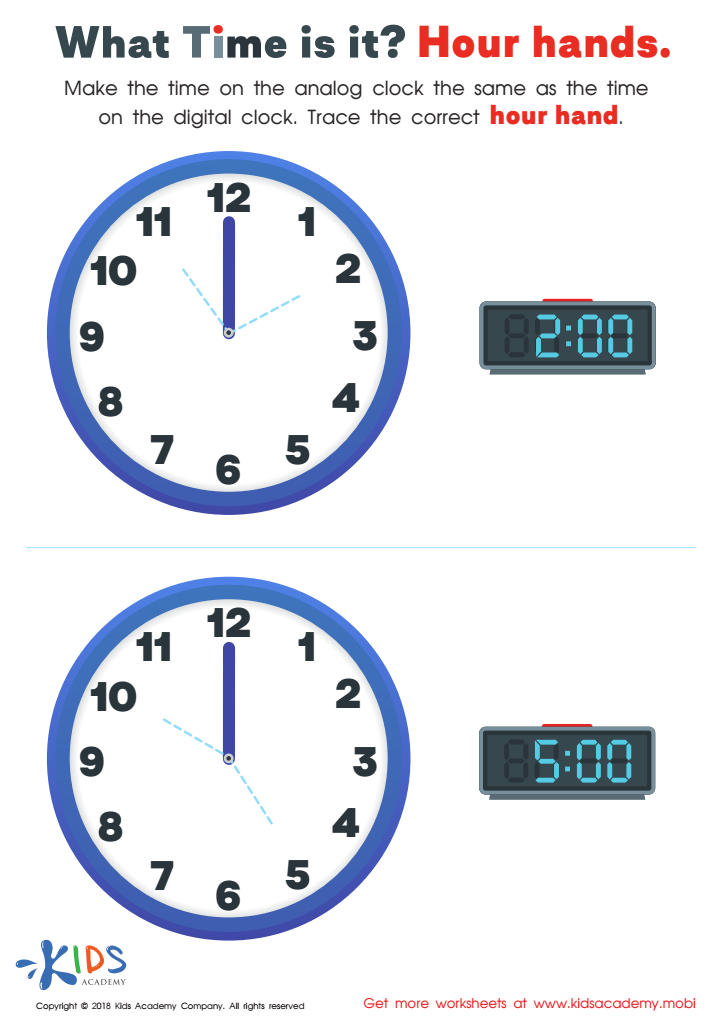
What Time Is it? Hour Hands Worksheet
 Assign to My Students








Developing the ability to tell time is an essential skill for children aged 3-7, as it plays a crucial role in their overall cognitive and social development. Understanding time helps children learn about daily routines, build self-discipline, and manage their time effectively. When children grasp the concept of time, they can better understand the sequence of events in their day, which fosters independence and responsibility.
Parents and teachers should care about teaching time because it boosts critical thinking and problem-solving skills. Telling time encourages children to engage with numbers, improving their mathematical abilities and reinforcing concepts of counting and basic arithmetic. It also enhances their vocabulary and introduces them to new languages related to time, such as “hours,” “minutes,” and “o’clock.”
Moreover, mastering time helps children build social skills as they learn to coordinate activities with peers and negotiate timing for playdates or group gatherings. By introducing time in engaging and playful ways—through storytelling, games, and visual aids—adults can create a foundation for children that extends beyond the classroom, equipping them with a lifelong skill essential for daily living. Overall, caring about this skill contributes significantly to a child’s holistic development.








