
Understanding equivalence Worksheets for Ages 3-7
3 filtered results
Difficulty Level
Grade
Age
-
From - To
Subject
Activity
Standards
Explore our engaging Understanding Equivalence Worksheets designed for children aged 3-7! These interactive resources help young learners grasp the concept of equivalence through fun activities and colorful illustrations. Perfect for reinforcing math skills, these worksheets encourage kids to recognize equal values, compare quantities, and develop critical thinking. With a variety of exercises ranging from matching and counting to visual puzzles, your child will build a strong foundation in mathematics while enjoying the learning process. Ideal for use at home or in the classroom, our worksheets make understanding equivalence an exciting adventure in learning. Start exploring today!
Favorites
With answer key
Interactive
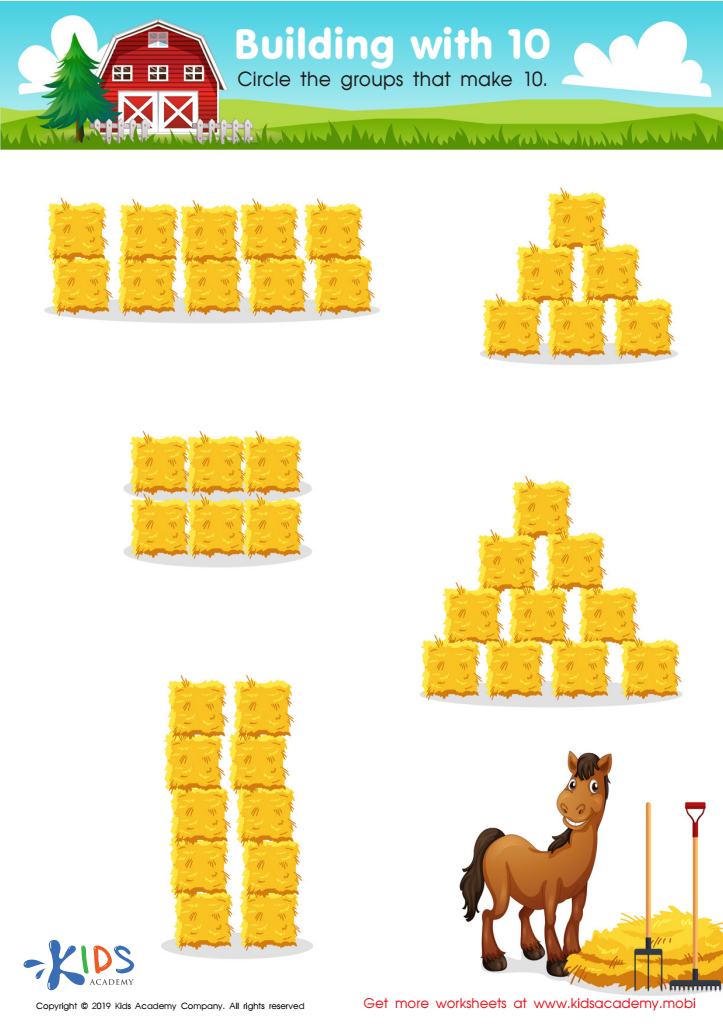
Building with 10 Worksheet
Counting numbers can be simple with this worksheet: Ask your kids to count the stacks of objects, ensure accuracy with your help, then circle the ones of ten. With practice and guidance, your children will soon become counting pros!
 Assign to My Students
Building with 10 Worksheet
Worksheet
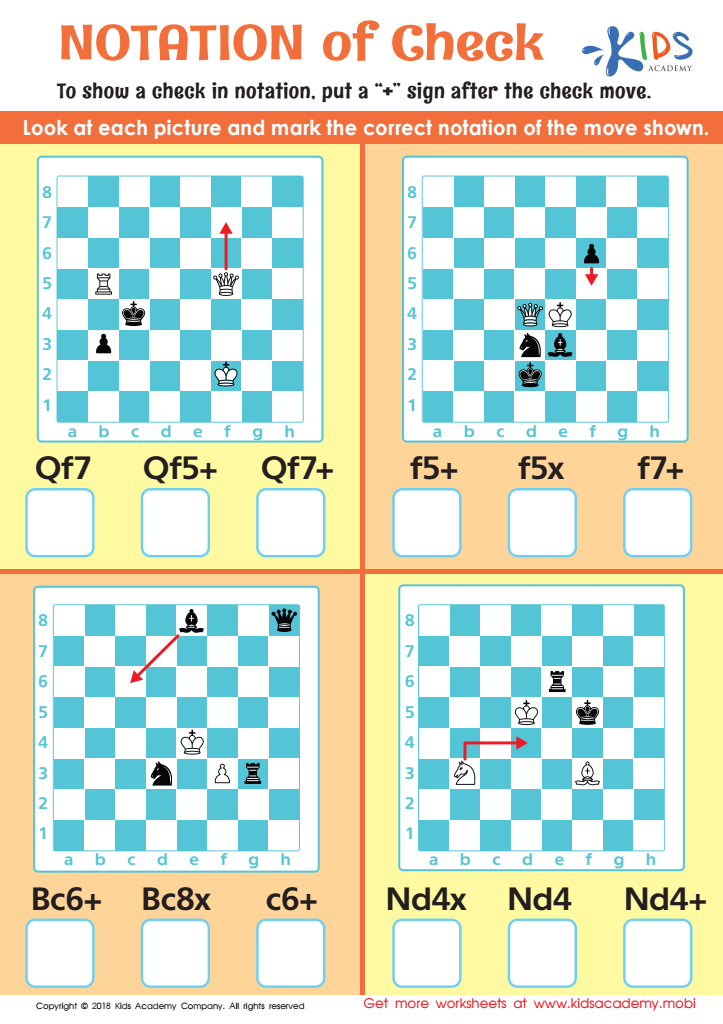
Notation of Check Worksheet
Chess is an addictive game! Once you know the basics of check and checkmate, you'll be hooked! Teach your little one to make check notation with this free PDF worksheet. They can use downloadable practice to look at each picture and mark the correct notation, strengthening their problem-solving skills while they learn to play - and win - this fun game!
Notation of Check Worksheet
Worksheet
Join Kids Academy for Free
Who is primarily going to use this learning content?






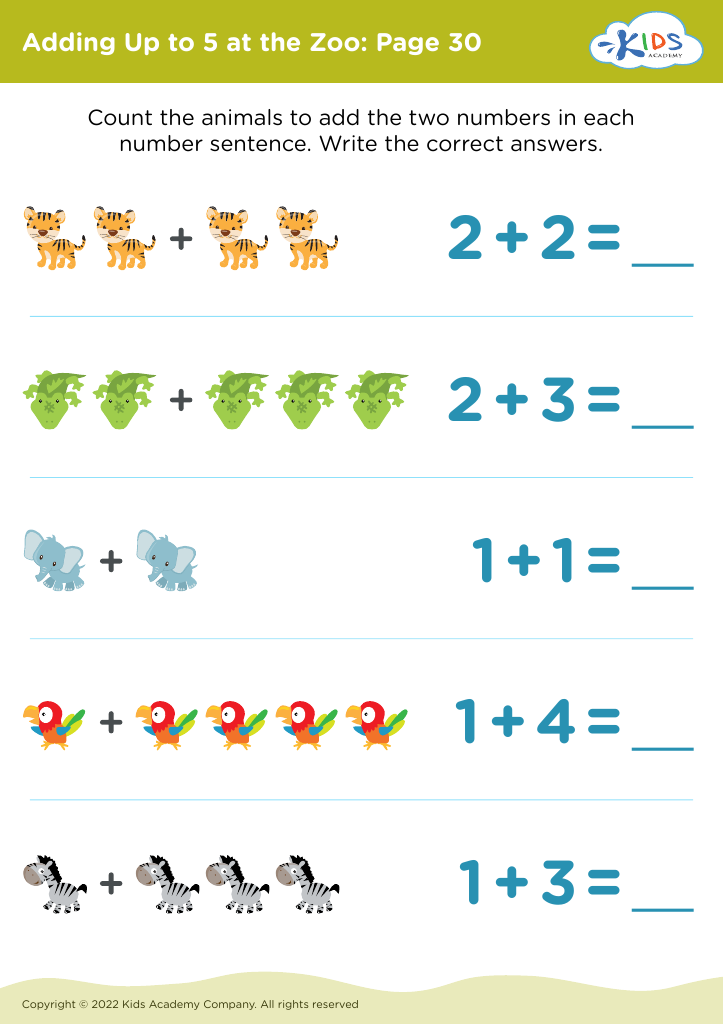
Understanding equivalence is a foundational math concept that significantly impacts a child's cognitive development and problem-solving abilities, particularly for children aged 3-7. During these formative years, children are naturally curious and eager to explore relationships between numbers and quantities. By fostering an understanding of equivalence, parents and teachers can help children grasp the idea that different representations can equal the same value — for example, recognizing that 2+2 is the same as 4 or understanding that two groups of three objects each also amount to six.
Care regarding this concept is warranted because it lays the groundwork for more advanced mathematical skills, such as addition, subtraction, and even basic algebra. Children who grasp equivalence develop stronger critical thinking and reasoning skills, enabling them to approach mathematical problems with confidence. Additionally, these skills encourage logical thought processes that extend beyond math into other subjects.
Moreover, the ability to understand equivalence impacts a child's overall academic performance, enhances their ability to communicate mathematical ideas, and prepares them for future educational challenges. By prioritizing this early understanding, parents and teachers can equip children with the crucial tools they need for lifelong learning and success in mathematics and beyond.








