Basic geometry knowledge 2D Shapes Worksheets for Ages 3-7
3 filtered results
-
From - To
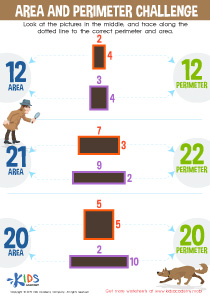
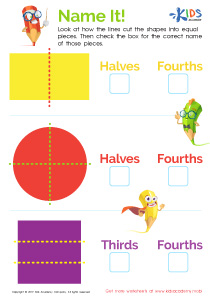
Explore our engaging 2D Shapes worksheets designed for children ages 3-7! These printable activities help young learners develop essential geometry skills through fun exercises that introduce basic shapes like circles, squares, triangles, and rectangles. Each worksheet promotes recognition, differentiation, and understanding of 2D shapes in an interactive way. Perfect for at-home learning or classroom use, these worksheets encourage creativity and boost confidence in math. With colorful illustrations and simple instructions, young learners will enjoy mastering geometric concepts while preparing for more advanced math skills. Dive into a world of shapes and make learning geometry exciting and enjoyable!
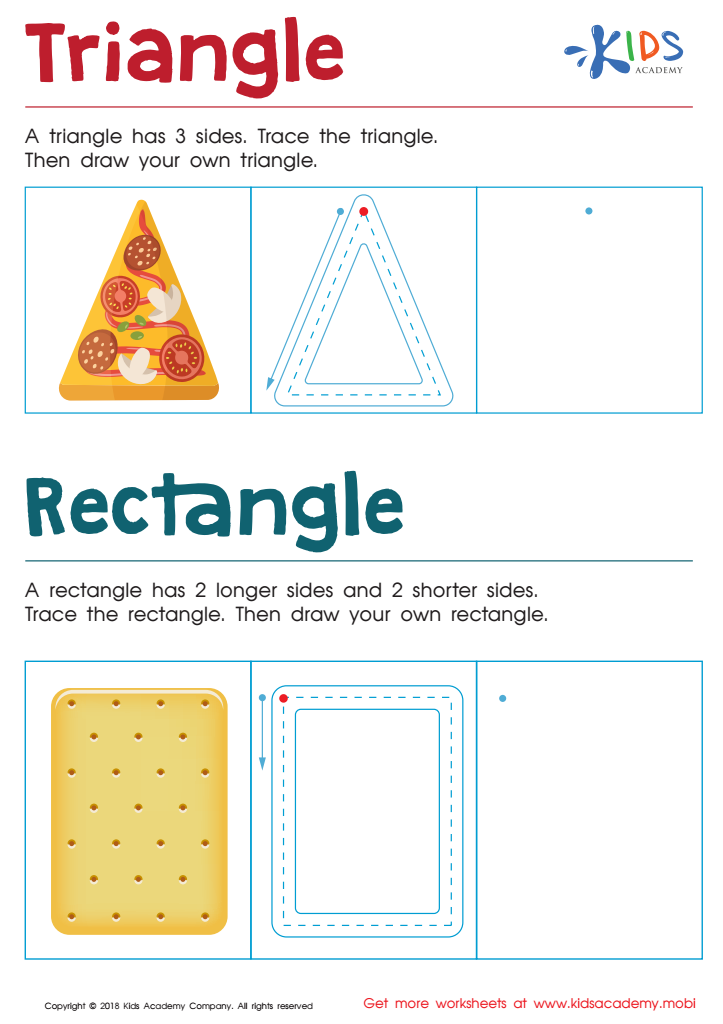
Triangle Rectangle Worksheet
 Assign to My Students











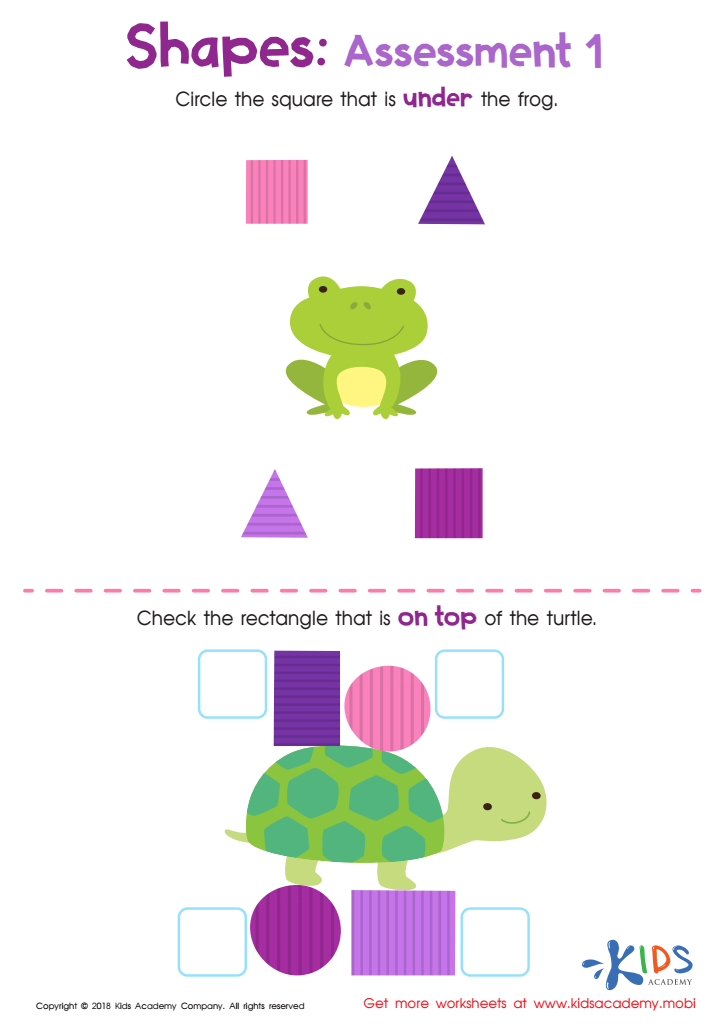
Geometry – Assessment 1 Worksheet
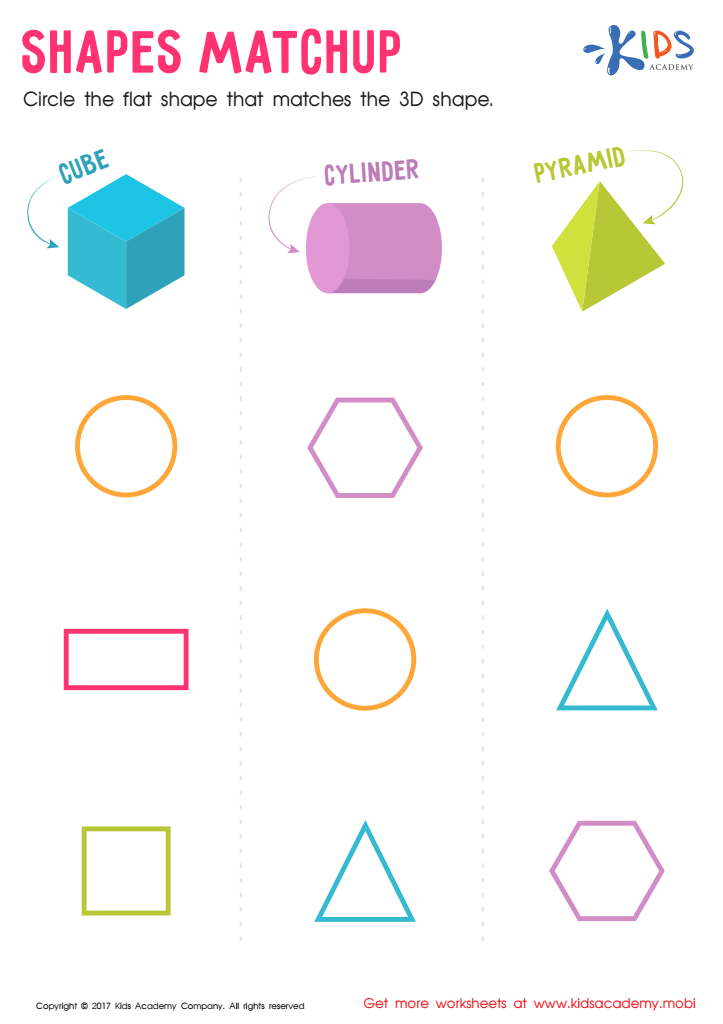
Shapes Matchup Worksheet








Basic geometry knowledge, particularly understanding 2D shapes, is crucial for children aged 3-7 for several reasons. Firstly, it lays a foundational cognitive skill that supports later mathematical learning. Recognizing and naming shapes such as circles, squares, triangles, and rectangles helps children develop visual-spatial awareness, enhancing their ability to navigate the world around them.
Moreover, learning about 2D shapes fosters critical thinking. As children learn to categorize and compare shapes, they improve their ability to notice differences and similarities, promoting analytical skills that are essential not just in math, but across all subjects.
Additionally, understanding shapes facilitates creativity. Activities that involve drawing, building with blocks, or coloring can inspire imaginative play while reinforcing knowledge of 2D shapes. This hands-on experience enhances engagement and retention.
Lastly, early exposure to geometric concepts aids in the development of problem-solving abilities. Through puzzles and games that incorporate shapes, children learn to devise strategies, influencing their overall development.
In conclusion, supporting children's understanding of 2D shapes is fundamental for early literacy in mathematics and overall cognitive growth, setting the stage for future learning and skill acquisition. Both parents and teachers play a crucial role in nurturing these essential skills.