Pattern recognition 2D Shapes Worksheets for Ages 3-7
3 filtered results
-
From - To
Explore our engaging Pattern Recognition 2D Shapes Worksheets designed for children ages 3-7 at Kids Academy! Our carefully curated worksheets help young learners identify, compare, and understand various 2D shapes, fostering critical thinking and early math skills. Through fun activities and colorful illustrations, children can practice recognizing patterns, enhancing their cognitive development. Perfect for use at home or in the classroom, these worksheets are an excellent resource for teachers and parents. Nurture your child's curiosity and set a strong foundation for future math success with Kids Academy’s Pattern Recognition 2D Shapes Worksheets!
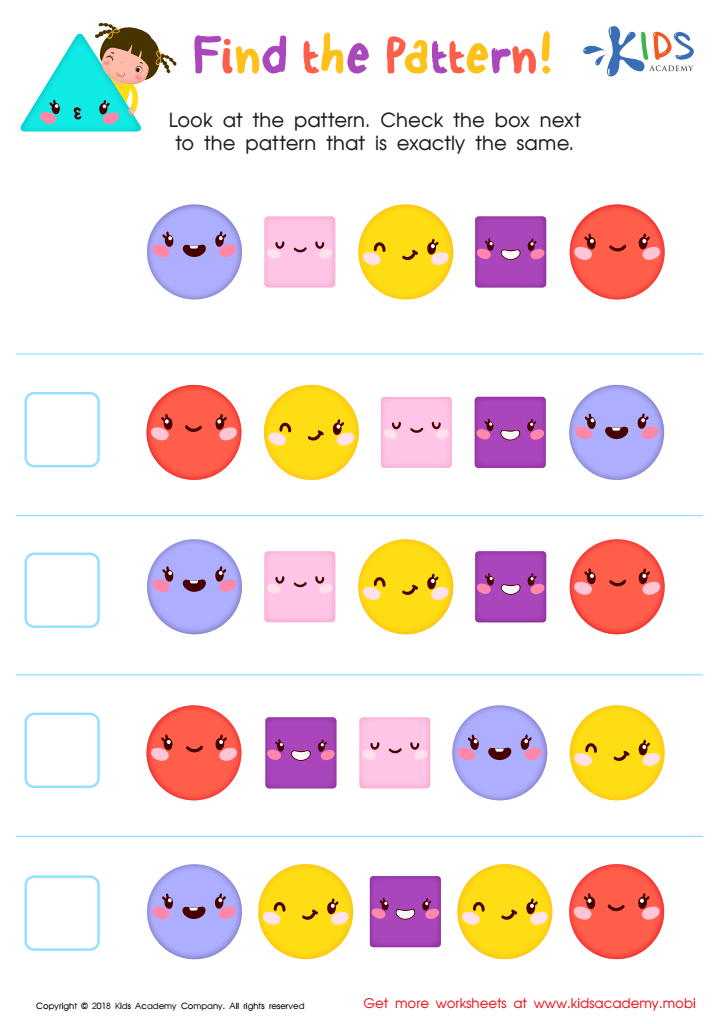
Find the Pattern Worksheet
 Assign to My Students










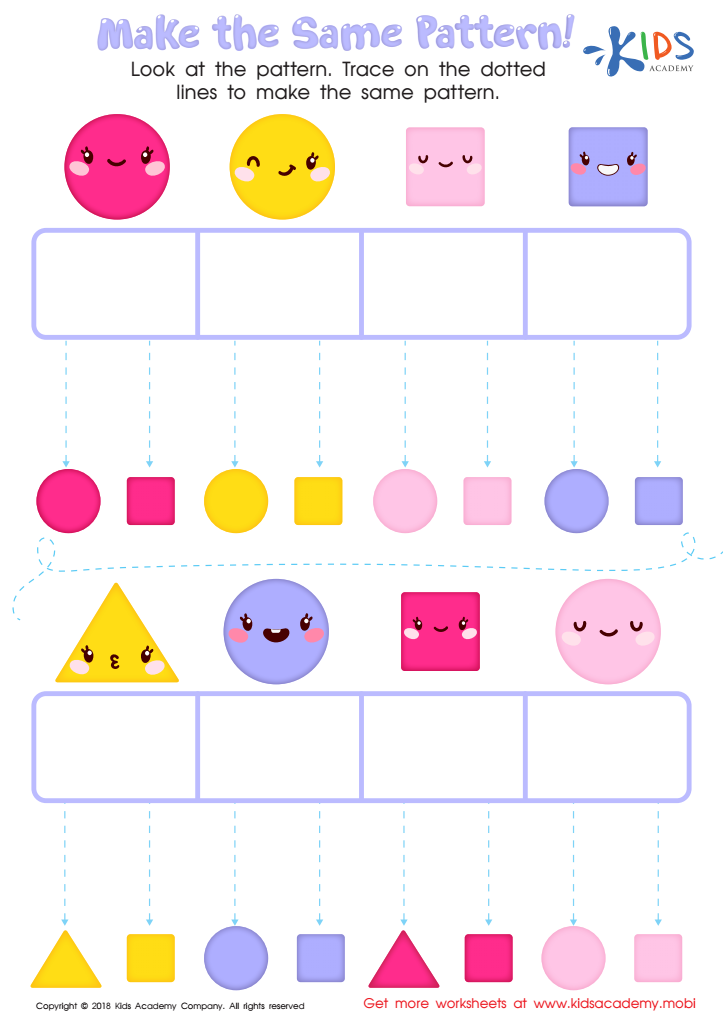
Make the Same Pattern Worksheet
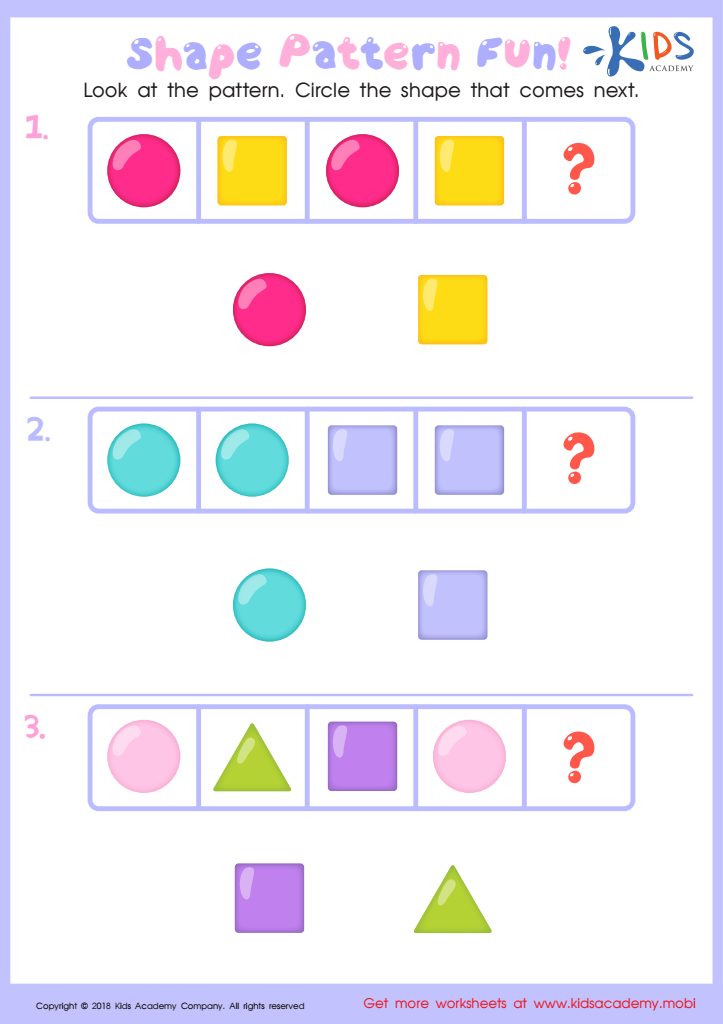
Shape Pattern Fun Worksheet








Pattern recognition and understanding 2D shapes are fundamental skills for young children, laying the groundwork for a multitude of future learning areas. For ages 3-7, actively engaging in activities that promote these skills significantly enhances cognitive development. Recognizing and comprehending patterns aids in the development of critical thinking skills and the ability to predict and identify relationships, both of which are crucial concepts in various subjects, especially in mathematics and science.
Delving into 2D shapes is pivotal for spatial awareness, which is essential not just in math, but in understanding the world around them. Through recognizing shapes like circles, squares, and triangles, children not only enhance their visual perception but also their ability to categorize and sequence objects. This kind of sorting and classifying paves the way for organizational skills.
Moreover, pattern recognition and shape identification bolster language development. As kids learn the names and properties of shapes, they expand their vocabulary and improve their communication skills. These activities also encourage the development of fine motor skills through drawing and building with shapes.
Parents and teachers should emphasize these concepts not only for their immediate educational benefits but for their role in laying a strong foundation for problem-solving, logical reasoning, and analytical thinking—skills essential for lifelong learning.