Recognizing shapes 2D Shapes Worksheets for Ages 3-7
3 filtered results
-
From - To
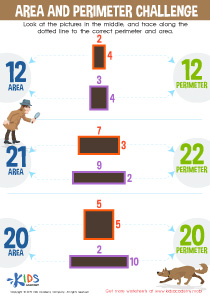
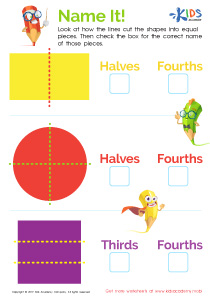
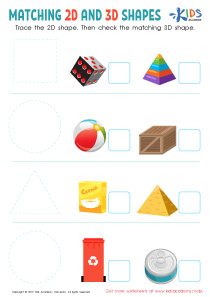
Explore our "Recognizing Shapes: 2D Shapes Worksheets" designed for children ages 3-7! These engaging worksheets provide young learners with a fun way to identify and understand fundamental 2D shapes such as circles, squares, triangles, and rectangles. With colorful illustrations and interactive activities, kids will enhance their shape recognition skills while enjoying hands-on learning experiences. Our resources are tailored to develop early math skills and boost confidence through playful exercises that can be completed at home or in the classroom. Start your child’s journey into geometry today, and watch them master the world of shapes with ease and excitement!
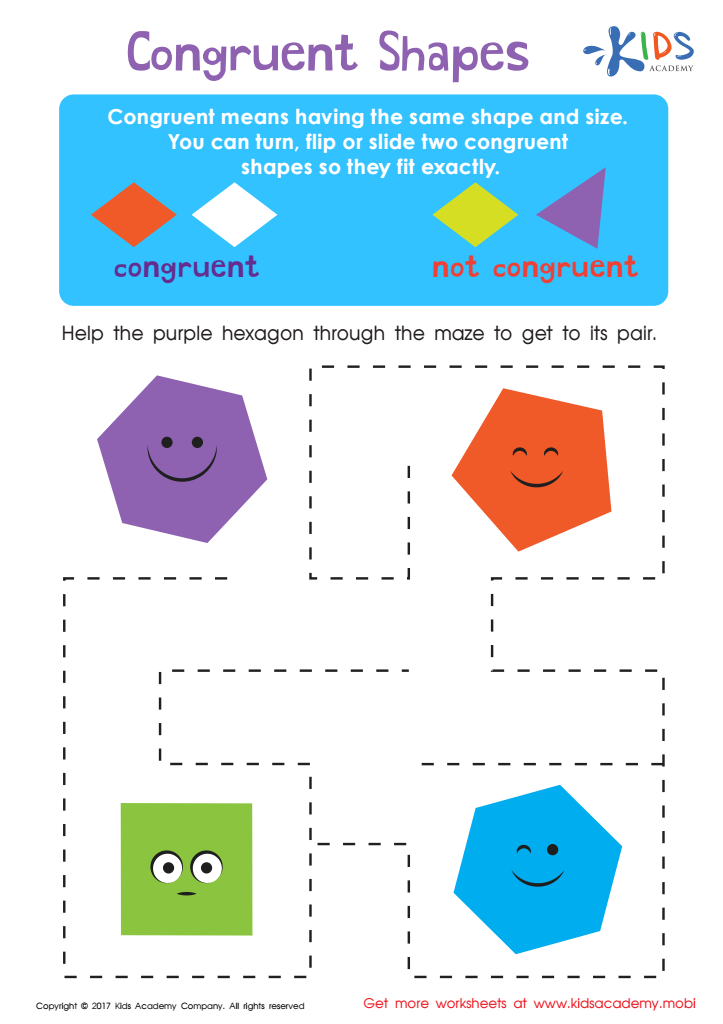
Congruent Shapes Worksheet
 Assign to My Students











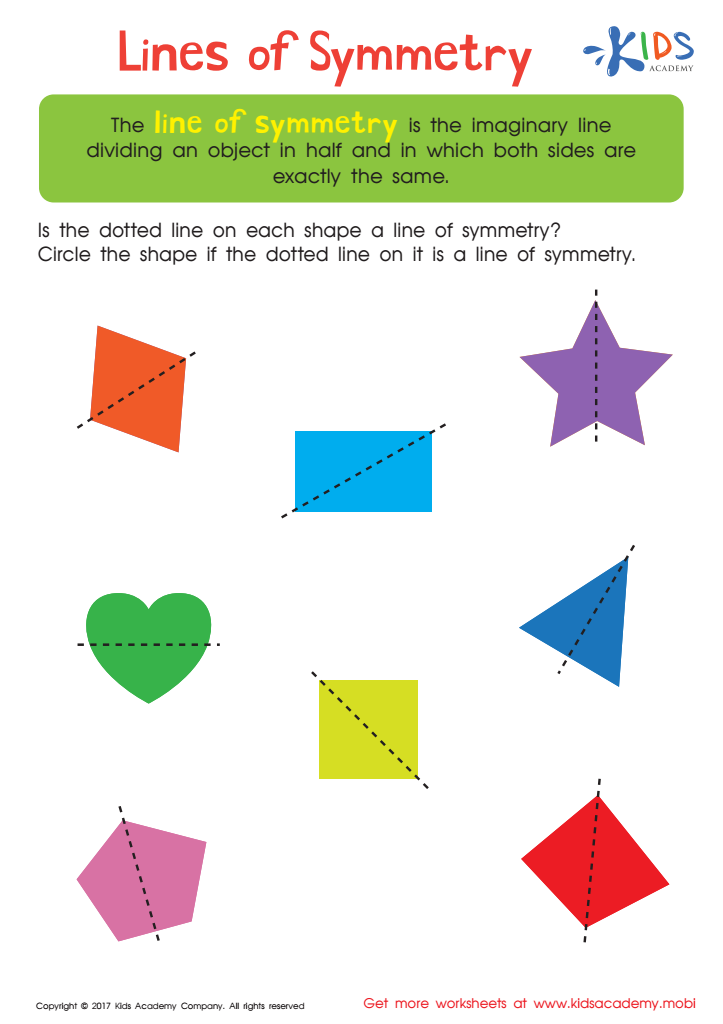
Lines of Symmetry Printable
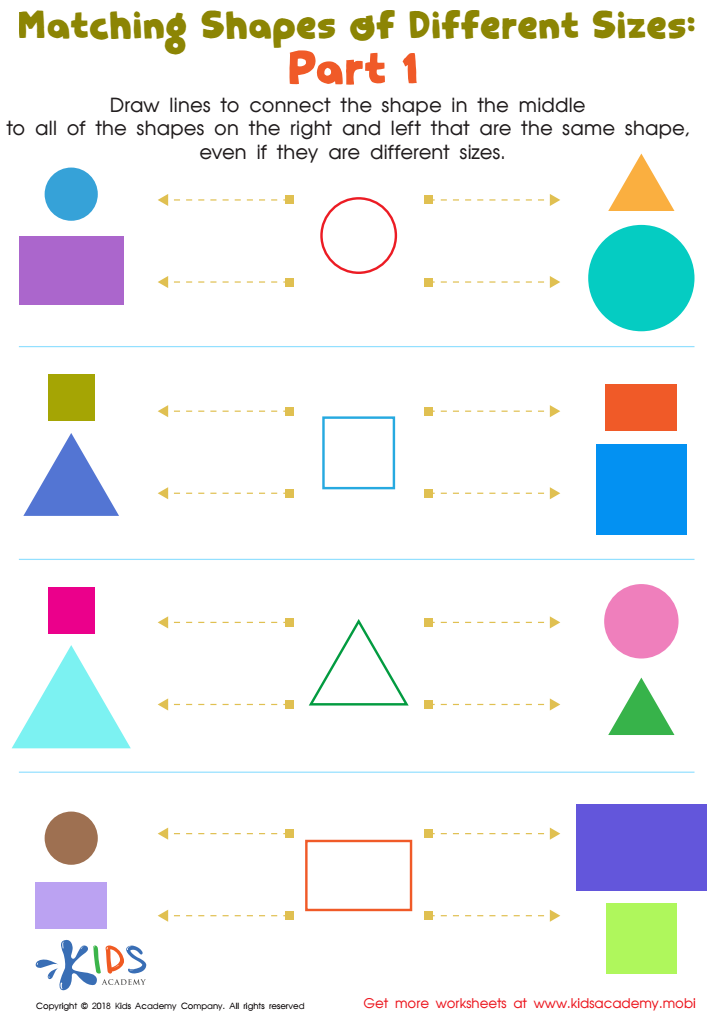
Geometry: part 1 Worksheet








Recognizing 2D shapes is a crucial developmental milestone for children ages 3-7, and it's vital for parents and teachers to prioritize this learning. At this age, children are naturally curious, and engaging with shapes helps them make sense of the world around them. Understanding 2D shapes not only enhances their visual-spatial skills but also builds a strong foundation for later mathematical concepts such as geometry, problem-solving, and spatial reasoning.
Moreover, recognizing shapes supports cognitive development; as children identify and categorize shapes, they enhance their critical thinking and reasoning abilities. It also fosters fine motor skills through activities like drawing, tracing, or building shapes with materials. The social aspect is equally important; group activities around shapes encourage collaboration, communication, and cooperative learning.
Additionally, incorporating shapes into daily life, such as finding them in nature or at home, can make learning more relatable and fun. Parents and teachers can create engaging activities that transform shape recognition into a playful adventure, enhancing a child's love for learning. Ultimately, fostering shape recognition in early childhood sets the stage for academic success, promoting confidence in problem-solving and creative thinking skills that children will carry with them throughout their education.