Fraction comparison Adding 2-digit Numbers Worksheets for Ages 3-7
3 filtered results
-
From - To
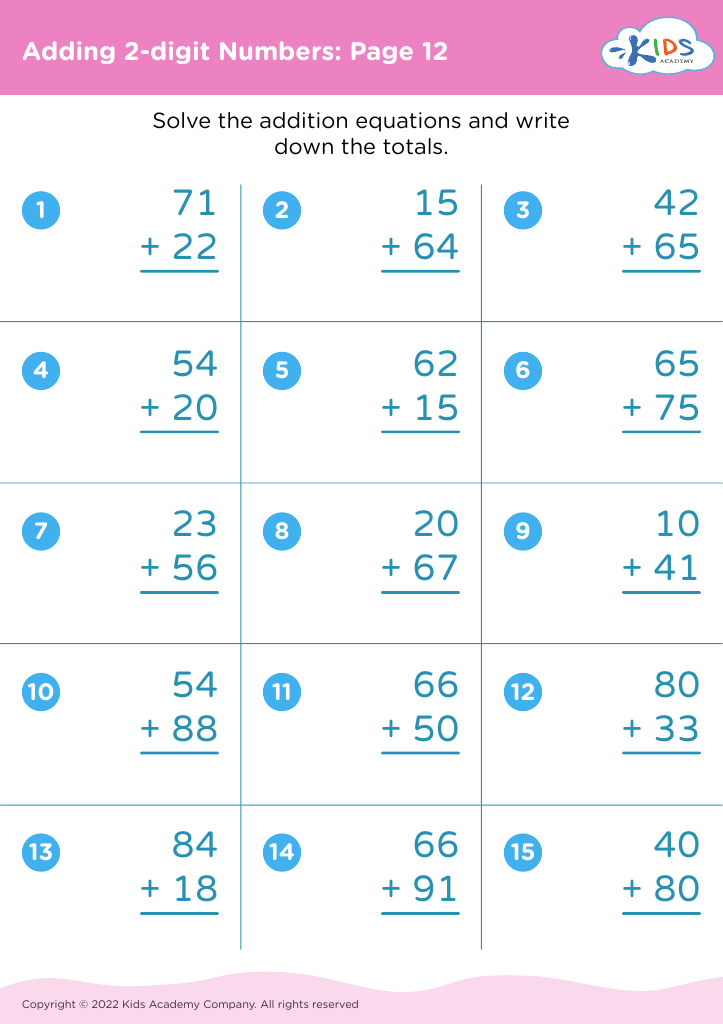
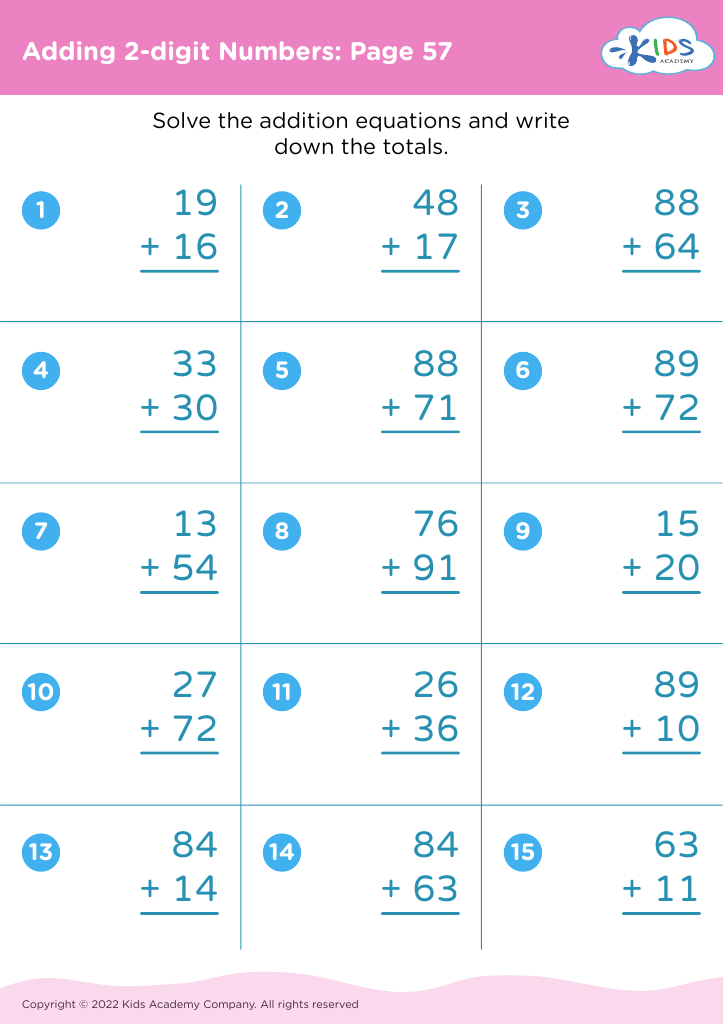
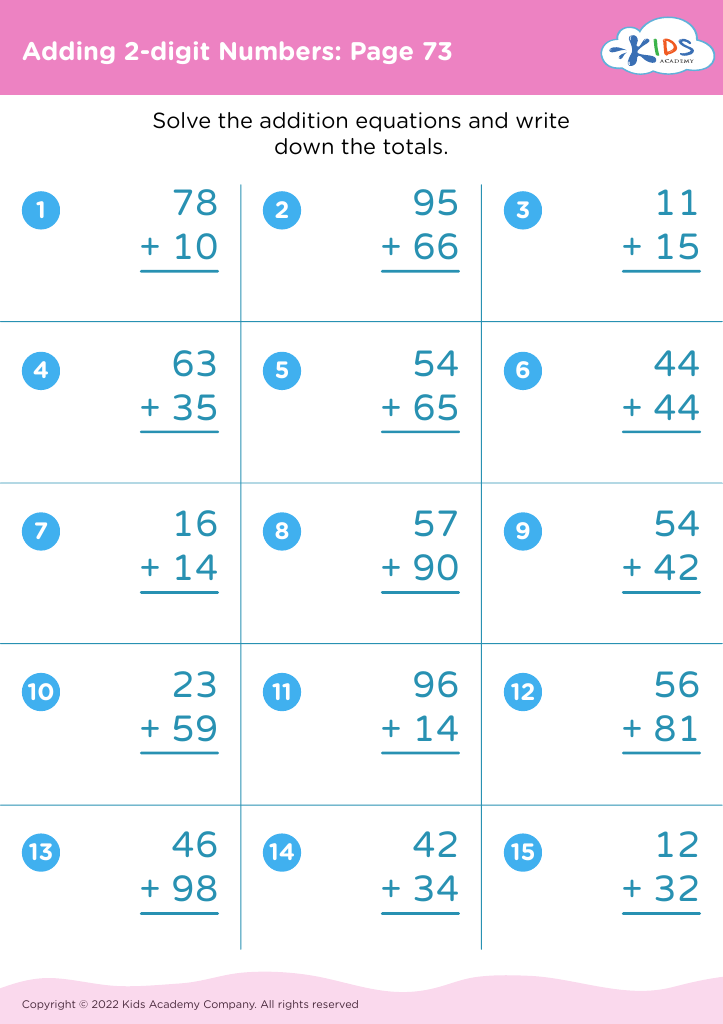
Enhance your child's math skills with our engaging Fraction Comparison and Adding 2-digit Numbers Worksheets tailored for ages 3-7. These brilliant resources are designed to make learning fun and accessible, guiding young minds through the basics of fractions and double-digit addition. Our worksheets foster critical early math skills, promoting number sense and comparative reasoning. With colorful, kid-friendly designs, children will enjoy mastering these essential concepts while building confidence in their abilities. Ideal for classroom or home use, these activities are perfect for young learners ready to take their math abilities to the next level. Download now for enriching practice!








Understanding fraction comparison and adding 2-digit numbers are critical foundational skills for young children. These mathematical concepts enrich a child’s cognitive development and form the cornerstone of their future success in arithmetic and beyond.
Fraction comparison helps children grasp the concept of parts of a whole and lays the groundwork for understanding more complex mathematical ideas. Even though kids aged 3-7 might only engage with basic fractions like 1/2 or 1/4, this introduces them to proportional thinking. Comparing fractions—with visual aids like pie charts or number lines—helps them develop comprehension of quantities and relative sizes, fostering logical reasoning.
Adding 2-digit numbers, on the other hand, helps build arithmetic fluency. By practicing this skill, children learn strategic thinking, place value, and number sense. Beyond just getting the right answer, such exercises encourage mental math and problem-solving abilities. These skills are indispensable for everyday functionalities, like knowing how much money they need or how long it will take to reach their destination.
In summary, parents and teachers should prioritize these mathematical milestones because they are crucial for mental processing, problem-solving abilities, and overall intellectual growth. Laying a solid mathematical foundation early on encourages confidence and competence in young learners, setting them up for academic success.








