Recognizing Patterns Adding 2-digit Numbers Worksheets for Ages 3-7
3 filtered results
-
From - To
Unlock the world of mathematics for young learners with our "Recognizing Patterns Adding 2-Digit Numbers Worksheets" designed specifically for children aged 3-7. These engaging worksheets introduce key concepts that make addition fun and accessible, fostering early numeracy skills. Kids will explore visual patterns and number relationships through brightly colored illustrations and interactive activities. By recognizing patterns in addition, children will build a strong foundation for math as they progress in their learning journey. Perfect for home, preschool, or kindergarten settings, these resources promote both learning and enjoyment. Start your child's mathematical adventure today with our thoughtfully crafted worksheets!
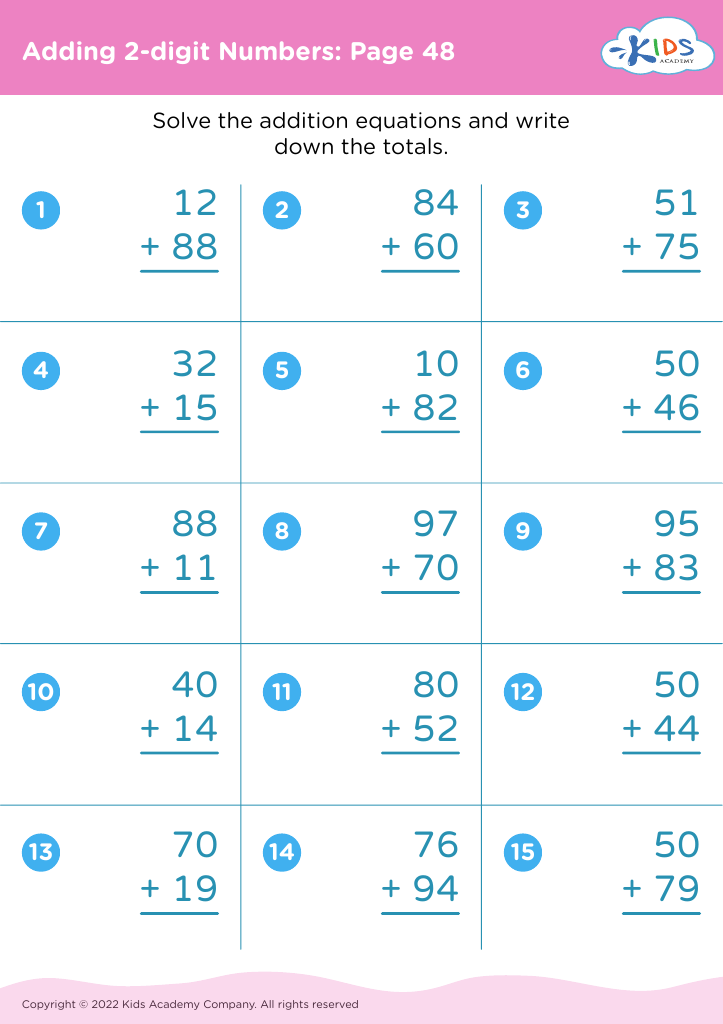
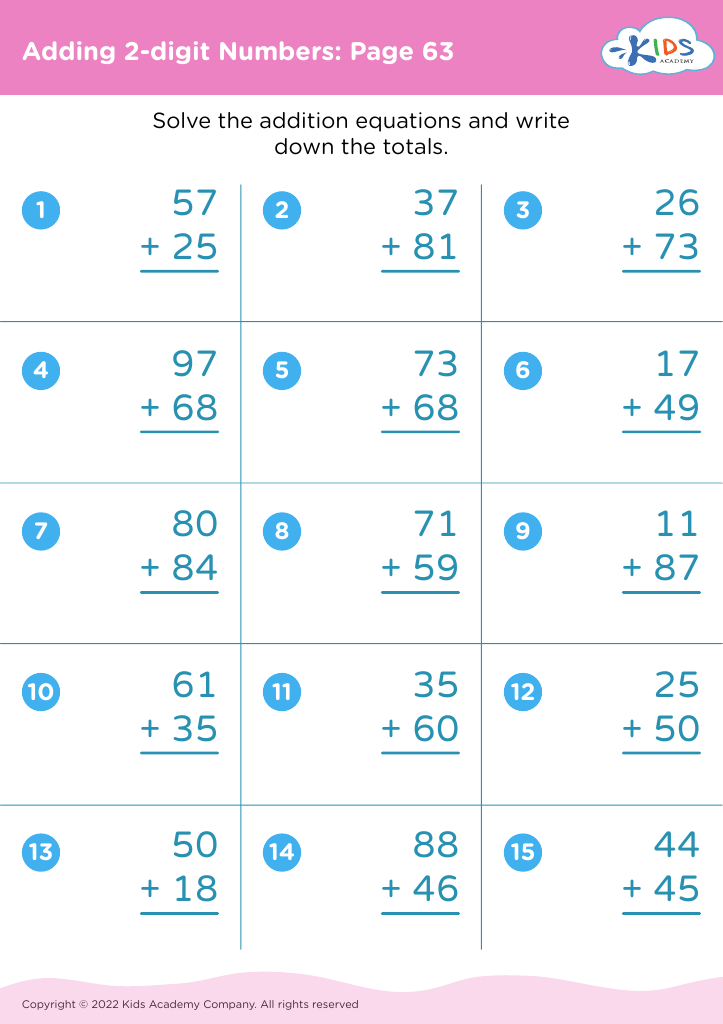
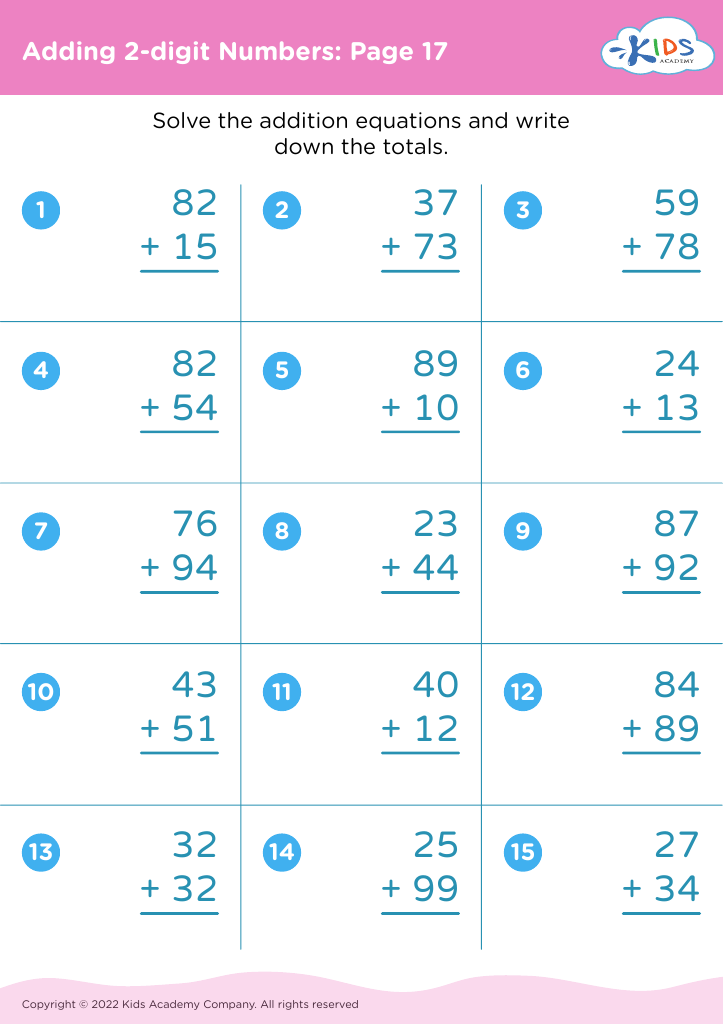








Recognizing patterns and adding 2-digit numbers are foundational skills that significantly contribute to a child's mathematical development. For children aged 3-7, engaging with patterns helps them build critical thinking and problem-solving abilities. Patterns offer a way to interpret and predict relationships between numbers, establishing a strong groundwork for understanding more complex mathematical concepts in later years.
When children learn to add 2-digit numbers, they develop number sense, learning to recognize the value of tens and units. This understanding is crucial for mental math, fostering confidence as they tackle arithmetic challenges. Additionally, recognizing patterns through addition aids in memorization of facts and enhances computational skills.
Parents and teachers play a key role in nurturing these abilities through engaging activities that promote exploration and discovery. By incorporating pattern recognition in everyday tasks, such as counting objects or participating in rhythm games, caregivers can create meaningful learning experiences. Ultimately, fostering these skills not only prepares children for future academic success but also instills a love for mathematics. Emphasizing these concepts from an early age can lead to increased engagement, perseverance, and a stronger foundation for lifelong learning in mathematics and beyond.








